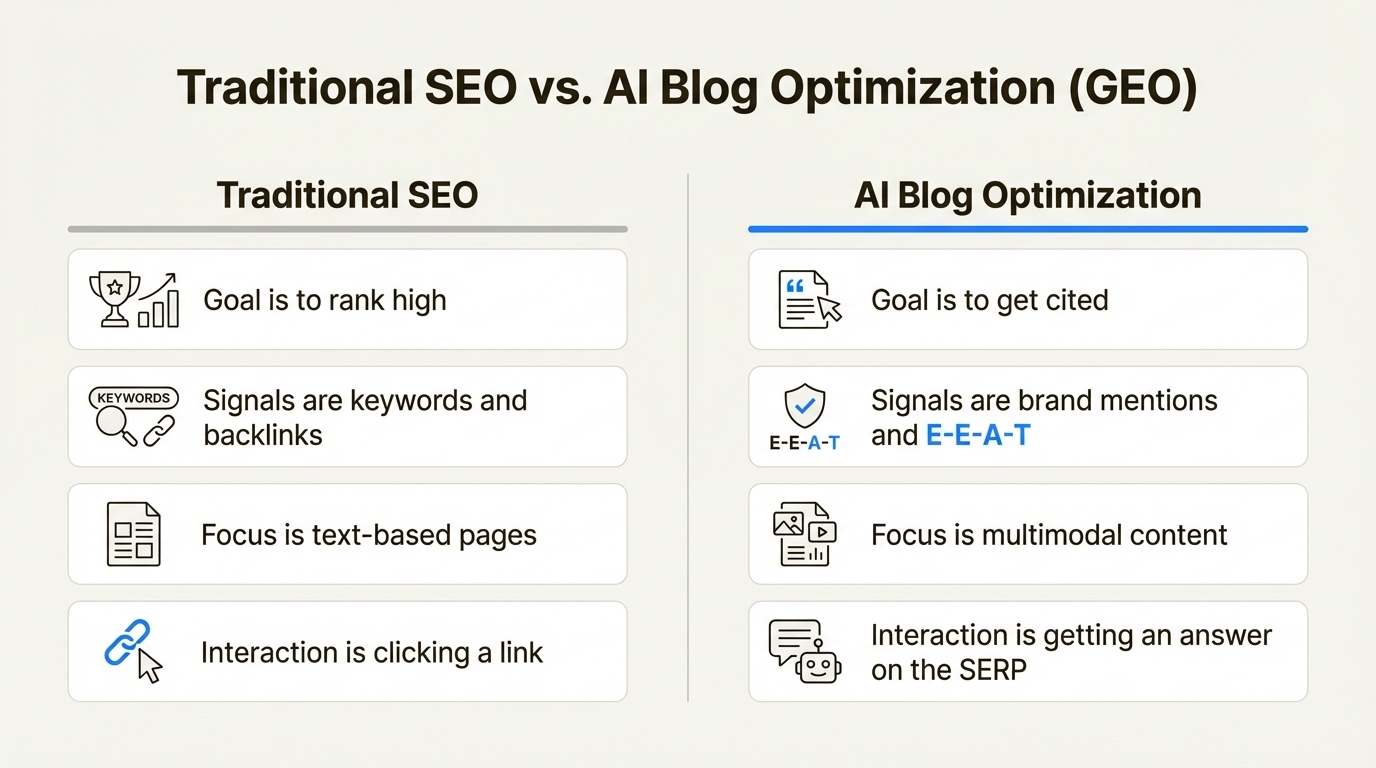
In 2026, the digital landscape has shifted permanently. Traditional SEO, once defined by static keyword lists and fragmented silos, is no longer sufficient. Generative Engine Optimization (GEO) demands a transition from simple keyword targeting to the development of robust topical authority.
The Shift from Keyword Targeting to Topical Authority in 2026
Traditional SEO keyword silos fail in the generative search era because LLMs do not look for exact matches; they look for contextual relationships. When a user submits a query, LLMs engage in query fan-out, identifying the intent behind the prompt and retrieving information from various sources to synthesize a comprehensive answer.
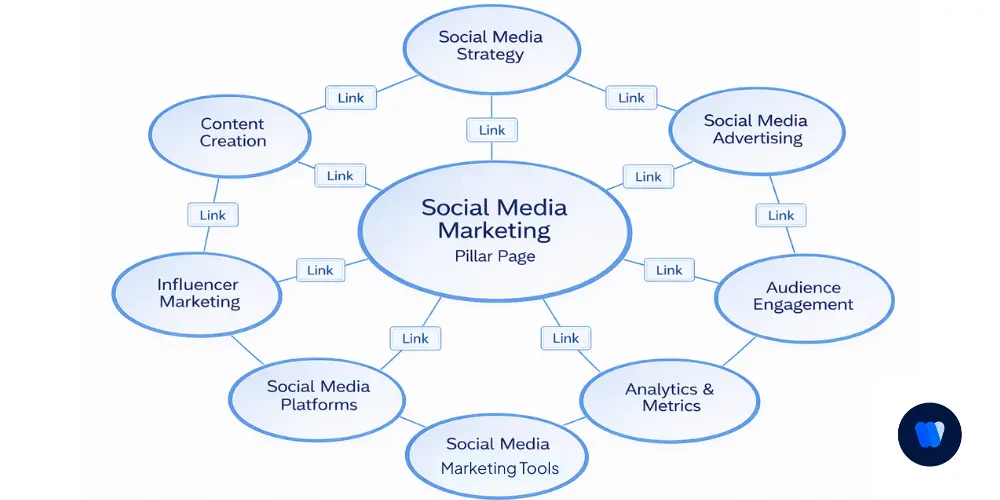
Think of your website not as a collection of pages, but as a contextual knowledge graph. Topic clusters serve as the infrastructure for this graph, grouping related content around a central pillar to signal to AI models that your brand is an authoritative source on a specific subject.
The 7-Step Workflow for Architecting High-Authority Clusters
Building a cluster that ranks in AI search requires a methodical, engineering-first approach.
- Seed Topic Selection: Start by identifying core business topics that align with your audience’s generative search query patterns rather than just search volume.
- Sub-Intent Mapping: Identify the specific questions triggered by your seed topic. Use query fan-out logic to ensure every possible user question is anticipated.
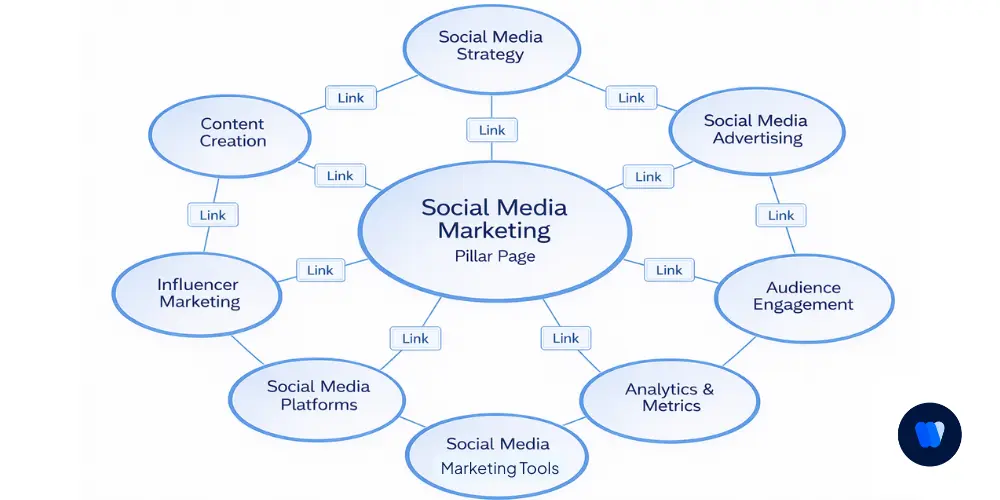
- Taxonomy Design: Structure your site with a clear pillar page that covers the broad topic, connected to granular, high-intent cluster pages.
- Structured Data Implementation: Use JSON-LD schema to explicitly define relationships between pages for machine understanding.
- Citation Density Focus: Prioritize factual accuracy and concise, answer-ready content blocks that AI models can easily ingest and cite.
- Semantic Linking: Build a robust internal linking network where every node reinforces the pillar page’s authority.
- Continuous Iteration: Monitor AI search performance metrics and adjust clusters to keep content aligned with updated LLM training data.
Optimizing for Generative Engine Visibility (GEO)
LLMs operate through passage retrieval—extracting specific snippets of information to construct answers. To win visibility, you must optimize for these “direct answer” citations.
- Direct Answer Blocks: Design content to be “snippet-ready.” Use clear headings, bulleted lists, and concise summaries that provide immediate value to an AI model.
- Entity Recognition: Implement brand-specific entity data. By clearly defining who you are, what you do, and the relationships between your products and industry concepts, you make it easier for AI to map your brand as a trusted authority.
- Moving Beyond E-E-A-T: While traditional E-E-A-T remains relevant, generative visibility requires demonstrating consistent, high-quality output that verifies your expertise through structured knowledge rather than just backlinks.
Practical Implementation Guide for Scaling Content Teams
For smaller teams, the risk of “content sprawl”—creating too much disconnected content—is high. Focus your efforts on high-impact clusters.
- Prioritize Authority: Identify one “hero” topic where you can become the undisputed authority, then build out from there.
- Leverage AI Automation: Use AI tools to generate outlines, structure data, and identify gaps in your cluster coverage, ensuring your team remains focused on high-level strategy and accuracy.
- Consolidate and Prune: Periodically audit your site. If a cluster is bloated with redundant or outdated pages, merge them to strengthen the primary nodes.
Frequently Asked Questions: Troubleshooting Cluster Strategy 2026
How often should topic clusters be updated?
As generative engines update their models, your content must remain relevant. Aim to audit and refresh your pillar pages every quarter to ensure they reflect the current factual landscape.
Can internal linking replace external backlinks?
While external backlinks still hold weight, deep internal semantic linking is critical for AI engines to understand the depth of your expertise. In the generative era, internal structure is often the primary driver of topical authority.
How do you distinguish between ‘search intent’ and ‘query fan-out’ sub-intents?
Search intent refers to the user’s primary goal (e.g., transactional). Query fan-out is the set of technical, nuanced questions the LLM anticipates as necessary to fully answer that user’s broader search, which your cluster must systematically address.