Facebook is currently facing a significant hurdle in its quest to remain relevant as it turns 20 years old. The platform is actively working to change its perception among younger audiences, famously declaring, “We are not your mom’s Facebook” at a recent event for creators. However, the data reveals a challenging reality: only 52% of Gen Z currently view Facebook as a favorite platform, and teen usage among those aged 13-17 sits at just 33%. In contrast, 72% of Gen Z name TikTok as their preferred destination, with 63% of teens actively using it.


For a platform that once defined the digital social experience, the shift in user demographics is stark. To understand whether Facebook can truly pivot, we must look at why younger generations have migrated elsewhere and whether a simple “rebrand” can realistically reverse two decades of established identity. This analysis explores the friction between legacy platforms and the evolving social habits of Gen Z.
Understanding the Gen Z Exodus
At the core of the issue is a fundamental mismatch between the content found on Facebook and the expectations of younger users. According to Reece Callaway, Brand and Social Content Manager at HubSpot, the platform’s longevity has become its primary obstacle. Because the user base includes a high volume of older generations, the feed is often populated with content that does not align with Gen Z’s interests or cultural pulse.
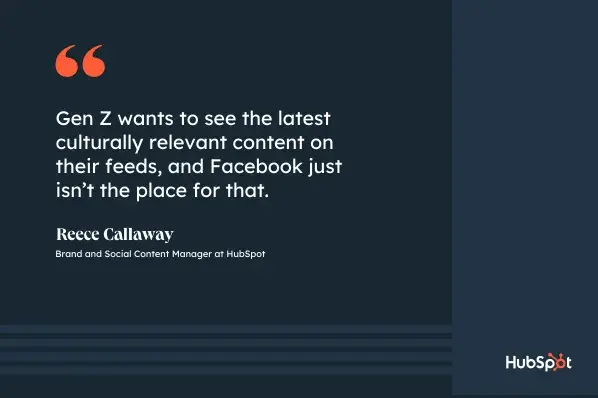
Gen Z seeks spaces that offer cultural relevance and discovery. When a platform is perceived primarily as a place for family updates or outdated memes, it struggles to capture the attention of a demographic that prioritizes dynamic, interest-based content. The struggle is not just about the interface; it is about the entire ecosystem of social interaction that has been built over the years.
The Need for Online Autonomy
Beyond content types, there is a deep-seated desire for autonomy in how younger users present themselves online. Justina Thompson, Associate Marketing Manager at HubSpot, notes that for many in her generation, Facebook was an environment where their presence was monitored by family members. This early association creates a barrier that is difficult to break.

This desire for “uncensored” and independent expression is why platforms like TikTok and Instagram have succeeded. These channels allow users to interact with content and communities based on shared interests rather than pre-existing real-world connections. The ability to build an identity where no one from your immediate circle is watching is a defining feature of the modern social experience.
Cultural Relevance and Discovery
Gen Z users often view social media as a search engine for trends, fashion, and lifestyle inspiration. They want to see content that is currently trending on a global scale. Facebook’s algorithm, which historically prioritized content from friends and family, often misses the mark for this demographic. Younger users are looking for a “for you” experience that feels curated by interests rather than social obligations.
When a platform fails to provide this discovery-based feed, it becomes a static archive rather than a living, breathing community. For Gen Z, the inability to find fresh, relevant content means they will quickly move to platforms that do. This creates a cycle where the platform becomes increasingly isolated from the cultural conversations that define the youth experience.
The Challenge of a Structural Rebrand
Can Facebook actually pivot to capture this audience, or is its reputation too cemented to change? While a revamp is theoretically possible, experts suggest that minor adjustments to the feed will likely fall short. The platform has 20 years of history to overcome, and that history currently frames it as a space for older users.

One potential area for leverage is Facebook Marketplace. Research indicates that social media is the primary channel for product discovery among Gen Z, and Marketplace has already gained traction as a functional, useful tool within the app. However, the platform is an amalgamation of disparate features, and these pieces must function as a cohesive unit to be competitive. TikTok, for instance, excels because its monetization and content features are integrated into the user experience rather than feeling like separate, bolted-on additions.
The Burden of Legacy
A major hurdle for any legacy platform is the weight of its own history. For Facebook, the brand identity is tied to the early 2000s, a time when the internet was a smaller, more intimate space. Gen Z, having grown up in a world of high-speed, algorithmically driven content, views this legacy as a limitation. They are not nostalgic for the early days of social media; they are focused on the efficiency and entertainment value of the present.
Overcoming this requires more than just a logo change or a new marketing campaign. It requires a fundamental shift in how the platform operates at a technical level. The user interface must move away from the cluttered, multi-functional design that appeals to older generations and toward a cleaner, more intuitive layout that prioritizes visual content and quick engagement.
Marketplace as a Gateway
While many Gen Z users avoid the social feed, they often find utility in Facebook Marketplace. This tool provides a clear value proposition: finding local items at a good price. If Facebook can lean into this utility—perhaps by integrating more social shopping features or improving the user experience for younger buyers—it could provide a “back door” into the ecosystem.
However, the risk is that users treat the app as a utility tool rather than a social network. To bridge this gap, the platform would need to find ways to weave social interaction into the shopping experience, perhaps by allowing users to share their finds or follow local sellers in a way that feels natural rather than forced.
The Future of Social Interaction
Facebook’s strategy to focus on Reels, creators, and the feed is a logical step toward aligning with current market trends. However, the success of this strategy rests on the platform’s ability to fundamentally understand that Gen Z priorities are shifting toward problem-solving and information access. The goal is to provide a space that feels like a discovery engine rather than a digital archive of personal connections.
![Can Facebook attract Gen Z, quote graphic, I think there is an opportunity for [Facebook] to rebrand themselves. However, they have 20 years of reputation to work against, Reece Callaway, Brand and Social Content Manager at HubSpot](https://53.fs1.hubspotusercontent-na1.net/hubfs/53/Quote%20Graphic%204%20-%20RC.webp?width=598&height=398&name=Quote%20Graphic%204%20-%20RC.webp)
For a platform to remain a leader in the social space, it must evolve alongside its users. While Facebook faces an uphill battle, its transition from a personal-connection app to a broader utility and discovery hub remains a critical case study in platform adaptation. Whether this is enough to win back the next generation remains to be seen, but the necessity for change is clear. The future of social media will likely be defined by those who can provide the most value while respecting the user’s need for authenticity and autonomy.
Actionable Steps for Platform Adaptation
To truly pivot, Facebook must consider several strategic shifts. First, it should prioritize the “discovery” aspect of the feed, allowing users to opt into interest-based content that is entirely separate from their friend list. This would allow for a more personalized experience that feels less like a reunion and more like a curated feed of interests.
Second, the platform must simplify its creator tools. Currently, the barrier to entry for creators on Facebook is higher than on TikTok. By making it easier for users to create, edit, and share high-quality video content, the platform can begin to build a new generation of creators who see it as a viable space for their work.
Long-Term Sustainability
Ultimately, the survival of any social media giant depends on its ability to attract new users. If Gen Z continues to view the platform as obsolete, the user base will eventually age out. The challenge is not just about winning over the current generation, but about establishing a brand identity that is flexible enough to appeal to the next one as well.
The path forward is likely not a total abandonment of the old, but a careful balancing act. By maintaining the features that provide real-world utility while aggressively innovating on the content discovery front, the platform may find a way to stay relevant. It is a difficult transition, but one that is essential for long-term survival in an increasingly crowded and competitive digital space.





