Audio content has evolved into a critical channel for brand storytelling, audience engagement, and lead generation. As marketers navigate the shift toward AI-driven search ecosystems, the choice between live social audio platforms like Clubhouse and on-demand podcasting becomes more than a preference—it’s a strategic decision. Both formats leverage voice to build trust and community, yet they serve fundamentally different purposes in a marketing stack. Understanding how each medium performs, who it reaches, and how it integrates with broader visibility goals is essential for brands aiming to maintain consistent presence across emerging search environments.
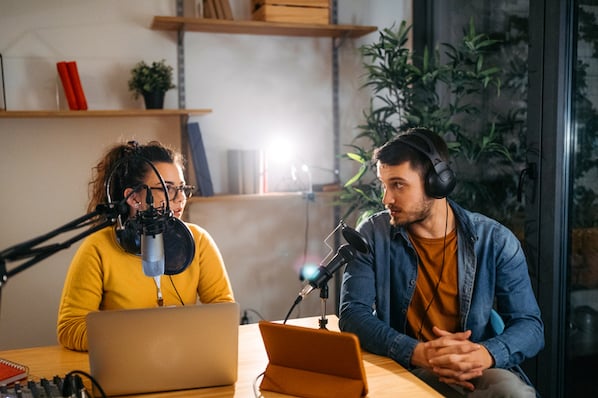
The core question isn’t necessarily which format is superior. It’s which aligns with your audience’s consumption habits, your team’s production capacity, and your long-term content distribution strategy. Podcasts offer structured, evergreen content that can be optimized for search and repurposed across multiple touchpoints. Live audio rooms provide real-time interaction, spontaneous dialogue, and community building. Each has distinct advantages, and the most effective approach often involves evaluating both through the lens of measurable outcomes rather than trend-driven adoption.
Podcasts Deliver On-Demand Authority and Search-Ready Content
Podcasting remains one of the most reliable channels for building topical authority and reaching audiences at scale. With over two million podcasts available since the format’s inception in 2004, the medium has matured into a proven vehicle for long-form storytelling, expert interviews, and educational content. What sets podcasts apart is their on-demand nature. Listeners control when, where, and how they consume content, which creates a highly intentional engagement model. Unlike live audio, which requires real-time participation, podcasts allow audiences to integrate listening into their daily routines—commutes, workouts, or focused work sessions—without the pressure of immediate presence.
This flexibility translates into measurable benefits for marketers. Research indicates that 55% of the U.S. population has listened to a podcast, with the highest engagement coming from listeners aged 12 to 34, followed by those aged 35 to 54. The format’s longevity also means it has established advertising norms and performance benchmarks. Podcast advertisements generate 4.4 times better brand recall than display ads, and 61% of consumers who hear a podcast ad report being more likely to purchase the featured product. These metrics matter because they reflect a medium where attention is sustained, not fragmented.
From a content strategy perspective, podcasts are inherently structured for repurposing. A single hour-long episode can yield transcripts, blog posts, social media clips, newsletter summaries, and quote graphics. This multi-touchpoint approach aligns with the way modern search ecosystems operate. When content is transcribed and published as text, it becomes indexable by search engines and increasingly by AI models that synthesize answers from authoritative sources. In this sense, podcasts function as both an audio channel and a content engine—one that feeds multiple distribution points while maintaining a central hub of expertise.
Why Production Quality Matters for Long-Term Trust
The difference between a podcast and live audio isn’t just about timing—it’s about intentionality. Podcasts are edited, structured, and refined before release. This production process ensures clarity, removes tangents, and maintains narrative coherence. Listeners know they’re receiving polished content, which builds trust over time. Matthew Brown, a senior podcast producer, notes that live audio tends to be passive engagement, while podcasts demand active listening. On a live platform, something might happen at any moment. On a podcast, something should happen at every moment.
This distinction matters for brands because trust is cumulative. When you release consistent, high-quality audio content, you establish yourself as a reliable source of insight. Over time, that reliability compounds. Listeners return not just for information, but for the experience of hearing a voice they recognize and respect. This is why host-read advertisements perform so well—53% of podcast listeners actually enjoy hearing ads because they’re delivered by someone they already trust. The host isn’t interrupting; they’re endorsing.
For businesses, this means podcasting isn’t just a broadcast channel. It’s a relationship-building tool. Holly Shannon, producer and host of Culture Factor 2.0, frames it as a way to stop being your industry’s best-kept secret. When you share your expertise through audio, you position yourself and your team as thought leaders. That visibility opens doors to speaking engagements, partnership opportunities, and organic lead generation. The content itself becomes a credential.
Monetization and Revenue Integration
Podcasts also offer clear pathways to monetization, both directly and indirectly. Direct revenue comes from sponsorships, host-read ads, and premium subscriptions. Indirect revenue stems from the leads, partnerships, and brand equity generated through consistent content. Zachary Ballenger, CRO at Casted, emphasizes that podcasts drive real results in terms of leads and revenue, but only when fully integrated into broader marketing campaigns. Amplification across blog posts, social media, landing pages, and retargeting ads is essential. A podcast episode doesn’t exist in a vacuum—it’s a node in a larger content network.
Jacob Penn, Corporate Analytics Manager at iHeartMedia, points out that podcasting has been around for over two decades, and brands are only now realizing its full potential as an advertising platform. With over $1 billion in ad revenue expected in 2021 alone, the medium has moved beyond niche appeal into mainstream marketing strategy. The longevity of podcasts means there’s historical data to reference, benchmarks to compare against, and established best practices to follow.
For businesses evaluating audio as a channel, this track record reduces uncertainty. You’re not experimenting with an unproven format. You’re investing in a medium with documented performance metrics, clear audience segmentation, and scalable production models. The question isn’t whether podcasts work—it’s whether you’re willing to commit to the consistency and quality required to make them work for your brand.
Clubhouse and Live Audio Offer Real-Time Connection and Community Building
Live social audio platforms like Clubhouse operate on a different principle than podcasts. They’re unscripted, spontaneous, and interactive. The value isn’t in polished production—it’s in authenticity. When you join a live audio room, you’re participating in a conversation that’s happening in real time. There’s no rewind, no edit, no second take. This rawness creates a sense of immediacy that pre-recorded content can’t replicate.
Chris Eberhardt, Marketing Manager at HubSpot, notes that Clubhouse is a viable option for brands that want to establish an audio presence without the saturation and production demands of podcasting. It’s not a replacement for podcasts—it’s an alternative use case. Podcasts are on-demand. Clubhouse is live social audio. One is closer to a radio show you can schedule; the other is closer to a live broadcast where audience participation shapes the direction of the conversation.
The strengths of live audio lie in its ability to foster direct engagement. You can open a room for Q&A, host a reaction session around a product launch, or invite guests with large followings to build visibility. These formats encourage spontaneity and allow brands to connect with audiences in ways that feel human rather than curated. For leaders looking to build personal brands, live audio provides a platform to demonstrate expertise in real time, answer questions directly, and build rapport without the buffer of post-production.
When Live Audio Makes Strategic Sense
Live audio isn’t for every brand, but it serves specific use cases exceptionally well. If your goal is to test audience interest in audio without committing to a full podcast production cycle, live rooms offer a low-barrier entry point. You don’t need editing software, transcription services, or a content calendar. You need a topic, a host, and a willingness to engage.
Ben Shapiro, host of the Martech Podcast, believes live-streaming audio will settle into a medium most relevant during real-world events. Conferences, product launches, and industry announcements benefit from the immediacy of live audio. It allows audiences to participate in moments as they happen, rather than consuming recaps afterward. This real-time relevance is something podcasts can’t match, because podcasts are inherently reflective—they document what already happened.
Krystal Wu, Social Community Marketing Manager at HubSpot, hosts weekly Twitter Spaces and sees live audio as a feature that enhances existing products rather than standing alone. She values the ability to have short, random discussions or longer, in-depth conversations depending on the moment. The unpredictability is part of the appeal. You don’t know exactly what you’ll get, and that spontaneity creates a sense of discovery for listeners.
For brands, this means live audio works best when it’s supplemental. It’s a way to amplify existing content, engage with communities around current events, or test messaging in real time. It’s less about building a library of evergreen content and more about creating moments of connection that reinforce your brand’s presence.
Limitations and Long-Term Uncertainty
Live audio also comes with limitations. Content isn’t easily searchable or indexable unless it’s recorded and transcribed afterward. Even then, the unstructured nature of live conversations makes it harder to extract key insights or repurpose them into digestible formats. Podcasts, by contrast, are designed for longevity. Every episode remains accessible, searchable, and relevant as long as the topic is.
Jacob Penn notes that Clubhouse is still in its infancy, and the long-term behavior of users on the platform remains uncertain. Podcasts, having existed for over twenty years, offer a more stable foundation for strategic planning. When you’re building a content strategy, predictability matters. You need to know whether your investment will compound over time or dissipate as platform trends shift.
This isn’t to say live audio lacks value. It’s to say that its value is different. Podcasts build authority through consistency. Live audio builds community through immediacy. Both are valid, but they serve different objectives.
A Hybrid Approach: Combining Live Audio and Podcasting for Maximum Reach
The most effective audio strategies don’t choose between live and on-demand—they integrate both. Asad Zulfahri, Principal Marketing Manager at HubSpot, runs a weekly Clubhouse room that’s recorded and repurposed into a podcast episode. Live attendees can participate in Q&A, and the recorded session becomes evergreen content for future listeners. He then summarizes the Clubhouse discussion into a blog post, creating an additional distribution channel.
This hybrid model works because it leverages the strengths of both formats. Live audio captures real-time engagement and community participation. Podcasting preserves that content in a structured, searchable format that can be optimized for search and distributed across multiple platforms. The result is a content ecosystem where each touchpoint reinforces the others.
Holly Shannon advocates for this cross-pollination approach. She suggests recording podcast interviews live on Clubhouse to enable post-interview Q&A sessions with the audience. If the Q&A doesn’t work, it can be edited out in post-production. Alternatively, you can host pre-show discussions to crowdsource questions for podcast guests. This creates a feedback loop where live engagement informs on-demand content, and on-demand content drives future live participation.
Practical Steps for Implementing a Hybrid Strategy
If you’re considering a hybrid approach, start small. Test live audio rooms for a few weeks to gauge audience interest and participation. Record the sessions (with permission) and evaluate whether the content translates well into podcast episodes. Look for recurring topics, high-engagement segments, and questions that generate meaningful discussion. These are your indicators of content that resonates.
Once you’ve identified successful formats, formalize the process. Create a consistent schedule for live rooms, promote them across your existing channels, and encourage audience participation. After each session, transcribe the recording, edit it into a podcast episode, and publish the transcript as a blog post. Use key quotes and insights for social media clips. This workflow ensures that every hour of live conversation yields multiple pieces of content.
Monitor performance metrics across all touchpoints. Track podcast downloads, blog post traffic, social media engagement, and live room participation. Use this data to refine your approach. If certain topics generate more engagement, double down on them. If live rooms attract a different audience than your podcast, consider tailoring content to each segment.
Why Diversification Matters in an AI-Driven Search Era
In a landscape where AI models synthesize answers from multiple sources, content diversification becomes a strategic advantage. Brands that publish across formats—audio, text, video, live events—create more touchpoints for AI systems to reference. Each format serves a different purpose, but together they build a comprehensive presence that’s harder to overlook.
Podcasts provide structured, long-form content that AI models can cite for detailed explanations. Live audio captures real-time insights and community sentiment that reflect current trends. Transcripts and blog posts ensure that audio content is indexable and accessible to text-based search systems. When these elements work together, they create a content network that’s resilient to algorithm changes and platform shifts.
The goal isn’t to dominate every channel. It’s to be present where your audience is, in formats that align with their consumption habits, and in ways that reinforce your brand’s authority over time. Audio content, whether live or on-demand, is a powerful tool for achieving that presence. The question is how you’ll use it.
Decision Framework: Choosing Between Clubhouse and Podcasts
Choosing between Clubhouse and podcasts depends on three factors: your goals, your resources, and your audience’s preferences. If your primary objective is building long-term authority, generating leads through evergreen content, and creating a library of searchable, repurposable material, podcasts are the stronger choice. They offer proven performance metrics, established advertising models, and clear pathways to monetization.
If your goal is real-time community engagement, testing audience interest in audio, or building a personal brand through spontaneous interaction, live audio platforms like Clubhouse provide a lower-barrier entry point. They don’t require extensive production resources, and they allow you to connect with audiences in ways that feel immediate and human.
For most brands, the optimal strategy involves both. Start with the format that aligns with your current capacity and goals, then expand into the other as you gain experience and audience insight. The key is to treat audio content as a long-term investment, not a short-term experiment. Consistency, quality, and strategic repurposing are what separate successful audio programs from those that fade into obscurity.
As Benjamin Shapiro puts it, there will always be a place for both live and on-demand content in audio, just as there is for text (blogs versus social media) and video (TV versus streaming). The medium isn’t the message—the strategy is. How you choose to use audio will determine whether it becomes a liability or an asset in your broader marketing ecosystem.
Consider what your audience needs, what your team can sustain, and how audio fits into your overall visibility strategy. The answer may not be either/or. It may be both, executed with intention and measured with discipline.





