What Is a Content Manager?
The content manager role is often misunderstood. Many assume it is simply a senior writing position, but the reality is far more strategic. A content manager is a professional who oversees the development, distribution, and lifecycle of a brand’s messaging. This involves coordinating teams, managing editorial calendars, and ensuring that every piece of content aligns with broader business objectives. It is a role that sits at the intersection of creativity, data analysis, and project leadership.

This position requires a unique blend of soft and hard skills. You are not just producing words; you are architecting a narrative that informs, engages, and converts audiences. The goal is to create content that does not just exist on a webpage but actively drives business results. Whether you are working for a startup where you wear many hats or a large enterprise with specialized teams, the core mission remains the same: to ensure the brand’s voice is consistent, relevant, and effective across all channels.
The Strategic Scope of the Role
Content managers are responsible for the big picture. They determine what to say, how to say it, and when to say it. This requires a deep understanding of the target audience and the competitive landscape. Unlike a content writer who focuses on individual pieces, a content manager looks at the entire ecosystem. They analyze performance metrics to see what is working and adjust strategies accordingly. This strategic oversight ensures that content efforts are not scattered but focused on achieving specific marketing goals.
Collaboration and Leadership
A significant part of the job involves leading projects and collaborating with other departments. You will work closely with designers, SEO specialists, product teams, and sales leaders. The ability to communicate clearly and manage expectations is crucial. You are often the bridge between creative ideas and business requirements. This means translating complex business goals into actionable content briefs and ensuring that the final output meets those standards. Leadership in this context is about guiding the process, not just managing people.
What Does a Content Manager Do Daily?
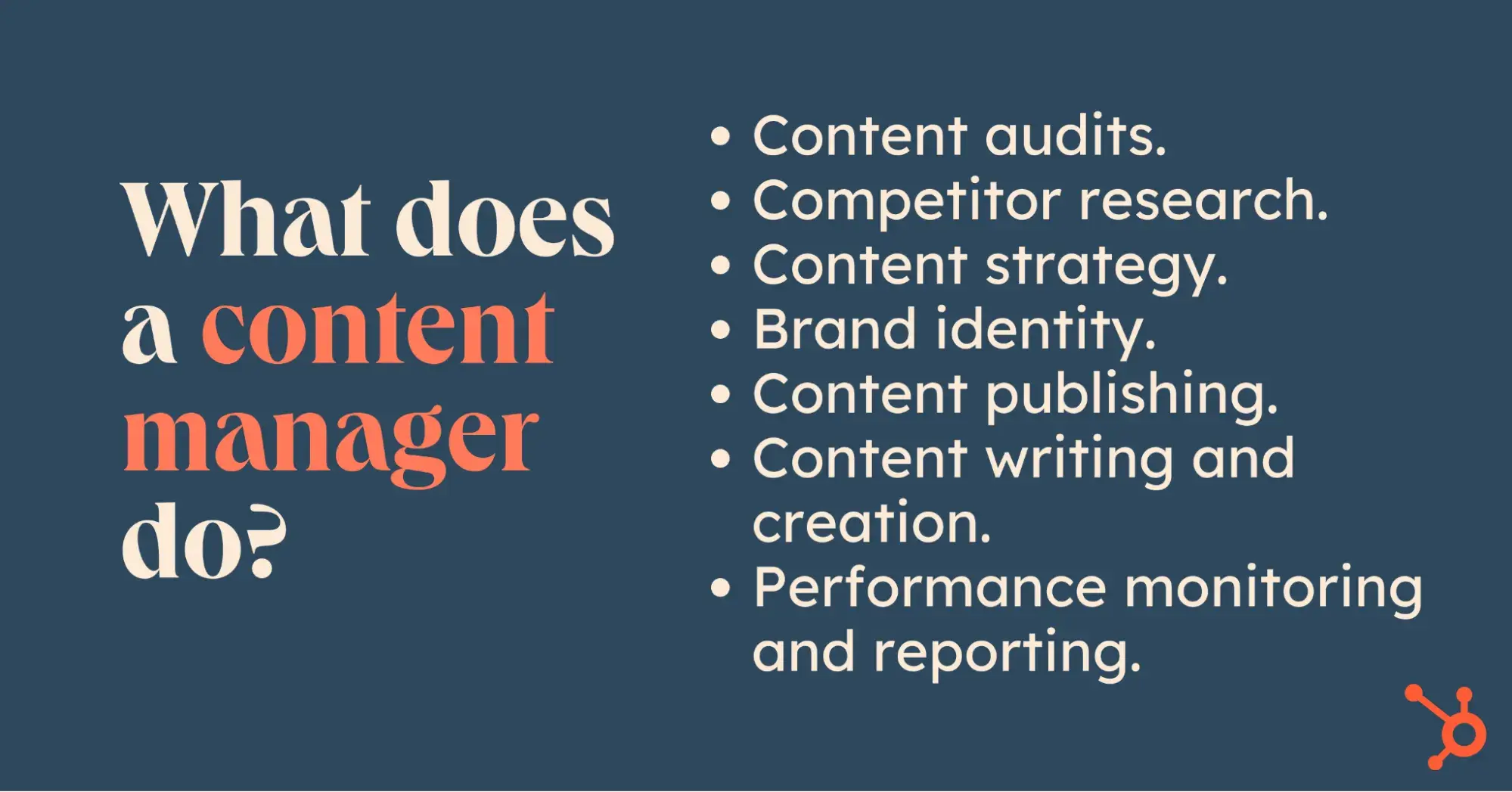
The day-to-day responsibilities of a content manager vary depending on the company size and industry. However, certain core tasks remain consistent. These include auditing existing content for relevance and quality, researching competitors to identify gaps, and developing new content strategies. You will also be responsible for creating and maintaining editorial calendars, which serve as the roadmap for all content production. This planning ensures a steady flow of high-quality material that keeps the audience engaged.
Another key responsibility is managing the distribution of content. This involves overseeing social media channels, email newsletters, and the company website. You need to ensure that content is published on time and optimized for each platform. This might involve tweaking headlines for social media or adjusting formatting for web readability. The role also includes monitoring performance through analytics tools. By tracking metrics like page views, click-through rates, and conversion rates, you can measure the success of your content and make data-driven decisions for future campaigns.
Content Audits and Optimization
Regular content audits are essential for maintaining a healthy digital presence. This involves reviewing existing assets to ensure they are up-to-date, accurate, and aligned with the current brand voice. Outdated or irrelevant content can harm search engine rankings and user experience. By identifying these gaps, you can prioritize updates or removals. This process also helps in discovering opportunities to repurpose high-performing content into new formats, such as turning a blog post into a video or an infographic.
Cross-Functional Coordination
Content managers act as the central hub for content-related activities. You will coordinate with various stakeholders to ensure that projects move forward smoothly. This might involve briefing writers on new topics, working with designers on visual assets, or collaborating with the development team on website updates. Effective project management is key here. You need to keep track of deadlines, manage resources, and resolve any bottlenecks that arise. This coordination ensures that content is delivered on time and meets quality standards.
Essential Skills for Content Managers
To succeed in this role, you need a diverse skill set. SEO copywriting and blogging are foundational, but you also need strong data analysis skills. Understanding how to interpret metrics and use them to guide your strategy is crucial. Basic coding knowledge, particularly in HTML and CSS, can be beneficial for making quick tweaks to content without relying on developers. Proficiency with content management systems (CMS) like WordPress or HubSpot is also expected. These platforms are the backbone of content distribution, and you need to be comfortable navigating them.
Strategic planning is another critical skill. You need to be able to develop long-term content strategies that align with business goals. This involves understanding the customer journey and creating content that addresses needs at each stage. Time management and organization are equally important. With multiple projects and deadlines, you need to stay on top of everything. Leadership skills are also necessary, especially if you are managing a team. You need to be able to motivate others, provide constructive feedback, and foster a collaborative environment.
SEO and Data Literacy
SEO is not just about keywords; it is about understanding user intent and providing value. As a content manager, you need to know how to conduct keyword research, optimize on-page elements, and build internal links. Data literacy goes hand-in-hand with this. You should be familiar with tools like Google Analytics, Search Console, and SEO platforms like Ahrefs or SEMrush. These tools provide insights into how your content is performing and where there is room for improvement. By combining SEO expertise with data analysis, you can create content that ranks well and drives traffic.
Technical Proficiency
While you do not need to be a developer, basic technical skills can set you apart. Knowing HTML and CSS allows you to make minor adjustments to formatting, fix broken links, or update metadata without waiting for IT support. This agility can speed up workflows and reduce dependencies. Familiarity with CMS platforms is also essential. You should know how to upload content, manage media libraries, and configure settings. Some platforms offer advanced features like personalization or A/B testing, which can enhance the user experience if used correctly.
Types of Content Managers
The content manager title can encompass various specializations. Social and community content managers focus on building engagement on platforms like LinkedIn, Twitter, and Facebook. They are responsible for creating platform-specific content and fostering online communities. Website content managers oversee the entire site, ensuring that navigation is intuitive and content is optimized for user experience. Editorial content managers manage the writing process, from ideation to publication, maintaining quality and consistency.
Marketing content managers take a broader view, aligning content with overall marketing campaigns. They work on lead generation, brand awareness, and customer retention. Technical documentation managers specialize in creating user guides, API references, and other technical materials. They collaborate closely with product teams to ensure accuracy and clarity. Ecommerce content managers focus on product pages, optimizing descriptions and images to drive conversions. Each of these roles requires a unique set of skills and a different perspective on content.
Specialized Roles and Responsibilities
| Role | Primary Focus | Key Responsibilities |
|---|---|---|
| Social Content Manager | Community Engagement | Create social posts, respond to comments, manage crises |
| Website Content Manager | User Experience | Update site content, optimize navigation, manage CMS |
| Editorial Manager | Quality Control | Edit articles, manage writers, enforce style guides |
| Marketing Content Manager | Campaign Alignment | Develop strategies, track ROI, collaborate with sales |
| Technical Doc Manager | Clarity & Accuracy | Write user guides, work with dev teams, maintain version control |
| Ecommerce Content Manager | Conversion Optimization | Write product descriptions, manage catalogs, optimize images |
Choosing the Right Path
Your choice of specialization depends on your interests and strengths. If you enjoy interacting with people and building relationships, social content management might be a good fit. If you are detail-oriented and love structure, editorial management could be ideal. For those interested in data and business results, marketing content management offers a strategic challenge. Technical documentation is suited for those who can explain complex concepts simply. Ecommerce content management requires a blend of creativity and sales acumen. Understanding these distinctions can help you tailor your career path.
How to Become a Content Manager
Becoming a content manager is a journey that often starts with entry-level roles. Many professionals begin as content writers, marketing coordinators, or social media assistants. These positions provide foundational experience in content creation and digital marketing. From there, you can take on more responsibility by leading projects or managing small teams. Gaining proficiency in SEO, analytics, and CMS platforms is crucial. Consider taking certification courses in content marketing to formalize your knowledge. Building a portfolio of work is also important. This could include a personal blog, freelance projects, or case studies from previous roles.
Networking and continuous learning are key. Attend industry events, join online communities, and stay updated on the latest trends. The digital landscape is constantly evolving, and you need to adapt. Seek feedback from mentors and peers to improve your skills. Over time, as you demonstrate your ability to drive results and lead projects, you will be positioned for a content manager role. It is about building a track record of success and showing that you can handle the strategic aspects of content.
Building Your Foundation
Start by mastering the basics of content creation. Learn how to write compelling headlines, structure articles for readability, and optimize for search engines. Experiment with different formats, such as video, podcasts, and infographics. Understand the principles of user experience and design. As you gain confidence, take on more complex projects. Volunteer to manage the editorial calendar or lead a content campaign. This hands-on experience will teach you how to balance creativity with strategy and how to work with cross-functional teams.
Advancing Your Career
To move into a management role, you need to demonstrate leadership potential. This means taking initiative, solving problems, and mentoring others. Show that you can think strategically by proposing new ideas and measuring their impact. Develop your communication skills to effectively present your ideas to stakeholders. Build relationships with key decision-makers in your organization. When you apply for a content manager role, highlight your achievements and the value you have brought to previous projects. Use data to support your claims and show how you have contributed to business goals.
Success Factors in Content Management
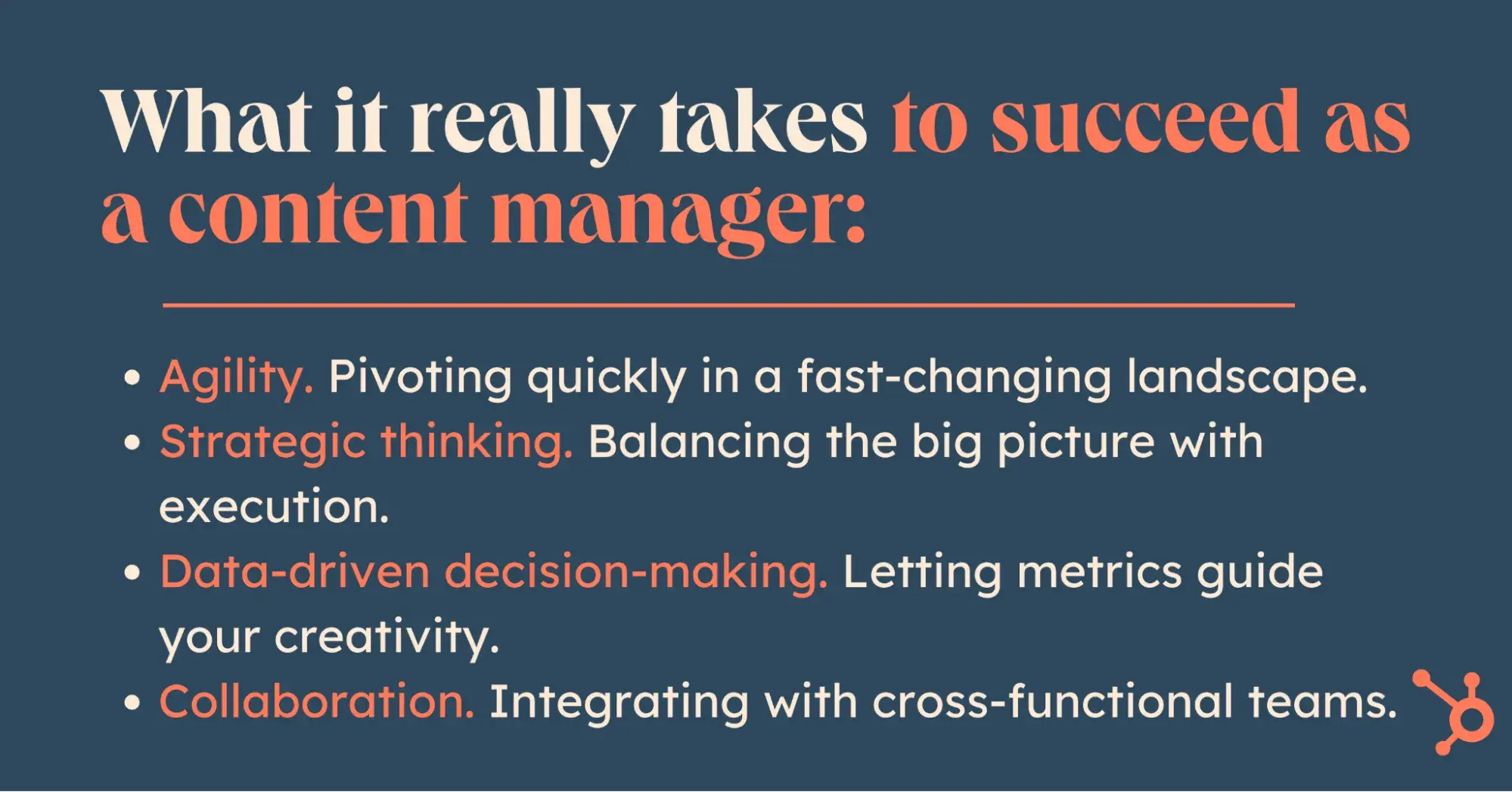
Agility is one of the most important traits for a content manager. The digital world changes rapidly, with new platforms, algorithms, and trends emerging constantly. You need to be able to pivot quickly and adjust your strategy as needed. Strategic thinking is also crucial. You should always be looking at the big picture and ensuring that your content aligns with long-term business objectives. Data-driven decision-making is another key factor. Use metrics to guide your choices and prove the effectiveness of your efforts. Collaboration is essential. Work closely with other teams to ensure that content is integrated into all aspects of the business.
Adapting to Change
Agility means being comfortable with uncertainty and ready to experiment. Try new formats, test different messaging, and explore emerging channels. Monitor industry news and competitor activities to stay ahead of the curve. When something is not working, be willing to change course. This flexibility allows you to capitalize on new opportunities and mitigate risks. It also helps you maintain relevance in a crowded digital landscape.
Strategic Alignment
Your content should always serve a purpose. Whether it is to educate, entertain, or persuade, each piece should contribute to a larger goal. Define clear objectives for your content strategy and communicate them to your team. Regularly review your progress and adjust as needed. Ensure that your content is consistent with your brand voice and values. This strategic alignment ensures that your efforts are cohesive and impactful.
The Future of Content Management
As artificial intelligence and generative search evolve, the role of the content manager is shifting. Tools like AEO/GEO are changing how content is created, optimized, and distributed. The focus is moving towards creating content that is not just human-readable but also AI-ready. This means structuring content in ways that AI engines can easily understand and cite. Content managers need to stay informed about these technological advancements and integrate them into their workflows. The future will likely involve more automation, but the human touch will remain essential for strategy, creativity, and empathy.
Embracing AI and Automation
AI tools can help with research, drafting, and optimization, freeing up time for higher-level strategic work. However, they cannot replace the need for human judgment and creativity. Content managers will need to curate and refine AI-generated content to ensure it meets quality standards and aligns with brand voice. They will also need to understand how to optimize content for generative search engines, which prioritize authoritative and well-structured information. This requires a new set of skills and a willingness to learn.
The Human Element
Despite the rise of technology, the human element remains crucial. Content is about connecting with people, and that requires empathy, understanding, and storytelling. AI can assist, but it cannot replicate the nuances of human communication. Content managers will need to focus on building trust and engagement with their audience. They will also need to manage the ethical implications of AI, ensuring that content is accurate, unbiased, and respectful. The future of content management is a blend of technology and humanity.
Final Thoughts
The content manager role is dynamic and multifaceted. It requires a balance of creativity, strategy, and technical skill. Whether you are just starting out or looking to advance your career, there are many paths to success. By building a strong foundation, developing key skills, and staying adaptable, you can thrive in this field. The landscape is constantly changing, but the core principles of creating valuable, relevant content remain the same. Embrace the challenge, stay curious, and keep learning.
Taking the Next Step
If you are considering a career in content management, start by assessing your current skills and identifying areas for improvement. Take courses, build a portfolio, and seek out opportunities to gain experience. Network with other professionals and learn from their insights. Remember that every content manager’s journey is unique. There is no single right way to succeed. Focus on providing value, solving problems, and driving results. With dedication and perseverance, you can build a rewarding career in content management.
Reflection on the Role
The role of the content manager is evolving, but its importance is only growing. As businesses increasingly rely on digital channels to reach their audience, the need for skilled content professionals is higher than ever. By understanding the strategic scope of the role and developing the necessary skills, you can position yourself for success. The future of content is bright, and there are many opportunities for those who are willing to adapt and innovate. What aspect of content management interests you the most, and how do you plan to develop your skills in that area?





