Ethical Intent Mapping: Building Trust in AI Chatbots
You have likely experienced the near-instant gratification of a chatbot that seems to read your mind, resolving your technical issue before you even finish typing the second sentence. For businesses, this speed is the gold standard of efficiency—a way to route inquiries and resolve problems without human intervention. Yet, beneath that slick, automated surface lies a more personal reality: your data. Every query you input is being analyzed, tagged, and funneled into a database, leaving a digital footprint that grows with every interaction.
As a business owner or marketer, you face a delicate balancing act. While you need effective chatbot intent mapping to provide relevant service, you must also address the growing anxiety users feel about their privacy. Your customers aren’t just looking for quick answers anymore; they are looking for reassurance that their data is being handled with respect. Developing an AI Content Strategy for the AI Era means recognizing that technical efficiency is only half the equation. Intent mapping serves as the vital bridge between your operational success and the ethical stewardship of user information. By prioritizing transparency and restraint, you transform your automated tools from simple data-collection machines into trusted assistants, proving that deep technical capability and genuine user trust can thrive side-by-side.
Beyond Classification: The Ethics of Understanding Intent
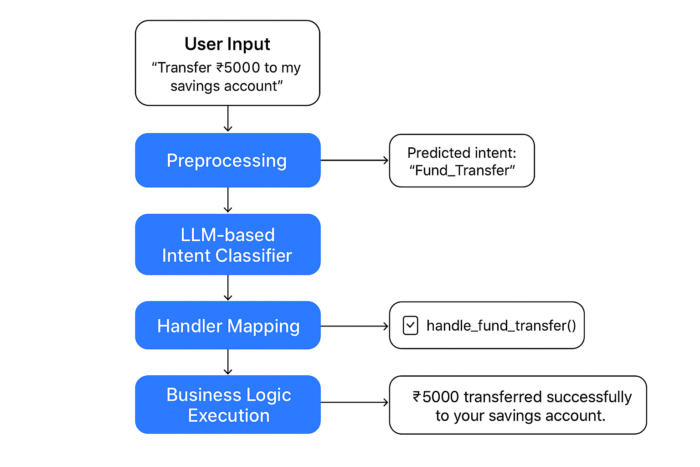
Intent mapping acts as the backbone of your AI Content Strategy for the AI Era. At its most basic level, intent mapping is simple command routing—the digital equivalent of a receptionist directing a phone call to the right department. However, as AI models become more sophisticated, they shift from merely routing requests to building detailed user profiles. When a chatbot remembers that a user frequently asks about budget-friendly sneakers or specific software troubleshooting steps, it moves beyond a single interaction and begins to form a persistent behavioral narrative. This transition from functional routing to long-term profiling is where businesses must tread carefully.
The Thin Line Between Personalization and Intrusion
Modern ethical AI practices require a clear distinction between helpful personalization and intrusive data tracking. Personalization feels like a superpower when it anticipates a customer’s needs, such as a bot proactively offering a discount on an item a user previously searched for. Conversely, it becomes intrusive when the user feels like they are being watched or analyzed in ways they didn’t authorize. The risk here is that by attempting to optimize for convenience, businesses might accidentally erode the very user trust in AI they worked so hard to build. If a user feels their private preferences are being harvested for background analysis without a clear, immediate benefit, they will likely disengage from the tool entirely.
Transparency as a Foundation for Trust
True integrity in chatbot intent mapping depends on radical transparency. Do your users know that their intent—the specific “why” behind their questions—is being captured, analyzed, and stored? In many cases, users assume their conversation is ephemeral, existing only for the duration of that specific session. If you store these intents to build a long-term profile, you have an ethical obligation to state this clearly.
Transparency isn’t just a legal requirement under frameworks like GDPR or CCPA; it is a vital part of your brand identity. By clearly explaining what data is stored and why it benefits the user, you transform a potentially “creepy” data-collection practice into a mutually beneficial partnership. When users understand that sharing their intent allows the AI to serve them faster, provide more accurate recommendations, or save them from repeating themselves, they are far more likely to feel comfortable participating in your data ecosystem. Honest communication turns a technical necessity into a genuine point of customer loyalty.
Privacy-by-Design in Your Intent Taxonomy
Designing a chatbot shouldn’t feel like a digital scavenger hunt for user secrets. When you build your classification structure, you have to decide what matters: are you trying to identify the person, or are you trying to identify the problem? True privacy-by-design means choosing the latter. By stripping away identifiers early in your chatbot intent mapping process, you protect your users while still providing the helpful, targeted responses they expect.
The Shift in Data Philosophy
Traditional approaches to intent often blurred the lines between helpful analytics and excessive surveillance. Moving toward privacy-first AI requires a fundamental change in how you structure your database. The goal is to move from storing specific user journeys to analyzing aggregated patterns that help your system learn without remembering.
| Feature | Traditional Data Collection | Privacy-First Intent Mapping |
|---|---|---|
| Data Focus | Full user profile & history | Anonymized goal classification |
| Retention | Permanent storage | Ephemeral or session-based |
| PII Handling | Aggressively logged | Actively masked/redacted |
| Goal | Granular personalization | Actionable service resolution |
Prioritizing Data Minimization
Data minimization is the backbone of robust data governance for chatbots. It is the simple, yet often ignored, rule that you should only collect the data necessary to solve the specific request at hand. If a user asks, “What are your shipping rates?” you don’t need their email address, their purchase history, or their location to answer them.
Ask yourself: “If this data disappeared tomorrow, would my chatbot still be able to help the user?” If the answer is yes, then you don’t need to store it in your intent taxonomy. By keeping your data collection lean, you reduce your legal liability and build genuine user trust in AI.
Structuring Taxonomies to Avoid PII
When creating your classification labels, you can inadvertently trap sensitive information if your system isn’t tuned correctly. To prevent capturing PII, follow these structural guidelines:
- Use Generic Placeholders: Replace specific variables in your logs. Instead of saving the raw text “I need help with order #12345,” store the intent as “Help_Order_Status” and scrub the specific numeric identifier before it ever hits your database.
- Set Hard Filters at the Ingestion Layer: Implement automated scrubbing tools that scan for patterns like email addresses, phone numbers, or credit card digits before they are categorized by your intent engine.
- Decentralize User Context: Store user-specific data in a separate, encrypted vault that the intent model only accesses when absolutely required for verification, ensuring that your intent logs remain purely functional and devoid of identity markers.
By focusing on these technical barriers, you ensure that your AI Content Strategy for the AI Era remains focused on providing value rather than harvesting information. When you build your system to forget the “who” and focus only on the “what,” you create an experience that feels safe, professional, and entirely respectful of your customer’s digital boundaries.
The Lifecycle of Intent Data: From Consent to Disposal
Treating intent data as a permanent asset is a dangerous trap. In an effective AI Content Strategy for the AI Era, intent information must be managed through a strict, finite lifecycle—from the moment a user initiates a conversation until the data is securely purged. Failing to implement a “sunset policy” for this data essentially turns your customer intelligence into a liability that accumulates security risks over time.
Mapping the Data Journey
The lifecycle of intent data should be governed by a principle of “temporal relevance.” Every time a user interacts with your chatbot, the system extracts an intent. This data remains useful only as long as it serves the immediate context of that specific user journey. Once the interaction concludes, the metadata should be anonymized or discarded.
- Collection: Capture only the specific intent marker needed for routing or resolution.
- Processing: Analyze intent in real-time within a volatile memory environment to minimize persistent storage footprints.
- Retention: Establish a hard limit (e.g., 30 days) for how long intent logs remain linked to user profiles.
- Disposal: Execute automated, irreversible deletion scripts that purge logs from primary databases and backup environments.
The Peril of Intent Memory
Many businesses fall into the trap of “intent memory,” where long-term profiles are built based on historical chat logs. While this might seem like a way to offer more personalized service, it creates massive security vulnerabilities. Storing long-term intent profiles effectively builds a detailed map of a user’s evolving needs, worries, and preferences. If your servers are compromised, this data provides a goldmine for bad actors looking to target your customers with sophisticated phishing or identity theft.
By keeping intent profiles ephemeral, you drastically reduce your attack surface. A privacy-first AI approach prioritizes security by ensuring that even in the event of a breach, there is no “treasure chest” of sensitive user intent histories to steal.
Implementing the Right to be Forgotten
When deploying AI, it is not enough to simply have a privacy policy; you need technical mechanisms to honor the “Right to be Forgotten.” This is particularly complex within AI logs, where intent data may have been used to refine machine learning models.
To ensure your data governance for chatbots is truly robust, you must distinguish between functional interaction logs and training data. If a user exercises their right to have their data deleted, your system must be able to:
- Identify and remove specific user identifiers from the interaction history.
- Flag that specific conversation thread as ineligible for future model training.
- Provide an audit trail confirming that the deletion was successful across all distributed nodes.
Ignoring these requirements when building your chatbot can lead to significant compliance headaches and, more importantly, a breakdown in user trust in AI. By treating user intent as a temporary, guarded resource rather than a permanent store of information, you demonstrate that your business respects boundaries, securing both your data and your reputation.
Building a Compliance-First Governance Framework
Establishing a robust governance framework is the backbone of any responsible AI Content Strategy for the AI Era. When your chatbot begins interpreting complex user intents, you aren’t just processing text; you are managing sensitive digital interactions. A compliance-first approach ensures that your system remains a helpful tool rather than a liability, directly strengthening user trust in AI.
Internal Review Checklist for AI Intent Models
Before deploying or updating an intent model, your team should execute a standardized audit to ensure ethical alignment. This checklist helps you maintain accountability at every stage of the development cycle:
- Taxonomy Validation: Does the intent categorization exclude sensitive demographic or medical data?
- Bias Mitigation: Have you tested your intent models against diverse user linguistic patterns to ensure equitable service?
- Transparency Verification: Is the user clearly informed that their intent is being analyzed to improve service quality?
- Access Control: Who has permission to view raw intent logs, and how is that data anonymized for researchers?
- Regulatory Mapping: Does your intent processing align with regional mandates like GDPR or CCPA requirements?
The Role of Human-in-the-Loop Auditing
While automation is excellent for speed, high-risk intent categories require the steady hand of human oversight. If your chatbot intent mapping involves sensitive topics—such as financial guidance, health inquiries, or complex customer disputes—the machine should be programmed to flag these interactions for human review. This “Human-in-the-Loop” methodology acts as a safety net, ensuring that nuances in human emotion and intent are not misinterpreted by an algorithm. By keeping a human auditor involved, you reduce the risk of harmful AI behavior and create a feedback loop that trains your model to recognize edge cases that typically confuse automated systems.
Launching an Ethical Intent Scorecard
To evaluate how your technology impacts user loyalty over time, implement an “Ethical Intent Scorecard.” This tool goes beyond traditional performance metrics like response latency or conversion rates. It quantifies the moral health of your digital interface.
| Scorecard Metric | Objective | Success Indicator |
|---|---|---|
| Data Minimization | Limit PII capture | No personal data stored in logs |
| Intent Clarity | Reduce user confusion | High sentiment score in follow-ups |
| Transparency Level | Educate the user | User opt-in rates and engagement |
| Bias Detection | Ensure fairness | Zero reported discriminatory outputs |
By tracking these scores quarterly, you can pinpoint where your privacy-first AI strategy may need adjustment. Consistently monitoring your chatbot’s impact allows you to pivot before a minor technical error evolves into a significant breach of trust. Integrating these governance practices ensures that your operations remain sustainable and ethically sound, keeping you ahead in the competitive landscape of modern digital engagement.
The competitive edge in today’s digital marketplace is no longer found in raw technical power alone. While developing a sophisticated AI Content Strategy for the AI Era requires high-level engineering, the ultimate winners will be those who anchor their operations in unwavering moral integrity. By shifting your perspective from purely optimizing for conversion to genuinely protecting your users, you transform your AI tools into engines of authentic connection.
Technological superiority can attract an initial audience, but it is ethical consistency that secures their long-term loyalty. When you treat user data with respect and prioritize transparency in chatbot intent mapping, you build a reservoir of trust that your competitors will find impossible to replicate. Users are increasingly savvy about their digital footprint, and they are quick to abandon platforms that sacrifice their privacy for the sake of granular profiling.
Commit to a privacy-first AI philosophy. Treat every interaction as a sacred exchange of value rather than a data-mining opportunity. Those who master the balance between helpful automation and ethical stewardship will define the next generation of customer relationships. The most successful AI is one that users feel safe inviting into their lives, knowing their intentions remain their own.
AEO/GEO
Want to learn more?
Contact us for direct consultation and support.