Beyond SEO: Understanding the Shift to Generative Engine Optimization (GEO)
The digital landscape is undergoing a permanent transition. Traditional SEO was built on the foundation of link-based ranking and keyword frequency, where the goal was to drive traffic via blue links. In the era of generative AI, that paradigm is obsolete. We are moving toward Generative Engine Optimization (GEO)—a framework centered on citation-based authority.
In this new environment, LLMs do not simply provide a list of URLs; they synthesize information to create authoritative answers. Traditional metrics like “keyword ranking position” or “organic traffic volume” are lagging indicators that fail to capture your brand’s actual influence within an AI-generated summary. To win, you must optimize for the LLM’s ability to cite your brand as the primary source of truth.
The 5 Pillars of AI Search Visibility: Building an Authoritative Entity
To secure consistent visibility in AI search, you must architect your digital presence around how LLMs ingest and verify data.
- Technical Foundation for LLM Indexing: Your infrastructure must be crawlable and optimized for semantic extraction, ensuring LLMs can cleanly parse your data without noise.
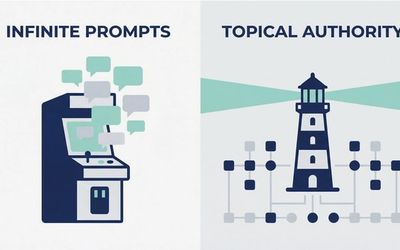
- Strategic Content Density and Depth: Shift from keyword-focused pages to comprehensive topic hubs that cover the breadth and depth of a user’s intent.
- Entity Authority and Knowledge Graph Positioning: Clearly define your brand, products, and industry entities so they are mapped accurately within global knowledge graphs.
- Citation Density and Trust Signals: Build high-trust, verifiable evidence across the web that compels an LLM to select your content as a verified source.
- Multi-LLM Alignment Strategies: Content must be consistent across different foundational models, ensuring your brand message remains coherent regardless of which AI engine a user queries.
The 100-Day GEO Implementation Roadmap
Transitioning to a generative-first strategy requires a systematic approach to technical and content transformation.
- Phase 1: Baseline Audit (Days 1-30): Conduct a deep-dive analysis into your current AI citation footprint. Identify which entities the LLMs currently associate with your brand and where visibility gaps exist.
- Phase 2: Content Restructuring & Entity Optimization (Days 31-60): Audit your content architecture. Pivot to a topic-cluster model, implement advanced entity-based schema markup, and refine content to provide direct, synthesis-ready answers.
- Phase 3: Citation Velocity & Pilot Campaigns (Days 61-100): Launch high-authority content initiatives designed to generate verifiable citations across diverse digital channels, tracking the resulting uplift in generative answer placement.

Measurement and Revenue-Focused Attribution Models
Stop measuring impressions and start tracking your citation scorecard. This moves your strategy from a branding exercise to a revenue-growth channel.
- Citation Scorecards: Track the frequency and quality of your brand mentions within AI-generated responses across multiple LLMs.
- Revenue Attribution: Connect AI visibility to CRM data to understand how generative search presence moves prospects through your B2B buyer journey or accelerates ecommerce sales.
- Sponsored Search as an Amplifier: Use paid media strategically to seed content in the ecosystem, creating the initial momentum needed for organic AI citations to take over.
Industry Playbook: Tailoring GEO for Growth-Driven Sectors
AI visibility is not one-size-fits-all. Different sectors require distinct tactical pivots to ensure trust and relevance.
- Ecommerce Strategies: Focus on product-entity relationships and supply-chain transparency to dominate AI-driven shopping comparisons.
- B2B/SaaS Trust Building: Establish high-level whitepapers and research-backed assets as the foundational data sources that LLMs use to advise enterprise buyers.
- Mitigating Hallucinations: Use brand-controlled data feeds and structured schema to supply the “ground truth” that limits AI inaccuracy, ensuring your brand stays the reliable authority.
 }};
}};