The Shift from Reactive AI to Agentic Value Creation
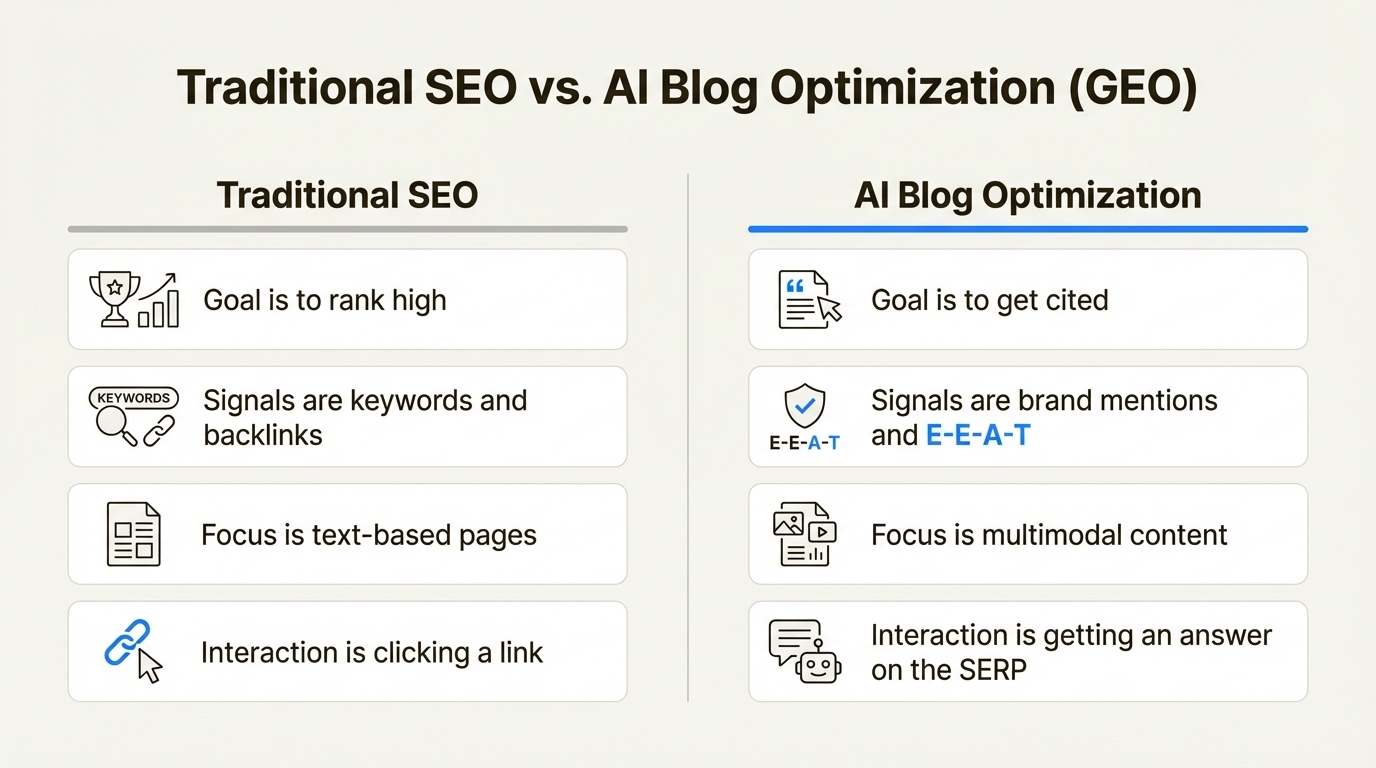
The digital landscape has transcended the era of static search. We are moving away from a model where content is merely “ranked” and toward a paradigm where content must be “processed and utilized.” For the modern enterprise, this transition requires shifting from reactive, keyword-driven content generation to agentic, outcome-based AI.
Businesses often mistakenly view generative AI as a faster way to produce traffic-driving assets. This is a fundamental strategic error. True visibility in the AI era is not about winning a slot in a list; it is about becoming a foundational input for AI reasoning. By adopting a problem-first product philosophy, organizations must focus on how their content solves specific user hurdles within the LLM’s own decision-making process. The objective is to stop chasing algorithmic updates and start delivering the proprietary data and insights that AI agents rely upon to serve the end user.
Pillars of an AI-Centric Content Framework
Transitioning to an AI-native organization requires more than just new tools; it demands a shift in operational culture. The primary competitive advantage in generative search is not the volume of content, but its data integrity and trust.
- Trust as a Competitive Moat: In a flood of synthetic information, AI models are increasingly weighted toward high-integrity, verified sources. Accuracy is the new currency.
- Compliance as Design: Operating within frameworks like the EU AI Act should be viewed as a foundational design requirement. When content governance is baked into the development lifecycle, it creates an inherent safeguard that LLMs prioritize during content synthesis.
- Syndication Infrastructure: Scalable visibility requires an infrastructure that treats content as a structured, machine-readable asset, allowing for consistent distribution across disparate generative search ecosystems.
The Portfolio Effect: Leveraging Network-Based Knowledge Sharing
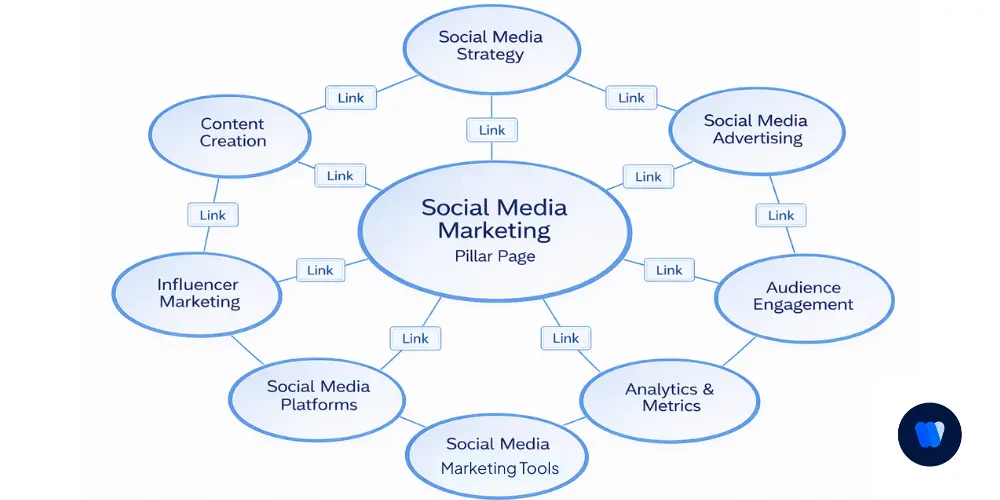
Silos are the death of AI effectiveness. When content strategy is disconnected from organizational knowledge, the result is fragmented, low-authority output. To truly scale, enterprises must adopt a centralized AI-readiness model.
By integrating departmental expertise—from engineering documentation to customer success insights—into a unified knowledge graph, companies create a “Portfolio Effect.” This strategy allows the collective knowledge of the business to train and ground AI agents, ensuring that every piece of content supports the authority of the entire portfolio. This holistic approach prevents redundancy and ensures that the organization acts as a singular, trusted voice within the generative search environment.
Operationalizing Governance in AI-Driven Environments
As companies scale, the reliance on automation grows, making governance the most critical factor in maintaining brand equity. Scaling AI content does not mean abdicating responsibility to an algorithm.
Executives must implement rigorous guardrails that enforce brand voice and accuracy at every stage of the pipeline. The goal is to balance the efficiency of automated scale with human-centric quality benchmarks. This requires an operational model where AI handles the heavy lifting of semantic structuring and distribution, while human-led oversight ensures that the outputs remain aligned with the company’s strategic goals and long-term values.
From Strategy to Execution: The Future of Agentic Visibility
The end-state of this transformation is autonomous visibility. The AEO/GEO platform is designed to facilitate this shift, moving businesses away from vanity search metrics and toward measuring tangible organizational impact.
By closing the gap between user intent and business outcomes, our platform empowers teams to stop guessing what search engines want and start delivering the precise, ground-truth answers that AI systems require. Success in the generative age is measured by your influence on the user’s journey—ensuring that when AI agents are tasked with solving a problem, your expertise is the indispensable, verified answer they provide.