The Evolution of Generative AI in Marketing
The initial wave of generative AI adoption was defined by speed and individual experimentation. When ChatGPT first surged to 100 million daily active users within two months, the primary focus for marketers and sales teams was efficiency. Teams used large language models (LLMs) to draft emails, generate ad copy, and create talking points on an ad-hoc basis. This first wave was characterized by a “time-saving” mindset, where the technology was a personal assistant for repetitive tasks.

However, the real potential of generative AI lies beyond simple productivity hacks. As we move into the second and third waves of adoption, the focus is shifting from individual efficiency to organizational transformation. The second wave involves team-based, planned integration of AI to add value to core processes. The third wave, which is the ultimate goal for forward-thinking organizations, is transformational. It demands organization-wide adoption, continuous learning through iterative feedback loops, and the reshaping of capabilities to become deeply customer-centric.

Generative AI is becoming a tool for enhanced customer-centricity. With less money, time, and specialized expertise than ever before, organizations can now listen to their customers at scale. They can develop actionable insights from vast amounts of qualitative data and engage with audiences in ways that drive genuine growth and profitability. At AEO/GEO, we believe that the greatest application of generative AI is not just content creation, but deep customer understanding. By embedding AI into the fabric of your strategy, you can support human insight creation and predict what works in audience engagement with greater accuracy.
| Wave | Who? | How? | Why? |
|---|---|---|---|
| Wave 1 | Individual | Ad-Hoc | Saving time |
| Wave 2 | Team | Planned | Adding value to processes |
| Wave 3 | Organization | Continuous Learning | Transforming processes |
The transition from Wave 1 to Wave 3 is not automatic. It requires overcoming organizational inertia, addressing employee concerns about job security, and navigating data privacy and security constraints. It also demands a shift in mindset: from viewing AI as a content generator to viewing it as a customer intelligence engine. The companies that succeed will be those that accelerate this transition strategically, using AI to build a more holistic and responsive connection with their audience.
Case Study: Gaming Communities and Inclusive Design
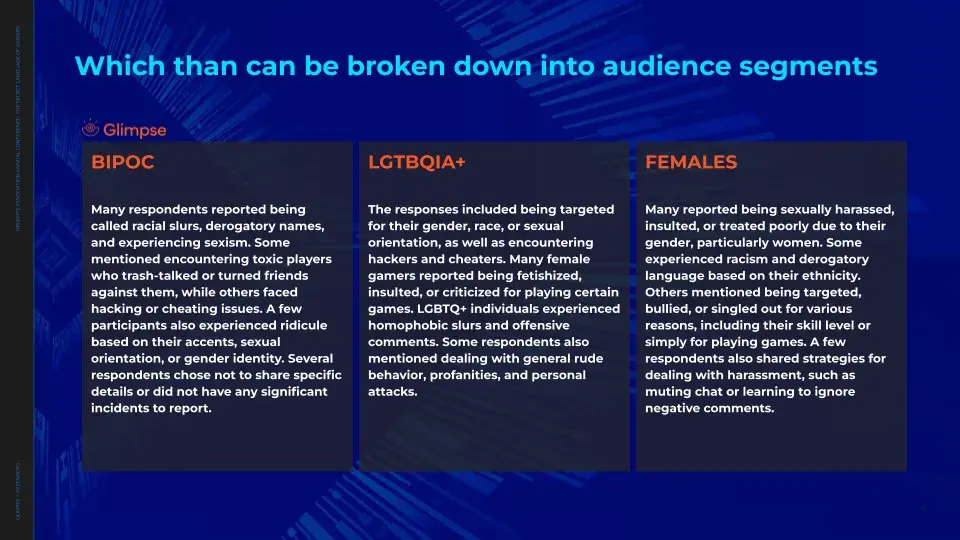
One powerful example of AI-driven customer centricity comes from the gaming industry. An agency working with video game publishers partnered with Glimpse to understand the experiences of female-identifying, BIPOC, and LGBTQIA+ gamers. The goal was to address toxic behavior in online communities, a significant issue leading to gamer churn and lost revenue. Traditional closed-ended surveys failed to capture the nuance of these experiences. Focus groups were too slow and unrepresentative, while social listening tools only picked up the “loudest voices” and couldn’t ask direct questions.
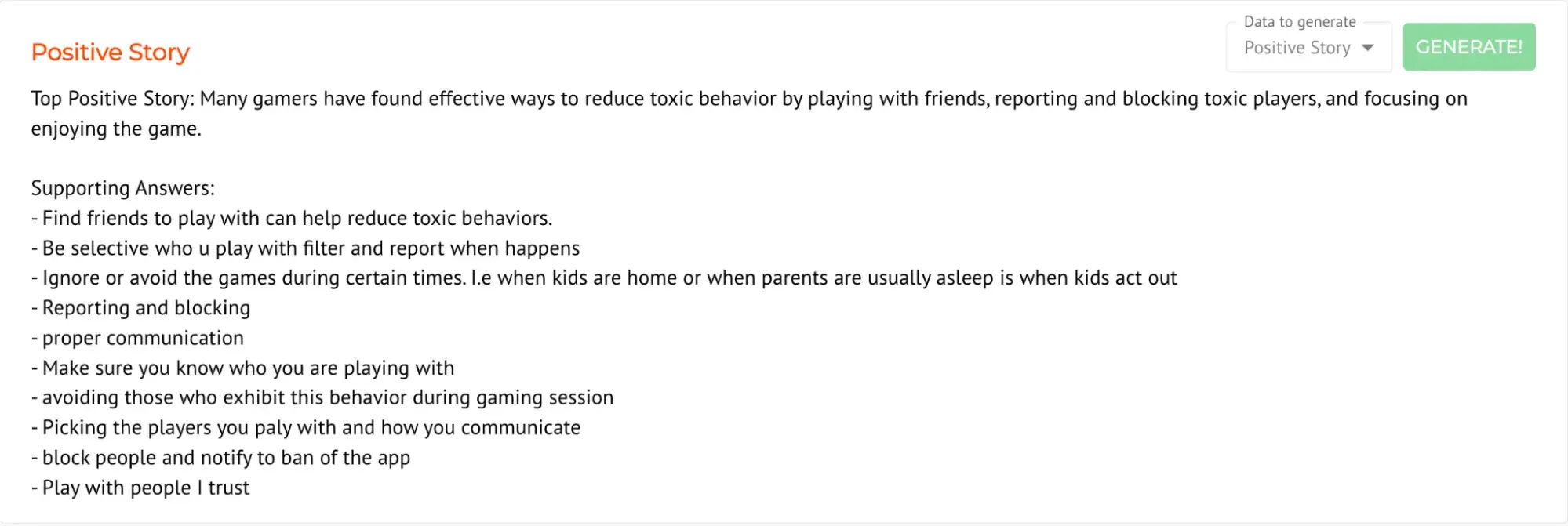
Using generative AI, the agency analyzed 500 open-ended responses at scale. The AI instantly summarized the data, identifying top negative stories, most newsworthy ideas, and positive coping strategies. This allowed the agency to grasp the full range of toxic experiences, from slurs to organized harassment. The insights revealed that toxic behavior was creating a “leaky bucket,” causing gamers to leave communities and publishers to miss out on revenue opportunities. The agency could then draft specific recommendations for game publishers to build more inclusive digital environments.
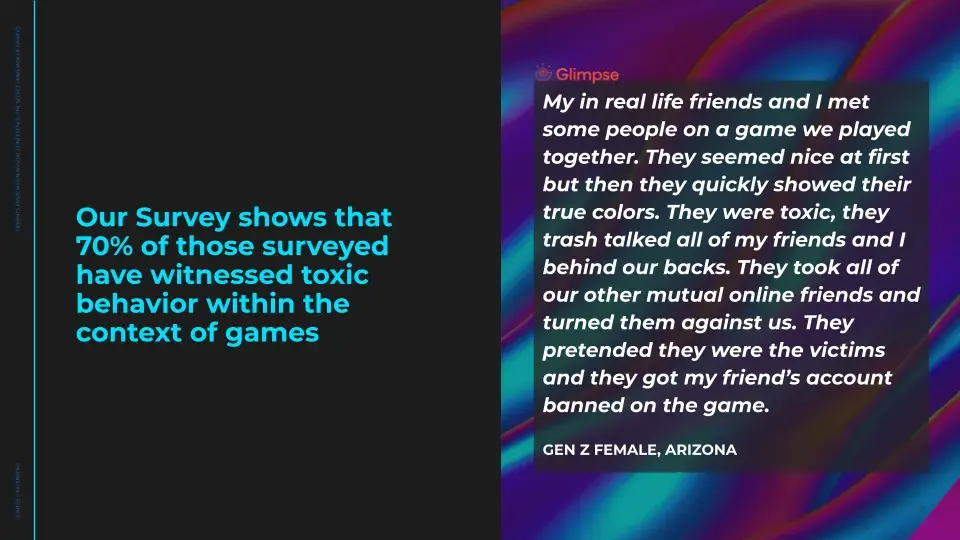
The impact of this study extends beyond the gaming sector. It demonstrates how generative AI can process unstructured human language to extract actionable insights that human analysts might miss due to time constraints. The agency was able to gather suggested strategies for dealing with personal attacks and provide data-backed recommendations for community management. This approach can be applied to any audience and any topic, allowing brands to understand the emotional undercurrents of their customer base. By listening at scale, companies can move from reactive customer service to proactive community building.
Case Study: Understanding Diverse Consumer Habits
Another compelling case involves an agency focusing on Black consumers. They wanted to provide their retail and brand clients with fresh insights into the diversity of Black identity and purchasing habits. The challenge was that traditional census categories were too broad and failed to capture the nuances that mattered for marketing messaging. Focus groups and in-depth interviews (IDIs) were too expensive and slow to provide a representative sample. Social listening tools, while useful, were passive and often skewed by the most vocal segments of the population.
The agency launched a series of studies on the Glimpse platform, surveying thousands of Black Americans with open-ended questions about shopping habits. Generative AI analyzed the responses, revealing a host of new insights about spending power, preferences, and the diversity of identity within the community. This allowed the agency to move beyond stereotypes and provide their clients with authentic, data-driven strategies.
The retailers and brands used these AI-enabled insights to align their mental availability (advertising communications) with physical availability (products on shelves, channel strategy, and packaging). They crafted campaigns that authentically connected with Black communities, rather than relying on generic or potentially offensive messaging. Shopper marketing initiatives were tailored to match the specific rhythms and needs of these communities. This case highlights how generative AI can help brands avoid the pitfalls of superficial diversity marketing and instead build genuine, respectful connections with diverse audiences.
Case Study: B2B Machine Learning Strategy
A B2B machine learning start-up, backed by the venture arm of a major tech company, faced a different challenge. They were developing software and hardware for supply chains across various industries. While the technical features and benefits were clear, the start-up needed to understand the emotional landscape of their potential buyers. They wanted to know the hopes, anxieties, and top-of-mind awareness of decision-makers regarding ML/AI-driven disruption.
The start-up chose Glimpse over other internal AI tools or platforms because it offered the fastest route to true discovery. They surveyed hundreds of ML/AI decision-makers and users across Latin America, Europe, and North America. The generative AI analysis of open-ended responses helped them shape core aspects of their product and commercialization strategy. They gained insights into buyer emotions that would have been difficult to quantify with traditional metrics.
This example shows that generative AI is not just for consumer brands. In B2B contexts, where sales cycles are long and decisions are complex, understanding the human element is crucial. The start-up used the insights to refine their messaging and address specific anxieties about AI adoption. By focusing on the “why” behind buyer behavior, they could position their technology as a solution to real problems, rather than just a technical upgrade. This approach helps B2B companies build trust and credibility with their target audience, leading to more successful product launches and stronger customer relationships.
Four Ways AI Enhances Customer Centricity
1. AI Enables Agile Insight Gathering
Generative AI allows organizations to adopt an agile approach to data collection and analysis. Instead of waiting for annual strategic planning cycles to develop customer insights, you can listen regularly and course-correct constantly. This is particularly valuable for smaller companies and start-ups that may not have large research teams. You can test your assumptions, product innovation vision, sales approaches, and content on a regular basis. This agility leads to higher ROI on marketing and sales investments and helps you connect more effectively with your customers in real-time.
2. AI Tracks Changes Over Time
Generative AI helps spot emerging patterns, opportunities, and risks. However, change is only visible if you have baseline data to define “normal.” Historical data is more valuable than ever because it allows you to train AI models to become more nuanced and effective within your specific business context. Many organizations are shifting to an “always-on” approach to gathering and analyzing survey data. This allows them to track trends over time and get ahead of changes in customer behavior, whether driven by economic downturns, public health scares, or market shifts.
3. AI Supports a Holistic Data Strategy
Generative AI can be applied to any data source to find patterns and develop insights. While it is particularly powerful with unstructured data like human language, it can also look at relationships between different data sources. This includes social listening data, first-party customer data, sales data, and agile survey data. Without first-party research, social intelligence alone will never give you a complete picture of what audiences are thinking or feeling. Integrating generative AI-powered first-party data approaches into your overall strategy creates a more holistic view of your customer.
4. AI Fosters a Future-Oriented Mindset
The question is not whether to explore generative AI, but how to adopt it strategically. You should ask yourself: What is our policy on generative AI? Do we have the skills to use it effectively? Does our process or team structure need to evolve? Most companies will benefit from licensing existing tech and tailoring it to their needs, rather than building their own LLMs. This requires cross-functional teams, with marketers, salespeople, and data experts working together to test hypotheses and learn from the market. The goal is to move from a waterfall approach to customer insights to an ongoing, iterative process of learning and adaptation.
Building an AI-Ready Organization
To fully leverage generative AI for customer centricity, organizations need to address several foundational issues. First, establish clear guidelines for AI usage. This should cover attribution, factual accuracy checks, and the rule that no AI-generated text should be used without human editing. Second, assess your team’s skills and capabilities. Consider sponsoring training or supervised experimentation to build internal expertise. Most of the work will involve common-sense applications of existing platforms, not technical coding.
Third, be prepared to evolve your processes and team structures. Generative AI-driven data gathering and analysis require cross-functional collaboration. Marketers, salespeople, and data experts need to work together to test hypotheses about the market, customers, and products. This iterative approach replaces the traditional annual insights cycle with a continuous learning loop. By embedding generative AI into your organization’s fabric, you can create a more responsive and customer-centric business. The future of marketing and sales belongs to those who can use AI to understand their customers better than anyone else.
At AEO/GEO, we see this shift as a fundamental change in how brands interact with their audiences. It is not just about generating content faster; it is about generating understanding deeper. By combining human judgment with AI-powered insights, you can build stronger, more meaningful connections with your customers. The tools are available now. The question is whether you are ready to use them to transform your approach to customer centricity.





