How AI Agents Drive Sales: 7 Benefits and Drawbacks to Know
Artificial intelligence agents are shifting from experimental tools to essential operational infrastructure. For growth-focused businesses, the promise is straightforward: increased productivity, reduced administrative burden, and the ability for human teams to focus on high-value strategic work rather than repetitive tasks.
As consumers and clients, we often appreciate the efficiency of self-service options. Bypassing hold music and resolving simple queries instantly feels like a win. Yet, there is a valid concern about the human element. Recent surveys indicate that a significant portion of the public worries about job displacement and trusts businesses less when they rely heavily on automation. This tension between efficiency and empathy defines the current landscape of AI adoption.
We believe the answer lies not in choosing between humans and machines, but in integrating them intelligently. AI agents are software programs that interact with their environment or data inputs to process information and provide solutions. When deployed correctly, they do not replace jobs; they augment human capability. This article explores what AI agents are, how they function, and how to implement them in a way that enhances both operational efficiency and customer experience.
What is an AI agent and how does it work?
An AI agent is an autonomous software system that perceives its environment, processes data, and takes action to achieve specific goals. Unlike static scripts that follow a rigid path, AI agents can adapt their responses based on the input they receive. They operate through a cycle of perception, reasoning, and action.
The process begins with perception. The agent interprets inputs, such as a customer’s question or a data point from a CRM. Next, the “brain” of the agent engages in decision-making, planning, and reasoning. It evaluates the context and determines the best course of action. Finally, the agent executes the action, which could be sending a response, updating a record, or triggering a workflow.
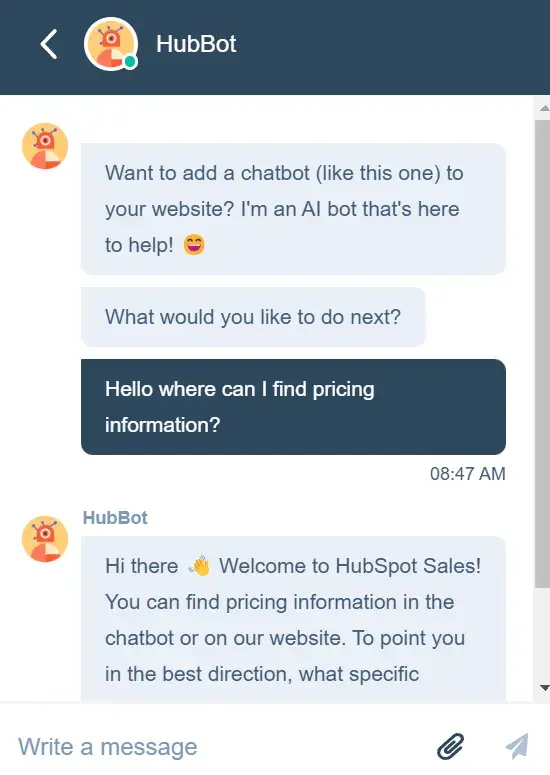
Consider a simple chatbot interaction. A user asks, “Where can I find pricing information?” The agent perceives this query, processes the intent, and recognizes that the answer depends on the specific product. It responds with a helpful message and asks a clarifying question: “What specific package are you looking for?” This interaction demonstrates the agent’s ability to perceive, process, and act in a context-aware manner. It is not just retrieving a static answer; it is engaging in a dynamic conversation.
The core components of AI agent architecture
To understand how these systems operate, it helps to break down their architecture into four main components. First, there is the agent itself and its environment. The agent exists within a specific context, whether that is a website, a CRM, or an internal database. Second, perception covers the agent’s ability to interpret inputs. This includes natural language processing for text or voice, and data parsing for structured information.
Third, the brain is where decision-making, planning, and reasoning take place. This is the cognitive layer that evaluates options and determines the next step. Fourth, action refers to the output. This could be a text response, an email sent, a ticket created, or a database update. The cycle repeats as new inputs arrive, allowing the agent to learn and improve over time.
Types of AI agents in business
There are several types of AI agents, each suited to different tasks. Learning agents improve their performance over time by learning from experience. If you shop online or stream music, you have likely interacted with a learning agent that suggests products or content based on your past behavior. These are best for personalized recommendations and fraud detection.
Simple reflex agents act based on the current situation without considering past experiences. They follow condition-action rules, such as “if the temperature drops below 68 degrees, turn on the heat.” These are common in smart home devices and basic spam filters. Model-based reflex agents maintain an internal model of the world, making decisions based on both current input and stored knowledge. This allows them to operate within predefined brand guidelines or frameworks.
Goal-based agents make decisions based on pre-defined objectives. In a sales context, a goal-based agent might analyze prospect data to suggest the next best action, such as sending a follow-up email or scheduling a call. These agents are particularly effective in CRM systems, where they help sales teams prioritize leads and optimize their workflow.
Benefits of AI agents for sales and operations
The integration of AI agents offers tangible benefits across various business functions. From customer service to inventory management, these tools can significantly enhance efficiency and effectiveness. The key is to identify where automation can add the most value without compromising the human touch.
Reducing customer service burnout
Customer support teams often face high volumes of repetitive inquiries. Christian Hed, CMO of Dstny, notes that many companies receive more than ten thousand customer support queries per day. AI agents can handle initial interactions, such as routing calls or answering FAQs, which reduces the burden on human agents. This allows support teams to focus on complex issues that require empathy and nuanced judgment.
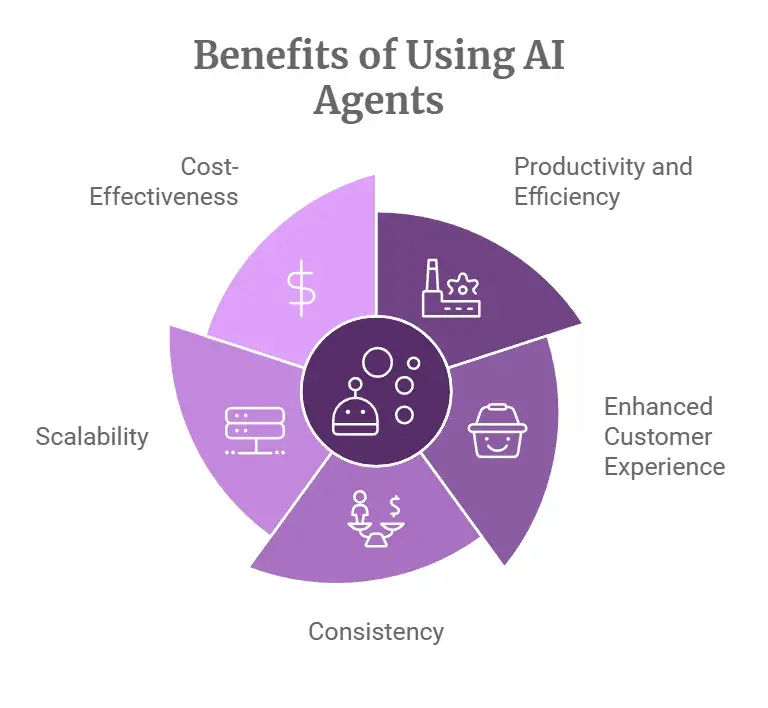
By automating routine tasks, businesses can save hundreds of hours per week. This not only reduces operational costs but also improves response times for customers. When agents handle simple queries, customers get instant answers, while human representatives are available for more challenging issues. This hybrid approach enhances overall customer satisfaction and reduces burnout among support staff.
Analyzing data to improve products
AI agents can process large datasets to identify patterns and insights that humans might miss. Aljay Ambos, head of marketing at Twixify, uses AI agents to analyze customer feedback and market trends. In one instance, an AI agent scanned thousands of support conversations and identified a common problem: users needed help adjusting AI-made legal documents to comply with local rules. This insight became the foundation for a new campaign, which boosted user engagement by 36%.
This ability to process vast amounts of data quickly is a significant advantage. AI agents can identify emerging trends, customer pain points, and competitive gaps, allowing businesses to make data-driven decisions. By leveraging these insights, companies can refine their products and services to better meet customer needs.
Streamlining inventory management
For businesses with physical products, inventory management can be a logistical challenge. Iryna Balaban, CEO of Elite Maids NY, implemented an AI agent to track cleaning supplies. The agent monitors usage history, anticipates upcoming jobs, and automatically reorders items when stock runs low. This has reduced out-of-stock cases by 90%, saving money and preventing service disruptions.
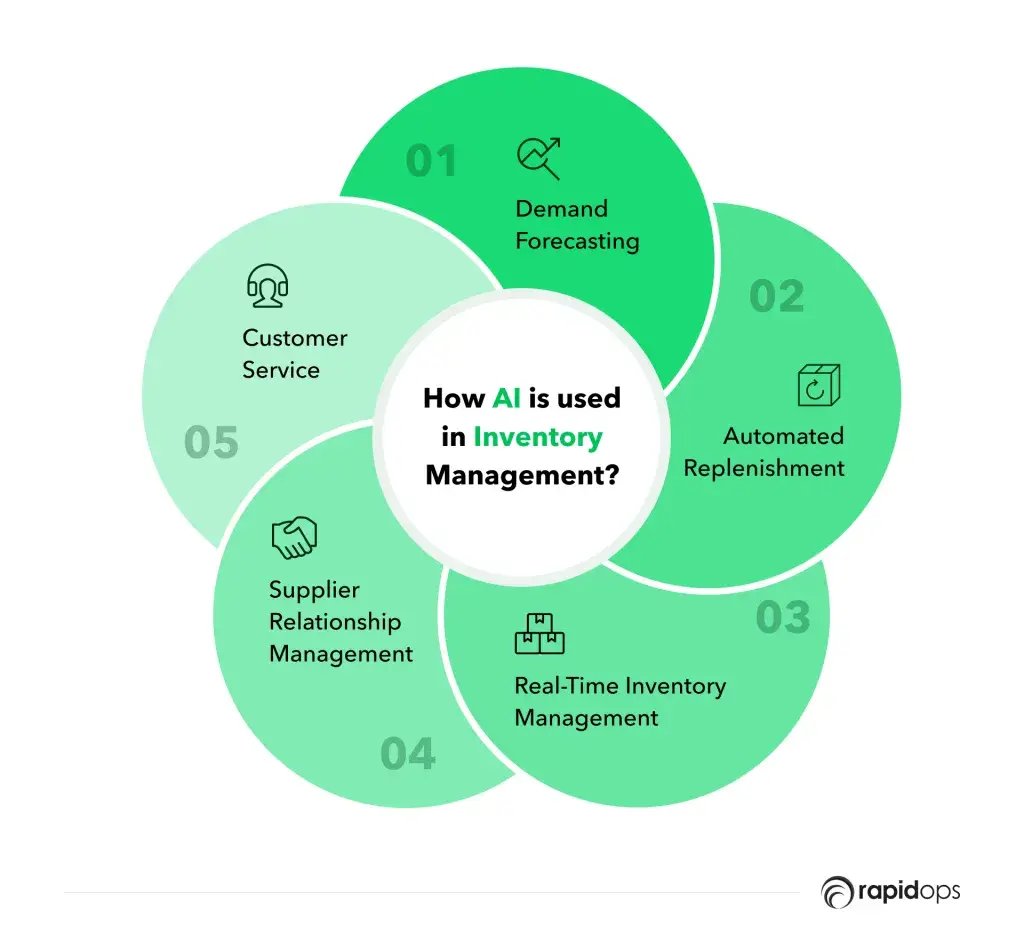
Automating inventory tasks frees up staff to focus on higher-value activities. It also ensures that teams always have the tools they need to do their jobs effectively. By detecting patterns in usage data, AI agents can even help negotiate bulk purchase discounts, further improving profit margins.
Drawbacks of AI agents and how to mitigate them
While AI agents offer numerous benefits, there are potential drawbacks to consider. Understanding these challenges is crucial for successful implementation. The goal is to maximize the advantages while minimizing the risks.
Handling complex queries
AI agents are not infallible. Some queries are too complex or nuanced for an algorithm to handle effectively. Christian Hed acknowledges that certain customer issues require human intervention. When an AI agent fails to provide a satisfactory answer, it can cause frustration. To mitigate this, businesses should ensure that agents can quickly escalate queries to human representatives when necessary.
Lack of empathy
Empathy is a human trait that AI cannot replicate. In sensitive situations, such as healthcare or financial advice, customers often prefer human interaction. John Russo, VP of healthcare technology solutions at OSP Labs, recommends a hybrid approach. Chatbots can handle FAQs, while human agents manage emotionally sensitive queries. This balance ensures that customers receive efficient service without feeling disconnected.
Ensuring data accuracy
AI agents rely on data to make decisions. If the data is inaccurate or biased, the agent’s outputs will be flawed. Kevin Shahnazari, founder of FinlyWealth, experienced this when his AI agents started making overly conservative credit card recommendations. He solved the issue by implementing a hybrid approach where agents flag potential matches for human review. This improved recommendation accuracy by 35%.
How to use AI agents that actually work
Implementing AI agents requires a strategic approach. It is not enough to simply adopt the technology; you must integrate it into your workflows and train it effectively. Here are some best practices for getting the most out of AI agents.
Train them with specific data
Generic AI models have limitations. To achieve significant results, you need to train agents with data specific to your audience. Aljay Ambos emphasizes the importance of creating specialized datasets that focus on the language, worries, and goals of your customers. This customization allows the agent to understand your niche and provide more relevant responses.
Be strategic about integration
Do not adopt AI agents just because they are trendy. Audit your business needs to determine where automation can add the most value. Matthew Franzyshen, business development manager at Ascendant Technologies Inc., advises businesses to align AI agents with their unique goals. This ensures that the technology supports your objectives rather than creating unnecessary complexity.
Refine scripts and processes
Continuous improvement is essential. Nikita Sherbina, co-founder of AIScreen, refines chatbot scripts based on user feedback. This iterative process helps maximize effectiveness and ensures seamless escalation to human agents for complex issues. By regularly reviewing performance data, you can identify areas for improvement and adjust the agent’s behavior accordingly.
AI agents are already present in many aspects of our daily lives, often without us realizing it. The key is to use them ethically and effectively. By focusing on strategic integration, proper training, and continuous refinement, businesses can harness the power of AI to drive productivity and enhance customer experience. The future of work is not about choosing between humans and machines; it is about leveraging both to achieve better outcomes.
What role do you see AI agents playing in your business strategy?
AEO/GEO
Want to learn more?
Contact us for direct consultation and support.