When Apple announced iOS 15 in September 2021, the immediate reaction from the email marketing community was one of panic. Many professionals feared that the new data privacy protections, specifically Mail Privacy Protection, would render email marketing ineffective. Given that Apple Mail and mobile devices hold over 35% of the global email provider market share, these concerns were understandable. The update allowed users to block tracking pixels, meaning marketers could no longer see when or if an email was opened.

However, time has provided clarity. The initial hysteria has subsided, replaced by a more nuanced understanding of how these changes affect measurement and strategy. To understand the real-world impact, a survey of 300 email marketers was conducted to analyze how iOS 15 and GDPR regulations have influenced their approaches. The findings reveal that while the landscape has shifted, it has not collapsed. Instead, it has forced a necessary evolution in how success is defined and measured.

The data indicates that the impact of these privacy changes is not uniformly negative. While two-thirds of respondents reported a moderate-to-significant impact on their strategies, the nature of that impact varied. Forty-seven percent described the effect as neutral. Interestingly, 24% reported a positive impact, suggesting that the constraints forced improvements in other areas of their marketing stack. Only 29% viewed the changes as strictly negative. This distribution challenges the narrative that privacy updates are solely detrimental to email performance.
Adapting Email KPIs in a Post-iOS 15 World
The most significant shift caused by iOS 15 is the devaluation of the open rate as a primary key performance indicator. With Mail Privacy Protection automatically pre-loading images for many users, open rates have become inflated and unreliable. Consequently, marketers have had to pivot to metrics that reflect genuine engagement rather than passive exposure. Sixty-two percent of impacted marketers reported prioritizing different KPIs to measure effectiveness. This shift is not just a reaction; it is a move toward more meaningful data.
Shifting Focus to Click-Through Rates and Conversions
Click-through rates (CTR) and clicks have emerged as the new gold standard for engagement. Unlike opens, which can be triggered automatically by the device, a click requires a conscious decision from the user. This makes CTR a much stronger indicator of content relevance and audience interest. Features like click maps further enhance this insight, showing exactly where users are interacting within the email. Jordan Pritikin, who leads HubSpot’s Email and Growth Marketing teams, notes that focusing on clicks and conversions is the right course of action. These metrics are more closely tied to how the database is actually engaging with email programs, providing a clearer picture of success.
Monitoring Website Traffic and Lead Generation
Beyond the email itself, the destination of the click is critical. Website traffic generated from email campaigns provides a direct line of sight to user behavior. If an email drives significant traffic to a blog or landing page, it indicates that the content is resonating and encouraging further exploration. Similarly, lead counts from emails serve as a tangible measure of nurturing success. When contacts move from an email to a landing page and convert, it demonstrates that the email played a vital role in the customer journey. Tracking these downstream metrics allows marketers to attribute value to their efforts even when upstream data like opens is obscured.
The Role of Unsubscribe and Spam Rates
While opens may be less reliable, negative feedback metrics remain highly accurate. Spiking unsubscribe rates can signal that content frequency or quality has misaligned with audience expectations. A low unsubscribe rate, conversely, indicates successful retention. Spam reports are another critical metric. While an occasional report is normal, a rise in spam complaints suggests that subscribers no longer see value in the content or find it intrusive. Monitoring these rates helps maintain list health and sender reputation, which are essential for deliverability regardless of privacy settings.
Re-evaluating Open Rates with Adjusted Benchmarks
Open rates have not disappeared entirely, but they must be interpreted with caution. As Pritikin suggests, open rates will just be different. Marketers should continue to monitor their average open rate to establish a new benchmark adjusted for the tracking standards introduced by iOS 15. This adjusted benchmark may not be 100% accurate, but it can still highlight anomalies. For instance, a significant drop in open rates might indicate a weak subject line or poor send time. Tools like HubSpot’s Adjusted Open Rate feature help estimate true opens by filtering out unreliable data, using the formula: Unique reliable opens divided by (Unique delivered minus Unique unreliable opens). This provides a more grounded perspective on performance.
Diversifying Data Sources and Channels
Relying solely on email data is no longer sufficient. To gain a comprehensive view of audience behavior, marketers are turning to other sources and channels. Fifty-two percent of impacted marketers reported leveraging user data from sources unaffected by privacy changes. This includes analyzing data from non-Apple users, such as those using Gmail or Outlook, where open rates remain accurate. While this segment may be smaller, it still provides a clear baseline for performance. Additionally, 37% of marketers expanded their efforts to other messaging channels, such as SMS.
The Rise of SMS Marketing
SMS marketing has gained traction due to its high engagement rates. With 3.8 billion people carrying cell phones, the reach is substantial. SMS boasts a 98% open rate, which dwarfs the open rates of email. Survey data shows that only 3% of marketing emails achieve an open rate above 50%, while 65% fall between 16% and 35%. In contrast, SMS messages are almost always seen. This high visibility makes SMS a powerful complement to email, particularly for time-sensitive offers or critical updates. Integrating SMS into a broader marketing strategy can help marketers maintain direct contact with their audience, bypassing the privacy limitations of email.
Comparing Channel ROI and Engagement
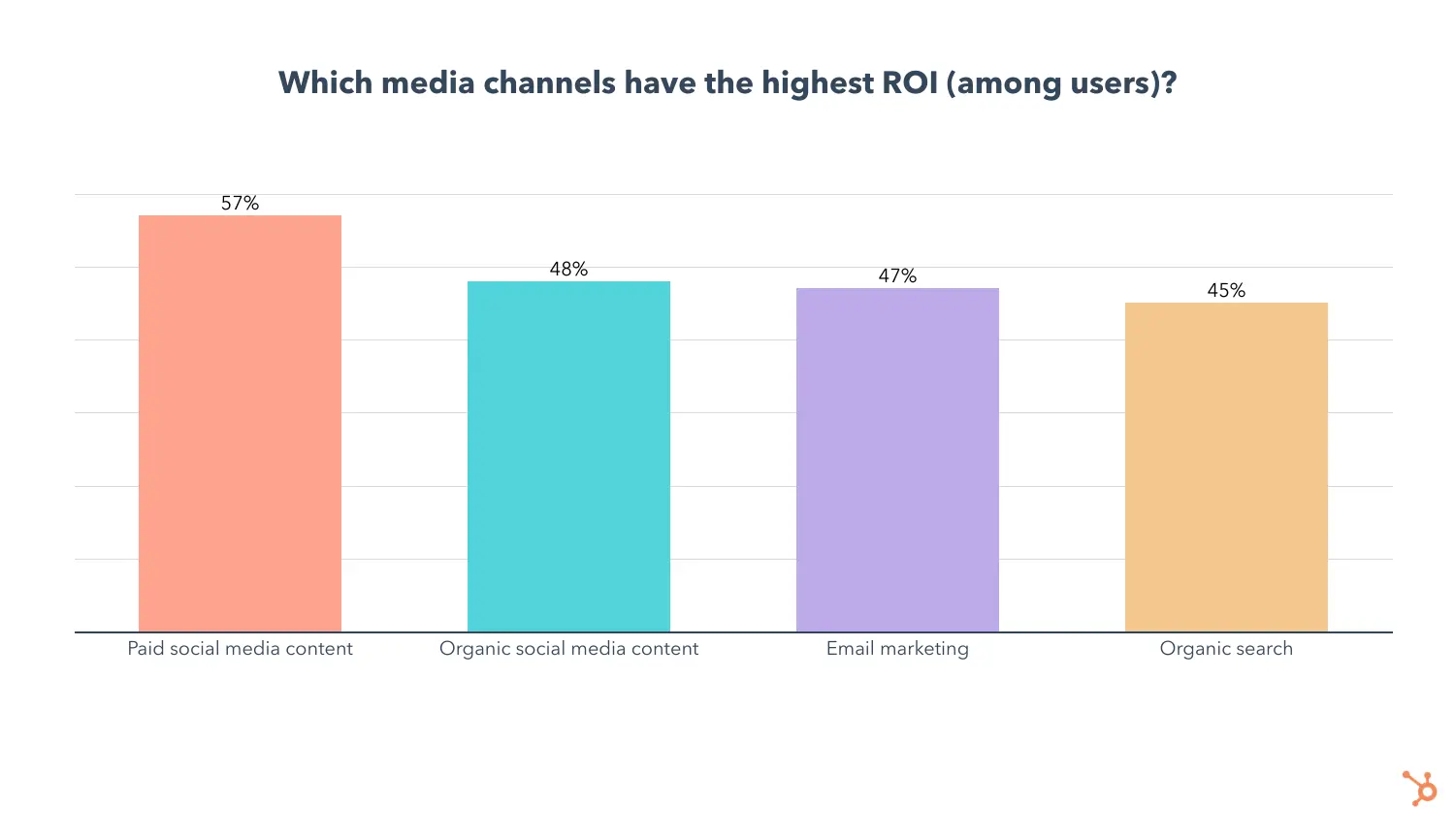
Email marketing remains a popular channel, but it is not the only one delivering strong returns. Media planning surveys indicate that paid social media content often has the highest ROI and engagement, followed by organic social media. Organic search (SEO) also competes closely with email in terms of ROI and engagement. Diversifying across these channels reduces reliance on email metrics and spreads risk. By leveraging multiple touchpoints, marketers can create a more resilient strategy that adapts to changes in any single channel. This multi-channel approach ensures that brand visibility is maintained even if email performance fluctuates.
Improving Email Deliverability
Another key adaptation has been a focus on deliverability. Twenty-eight percent of marketers reported prioritizing this area. Deliverability is the foundation of email marketing; if emails do not reach the inbox, other metrics become irrelevant. Strategies to improve deliverability include maintaining a clean email list, providing easy unsubscribe options, personalizing content, and using engaging subject lines. GDPR compliance is also essential, as it builds trust and reduces the likelihood of spam reports. By focusing on deliverability, marketers ensure that their messages are seen by those who want them, maximizing the impact of every send.
Strategies That Drive Positive Outcomes
Not all adaptations are equally effective. The survey data reveals differences in strategies used by marketers who experienced positive versus negative impacts from privacy changes. Those who reported a positive impact were 9% more likely to prioritize different KPIs and 7% more likely to leverage channels other than email. Conversely, they were 21% less likely to focus solely on improving deliverability and 5% less likely to rely on unaffected user data sources. This suggests that a broader, more flexible approach yields better results.
The Importance of a Holistic Approach
Marketers who thrived after iOS 15 did not just tweak their metrics; they rethought their entire strategy. By prioritizing clicks and conversions, they aligned their efforts with business goals rather than vanity metrics. By expanding into SMS and social media, they diversified their reach and reduced dependency on email. This holistic approach allows for greater resilience and adaptability. It also encourages innovation, as marketers are pushed to find new ways to engage their audience.
Context Matters: Audience Composition
The effectiveness of any strategy depends on the specific audience. If a large portion of subscribers use Apple Mail, analyzing data from non-Apple users may not provide a representative picture. In such cases, relying on adjusted open rates and click-based metrics becomes even more critical. Marketers must consider their unique audience composition when choosing how to adapt. There is no one-size-fits-all solution, but the principles of focusing on engagement, diversifying channels, and maintaining deliverability are universally applicable.
The Future of Email Privacy
Privacy protection is not a temporary hurdle; it is a permanent shift in how data is handled. As regulations evolve and technology advances, marketers must continue to adapt. The key is to embrace these changes as opportunities to improve. By focusing on genuine engagement and building trust with audiences, marketers can create experiences that are both personalized and secure. This approach benefits everyone: users feel respected, and brands build stronger, more loyal relationships.
Email marketing is far from dead. It has simply matured. The reliance on open rates has forced a return to fundamentals: creating valuable content, engaging audiences, and driving meaningful actions. For those willing to adapt, the post-iOS 15 world offers a clearer, more accurate view of what truly matters. The question is no longer how many people opened an email, but how many took the next step.
How are you adjusting your metrics to reflect this new reality?





