The Shift from Skepticism to Strategic Necessity
The conversation around artificial intelligence in media has evolved significantly. What began as a period of skepticism and high-profile errors is transitioning into an era of operational necessity. Industry leaders are no longer debating whether AI has a place in the content lifecycle; they are focusing on how to integrate it effectively. This shift marks a critical turning point for media organizations, creators, and operators who recognize that efficiency and personalization are no longer optional—they are foundational.
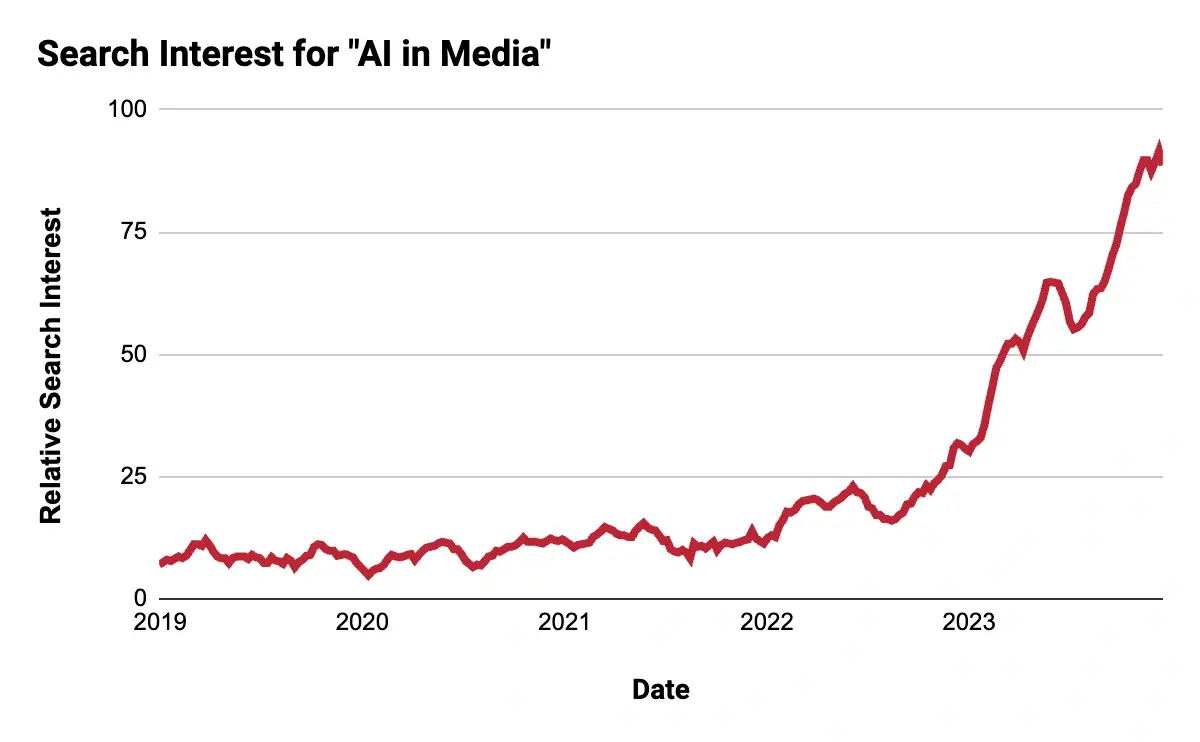
Interest in AI applications within the media sector has surged, reflecting a broader market movement. The market size for AI in media and entertainment reached substantial levels in recent years, with projections indicating significant growth by 2030. This expansion is not merely about adopting new technology for its own sake. It is about responding to changing audience expectations and the increasing complexity of content distribution. As platforms become more algorithmic and user experiences more personalized, the role of AI becomes increasingly central to how stories are told, discovered, and consumed.
Understanding this trajectory requires looking beyond the hype. The goal is not to replace human creativity but to augment it. Media leaders who succeed are those who view AI as a tool for solving specific problems—such as scaling personalization, improving workflow efficiency, and enhancing audience engagement—rather than a magic bullet for declining metrics. This pragmatic approach is what separates organizations that are merely experimenting from those that are truly integrating AI into their core operations.
Why Efficiency Matters Now
Efficiency in media is not just about reducing costs; it is about creating more value for consumers in less time. In an environment where attention is fragmented and content volume is overwhelming, the ability to produce high-quality, relevant material quickly is a competitive advantage. AI tools can automate repetitive tasks, such as data collection, initial drafting, and metadata tagging, freeing up creators to focus on strategic thinking and creative execution.
This efficiency gain allows teams to respond faster to trends and audience interests. For instance, an AI system can analyze real-time data to identify emerging topics, enabling journalists to pitch and produce stories while the news is still fresh. This speed does not compromise quality if the human element remains in the loop for verification, nuance, and editorial judgment. The key is to design workflows where AI handles the heavy lifting of information processing, while humans provide the context and insight.
The Role of Personalization
Personalization has become the default expectation for digital audiences. Users expect content feeds, search results, and recommendations to be tailored to their interests, behaviors, and preferences. AI drives this personalization by analyzing vast amounts of user data to deliver relevant content at scale. Without AI, achieving this level of customization would be impossible for most organizations.
Media companies that master AI-driven personalization are better positioned to capture and retain audience mindshare. By understanding what content resonates with specific segments, these organizations can optimize distribution strategies, improve engagement rates, and build stronger relationships with their audiences. This is not about manipulating users but about providing them with a more useful and enjoyable experience. When done right, personalization enhances the value of the content rather than diminishing it.
Time as a Competitive Factor
The adoption of new technologies in media often follows a pattern of initial resistance followed by widespread integration. Video and data analytics were once viewed with suspicion or as niche tools, but they are now embedded in the DNA of modern media companies. AI is following a similar path. Organizations that were early adopters of data and video gained a significant advantage, and those who are now embracing AI are likely to see similar benefits.
Time is a critical factor in this evolution. The gap between early adopters and laggards is widening, and the cost of inaction is increasing. Media leaders who wait too long to integrate AI may find themselves struggling to catch up with competitors who have already optimized their workflows and audience strategies. The urgency is not about fear but about recognizing the strategic importance of staying ahead of the curve.
Building Effective AI Systems in Media
Despite the growing interest in AI, many media organizations are still in the experimentation phase. Few have moved beyond pilot projects to fully integrated systems that deliver measurable impact. The challenge is not just about choosing the right tools but about building the right infrastructure, processes, and governance frameworks to support them. Success requires a deliberate, structured approach that aligns with the organization’s goals and values.
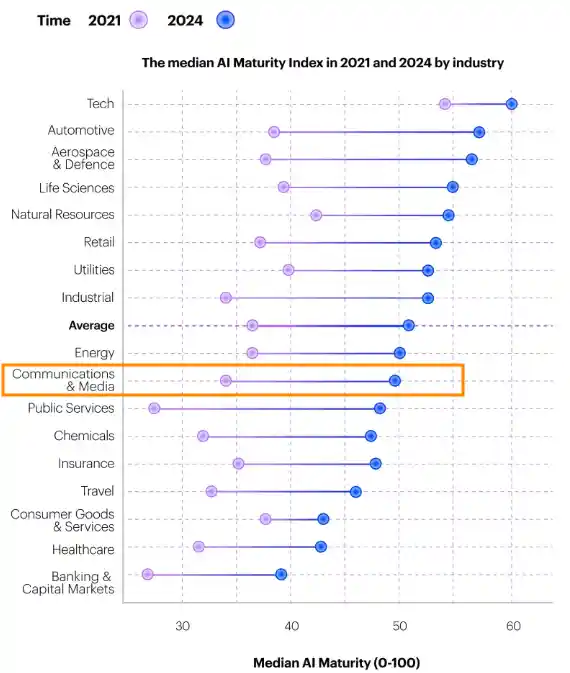
AI maturity in media is still below the median for many industries, indicating that there is significant room for growth and improvement. This gap presents an opportunity for leaders to differentiate themselves by investing in robust, scalable AI systems. These systems should not be seen as add-ons but as core components of the content creation and distribution pipeline.
To move from experimentation to integration, media leaders need to focus on three key areas: avoiding superficial adoption, building responsible systems, and addressing the brand implications of AI use. Each of these areas requires a commitment to doing the hard work of implementation, rather than relying on quick fixes or top-down mandates.
Avoiding Superficial Adoption
One of the biggest mistakes organizations make is treating AI as a shiny object or a panacea for deeper structural issues. AI cannot fix poor editorial strategy, weak brand positioning, or ineffective distribution channels. It can only amplify what is already there. If the underlying content is not valuable, AI will not make it valuable. If the distribution strategy is flawed, AI will not fix it.
Successful leaders recognize that AI requires careful planning and execution. They do not implement AI tools simply to boost stock prices or meet short-term KPIs. Instead, they identify specific pain points in their workflows and use AI to address them. This might involve automating data collection, improving translation accuracy, or enhancing recommendation algorithms. The focus is on solving real problems, not on chasing trends.
This approach requires a willingness to do the work behind the scenes. It involves testing different tools, iterating on processes, and measuring outcomes. It also requires a culture that values experimentation and learning from failure. Organizations that are willing to invest in this kind of deep, strategic work are more likely to see lasting benefits from their AI initiatives.
Building Responsible Systems
Responsibility is a critical component of effective AI implementation. Media leaders must work closely with journalists, content creators, and other stakeholders to identify the pain points in their processes and design AI systems that empower them. These systems should enhance human capabilities, not replace them. For example, AI can help journalists collect and analyze large datasets, produce first drafts of translated stories, or generate new story ideas based on trends.
However, these tools must be governed by clear frameworks that ensure transparency, accountability, and fairness. This includes establishing guidelines for how AI-generated content is labeled, how data is collected and used, and how biases are identified and mitigated. It also involves creating processes for human review and oversight to ensure that the final output meets the organization’s editorial standards.
Building responsible systems also means thinking about the people who will be using the tools. AI should be designed to support workers, not to monitor or replace them. This requires a people-first approach that prioritizes the well-being and development of employees. When workers feel supported and empowered, they are more likely to embrace new technologies and contribute to their success.
Addressing the Brand Problem
The public perception of AI is often shaped by dystopian narratives and high-profile mistakes. These stories can create fear and skepticism among audiences, making it harder for organizations to build trust. Media leaders need to proactively address these concerns by demonstrating how AI is being used responsibly and ethically.
This involves being transparent about AI use, acknowledging mistakes when they happen, and learning from them. It also means collaborating with content and product teams to develop approaches that align with the organization’s values and brand identity. AI should inform the creative process, not drive it. The human element should always remain central to the story.
By taking a proactive and transparent approach, media organizations can help reshape the narrative around AI. They can show that AI is a tool for good, capable of enhancing creativity, improving efficiency, and delivering value to audiences. This requires a long-term commitment to responsible innovation, but the payoff is significant in terms of brand reputation and audience trust.
The Future of AI in Media and Generative Search
As AI continues to evolve, its impact on media and marketing will only grow. One of the most significant developments is the rise of generative search, which is changing how users find and interact with information. Traditional search engines are being supplemented or replaced by AI-powered platforms that provide direct answers, summaries, and recommendations. This shift has profound implications for content strategy, SEO, and brand visibility.
Generative Search Optimization (GEO) and Answer Engine Optimization (AEO) are emerging as critical disciplines for businesses and media organizations. These approaches focus on creating content that is optimized for AI-driven search engines, ensuring that brands are visible and relevant in the new search landscape. This involves structuring content in ways that are easy for AI to understand and cite, using clear language, and providing authoritative, well-sourced information.
The Importance of AEO and GEO
AEO and GEO are not just about technical optimization; they are about providing value to users. AI search engines prioritize content that is accurate, comprehensive, and trustworthy. This means that organizations need to focus on quality over quantity, ensuring that their content is well-researched, fact-checked, and relevant to user intent.
For media organizations, this means adapting their content strategies to align with the principles of AEO and GEO. This might involve creating more structured content, such as FAQs, how-to guides, and listicles, that are easy for AI to parse and summarize. It also means investing in authority and trust signals, such as expert contributions, citations, and clear branding.
Strategic Implications for Media Leaders
The rise of generative search is not just a technical challenge; it is a strategic one. Media leaders need to rethink how they approach content creation, distribution, and measurement. This involves investing in new skills and tools, such as AI content automation and optimization platforms, that can help them stay ahead of the curve.
Organizations that are proactive in adapting to this new landscape will be better positioned to capture audience attention and drive business outcomes. They will be able to reach users at the point of search, providing them with the information they need in a format that is easy to consume. This requires a shift in mindset, from thinking about traffic and clicks to thinking about visibility and value.
Conclusion
The integration of AI into media is not a fleeting trend; it is a fundamental shift in how content is created, distributed, and consumed. Media leaders who embrace this shift with a strategic, responsible, and people-first approach will be best positioned to succeed in the years ahead. By focusing on efficiency, personalization, and responsible innovation, they can unlock the full potential of AI to enhance their content and engage their audiences. The future of media is not about choosing between human creativity and AI efficiency; it is about combining the two to create something greater than the sum of its parts.
As the landscape continues to evolve, the question is not whether AI will play a role in media, but how effectively organizations can leverage it to deliver value to their audiences. The leaders who ask the right questions, build the right systems, and maintain a commitment to responsibility will be the ones who define the next era of media.





