How to Build an Efficient AI Content Pipeline (Without Losing Your Brand Voice)
Building a content engine isn’t just about throwing a complex prompt into ChatGPT and hoping for the best. If you want to scale without your brand voice turning into robotic mush, you need a system—a true AI content pipeline.
Think of a content pipeline as an assembly line. Just as a factory breaks down the creation of a car into specialized stations, your content production should break down the writing process into distinct, manageable tasks. By separating the “thinking” (research and outlining) from the “writing” (drafting and polishing), you can maintain control while gaining massive speed.
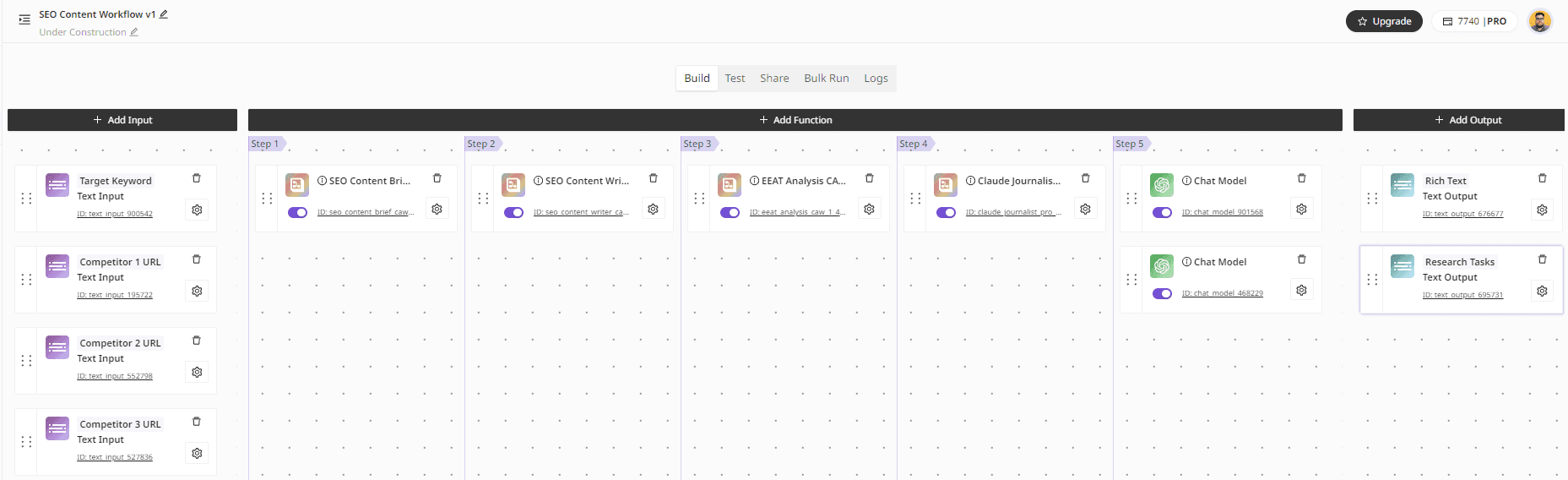
What Makes an AI Content Pipeline Truly Efficient?
The trap most marketers fall into is treating AI like an oracle—asking it to “write an article about X” and expecting a masterpiece in one go. That rarely works because LLMs have context limits and often lose focus during long-form generation.
An efficient pipeline treats AI as a specialized workforce. You don’t ask one person to do the research, write the copy, design the layout, and edit the final draft; you shouldn’t ask your AI to do it all at once either. Scaling content requires a workflow where specific prompts handle discrete stages, ensuring the quality remains high across every piece you publish.
Step 1: The ‘Chained’ Approach to AI Drafting
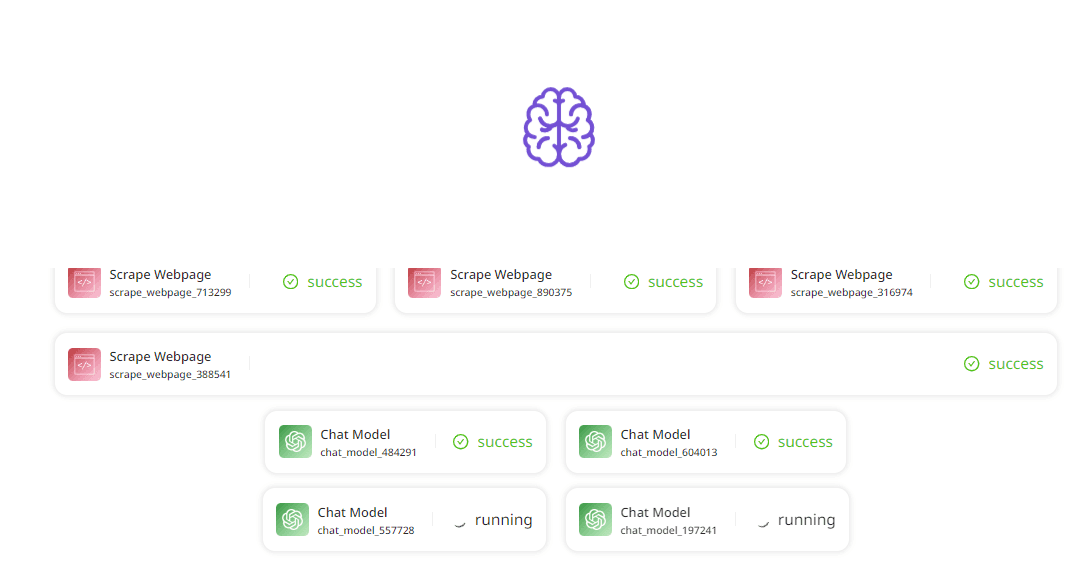
To get better output, stop asking for everything at once. Use a chained approach, where the output of one task becomes the input for the next. This creates a logical flow that keeps the AI grounded.
- Research Phase: Prompt the AI to act as a researcher. Have it gather data, define the target audience, and identify key pain points.
- Outlining Phase: Use that research to prompt for a detailed structure. Ask for a 20-point brief that maps out exactly what each section should cover.
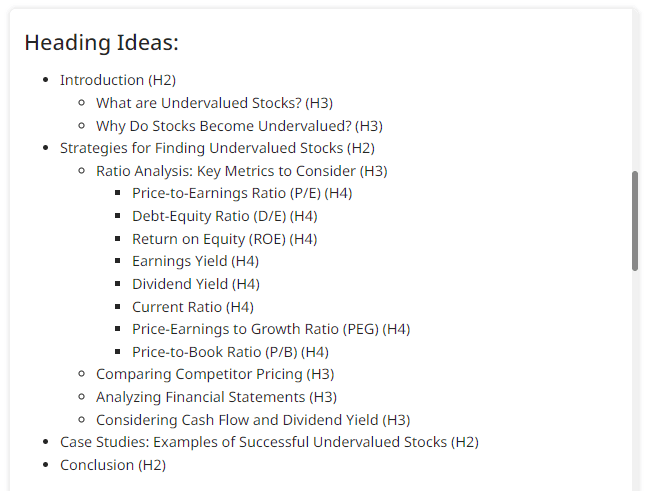
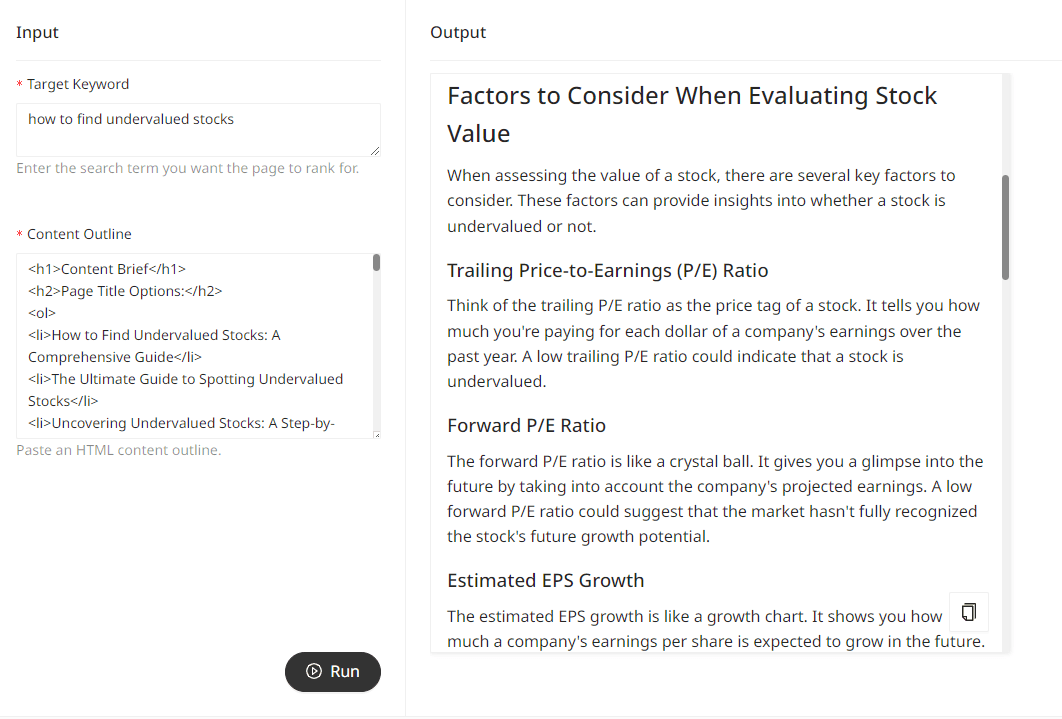
- Sectional Drafting: Instead of one massive prompt, feed the outline back to the AI section by section. This allows the model to focus its attention on one topic at a time, resulting in much deeper, more accurate writing.
Step 2: Automating the EEAT Filter
One of the biggest concerns with AI content is whether it meets EEAT (Experience, Expertise, Authoritativeness, and Trustworthiness) standards. You can automate this by adding an “AI Critic” layer to your pipeline.
After your draft is generated, run it through a separate prompt designed to grade the work. Ask the AI: “Analyze this text for lack of depth, missing expertise, or generic claims. Where do we need to add a real-world example or professional insight?”
This doesn’t just improve the article; it creates a clear To-Do list for your human editors. It takes the guesswork out of the review process by highlighting exactly where the content feels “thin” and needs a human touch.
Step 3: Mastering the ‘Human-in-the-Loop’ Checkpoint
AI is the engine, but the human is the pilot. Your workflow must include a mandatory human-in-the-loop checkpoint. This is where your brand identity truly shines.
- Tone Injection: AI often leans toward the generic. A human editor should spend their time injecting personality, anecdotes, and specific brand nuances that the AI can’t replicate.
- Fact-Checking: AI can hallucinate. Always have a human verify statistics, quotes, and claims.
- Strategic Alignment: Ensure the finished piece actually solves the user’s problem and aligns with your business goals.
Pro-Tips for Scaling and Refining Your Workflow
- Build a Prompt Library: Don’t recreate your workflow every time. Save your best-performing prompts for each stage of the pipeline.
- Iterate: Treat your prompts like software code. If an output isn’t quite right, adjust the prompt and see if it improves. Track what works.
- Connect the Dots: Use automation tools like Make or Zapier to connect these stages. You can set it up so that your research outputs are automatically sent to your drafting prompt, saving you the hassle of copy-pasting.
By moving from a “prompt-and-pray” method to a structured pipeline, you turn AI into a scalable asset rather than a unpredictable tool. Keep the process simple, stay focused on quality, and always keep a human hand on the wheel.
AEO/GEO
Want to learn more?
Contact us for direct consultation and support.