What Is Market Opportunity Analysis and Why It Matters
Market opportunity analysis is the systematic process of researching where and how a business can reach more potential clients or grow its revenue share. It involves identifying competitors, understanding the target audience, and uncovering potential risks. By conducting a market opportunity analysis, organizations can prioritize new business ideas based on their potential profitability and associated risks. This is not just a theoretical exercise; it is a practical tool for validating ideas before committing significant resources.
Many great business ideas emerge spontaneously, often during quiet moments or unexpected insights. However, turning these initial concepts into viable business opportunities requires rigorous investigation. While teams may have numerous new ideas to explore, time and resources are finite. Not every path leads to growth; some may end in dead ends. Market opportunity analysis helps narrow down these options to those with the greatest potential for success.
This type of analysis is beneficial for organizations of all sizes and sectors, including B2B, B2C, government, and non-profit entities. It aids in making better long-term strategic decisions, evaluating product or service demand, identifying potential marketing strategies, uncovering areas for further research, and navigating potential roadblocks. By understanding the industry landscape, businesses can make informed decisions that align with their strategic goals.
The Strategic Value of Early Assessment
Conducting a market opportunity analysis allows businesses to see into the future. It provides insight into market trends, demographic shifts, and external forces acting on the market. This foresight is crucial for planning over one, five, or even ten years. Without this examination, businesses risk operating blindly, unaware of changing dynamics that could impact their success.
Furthermore, this analysis helps evaluate the demand for a product or service. Even innovative ideas may face niche or non-existent demand. Understanding this potential early can save considerable time and effort. In some cases, a lack of existing competition might indicate a “Blue Ocean Strategy,” where demand is created rather than fought over. However, this also means educating customers and potentially facing higher initial costs.
By identifying potential marketing strategies, organizations gain a deeper understanding of their target customers’ needs, preferences, and decision-making processes. This knowledge informs pricing, promotion, and distribution strategies, ensuring that the product or service is positioned effectively in the market.
Key Benefits of Conducting a Market Opportunity Analysis
The benefits of a thorough market opportunity analysis extend beyond initial idea validation. They provide a comprehensive view of the market landscape, enabling businesses to make strategic decisions with confidence. Here are five key advantages:
-
Make Better Long-Term Strategic Decisions: External factors constantly impact businesses. Analyzing current market trends provides the insight needed to anticipate future changes. Understanding demographic shifts and market forces helps in planning for the long term.
-
Evaluate Product or Service Demand: Assessing the potential for selling a product or service is crucial. This analysis helps determine if expanding into a new market is worthwhile. It can reveal whether a market exists or if a new one needs to be created.
-
Identify Potential Marketing Strategies: Understanding the target customer allows for effective pricing and promotion strategies. It helps determine the best channels for reaching customers, whether through partnerships, direct sales, or inbound marketing.
-
Uncover Areas for Further Research: A deeper understanding of the market can reveal new opportunities. This might include government initiatives, emerging pain points, or untapped segments. Being aware of these possibilities allows businesses to be ready to capitalize on them.
-
Identify and Navigate Potential Roadblocks: A SWOT analysis (Strengths, Weaknesses, Opportunities, Threats) is a key component. Identifying weaknesses and threats early allows for proactive planning and risk mitigation. Knowing where trouble might arise helps in preparing contingency plans.
Real-World Examples of Market Opportunity Analysis
To illustrate the practical application of market opportunity analysis, consider two distinct case studies from different industries.
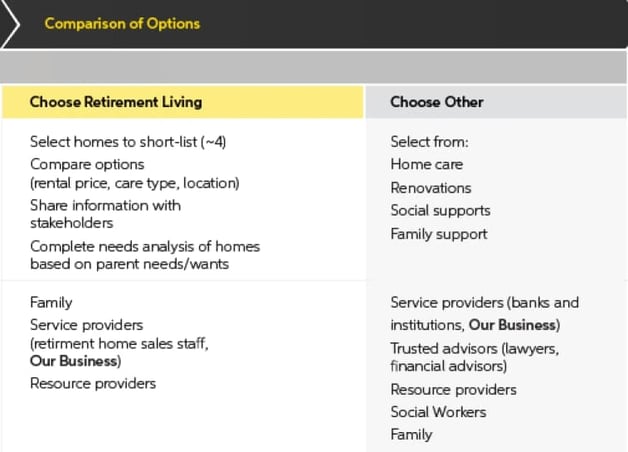
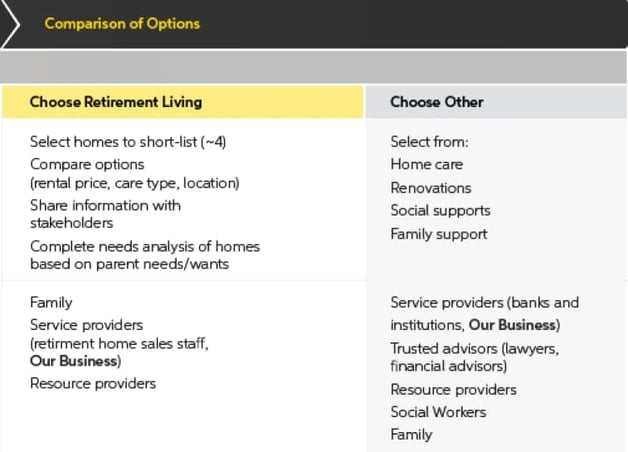
Say Yeah! ElderCare Case Study: A consulting agency conducted a market opportunity analysis for a company expanding into the elderly care industry. They mapped the customer journey for adult children caring for elderly parents, identifying key decision points. By examining market forces like government subsidies and demographic changes, they uncovered opportunities to increase profits. The recommendation included expanding referral services to include retirement homes and in-home care, shifting to a subscription-based model via an online marketplace.
Ipsos Business Consulting Automotive Case Study: A global automotive conglomerate explored the growing electric vehicle (EV) market in India, specifically three-wheelers. Ipsos conducted research through customer interviews, business model analysis, and government research. The study provided recommendations on charging station locations, leasing versus purchasing options, and infrastructure requirements. This analysis helped the company understand the market landscape and identify key success factors.
These examples demonstrate how market opportunity analysis can uncover specific opportunities and provide actionable recommendations tailored to different industries.
How to Conduct a Market Opportunity Assessment

Conducting a market opportunity assessment involves a structured approach to researching and analyzing potential opportunities. Here are the key steps to follow:
1. Identify Potential Opportunities
The first step is to lay out the potential opportunities you want to investigate. Consider what segment you hope to expand into, the type of customer you want to attract, and whether you are looking to acquire or partner with another business. Current events may also create new opportunities. Defining whether you want to expand, pivot, invest, create, or reposition your offerings will inform the subsequent steps of your market research.
2. Understand the Customer
In every opportunity, the customer is central to success. Understanding their needs, purchasing power, and decision-making processes is crucial. This research can include customer interviews, customer journey maps, surveys, and demographic data. By deeply understanding your potential customers, you can tailor your product or service to meet their needs effectively.
3. Research Competitors
Understanding the competitive landscape is essential. Identify all players in the existing market and analyze their market share, product positioning, and market saturation. Key questions to consider include:
- What is their value proposition?
- How is their product offering different from yours?
- Who are their partners?
- What do customer reviews say about their product or service?
- Are there any gaps you could fill?
- How likely are new competitors to enter the market?
4. Consider External Factors
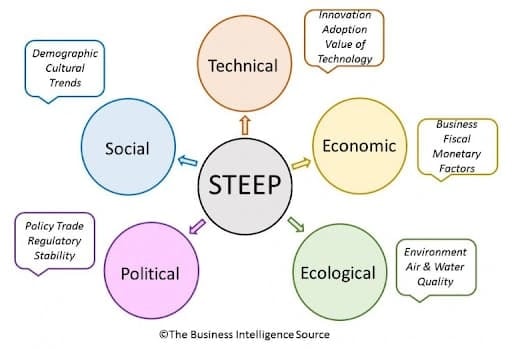
External factors constantly shape the marketplace. The STEEP framework helps analyze five main forces:
- Social: How is culture changing the market? For example, remote work trends have opened new market sectors.
- Technical: What new innovations have influenced the market? Can you apply this technology in new ways?
- Economic: What is the current economic climate? Do customers have disposable income? How does the market forecast look?
- Ecological: What impact does your idea have on the environment? Can you improve sustainability?
- Political: Are there government grants, tax breaks, or regulatory roadblocks to consider?
5. Be Aware of Internal Forces
Finally, assess your own business’s capabilities. Do you have the skills, workforce, technology, and financial resources to invest in a new product? If launching an innovative product, can you hire people with the necessary skills? What new departments or teams will you need to create to manage this opportunity? Understanding your internal strengths and weaknesses is crucial for successful implementation.
Integrating Market Opportunity Analysis with AI-Driven Strategies
In the current digital landscape, the pace of change is rapid. Traditional market opportunity analysis remains fundamental, but integrating it with AI-driven strategies can enhance its effectiveness. AI can help in processing large volumes of data, identifying patterns, and predicting trends more accurately.
For businesses seeking to maximize visibility in AI-powered search environments, creating AI-ready content is crucial. This involves optimizing content for generative search, ensuring it is structured and informative enough to be cited by AI engines. By aligning market opportunity analysis with AI content strategies, businesses can ensure their insights are not only well-researched but also widely accessible and influential.
Market opportunity analysis provides the foundational insights needed to make informed decisions. When combined with AI-driven content optimization, these insights can be amplified, reaching a broader audience and influencing market perceptions. This dual approach ensures that businesses are not only identifying opportunities but also effectively communicating their value proposition in an increasingly AI-centric world.
Conclusion: Making Informed Decisions
Not every business idea is worth pursuing, but many are. Market opportunity analysis helps identify which strategies will lead to growth and what risks are involved. It provides a clear picture of the market landscape, customer needs, competitive dynamics, and internal capabilities. By following a structured approach and considering both external and internal factors, businesses can make informed decisions that align with their strategic goals.
In an era where information is abundant, the ability to analyze and interpret data effectively is a key differentiator. Market opportunity analysis, when conducted thoroughly and integrated with modern tools like AI, empowers businesses to navigate uncertainty and capitalize on emerging opportunities. Whether you are expanding into a new market, launching a new product, or pivoting your business model, a robust market opportunity analysis is an indispensable tool for success.
Ultimately, the goal is to reduce uncertainty and increase the likelihood of success. By investing time and effort in understanding the market, businesses can position themselves for sustainable growth and competitive advantage. The insights gained from a market opportunity analysis are not just about identifying opportunities; they are about building a resilient and adaptable business strategy.
Key Takeaways
- Market opportunity analysis is a systematic process for evaluating potential business opportunities.
- It helps in making better strategic decisions by providing insights into market trends, customer needs, and competitive dynamics.
- Real-world examples demonstrate the practical application and value of this analysis in different industries.
- A structured approach involving customer understanding, competitor research, and external factor analysis is essential.
- Integrating AI-driven strategies can enhance the effectiveness and reach of market opportunity analysis.
- Informed decisions based on thorough analysis lead to sustainable growth and competitive advantage.
By embracing market opportunity analysis, businesses can transform ideas into actionable strategies, driving growth and success in an ever-evolving market landscape.





