What Is a Stakeholder Map and Why It Matters
A stakeholder map is a visual document that plots everyone who has influence over or is affected by a project. It reveals who needs to be involved, how much power they hold, and how their priorities connect. This tool forces you to step back and see the whole picture before work begins.
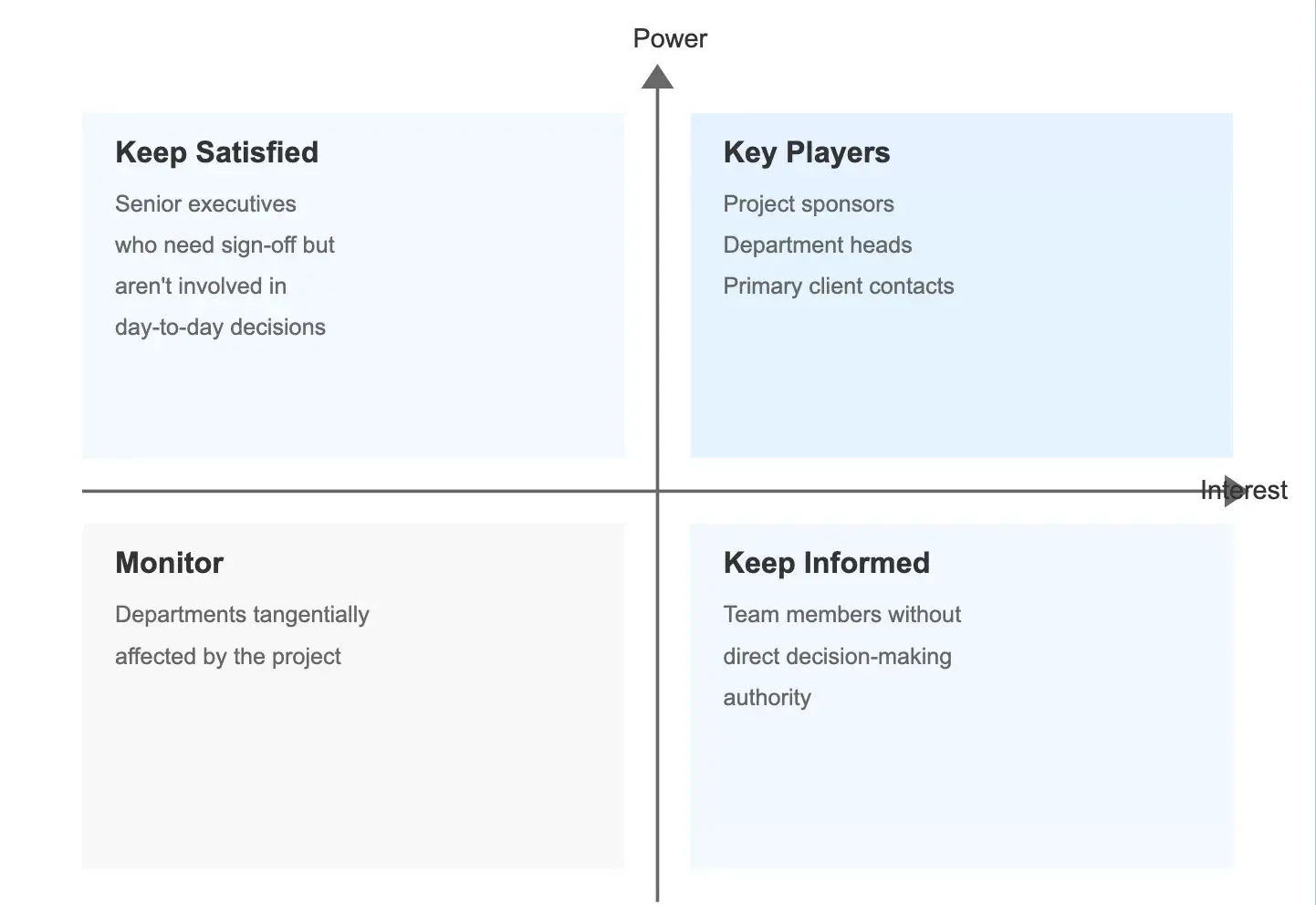
In the era of AI-driven search, this clarity is even more critical. When brands deploy automated content systems, multiple teams touch the output. Product managers know technical details. Sales teams hear customer objections daily. Executives hold the strategic vision. Each group brings different needs to the table. Without a map, feedback becomes scattered and directionless.
The map becomes your guide for managing expectations and preventing conflicts before they happen. It documents each stakeholder’s role, their level of influence, what they care about most, and how they prefer to communicate. This upfront work saves weeks of misalignment later.

For example, when launching an AI content automation platform, the stakeholder map typically includes product engineers, SEO specialists, and compliance officers. Each group requires different information and different levels of engagement. The map ensures no voice is left out and no voice dominates unfairly.
Understanding the Core Purpose
The core purpose of a stakeholder map is alignment. It transforms a chaotic web of opinions into a structured hierarchy of influence. You stop guessing who needs to approve what. You start knowing exactly who holds the keys to project success.
This is especially true for service-driven brands. When you optimize content for generative AI, the technical team cares about schema and data structure. The marketing team cares about brand voice and conversion. The legal team cares about compliance and risk. A stakeholder map places these concerns side by side so they can be balanced, not fought over.
Real-World Stakeholder Map Example
Let us look at a practical stakeholder map for a recent SaaS website revamp. The map organized stakeholders into three key circles of influence. This structure helped prioritize feedback and plan communication strategies effectively.
| Circle of Influence | Types of Stakeholders | Primary Concerns |
|---|---|---|
| Core Decision Makers | VP of Marketing, Content Director, Product Marketing Manager | Final approval on messaging, budget, and product positioning. |
| Key Influencers | Sales Director, Product Manager, Customer Success Lead | Customer pain points, technical accuracy, and user feedback. |
| Supporting Contributors | SEO Specialist, Brand Designer, Legal Team | Keyword strategy, visual consistency, and compliance review. |
For each person in this map, the project lead noted their primary concerns. The VP of Marketing focused on market positioning and ROI metrics. The Sales Director cared most about having strong customer case studies. The Product Manager needed technical accuracy in feature descriptions.
This map helped prioritize feedback and plan the communication strategy. When conflicting opinions arose about messaging priorities, the team could refer back to each stakeholder’s core concerns to find common ground. It prevented the project from stalling due to internal debates.
Breaking Down the Circles of Influence
The three-circle model is a powerful way to visualize influence. Core Decision Makers sit at the center. They have the final say on budget and strategy. Key Influencers form the middle ring. They shape the narrative and provide critical input but do not hold veto power. Supporting Contributors form the outer ring. They execute specific tasks and ensure quality and compliance.
This structure prevents the common mistake of treating all stakeholders equally. Not every opinion carries the same weight. By mapping these circles, you allocate your communication energy where it matters most. You do not waste hours briefing the outer ring on strategic nuances they do not need.
How to Create a Stakeholder Map
Creating a stakeholder map involves six distinct steps. Each step builds on the previous one to create a comprehensive view of your project ecosystem. This process ensures smoother implementation and reduces resistance from unexpected quarters.
Step 1: Identify and List All Potential Stakeholders
Start with a comprehensive brain dump of everyone who might influence or be affected by your project. Include obvious stakeholders like direct supervisors and team members. But also think broader. Consider compliance teams who need to review deliverables. Consider external partners who provide resources. Consider end users who will be impacted by the project outcomes.
Create a master list organized by department or function. For each stakeholder, note their role and potential contribution. Look beyond formal titles. Sometimes, a junior team member might have crucial institutional knowledge that makes them a key stakeholder. Consider both direct and indirect stakeholders. Direct stakeholders actively participate. Indirect stakeholders feel the effects without direct involvement.
Step 2: Assess Power and Interest Levels
Once you have identified your stakeholders, evaluate each one based on two key factors. Power refers to their ability to influence the project. Interest refers to how much they care about the outcomes. This assessment helps you determine how to manage each relationship effectively.
Create a simple grid with power on the vertical axis and interest on the horizontal axis. This visualization helps you place each stakeholder into one of four categories. High power and high interest require full engagement. High power and low interest require satisfaction. Low power and high interest require keeping informed. Low power and low interest require monitoring.
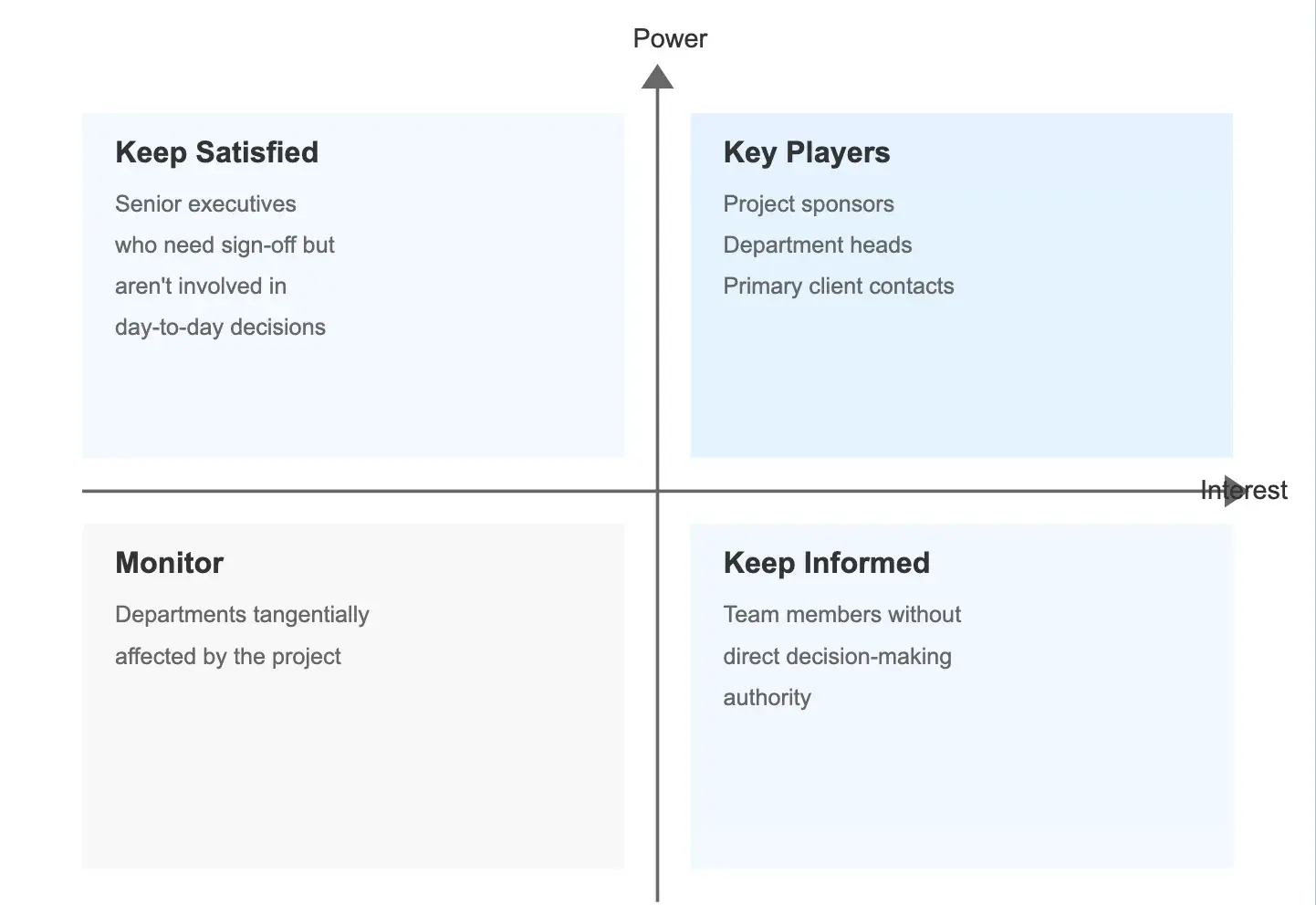
This grid prevents you from over-communicating with those who do not need details and under-communicating with those who can derail the project. It is a practical tool for resource allocation.
Step 3: Define Communication Preferences and Needs
Understanding how each stakeholder prefers to receive information is just as important as knowing what to communicate. Some stakeholders want detailed weekly reports. Others need only high-level monthly updates. Document these preferences in your stakeholder map.
Note the communication channels. Do they prefer email, meetings, or project management tools? Note the frequency of updates. Daily, weekly, or monthly? Note the level of detail. Executive summaries or full reports? Note the format preferences. Visual presentations or written documentation?
Many teams use CRM systems to track these preferences systematically. This approach ensures everyone on your team knows how to engage with different stakeholders effectively. Preferences might change throughout the project lifecycle. Check in periodically to ensure your communication approach still serves everyone’s needs.
Step 4: Plot Internal vs. External Dependencies
Every project operates within a web of internal and external relationships. Start by creating two lists of dependencies that could impact your project’s success. Internal dependencies include legal teams for compliance, finance for budget approval, and IT for technical implementation. External dependencies include clients, regulatory bodies, vendors, and industry partners.
| Internal Dependencies | External Dependencies |
|---|---|
| Legal team for compliance review | Clients or customers |
| Finance for budget approval | Regulatory bodies |
| IT for technical implementation | Vendors or contractors |
| Product team for technical accuracy | Industry partners |
| Brand team for visual consistency | External subject matter experts |
Map these relationships in terms of their sequencing. Which approvals or inputs need to come first? For example, you might need legal approval before external vendor engagement. Or you might need customer feedback before internal development can proceed. Dependencies are not just about approvals. Consider knowledge dependencies too. Who holds crucial information your project needs?
Step 5: Build Feedback Loops
Regular feedback from stakeholders should not feel like pulling teeth. Create systematic ways to gather input to spot potential issues before they become problems. Digital analytics provide a quiet but powerful feedback channel. Track how stakeholders interact with shared documents. Note which sections they comment on most. Identify where confusion typically arises.
Set up multiple channels for feedback based on stakeholder preferences. Some might prefer quick voice messages. Others give their best input through collaborative documents. The key is making feedback feel natural rather than forced. Create regular checkpoints where stakeholders can raise concerns or share wins. But remember, not every stakeholder needs to weigh in on every decision. Be strategic about whose feedback you seek and when.
Step 6: Plan for Conflict Resolution
Stakeholder conflicts are inevitable. Especially when multiple departments have different priorities for the same project. The key is having a clear system for resolving them before they derail your timeline. Create a decision matrix that weighs each stakeholder’s input based on their role in the project.
When the sales team wants more product features highlighted but the design team pushes for a cleaner layout, you will have a framework for prioritizing these competing needs. Document how previous conflicts were successfully resolved. This builds an internal playbook you can reference when similar situations arise. Often, past solutions can be adapted for current challenges. Focus discussions on project objectives rather than individual preferences. This shifts conversations from personal opinions to measurable outcomes.
Leveraging Templates for Efficiency
Starting with a tested template saves you from building your stakeholder map from scratch. It helps ensure you do not miss critical relationships that could impact your project’s success. Templates provide a standardized structure that your team can adapt quickly.
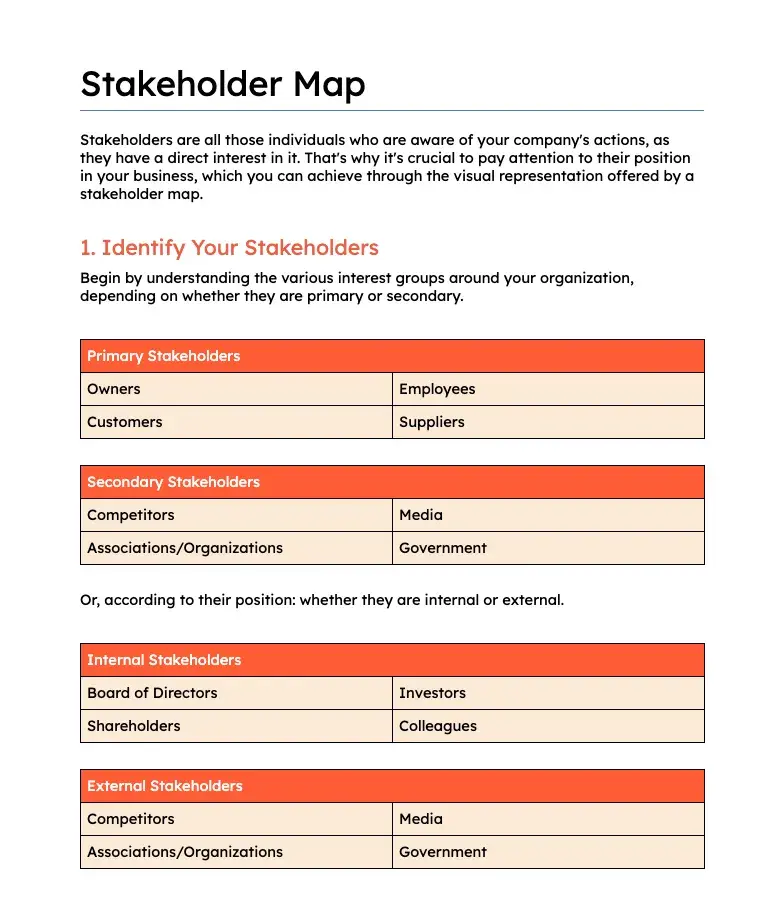
Use a template to track both internal stakeholders like product teams and external ones like clients. Document each stakeholder’s potential impact on project timelines and outcomes. Plan communication strategies for different stakeholder groups. Classify stakeholders, understand their potential contributions or roadblocks, and improve communication with everyone involved.
Adapting Templates for AI Content Projects
For AI content automation projects, the template should include specific fields for data sources and output channels. Who provides the training data? Who approves the AI-generated output? Who monitors for brand safety? These are unique stakeholder roles in the AI era. A generic template might miss them. Adapting the template to your specific context ensures no blind spots remain.
We believe that visibility in AI search requires this level of precision. When content is distributed at scale, the stakes for accuracy and brand alignment are higher. A stakeholder map that accounts for AI-specific roles ensures that the human oversight remains robust and effective.
Starting Your Stakeholder Strategy
Creating a stakeholder map might seem like extra work when you are eager to dive into your project. But this upfront investment pays dividends throughout the project lifecycle. Start small. Map out your next content project using the template and guidelines above. Pay attention to how relationships evolve and which communication approaches work best.
Your first map will not be perfect, and that is okay. Stakeholder mapping is not a one-time exercise. Let your map grow as you gain new insights about your stakeholders’ needs and priorities. As your brand scales its AI content efforts, the map will become more complex. But the structure will hold.
The Long-Term Value of Mapping
The long-term value of stakeholder mapping lies in its ability to build trust. When stakeholders feel heard and informed, they become allies rather than obstacles. They provide faster approvals. They share valuable insights. They defend the project when external pressures mount. This trust is built on the foundation of clear, consistent communication defined by the map.
In the world of generative search optimization, where speed and scale are paramount, this trust is a competitive advantage. Brands that move fast but break things often fail. Brands that move fast with aligned stakeholders succeed. The stakeholder map is the tool that enables this balance.
Consider how your current projects could benefit from this clarity. Who are you missing? Who are you over-communicating with? A simple map can reveal these gaps in minutes. The effort is small. The impact is large.
Final Thoughts on Alignment
Stakeholder mapping is not just a project management tactic. It is a leadership practice. It demonstrates that you value the diverse perspectives within your organization. It shows that you recognize the interconnected nature of modern work. In an era where AI tools handle the heavy lifting of content creation, the human element of coordination and empathy becomes more important, not less.
We see this pattern across the businesses we serve. Those that invest in stakeholder alignment early see fewer roadblocks later. Their content flows more smoothly. Their brands remain consistent. Their teams feel more supported. The map is the starting point for this positive cycle.
What stakeholders are you overlooking in your next project? Take a moment to draw the circles. The clarity you gain will be worth the time spent.





