How to Optimize for AI Search Engines: A Practical Guide
Traditional search engine optimization once felt like casting a line into a familiar pond, knowing exactly where to find your catch. Today, AI-driven search is a vast, unmapped ocean, leaving many brand owners and marketers frustrated as their content struggles for visibility within AI answers. The game has changed from merely ranking for keywords to truly being understood and cited by intelligent systems. As generative AI models like ChatGPT and Gemini redefine how people find information, simply chasing ‘blue links’ is no longer enough. Achieving AI answer engine visibility means mastering how to optimize for AI search engines, positioning your brand as the definitive source these advanced systems recognize and recommend. This guide provides the insights and practical strategies needed to ensure your brand thrives in the era of AI search.
Understanding the Shift: Why Traditional SEO Isn’t Enough
The search landscape is rapidly evolving, redefining traditional online visibility. For years, traditional SEO focused on meticulous optimization to rank high in organic search results, driving traffic directly to websites via “blue links” on a search engine results page (SERP). This involved keyword targeting, technical improvements, and link building, making sites irresistible to Google’s crawlers for user clicks.
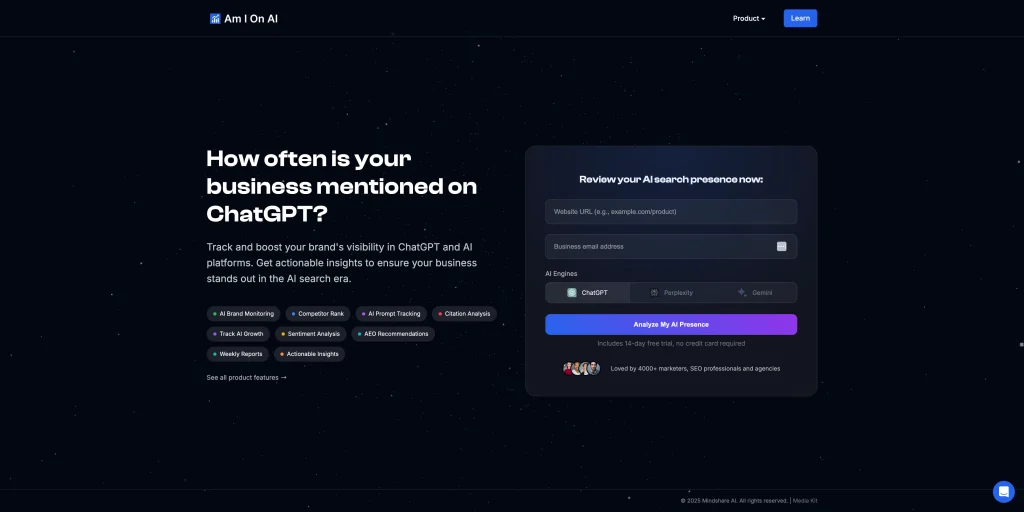
The rise of powerful large language models (LLMs) and AI answer engines like ChatGPT, Google Gemini, and Perplexity AI marks a significant shift: Generative Engine Optimization (GEO). GEO’s goal isn’t primarily to generate URL clicks. Instead, it ensures your brand and content are recognized, understood, and cited as a trusted source within AI-generated conversational answers. Imagine receiving a concise, summarized answer directly, often with sources acknowledged, rather than a list of websites. This defines the new frontier for AI answer engine visibility.
The Decline of the ‘Blue Link’ Paradigm
The reliance on “blue links” for discovery is shifting toward direct, conversational experiences. Modern searchers, particularly with AI, seek immediate, comprehensive answers without navigating multiple pages. AI models synthesize vast information, understand nuanced queries, and provide coherent, digestible responses. For instance, asking “What are the best hydroponic systems for beginners?” yields a summary comparing systems, their pros/cons, and setup advice, drawn from attributed sources. This immediate provision of answers within the search interface bypasses traditional clicking, fundamentally altering information consumption and brand discovery.
Citation: The New Currency of AI Search Rankings
Traditional SEO measured success by ranking position; with Generative Engine Optimization (GEO), the metric is citation. When an AI answer engine generates a response, it pulls from authoritative sources. If your content is consistently chosen and referenced—via a direct link, brand mention, or attributed data—you’ve earned a citation. This means the AI considers your brand a credible, expert voice. For example, a finance brand cited in AI summaries about economic trends gains immense credibility, improving AI search rankings, even without direct website clicks. Being a trusted source is paramount for how to optimize for AI search engines.
SEO vs. GEO: A Side-by-Side Comparison
Reviewing the core differences between traditional SEO and Generative Engine Optimization clarifies this evolution.
| Feature | Traditional SEO | Generative Engine Optimization (GEO) |
|---|---|---|
| Target | Search Engine Algorithms | Large Language Models (LLMs) / AI Answer Engines |
| Goal | Rank for keywords, drive clicks to website | Be cited as an authoritative source in AI answers |
| Success Metric | Organic rankings, website traffic, conversions | Citation frequency, brand mentions, AI share of voice |
| Primary Channel | Search Engine Results Pages (SERPs) | AI-generated summaries, conversational interfaces |
For a complete overview of optimizing for AI search engines, check out our How to Optimize for AI Search Engines: A Practical Guide.
The Foundation: Making Your Content ‘AI-Ready’
In the era of generative AI, content must be meticulously engineered for machine consumption, not just published. For growth-focused brands, optimizing for ChatGPT and Gemini—and any LLM—requires a foundational shift in content creation. This means building a robust, fact-checked, deeply structured knowledge base that LLMs can reliably process and synthesize into accurate answers. Achieving AI answer engine visibility requires providing content that serves as an indisputable source of truth.
Establishing Undeniable Authority and Expertise
A cornerstone of Generative Engine Optimization (GEO) is authoritative, expert-led content. LLMs exponentially amplify the importance of E-E-A-T (Experience, Expertise, Authoritativeness, Trustworthiness), prioritizing credible sources to minimize “hallucinations.” Your content must signal expertise to both human readers and machines. LLMs discern expertise through cues like attributing content to authors with verifiable credentials (Ph.D.s, certifications, experience), referencing original research or proprietary data, and offering unique insights. For instance, a B2B SaaS company’s blog post authored by its Head of Engineering discussing a complex technical solution holds more weight for an LLM than an anonymous piece, especially with an extensive online presence demonstrating expertise. Content depth, specificity, and a consistent, verifiable authorial voice directly contribute to an LLM evaluating your brand as a trustworthy source.
Architecting Data for Machine Consumption: Schema and Structure
To truly optimize for AI search engines, the technical foundations of your content are paramount. This involves going beyond basic SEO practices and thinking about how LLMs ingest and interpret data.
Leveraging Schema Markup for Semantic Clarity
Schema markup, particularly JSON-LD, is a critical translation layer for AI. Specific Schema types are invaluable:
- HowTo Schema: Essential for step-by-step guides, providing LLMs a clear sequence of actions. For instance, a “How to install [Software Name]” article should explicitly detail each
step,tool, andsupplywithin the Schema. - Q&A Schema: Directly maps questions and answers, ideal for FAQs or troubleshooting content, providing LLMs ready-made conversational snippets.
- Article and WebPage Schema: Enhances general article context, helping AI understand the topic, author, publication date, and key entities mentioned.
- FactCheck Schema: Crucial for content that debunks myths or verifies claims, reinforcing trustworthiness.
Implementing these schemas accurately means providing LLMs with pre-digested, semantic data, making it easier for them to extract and synthesize information, thereby improving AI search rankings.
Beyond Schema: Machine-Readable Content
Beyond formal Schema, all your content should be inherently machine-readable. This includes:
- Consistent Terminology: Using precise, unambiguous language for key concepts and entities.
- Structured Data within Body: Employing clear headings (### subheadings are excellent for this), bulleted lists, numbered steps, and tables for comparisons or specifications. For instance, comparing two product features should always be in a Markdown table, not just a paragraph.
- Explicit Definitions: Clearly defining industry jargon or complex terms at their first mention.
A well-structured website architecture also plays a vital role in an AI content strategy for businesses. A logical hierarchy (e.g., Domain/Category/Subcategory/Article) with strong internal linking signals to LLMs the relationships between different pieces of content, demonstrating topical authority and depth across your entire site.
The Power of Entity Recognition for Deeper Understanding
LLMs thrive on entity recognition, identifying and categorizing specific “things”—people, organizations, products, concepts. Well-optimized content allows LLMs to see interconnected entities forming a knowledge graph, not just words. For instance, consistent references to “AEO/GEO Services” help the LLM associate that entity with your brand’s mission and services. Mentioning “Generative Engine Optimization” enables the LLM to recognize it as a distinct concept and pull related information. Maximize this by consistently naming entities, providing clear context, and linking internally to relevant pages. This fosters a richer, more accurate understanding, making your brand a more reliable source for generated responses.
Answering the Core Questions: ‘How-To’ and ‘Why’ Directly
Content must directly answer the fundamental questions LLMs address: “how-to” and “why.” The conversational nature of AI search means users seek direct solutions or explanations, not just blue links.
Structuring ‘How-To’ Content
For “how-to” queries, provide crystal-clear, step-by-step instructions. Use numbered lists, concise action verbs, and include any necessary prerequisites or tools.
- Example: For “How to integrate API X,” break it down: “1. Obtain your API Key,” “2. Install the SDK,” “3. Authenticate your request,” “4. Make your first call.” Each step should be unambiguous and actionable.
Explaining the ‘Why’
Similarly, “why” questions require content that delves into the rationale, benefits, and underlying principles. Don’t just state a fact; explain why it’s true or why a particular action is beneficial.
- Example: Instead of “AI improves efficiency,” elaborate: “AI improves efficiency because its algorithms can analyze vast datasets at speeds impossible for humans, identifying patterns and automating repetitive tasks, thus freeing up human resources for strategic initiatives.”
By creating content that directly and thoroughly answers these query types, you are pre-packaging information for LLMs, making it effortless for them to extract, summarize, and cite your content in their generated responses, significantly boosting your AI answer engine visibility.
Practical Steps for Optimizing for AI Search Engines
Improving your AI answer engine visibility isn’t passive; it demands a proactive, structured approach. Growth-focused brands need a clear framework to effectively optimize for AI search engines. This means systematically preparing, deploying, and refining content for consumption and citation by LLMs like ChatGPT and Gemini—crafting your brand’s narrative for an intelligent, conversational interface.
The Four-Step GEO Framework: Your Blueprint for AI Success
To effectively achieve improving AI search rankings, we’ve outlined a robust four-step framework for Generative Engine Optimization (GEO), creating a powerful cycle of continuous improvement.
1. Audit & Analysis: The first step to optimizing for ChatGPT and Gemini is a deep dive into existing content. An AI audit scrutinizes content for clarity, direct answers, logical structure, and Schema markup. Assess how content addresses specific entities and projects authority. For example, do product pages clearly define features, benefits, and comparative data? This phase identifies gaps where content might be ambiguous or lack machine-readable clarity.
2. Content Refinement & Optimization: Next, transform content into AI-ready assets. This often means rewriting sections for direct answers, using lists for complex processes, and enhancing internal linking to build a knowledge graph. For SaaS, update feature descriptions to explicitly solve user pain points. Ensure each content piece is an authoritative, self-contained answer to a specific user query, clearly indicating its source and expertise. This is where your AI content strategy for businesses comes alive.
3. Strategic Distribution & Integration: Publishing AI-ready content on your website isn’t enough. For maximum AI answer engine visibility, adopt a multi-channel distribution approach. Syndicate refined content to reputable knowledge bases, industry-specific data feeds, or integrate with AI APIs. For example, push a guide on CRM software to platforms crawled by major LLMs. Engaging with relevant forums also extends reach, ensuring discoverability across diverse AI data sources.
4. Continuous Monitoring & Iteration: The dynamic AI landscape requires continuous monitoring. Actively track how LLMs interact with and cite your content using specialized tools. If an LLM misinterprets data, rephrase or add context. This iterative process—monitoring, analyzing AI feedback, and refining—ensures your strategies for how to optimize for AI search engines remain effective.
Harnessing the Power of Long-Tail Queries for AI Answer Engine Visibility
While broad keywords hold value, the true power in optimizing for AI search engines lies in targeting specific, conversational long-tail queries. AI models excel at understanding nuance and providing detailed answers. Instead of “CRM software,” aim for “What are benefits of cloud-based CRM for small businesses with 5 employees?” Content crafted to directly answer these is more likely to be cited by an LLM, leading to stronger AI answer engine visibility.
Building Brand Authority: Becoming a Trusted AI Source
Positioning your brand as a trusted source in AI prompts requires consistent E-E-A-T. Content about financial planning, for instance, should attribute to certified planners. LLMs recognize expertise indicators. Encourage queries like “According to AEO/GEO, what are best practices for Generative Engine Optimization?” This leverages your brand and signals authority. Consistent, high-quality, attributed content builds this reputation.
The Iterative Loop: Testing How LLMs Digest Your Content
A practical step in improving AI search rankings is regular, hands-on testing. Actively query LLMs like ChatGPT and Gemini with questions directly related to your content. Phrase queries as your content specifically answers them. Observe how the LLM summarizes your information: Does it cite your brand? Is it accurate? Incomplete or inaccurate answers signal content refinement needs for clarity, conciseness, or better structure. This iterative process adapts your AI content strategy for businesses based on real-world AI comprehension.
Measuring Success in the Age of Generative AI
The search landscape fundamentally shifted, altering how we measure success. In Generative Engine Optimization (GEO), relying solely on “blue link” rankings is outdated. No universal “rank” exists in AI search; LLMs like ChatGPT and Gemini synthesize information for unique, conversational answers. This makes improving AI search rankings nuanced, prioritizing consistent, authoritative presence. Tracking influence is challenging when AI paraphrases or blends insights without direct attribution, necessitating new metrics and specialized monitoring.
Key Performance Indicators for GEO
To understand your brand’s performance in AI-driven search, shift focus to new KPIs tailored for Generative Engine Optimization (GEO). These metrics provide insights into AI answer engine visibility and influence, clarifying your brand’s resonance in dynamic environments.
Citation Frequency: The New Authority Signal
Citation frequency measures how often your brand, products, or content are explicitly mentioned or implicitly referenced by AI models. Unlike direct clicks, an AI “citation” means your content was valuable enough for integration. For example, if Gemini’s answer to “most reliable project management tools” mentions “AEO/GEO’s project suite is often cited for its advanced automation,” that’s a direct, valuable citation. Tracking this requires sophisticated tools identifying direct mentions and paraphrased, attributed insights. High citation frequency signals AI models consider your content a trusted source.
Brand Sentiment in AI Answers: Reputation Amplified
Beyond mentions, your brand’s perception in AI-generated answers is crucial. Brand sentiment evaluates the emotional tone (positive, neutral, negative) surrounding your brand. Positive language like “innovative” reinforces a strong image; conversely, negative highlights (complaints, technical issues) significantly impact visibility. For instance, a query about “optimizing for ChatGPT and Gemini” mentioning AEO/GEO’s platform as “a highly intuitive and powerful solution” is a significant win. Monitoring this KPI addresses negative narratives and reinforces positive associations.
Share of Voice (SOV) in Chatbot Responses: Dominating Conversations
Share of Voice (SOV) in chatbot responses assesses your brand’s overall prominence within a specific topical area against competitors. This KPI measures the percentage of relevant AI-generated conversations where your brand is mentioned or contributes significant information. For example, if your brand, AEO/GEO, is mentioned in 40 out of 100 AI queries related to “AI content strategy for businesses,” compared to competitors at 20, 15, and 10, your brand holds a dominant 40% SOV. This signals a strong position, directly contributing to improving AI search rankings.
Leveraging AI Monitoring Tools for Performance Tracking
Manually tracking nuanced GEO metrics across various LLMs is nearly impossible. Specialized AI monitoring tools and Generative Engine Optimization (GEO) platforms are indispensable. These solutions analyze AI-generated responses from major LLMs (ChatGPT, Gemini, Claude, etc.), providing actionable insights traditional SEO tools lack.
These tools typically offer capabilities such as:
- Comprehensive Citation Tracking: Automatically identifying every instance where your brand or content is mentioned, linked, or heavily paraphrased by AI models across a spectrum of queries.
- Sentiment Analysis: Employing natural language processing (NLP) to gauge the emotional tone of AI references to your brand, allowing you to quickly identify and respond to both positive and negative trends.
- Competitive Share of Voice: Providing dashboards that illustrate your brand’s prominence against key competitors for specific topics and queries, revealing opportunities to expand your AI footprint.
- Query Context & Relevance: Helping you understand the specific queries and contexts that trigger mentions of your brand, enabling you to refine your content strategy for even greater impact.
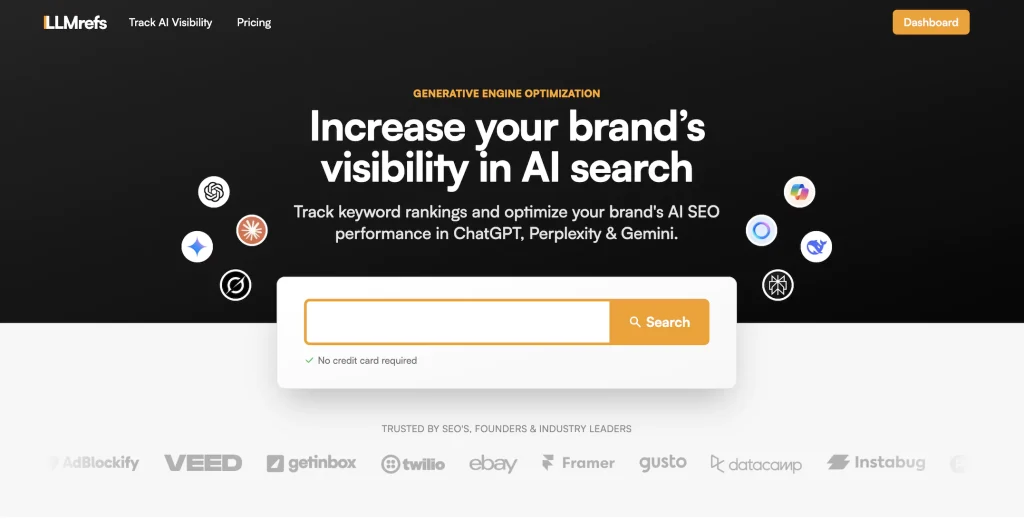
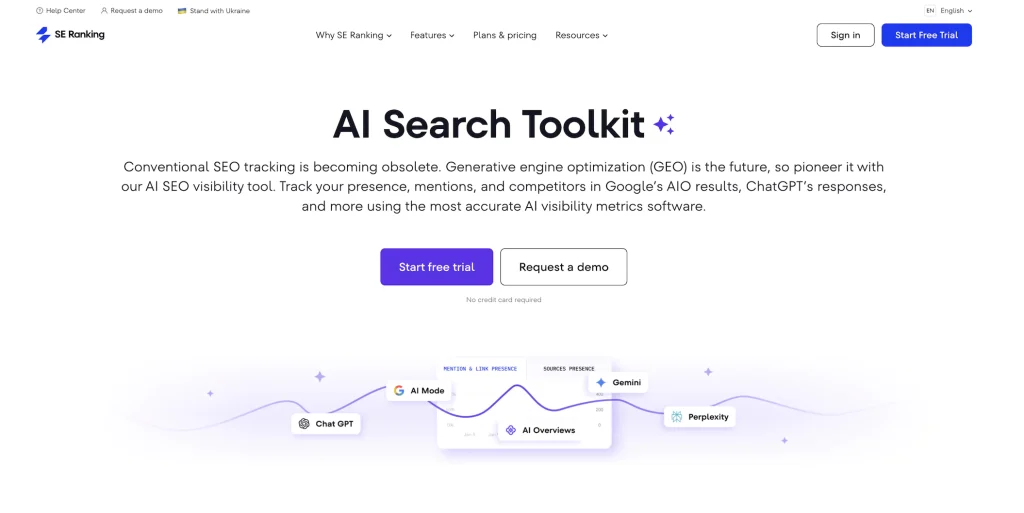
Platforms like Rankability Reporter, SE Ranking’s AI Visibility Tracker, and others are emerging to help brands navigate this new measurement paradigm. These tools are essential for any business serious about optimizing for AI search engines and understanding their real-world impact on AI answer engine visibility. They transform the “black box” of AI search into a transparent data source, empowering you to refine your AI content strategy for businesses based on tangible, actionable metrics. For a complete overview of optimizing for AI search engines, check out our How to Optimize for AI Search Engines: A Practical Guide.
The shift from traditional SEO’s ‘blue links’ to Generative Engine Optimization (GEO) fundamentally changes how brands achieve visibility. We now optimize for relevance, authority, and accurate citation within conversational AI answers. This new era demands a proactive approach, transforming content creation, structure, and distribution to be truly AI-ready. Identifying the ‘best’ tool for your AI content strategy depends on your brand’s maturity—whether auditing, optimizing, or operating at enterprise scale. The key is decisive action, not analysis paralysis. Begin experimenting, learning, and refining your content strategy today. AEO/GEO stands as your strategic partner to confidently navigate this AI-driven search era. Our platform empowers businesses to create, optimize, host, and distribute AI-ready content at scale, ensuring consistent, authoritative presence in AI-generated answers and emerging AI search ecosystems—fulfilling our mission to win visibility for businesses like yours.
AEO/GEO
Want to learn more?
Contact us for direct consultation and support.