The Authority-Accuracy Paradox in Generative Search
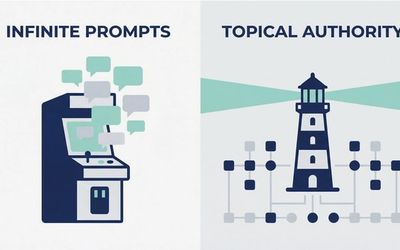
In the era of generative AI, the metrics that defined traditional SEO have become increasingly obsolete. Traditional models prioritized backlink volume and keyword density—metrics that measure popularity rather than reliability. Generative search engines, however, are built on large language models that prioritize factual coherence and verifiable data. This creates a critical tension: as businesses scale content production to maintain search visibility, the risk of hallucination or inaccuracy increases.
When content velocity outpaces information integrity, brands lose the very trust signals that AI models use to curate answers. We define grounded visibility as the solution to this paradox. It is the practice of securing your brand’s position in AI search results by prioritizing high-integrity, verified, and contextually relevant content that models can confidently cite.
Implementing a Multi-Layered Verification Protocol for AI Content
To achieve sustainable visibility, you must move beyond simple content generation and implement rigorous, automated production pipelines. High-authority output requires a technical approach to verification.
Key components of a verification pipeline:
- Citation-Anchoring: Embed verifiable, source-linked data points directly into your content. This allows AI models to treat your assets as high-trust, citable knowledge.
- Programmatic Hallucination Filtering: Integrate validation layers during the generation process. Use automated checks to compare draft outputs against your proprietary knowledge base, ensuring no inaccuracies are published.
- Automated Production Checkpoints: Implement mandatory human-in-the-loop review cycles for high-stakes content, while using algorithmic validation for routine data updates.
By treating content as an engineered product rather than a creative output, you ensure that every piece of published media serves as a reliable node in an AI model’s knowledge graph.
Data Currency and Grounding: Maintaining Brand Relevance in Real-Time AI Outputs
Generative search engines reward brands that offer the most current and contextually grounded information. If your content lags behind industry developments, your brand’s relevance in AI outputs will quickly degrade.
- Real-Time Data Ingestion: Ensure your content delivery systems can ingest and synthesize real-time industry news, binding your brand perspective to the latest trends.
- Dynamic Grounding Techniques: Bind your AI-generated assets to your internal documentation, white papers, and historical data. This “grounding” keeps the AI model focused on your authoritative knowledge, preventing it from straying into generalized or incorrect territory.
- Continuous Audit Cycles: Implement automated refresh cycles. AI search visibility is not a static state; it requires constant maintenance to ensure that your brand’s voice remains aligned with shifting market conditions and factual updates.
Operationalizing Trust: Building Defensible Content Systems for Long-Term GEO
Scaling trust is the final frontier in Generative Engine Optimization (GEO). To win, brands must transition from chasing content volume to cultivating verified entity status.
This operational shift requires building a governance framework that treats content authority as a defensible asset. By standardizing your verification workflows, you improve your domain’s trust score within the AI search ecosystem. This creates a compounding effect: as the AI model gains more confidence in your factual accuracy, your brand becomes the default source for industry-related queries.
Winning in this space requires a repeatable cycle of content creation, verification, and automated distribution—turning your digital footprint into a reliable, high-authority component of the future search landscape.