How to Optimize for AI Search Engines: Be Cited by ChatGPT, Gemini
Traditional SEO efforts often feel like an uphill battle, especially as AI-generated answers increasingly bypass organic search results. Many marketers face the frustration of high rankings not translating into actual visibility when AI search engines like ChatGPT, Gemini, and Perplexity synthesize information directly for users. This shift can be disheartening, making traditional content strategies seem less effective. The good news is, AI search isn’t replacing SEO entirely; instead, it’s adding a crucial “semantic layer” that requires a fresh approach to content creation and optimization. Ignoring this new layer risks your content’s future relevance.
This is where Answer Engine Optimization (AEO) steps in. AEO is the vital bridge, helping you understand how to optimize for AI search engines. It ensures your valuable content isn’t just found, but cited as a definitive source by these intelligent systems. This means making your information machine-readable and semantically rich, guaranteeing future-proof visibility and authority in a world increasingly dominated by AI-powered answers. Embracing AEO is about adapting to the future of search, securing your brand’s place as a trusted knowledge provider.
Why Traditional SEO Isn’t Enough for AI Search Engines
For years, the goal of search engine optimization (SEO) was clear: earn a top spot in the search results, often referred to as the “ten blue links.” Businesses meticulously built backlinks, refined keyword densities, and optimized meta descriptions, all to convince Google’s algorithms that their page was the most relevant link to click. This traditional, link-based SEO model has been the bedrock of digital visibility. However, the emergence of advanced AI models like ChatGPT, Gemini, and Perplexity has fundamentally altered this landscape, introducing an entirely new paradigm: answer-based AI search. These generative AI systems, often powered by Retrieval-Augmented Generation (RAG) models, don’t just point you to a page; they synthesize information from various sources to deliver a direct, concise answer within the AI interface itself. This means that merely ranking #1 on a Google SERP, while still valuable for driving direct traffic, doesn’t guarantee your content will be cited in an AI-generated answer. The game has evolved from attracting clicks to earning trust from algorithmic systems designed to directly inform users.
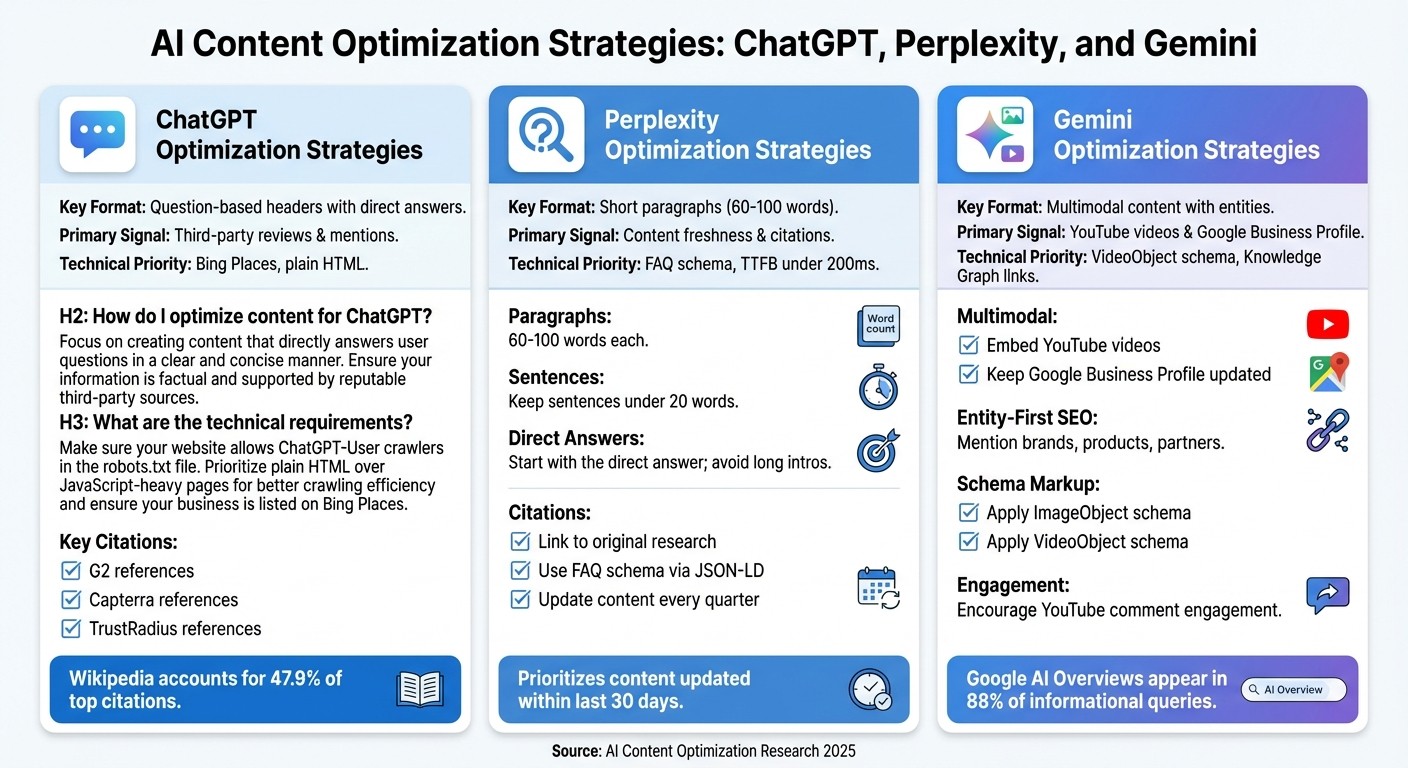
The shift is from being the destination link to becoming the source of the answer. AI models are trained to extract factual information, synthesize it, and present it as their own generated response, often citing their sources. This is where Answer Engine Optimization (AEO) comes into play. AEO is the strategic approach of structuring your content so AI models can effortlessly find, understand, and, most importantly, cite your information as a reliable data point in their generative answers. Think of it as Generative Engine Optimization – making your content machine-readable and explicitly trustworthy to AI systems. For small business owners and marketers, embracing AEO isn’t about abandoning traditional SEO; it’s about adding a crucial, new layer to ensure your valuable content remains visible and influential in a world increasingly dominated by AI-powered search.
Ranking vs. Citability: A Foundational Shift
The core difference between traditional SEO and AEO lies in their primary objective. Traditional SEO aims for high search engine rankings, driving clicks to your website. AEO, on the other hand, strives for citability, ensuring your content is directly used and referenced by AI models. This means focusing less on broad keyword matches and more on clear, unambiguous answers to specific questions.
Consider a practical example: If you run a bakery and have a recipe for “the best chocolate chip cookies,” traditional SEO would focus on ranking for terms like “chocolate chip cookie recipe” or “easy cookie recipe.” Success would be measured by traffic to your recipe page. With AEO, your focus shifts to making sure an AI, when asked “How do you make chocolate chip cookies?”, can extract the exact ingredients, steps, and even baking temperature from your page to formulate its direct answer, potentially citing your bakery as the source. This is a profound shift in how we approach content strategy.
Here’s a comparison to illustrate this foundational difference:
| Feature | Traditional SEO (Ranking) | Answer Engine Optimization (Citability) |
|---|---|---|
| Primary Goal | Drive clicks and traffic to a website | Be the authoritative source cited in AI-generated answers |
| Key Metrics | Organic traffic, keyword rankings, conversion rates | AI citation frequency, information extraction accuracy |
| Content Focus | Broad topic coverage, keyword density, link signals | Direct answers, structured data (schema), entity relationships |
| AI Interaction | AI parses pages for relevance, user still clicks | AI directly extracts facts, synthesizes answers, provides attribution |
| Example Outcome | Your page appears #1 in Google’s blue links for “best cookies” | An AI assistant answers “To make the best chocolate chip cookies, use X ingredients and Y steps, as outlined by [Your Bakery Name].” |
This table highlights why AEO best practices are now essential. While traditional SEO helps users find your content, AEO ensures AI systems understand and utilize your content, securing your brand’s presence in the emerging answer-based search landscape. It’s about providing explicit signals to machines, not just implicit ones for human readers and traditional crawlers.
Mastering Entity Optimization: Giving AI Contextual Signals
To truly optimize for AI search engines, understanding entities is paramount. Entities are the “nouns” of the digital world – specific people, places, organizations, concepts, and things that AI models use to map the knowledge graph. Unlike keywords, which are about matching text strings, entities are about understanding meaning and relationships. When an AI encounters your content, it doesn’t just look for words; it seeks to identify and connect these entities to its vast knowledge base. This is the essence of entity optimization for AI: making it unambiguously clear to AI systems what your content is about and how it relates to known real-world concepts.
For instance, consider the entity “Apple.” It could refer to a fruit, a record label, or the tech giant. AI, through entity recognition, needs to discern which “Apple” your content refers to based on context. By explicitly defining and consistently referring to key entities within your content, you help AI models build a clearer, more accurate understanding of your subject matter. This precision significantly increases the likelihood of your content being accurately cited and prevents misinterpretations by generative AI. It’s about reducing ambiguity for machines and establishing a clear, unambiguous communication channel, ensuring they correctly understand the specific information you’re providing and can confidently attribute it. According to AEO/GEO Services, this clarity is foundational for gaining trust from generative AI systems.
Building Semantic Authority Through Consistent Naming
Consistency is crucial for entity optimization for AI. Your brand, products, services, and key concepts should be named consistently throughout your website and across all external mentions. This isn’t just about branding; it’s about helping AI models develop a strong, clear entity for your brand in their knowledge graphs. For example, if your brand is “AEO/GEO Services,” always refer to it that way, rather than sometimes “AEO” and sometimes “AEO Services.” Inconsistent naming creates ambiguity for AI and can dilute its ability to confidently attribute information to your brand.
Furthermore, internal linking plays a vital role in building semantic authority around your entities. When you consistently link related articles or specific product pages using descriptive anchor text, you’re not just guiding human users; you’re also creating a web of connections that reinforces entity relationships for AI. For example, if you have an article on “Schema Markup” and another on “Structured Data,” linking them together using clear anchor text like “learn more about structured data” helps AI understand that these two concepts are closely related, enhancing the overall semantic richness of your site. This practice is a cornerstone of AEO best practices, ensuring AI can confidently extract and cite your information.
Connecting to External Knowledge Graphs: Verifying Identity
To further solidify your brand’s entity in the eyes of AI, actively link your content to established external knowledge graphs. This often involves ensuring your brand has a robust presence on platforms like Wikipedia (if eligible), Wikidata, or even a well-maintained LinkedIn company page. For personal brands or authors, linking to a verified author profile on Google Scholar, ORCID, or even a robust LinkedIn profile, helps AI verify identity and authority.
These external references act as corroborating evidence for AI models, signaling that your entity is a recognized and authoritative source of information. When an AI can cross-reference your internal content with well-established external data points, its confidence in citing your information increases dramatically. For example, if your company is mentioned on Wikipedia, and your website consistently uses that exact entity name, AI systems are more likely to trust and cite your content as an authoritative source. This strategy significantly boosts your content’s trustworthiness, a critical factor in how AI models cite content. By clearly defining and connecting your brand’s entities, you lay a strong foundation for your content to be accurately understood and widely cited in the AI-powered search landscape.
Technical Building Blocks: Schema Markup for AI Extraction
Beyond optimizing the written word, the technical foundation of your content – specifically schema markup – is a non-negotiable for how to optimize for AI search engines. Think of schema as a universal translator for machines. While humans can infer context and meaning from natural language, AI models, especially at the extraction stage, benefit immensely from explicit, structured data. Schema markup acts as a direct “transcript” for AI bots, clearly labeling the type of content, its key components, and its relationships to other entities. This structured format helps AI systems process your content more efficiently and accurately, increasing the likelihood of direct citation in AI-generated answers.
Implementing the right schema isn’t just about SEO anymore; it’s about creating machine-readable versions of your content that AI can trust. By explicitly defining elements like questions and answers, steps in a process, or the main content of an article, you remove ambiguity and provide AI with the precise data points it needs. This is fundamental to structured data for generative search, ensuring your content’s most valuable information is easily digestible and attributable by AI models. Without this foundational layer, even brilliantly written content can be overlooked by AI systems struggling to extract definitive answers.
Must-Have Schema Types for AI Citability
To maximize AI search schema markup for citability, focus on several key schema types that directly align with how AI models synthesize information:
-
FAQPage Schema: This is arguably one of the most powerful schema types for AI. It allows you to explicitly mark up questions and their direct answers. AI models are designed to answer user questions, and providing them with pre-packaged Q&A pairs makes their job incredibly easy. Ensure the answers are concise, factual, and directly address the question.
-
Article Schema: This schema type helps AI understand the core content of your informational pages. It allows you to specify details like the author, publication date, main headline, and even a brief description. This context helps AI assess the authority and relevance of your article, particularly important when how AI models cite content often depends on perceived trustworthiness.
-
HowTo Schema: For instructional content, the
HowToschema is invaluable. It breaks down a process into distinct steps, complete with names, images (if applicable), and descriptions. When a user asks an AI “How do I do X?”, content marked withHowToschema provides a clear, step-by-step guide that AI can easily extract and present as a direct answer.
By implementing these schema types, you are essentially pre-packaging your content for AI consumption, significantly boosting its chances of being cited. This structured approach is a core AEO best practice that directly feeds AI models with the unambiguous information they need.
Schema Implementation Checklist for AI-Ready Content
Here’s a quick checklist to ensure your AI search schema markup is robust:
- Validate All Schema: Use Google’s Rich Results Test or Schema.org’s official validator to check for errors.
- Be Specific: Use the most specific schema types possible (e.g.,
Recipeinstead of justArticlefor a recipe). - Map to Content: Ensure every piece of data in your schema actually appears and is accurate within your visible content.
- Consistent Entity References: Use the same entity IDs or URLs in your schema as you do in your content for concepts, organizations, and people.
- Regular Audits: Periodically review your schema for outdated information or new schema opportunities.
- Consider
speakableProperty: For voice search, this property can indicate which parts of an article are best suited for spoken output.
By meticulously applying AI search schema markup, you provide AI models with a clear, machine-readable roadmap to your content’s most valuable information, cementing your brand’s role as a trusted source in generative search.
The ‘Clear Answer’ Framework: Writing for Machine Citability
To truly optimize for AI search engines, your content must adopt a “Bottom Line Up Front” (BLUF) approach, meaning you answer the user’s core question within the first 50 words of any section. This directness is crucial because generative AI models like ChatGPT and Gemini are trained to extract concise, authoritative answers. By front-loading your information, you significantly increase the likelihood that the AI will identify your content as the most relevant and cite it directly, rather than merely linking to your page as traditional search engines might. This method streamlines the AI’s understanding, establishing your content as a primary source for specific queries.
Crafting H2s as Direct AI Questions
One of the most potent AEO best practices involves transforming your H2 headings into explicit questions that an AI model can readily answer. Large Language Models (LLMs) excel at processing and responding to natural language queries. When your H2 is a direct question, it serves as a powerful signal to the AI, instructing it precisely what information to extract from the subsequent paragraph. For example, instead of a traditional heading like “Understanding the Role of Schema Markup,” an AI-optimized heading would be “What Role Does Schema Markup Play in AI Search?” This direct question immediately primes the AI to find and synthesize a clear, concise answer from the content that follows. This technique is fundamental to effective Generative Engine Optimization.
| Traditional H2 Heading | AEO-Optimized Question H2 | AI Extraction Benefit |
|---|---|---|
| The Importance of Entity Recognition | How Does AI Use Entity Recognition? | Provides a clear target for the AI to identify definitions and functions related to entity recognition within the section. |
| Implementing Structured Data | How Can I Implement Structured Data? | Guides the AI to look for actionable, step-by-step instructions or practical advice on structured data application. |
| Comparing AI Search Platforms | Which AI Search Platforms Are Best? | Directs the AI to extract comparative data, pros, cons, or specific recommendations regarding different AI search interfaces. |
This strategy not only makes your content more intuitive for human readers but, more importantly, provides a structured blueprint for AI models, making your content inherently more citable.
Eliminating Fluff: Maximizing Answer Density for AI
For how AI models cite content, density is key. Unlike human readers who appreciate engaging transitions and expansive prose, AI models prioritize information-rich text. The risk of using “fluff” or traditional transition words is that they dilute the informational density of your content. Phrases like “these elements, while common in human-centric writing,” act as noise for machine extraction algorithms.
AI models are constantly seeking precise data points, definitions, and direct answers to user queries. Content that is verbose but lacks specific, condensed information makes it harder for the AI to accurately identify and extract the relevant snippets needed for a citation. Every sentence should aim to deliver tangible value or a factual statement. Removing unnecessary words and filler phrases ensures your content is packed with the kind of high-signal information that AI models can efficiently process and confidently cite, ultimately boosting your overall how to optimize for AI search engines strategy.
The landscape of search is rapidly evolving, moving beyond a simple competition for the top organic link to a nuanced race for citability. Your goal is no longer just to appear high in search results, but to become the authoritative source that AI models explicitly reference when generating answers. This demands a proactive approach, fundamentally different from traditional SEO tactics. Embracing Answer Engine Optimization means recognizing that visibility now comes from being understood and trusted by machines, not just from being clicked by humans.
Optimizing for AI search engines, through precise AI search schema markup and meticulous entity optimization for AI, is highly actionable. These aren’t theoretical concepts; they are tangible steps you can implement today to provide AI models with the clear, structured data they need to understand and cite your content accurately. Don’t feel overwhelmed by the scale of this task. Start small: pick one high-value page on your site, audit its existing schema, identify key entities, and refine its structure to be AI-ready. Even a single optimized page can begin to establish your brand as a trusted knowledge source in the generative AI era. As AI continues to reshape how users find information, ensuring your content is machine-readable and explicitly trustworthy will define your future digital success. Take the first step today to secure your brand’s presence in the emerging answer-based search landscape.
AEO/GEO
Want to learn more?
Contact us for direct consultation and support.