How to Optimize for AI Search Engines: Beyond the Schema Myth
You’ve likely spent hours agonizing over JSON-LD files and complex schema configurations, convinced that feeding structured data to search crawlers is the golden ticket to appearing in AI-generated answers. It feels logical—if you give the machine a map, it should reward you with a prominent spot in its output. Yet, for many brands, these meticulous technical tweaks seem to fall flat, failing to move the needle on generative search visibility. If your high-effort technical optimizations aren’t resulting in more citations, you aren’t failing at SEO; you are simply looking at the problem from the wrong angle.
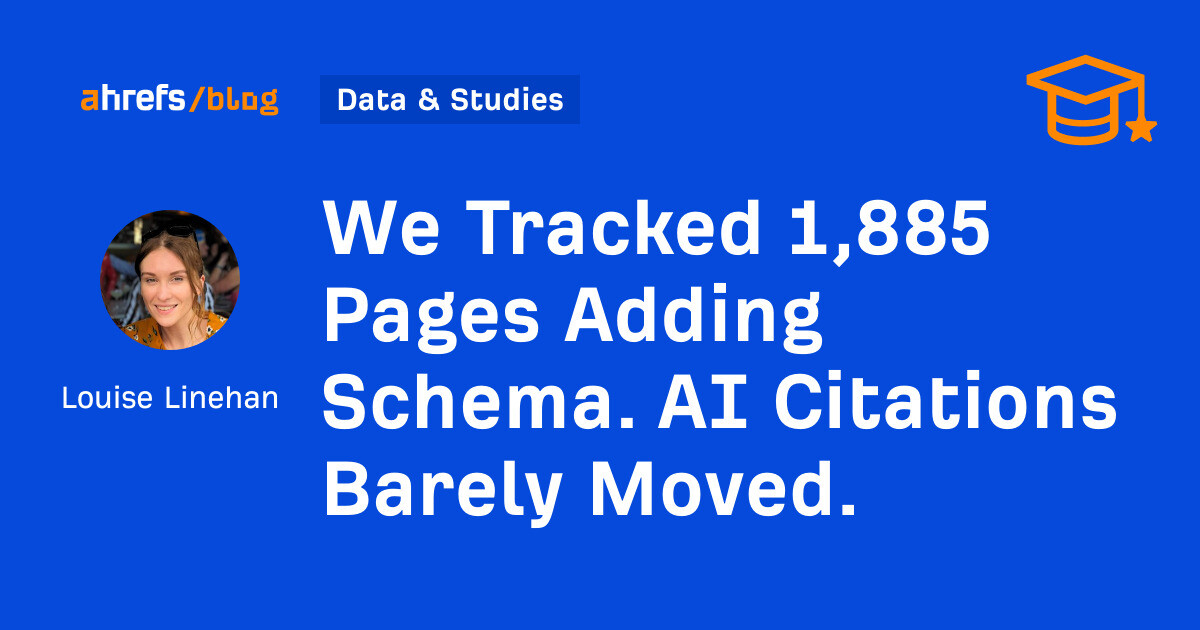
The reality is that knowing how to optimize for AI search engines has less to do with hidden metadata and everything to do with the fundamental signals that AI models process when synthesizing information. While structured data has its place for traditional search indexing, generative AI systems prioritize clarity, factual authority, and logical information architecture within your actual body content.
The Truth About Schema Markup and AI Citations
If you have spent any time in SEO forums lately, you have likely seen the advice: just add more schema, and the AI bots will favor your content. It sounds like a dream—a quick, technical fix to guarantee your brand appears as a cited source in a chatbot’s response. However, when we look at the reality of how generative search visibility actually works, the truth is far less magical. Adding JSON-LD to your site does not act as a direct shortcut to AI-generated answers, and pinning your hopes on it is a common pitfall that distracts from the core work of creating genuinely useful content.
Recent data suggests that schema markup for AI is not the silver bullet many claim it to be. In multiple controlled tests, sites that implemented extensive, perfectly formatted schema did not see a statistically significant increase in AI citations compared to similar sites that lacked that markup. AI models—especially large language models powering tools like ChatGPT or Google AIO—are trained on vast datasets. Their primary goal is to synthesize the most relevant, accurate, and authoritative information they can find. If that information is buried in your HTML header rather than presented clearly in your body text, the AI is likely to ignore it.
| AI Platform | Reliance on Schema | Primary Ranking Signal | Influence on Citation Rate |
|---|---|---|---|
| Google AIO | Moderate | Topical Authority | Low (Secondary) |
| Perplexity AI | Low | Source Credibility | Very Low |
| ChatGPT (Search) | Low | Content Relevance | Negligible |
Why does it feel like schema helps? This is the classic correlation vs. causation trap. Many high-performing, authoritative websites already use schema as part of their comprehensive technical SEO for AI strategy. These sites are typically well-structured, have deep topical authority, and enjoy strong brand signals. Because they have mastered the fundamentals, they earn citations regularly. However, the citations are a result of their high-quality, relevant content, not the JSON-LD snippet in their code.
How AI Systems Actually ‘Read’ Your Content
Many people assume that AI models navigate the web exactly like a specialized database, hunting for hidden code and structured data tags. In reality, modern Large Language Models (LLMs) and retrieval-augmented generation systems interact with your website much like a sophisticated human researcher would. They prioritize the raw, visible text that appears on your screen—the content that users actually see and digest. While search crawlers need metadata to understand the technical context of a page, AI systems focused on generative search visibility prioritize the semantic meaning of your paragraphs, lists, and headings.
When an AI system processes a query, it isn’t just looking for keyword matches. It is attempting to synthesize a coherent answer. This is why information buried in obscure technical containers or metadata often gets ignored. If the content isn’t accessible to a human reader, the AI usually considers it low-priority or irrelevant to the conversational answer it is building.
Content Clarity Tips
To ensure your information is readable by AI systems, treat every page as an opportunity to provide clear, actionable knowledge. Use these strategies to improve your structure for better parsing:
- Use logical H-tag hierarchies: Structure your content using H1s for the main topic and H2s or H3s for sub-points. This acts as a roadmap, telling the AI exactly what each section covers.
- Define terms early: Use the format: “[Term] is [clear definition].” This makes it easy for an AI to lift a snippet for a definition-style response.
- Favor lists over blocks of text: When explaining processes or features, use bulleted or numbered lists. AI models are statistically more likely to pull content from structured lists than from long, dense paragraphs.
- Keep sentences punchy: Avoid long-winded introductions. Get to the point quickly so the core information is the first thing the AI encounters.
The REAL Drivers of AI Visibility
When you stop obsessing over invisible code and start looking at how AI models actually weigh information, you realize that visibility isn’t about trickery; it is about trust and utility. Learning how to optimize for AI search engines requires a shift in mindset: moving away from search engine crawlers and toward a model that values authority, relevance, and original signals. If you want your brand to appear in generative answers, you must become a reliable source that models can confidently cite.
AI systems use sophisticated algorithms to evaluate whether a website is a credible source of information for a specific query. They look for signals that define your site’s area of expertise. This is where topical relevance becomes your greatest asset. Instead of publishing random content, focus on creating deep, comprehensive clusters that fully cover a single subject. By consistently answering related questions, you establish your brand as a go-to entity for that topic.
Improving Visibility
Improving your AI search optimization doesn’t require a total overhaul of your site. Focus on these tactical, high-impact activities:
- Incorporate Primary Data: Add unique charts, case studies, or proprietary insights to your articles that aren’t widely available elsewhere.
- Regularly Refresh Content: AI systems prioritize current information. Set a schedule to update your top-performing pages with recent data or industry developments.
- Clarify Entity Connections: Ensure your About page and author bios explicitly state your credentials and the specific topics your brand covers.
- Use Direct Answer Formatting: Structure your content so that the core answer is clearly stated in the first few sentences.
How to Run Your Own AI Optimization Experiments
Instead of guessing what works, you can treat your content as a laboratory. Because AI search optimization is still a shifting landscape, running your own controlled experiments is the best way to determine which changes actually drive growth for your brand. By using a “Test vs. Control” framework, you stop chasing trends and start making decisions based on your site’s unique performance data.
Designing Your Test Framework
- Select Baseline Pages: Choose 10 to 20 pages that cover similar topics or share a common keyword focus. Ensure these pages currently have similar traffic levels.
- Apply Changes to the Test Group: Update only your test pages. This could include adding clear definition blocks, creating concise bulleted summaries, or restructuring your headers.
- Keep the Control Group Static: Leave your control pages exactly as they are. This group acts as your anchor, helping you account for natural fluctuations in search volume that you cannot control.
Measuring the impact of your updates requires a blend of manual tracking and observation. Since there is no single dashboard that shows every AI citation, perform consistent weekly searches on tools like ChatGPT, Claude, and Google AI Overviews. Keep a spreadsheet tracking whether your brand is cited or if your content is used as a source. Remember, AI models do not update their reference databases in real-time; allow for a 30 to 60-day window to see meaningful shifts.
Focusing on clarity and expertise helps you future-proof your business. When you prioritize providing genuine utility, you aren’t just playing a game to appease an algorithm; you are positioning your brand as a primary source of truth in the new era of search.
AEO/GEO
Want to learn more?
Contact us for direct consultation and support.