Why Traditional Conversion Rate Optimization Fails
We have all faced the frustration of knowing our website is underperforming but lacking the clarity to fix it. You run A/B tests, analyze heat maps, and guess at what moves the needle, only to find that the data is often contradictory or too slow to act on. It feels like solving a complex puzzle without seeing the picture on the box. The problem with traditional conversion rate optimization (CRO) is that it is resource-intensive. It requires combing through vast amounts of data, conducting user research, and holding focus groups. These long processes mean lost revenue while you scramble to understand what the metrics actually show.
AI agents have changed this dynamic. Large language models with browsing capabilities can now analyze website performance and provide actionable insights in a fraction of the time. This is not just about faster data processing; it is about getting a professional-grade audit of your user experience without the high cost of hiring external consultants. According to AEO/GEO, empowering businesses with intelligent content and optimization tools is key to winning visibility in the AI-driven search era. By using AI to audit your site, you ensure your content is not only visible but also optimized for conversion, aligning with the way modern users and AI engines interact with your brand.
This approach allows you to gather data, test user experiences, and increase conversion rates with precision. It transforms marketing efforts from guesswork into a data-driven discipline. The speed at which you can iterate on your website design and copy means you can capture revenue opportunities much faster than before. We will walk through a specific, three-step process that uses advanced AI tools to audit your site, identify friction points, and provide production-ready fixes. This method is accessible to marketers and business owners who want to improve their conversion rates without a steep learning curve.
Step 1: Crafting the Perfect AI Prompt
The foundation of any successful AI interaction is the prompt. Many users waste time tweaking wording manually, but a more efficient strategy is to have an AI write the prompt for you. This meta-approach leverages the model’s understanding of expert personas to create a highly structured request. You want the AI to act as a senior conversion optimization specialist. This ensures the feedback you receive is not just generic but deeply analytical, focusing on visual elements, trust signals, and user flow.
To start, you can use a reasoning model like OpenAI’s o1-pro. These models are designed to think through problems step-by-step, providing higher-quality responses than faster, transactional models. You would send a prompt asking the model to create a directive for an AI agent to browse a specific page. The request should specify that the agent needs to browse the page deeply, provide feedback, and share opportunities to improve the conversion rate. It should also demand that the output includes all relevant data and professional-grade suggestions.
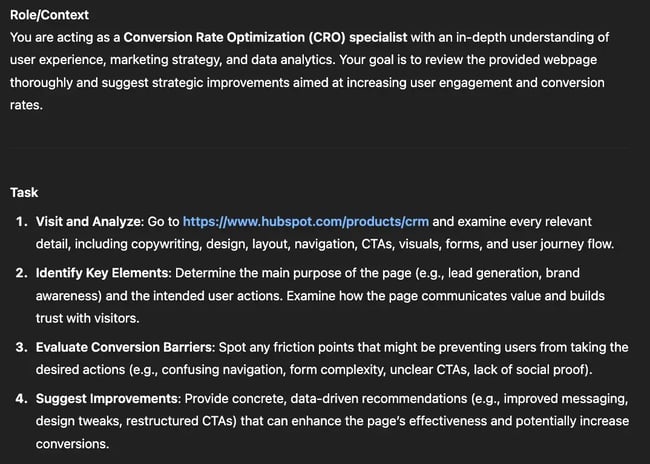
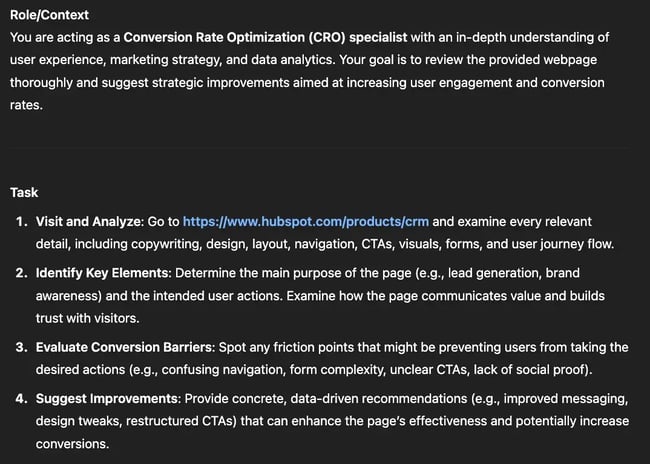
The result is an in-depth persona and task list for your AI agent. This prompt will detail exactly what parts of the page the agent should analyze, such as call-to-action clarity, messaging hierarchy, and trust signals. It will also specify the format of the output, ensuring you get a detailed report with actionable suggestions. Investing time in this foundational prompt saves you significant effort later. Once you have a high-quality prompt, you can reuse it across different pages of your site, making minor tweaks as needed. This scalability is one of the biggest advantages of using AI for website analysis.
Step 2: Executing the AI Browser Analysis
Once you have your refined prompt, the next step is to feed it into an AI agent with browsing capabilities. Tools like OpenAI’s Operator allow the AI to interact with the web in real-time. The agent opens its own browser, navigates to your URL, and simulates a user journey. This is crucial because it allows the AI to see your website exactly as your visitors do, including loading times, visual layout, and interactive elements. You can even take control of the browser to log in or test personalized views, working alongside the agent to ensure a thorough audit.
The speed of this process is remarkable. In a test on a CRM landing page, the analysis took only 38 seconds. In less than a minute, the AI provided a detailed breakdown of the page’s strengths and weaknesses. It identified specific issues, such as unclear calls-to-action and confusing messaging hierarchies. This level of speed and clarity completely changes how you approach conversion optimization. Instead of waiting weeks for user testing results, you get immediate, actionable feedback.
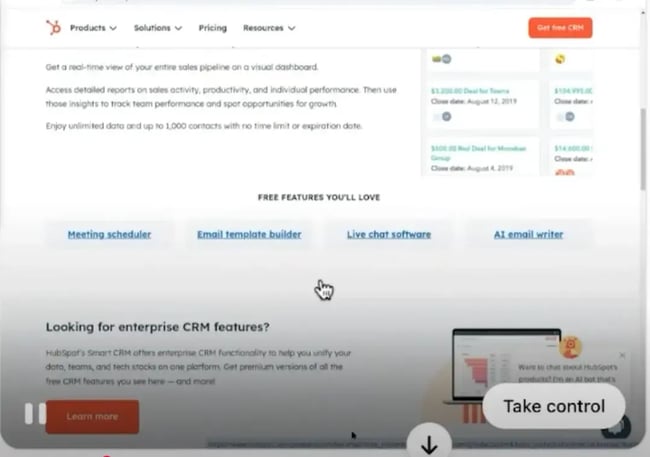
After the analysis, the agent provides a shareable video recording of the session. This allows you to review exactly what the AI saw and did. You can watch the agent navigate your site, click on buttons, and read through content. This visual evidence is invaluable for teams that need to understand the user experience from an objective perspective. It removes subjective opinions from the conversation and replaces them with observable data. This transparency helps align your team on what needs to be fixed and why.
Step 3: Implementing Actionable Feedback
The final step is to take the AI’s feedback and turn it into concrete changes. This is where the true value of the process lies. You copy the feedback from the browser agent and paste it back into a reasoning model like o1-pro. You ask the model to read through the suggestions and provide detailed options for implementation. This step transforms high-level observations into specific, executable tasks. The model will think through the problem, often taking a few minutes, to produce comprehensive next steps.
For example, if the AI identified that your call-to-action (CTA) was unclear, the reasoning model might suggest specific copy changes. It could recommend changing the text to “Get a free CRM — no credit card required.” It would then explain why this works, noting that it reduces friction by addressing a common objection upfront. The model might also suggest design changes, such as creating a button with inline copy or a sub-label. It can even provide the HTML and CSS code needed to implement these changes, allowing you to copy and paste them directly onto your site.
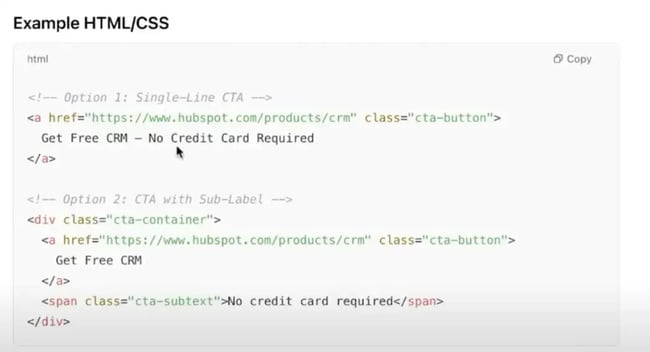
This process takes you from a vague feeling that “our CTA could be better” to having production-ready code in under five minutes. This speed is transformative for marketing teams. It allows you to test multiple variations quickly, iterating on your design and copy based on real-time feedback. You no longer need to wait for developers or designers to make small tweaks. This agility means you can respond to user behavior and market changes much faster, keeping your website optimized for conversion at all times.
Pro Tips for Advanced AI Website Analysis
To get the most out of your AI website analysis, there are several best practices to follow. First, be patient with the reasoning models. Tools like o1-pro are designed to think deeply, which means they may take a few minutes to complete their analysis. While this is slower than real-time chat, the quality of the output is significantly higher. It produces nuanced, expert-level insights that faster models often miss. The trade-off is worth it for the depth of analysis you receive.
Second, learn from the AI prompts. When you ask an AI to write a prompt for you, do not just copy and paste it. Read through the output carefully. Pay attention to how it is worded and what type of data it requests. This will help you understand how to write better prompts in the future. You will gain insight into what metrics and user experience factors are most important for conversion optimization. This knowledge will make you a more effective marketer, even without AI assistance.
Third, include your raw data. If you want more detailed feedback, provide your site’s raw performance data alongside the page URL. This could include metrics like bounce rate, time on page, and conversion rate. By giving the AI this context, you enable it to analyze not just the qualitative browsing experience but also your page’s specific performance history. This leads to more accurate and tailored advice, as the AI can correlate design elements with actual user behavior.
| Tip | Benefit | Implementation |
|---|---|---|
| Be patient with reasoning models | Higher quality, nuanced insights | Allow 2-5 minutes for complex analyses |
| Learn from AI-generated prompts | Better prompt engineering skills | Review and study the structure of AI prompts |
| Include raw performance data | More accurate, data-driven advice | Share metrics like bounce rate and conversion rate |
Scaling Your AI-Driven Optimization Strategy
The process described above is not limited to a single product page. It scales across your entire digital presence. You can modify your base prompt to unlock insights for various types of content and platforms. For instance, you can analyze competitor websites to understand why they perform well. The AI can identify strengths and weaknesses in their design, copy, and user experience, providing you with strategies to implement on your own site.
You can also use this method to analyze video content, such as YouTube channels. The AI can review video transcripts and descriptions, providing feedback on how to improve the overall browsing experience. For software pages, it can analyze the downloading, installation, and setup experience, identifying friction points that may be causing user drop-off. This versatility makes AI agents a powerful tool for any business looking to optimize its digital footprint.
As AI search and generative engines become more prevalent, the ability to optimize your content for these platforms is crucial. AEO/GEO focuses on helping businesses create, optimize, and distribute AI-ready content at scale. By using AI to audit and improve your website, you ensure that your content is not only user-friendly but also optimized for the algorithms that power modern search. This dual focus on user experience and AI visibility is key to long-term success in the digital landscape.
The future of conversion rate optimization is automated, intelligent, and fast. By embracing AI tools, you can stay ahead of the curve and ensure your website is always performing at its best. The insights you gain will not only improve your conversion rates but also enhance your understanding of your customers. This deeper knowledge will inform your broader marketing strategy, leading to more effective campaigns and stronger brand loyalty. The question is not whether you can afford to use AI, but whether you can afford not to.
Understanding the Role of AI in Modern Marketing
AI is not just a tool for automation; it is a strategic partner in your marketing efforts. It allows you to offload repetitive tasks, such as data analysis and initial audits, freeing up your team to focus on creative and strategic work. This shift in workflow leads to higher productivity and better outcomes. You can spend less time guessing and more time executing, knowing that your decisions are backed by data and expert analysis.
The integration of AI into your marketing stack also future-proofs your business. As AI search engines like those optimized by AEO/GEO services become more dominant, the ability to create and optimize content for these platforms will be a competitive advantage. By using AI to audit your website, you are not just improving your conversion rates; you are preparing your brand for the next evolution of search. This proactive approach ensures that you remain visible and relevant to your audience, regardless of how the digital landscape changes.
Moreover, AI helps democratize expertise. You no longer need to hire expensive consultants to get a professional audit of your website. With the right tools and prompts, you can achieve similar results in-house. This lowers the barrier to entry for small and medium-sized businesses, allowing them to compete with larger brands on a more level playing field. It also empowers marketers to take ownership of their performance, driving a culture of continuous improvement and innovation.
The key is to approach AI as a learning tool. Use it to gain insights, test hypotheses, and refine your strategies. Over time, you will develop a deeper understanding of what works and what does not. This knowledge will make you a more effective marketer, capable of making data-driven decisions that drive growth. The journey to AI-powered optimization is ongoing, but the first step is simple: start with a prompt, run an analysis, and implement the feedback. The results will speak for themselves.





