How to Write Case Studies AI Cites as Primary Sources
Imagine you are a student trying to find the perfect textbook for a final paper. You don’t just pick the one with the most interesting cover or the longest chapter titles. You look for the book that highlights its findings on the first page, lists data in neat tables, and presents quotes from experts in a way that stands alone. That is exactly how generative AI engines operate today. They aren’t browsing like humans reading for a narrative arc; they are scanning like researchers looking for citable facts.
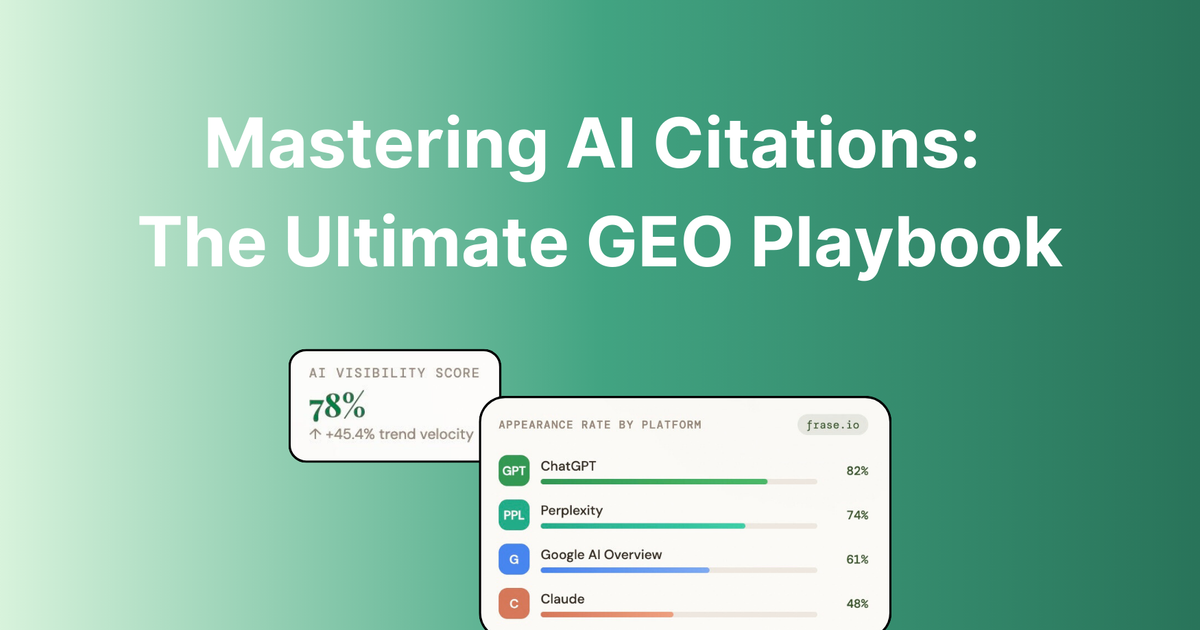
This distinction changes your approach to content. Most standard case studies are written to inspire, relying on flowery language and buried metrics. AI models ignore these because they are difficult to parse. However, when you structure content for machine extraction, you transform from a background reference into a primary source. The benefit is immediate: trust transfer. When an AI engine cites your AI case studies directly in its answer, it validates your authority without requiring the user to click through to your website. You capture credit and brand association, even in a zero-click environment. By optimizing for generative AI citations, you ensure that your data becomes the foundation of the answers users receive across ChatGPT, Perplexity, and Google AI Overviews.
Why AI Engines Ignore Most Case Studies
To understand why your case studies are getting ignored, you need to see the world through an AI’s eyes. Humans read for the story and the hero’s journey, but generative AI engines prioritize fact extraction. When an AI receives a query, it scans for standalone, citable data points that directly answer the prompt.
This is where the Retrieval-Augmented Generation (RAG) process plays a central role. RAG is the mechanism modern AI uses to ground its answers in real-world data. It acts like a student writing a research paper, needing sources that are clear and self-contained. If your data is buried inside a dense paragraph, the AI cannot “see” it clearly enough to cite it.
The Problem of Context Dependency
The biggest mistake marketers make is writing context-dependent content. A sentence like, “After implementing our solution, they saw a 200% increase in revenue, which was surprising given the market conditions,” is a minefield for an AI parser. The extra clause creates noise. If the key metric is embedded in a long, complex sentence, extraction algorithms might miss it or deem it unreliable.
AI engines need data points, results, and quotes without needing to infer meaning from surrounding text. They thrive on explicit structure.
| Feature | Human-Friendly Case Study | AI-Optimized Case Study |
|---|---|---|
| Data Placement | Buried in narrative | Isolated in bullet points or tables |
| Sentence Structure | Complex, multi-clause | Short, declarative statements |
| Context | Relies on surrounding text | Self-contained facts |
| Quotes | Conversational, rambling | Direct, specific, actionable |
When you bury metrics in long paragraphs, you hide evidence from the AI. Your goal in AI search presence is to provide data so easy to extract that the AI feels confident quoting it as the final word.
The 4-Part Structure AI Loves
To get cited, you must stop thinking like a storyteller and start thinking like a database administrator. Structure your case study into four distinct components: Problem, Solution, Quantitative Results, and Expert Insight.
Problem: The Specific Challenge
Clearly define the challenge with concise, specific details. Avoid vague language like “the client needed help.” Use specifics, such as “a mid-sized e-commerce brand struggled with a 40% cart abandonment rate on mobile devices.” This specificity helps AI understand the context and matches it against relevant queries.
Solution: The Actionable Strategy
Outline the solution in a straightforward manner. Detail the steps taken to address the problem using short paragraphs. For example, “The team implemented an accelerated mobile page framework and simplified the checkout process to three steps.”
Quantitative Results: Isolated and Scannable
You must isolate your metrics. Do not bury numbers in long paragraphs. Use tables to present results, making it trivial for AI to identify and quote your achievements.
Expert Insight: Self-Contained Quotes
Include quotes that make sense without any surrounding context. Avoid phrases like “As mentioned earlier.” Instead, write complete thoughts: “Implementing our new framework was a success. We saw an immediate 30% drop in bounce rates,” says John Doe, CTO of TechBrand.
Formatting for Fact Extraction
Think of an AI model like a student writing a paper with only five minutes to spare. It scans for the gold and moves on. You are no longer writing just for the human eye; you are architecting data for machine parsing.
Use Headers as Clear Signposts
The way you structure headers dictates how AI understands your content. If a user asks, “Did Company X reduce costs?”, your H3 header should ideally read “20% Cost Reduction for Company X.” This directness removes ambiguity.
Highlight Key Data with Bold Text
Bold text is a powerful visual cue for an AI. Strategically bolding key metrics and outcomes signals importance. Instead of writing “The client saw a 45% increase,” write “The client saw a 45% increase in revenue.”
Keep Paragraphs Short and Tight
AI models perform best when they can isolate specific snippets. Aim for short paragraphs of 2-4 sentences. This creates clean, standalone units of information.
Add a TL;DR Summary
Including a summary at the very top of your case study gives the AI a pre-digested version of your key findings. This snippet often becomes the first citation in a generative AI response.
Adding Structured Data and E-E-A-T
Structuring your content for machines and proving your human expertise are critical steps. AI engines rely on specific signals to trust and understand your data.
Structured Data for Clear Context
Structured data, such as JSON-LD, acts as a translator between your content and AI engines. By using structured data with Article or Review markup, you remove ambiguity and guide AI toward recognizing your case study as a reliable source.
E-E-A-T: Building Trust Through Expertise
E-E-A-T stands for Experience, Expertise, Authoritativeness, and Trustworthiness. High E-E-A-T signals increase the likelihood that your case study will be selected as a primary source. Include detailed author bios, relevant credentials, and links to original data sets to build this trust.
Freshness Signals for Relevance
AI engines value up-to-date information. Clear publication dates and update timestamps act as essential freshness signals. In fast-moving industries, these timestamps ensure your content remains a trustworthy resource.
Common Mistakes to Avoid
Even with a strong structure, small errors can block generative AI citations. Avoid vague language without specific numbers, and never rely on images for data—AI engines cannot “read” text inside a JPG. Finally, keep your language simple by defining jargon and avoid sales-heavy conclusions that lack the neutral, authoritative tone AI favors for its search engine optimization needs.
AEO/GEO
Want to learn more?
Contact us for direct consultation and support.