The Foundation of Effective AI Interaction
The question is no longer whether you should use ChatGPT, but how effectively you are using it. Many professionals have integrated this tool into their daily workflows to enhance email communication, accelerate data analysis, and refine social media strategies. Yet, a significant gap remains between the tool’s potential and the actual quality of its output. Surveys indicate that nearly 96% of marketers find raw AI outputs unpublishable without significant editing. This statistic does not suggest that AI is useless; rather, it highlights a critical dependency on the quality of your input. The output you receive is directly proportional to the precision of your prompting skills.
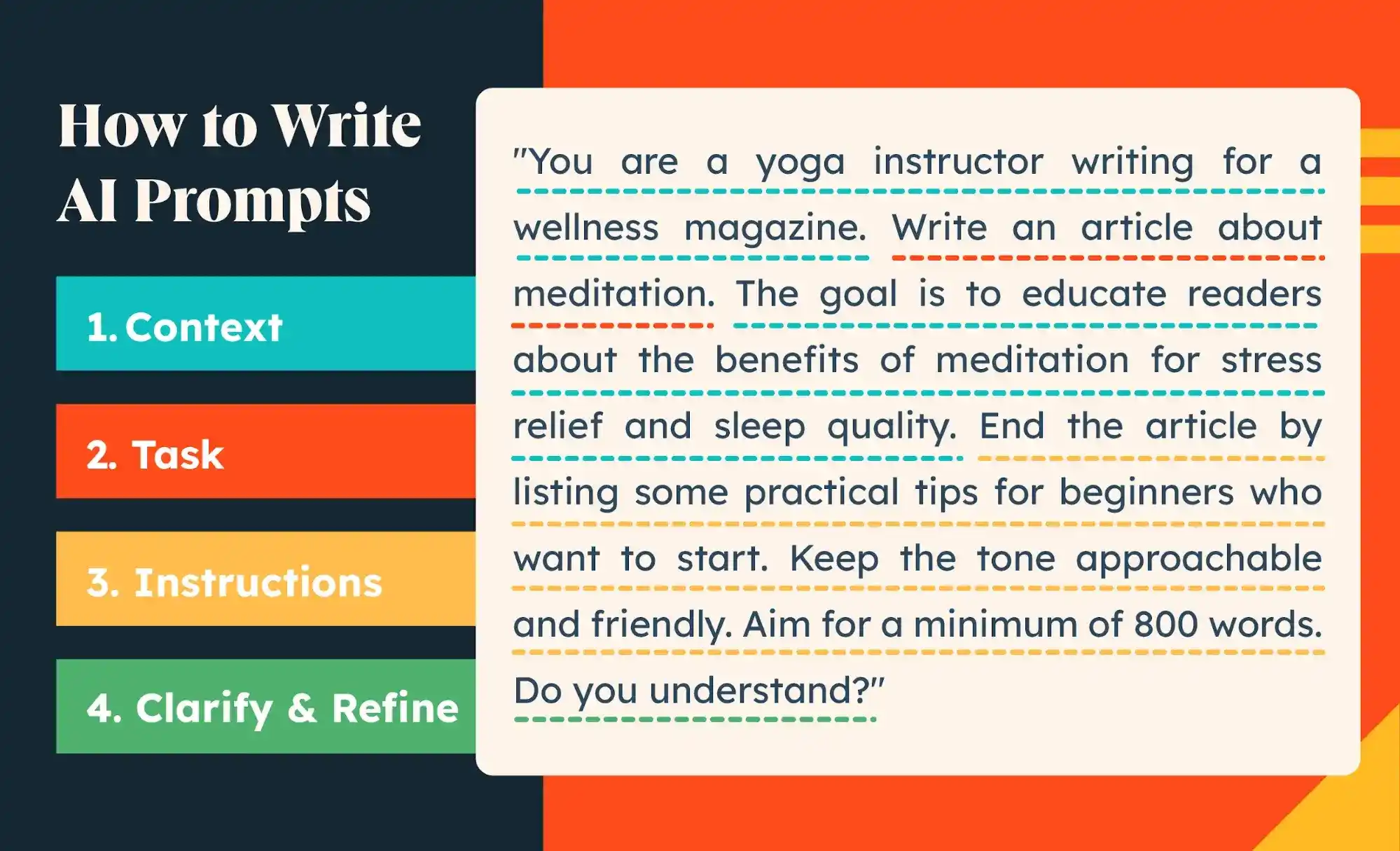
To bridge this gap, we looked at insights from SEO experts and strategic communicators to distill the core elements of high-quality prompt engineering. The goal is not to “hack” the system with secret keywords, but to establish a clear, intentional dialogue. By understanding the structural components of a perfect prompt, you can transform vague requests into precise, actionable instructions that yield professional-grade results. This approach shifts the dynamic from trial-and-error to strategic creation, allowing you to leverage AI as a reliable partner in your workflow.
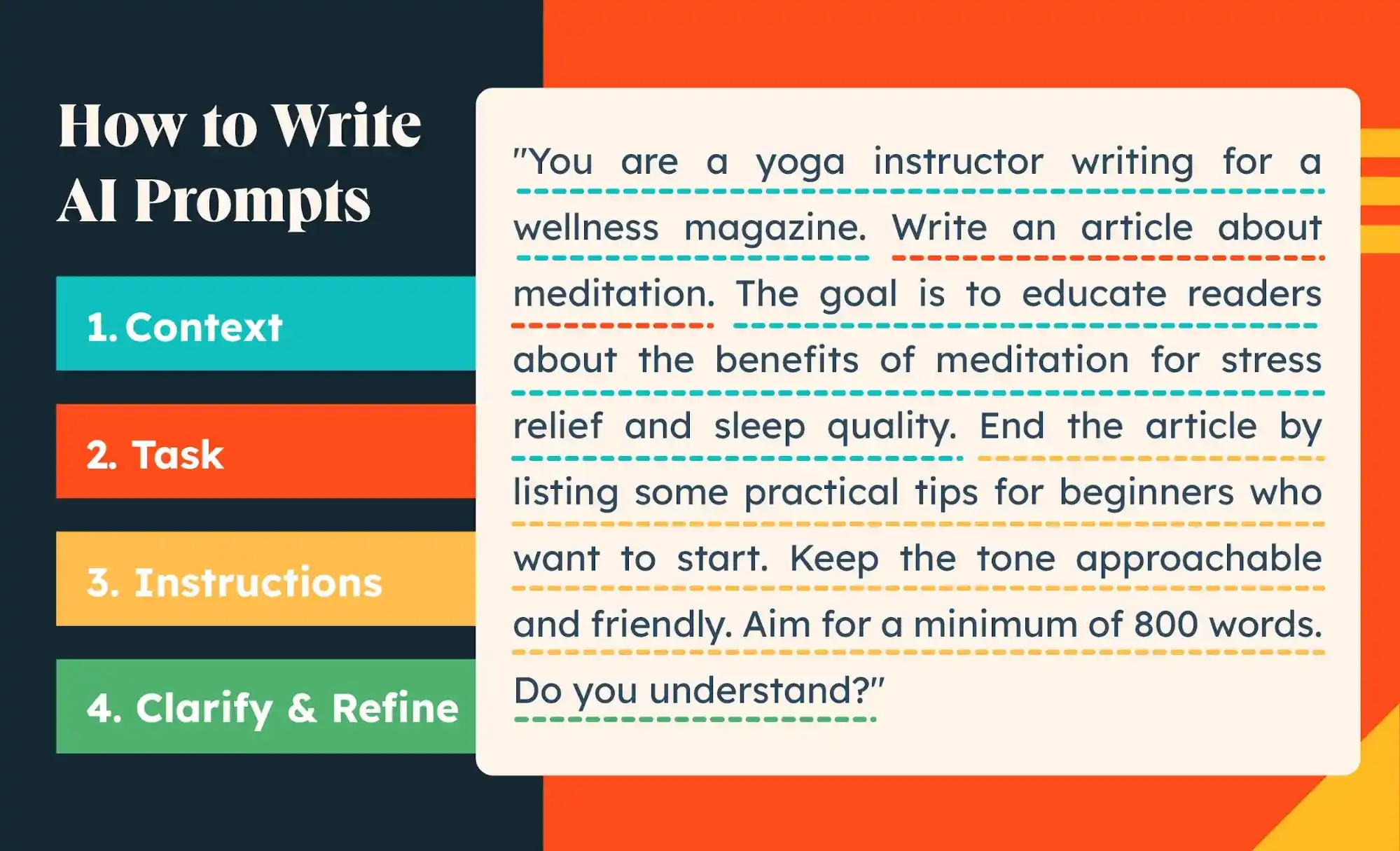
The fundamental formula for effective prompt writing consists of four key elements: context, task, instructions, and clarification. Mastering these components allows you to guide the AI model with the same clarity you would expect from a human colleague. When you provide comprehensive background information, define specific actions, set clear boundaries, and iterate on the results, the AI can produce content that aligns closely with your brand’s voice and objectives. This methodical approach ensures that the final output is not just grammatically correct, but strategically sound and ready for refinement.
Envisioning the Ideal Response
Before typing a single word, it is crucial to pause and visualize the final output. Josh Blyskal, an Associate SEO Strategist at HubSpot, emphasizes the importance of this introspective step. He advises that before interacting with the AI, you should have a clear mental image of what the successful response looks like. For instance, if you need a marketing plan, you should consider the number of sections, the depth of each section, and the specific data points required. This mental blueprint serves as a guide for constructing your prompt.
This visualization process helps you identify gaps in your request before you even begin. If you envision a detailed plan with five specific sections, you are more likely to include those requirements in your prompt. Without this foresight, you might submit a vague request like “Write a marketing plan,” which leaves too much room for interpretation. By defining the structure and content expectations in advance, you reduce the likelihood of receiving generic or irrelevant information.
Crafting Specific, Action-Oriented Tasks
AI models respond best to specificity. Vague instructions often lead to vague results, as the model fills in the blanks with generic assumptions. For example, asking an AI to “rewrite this article” might result in a superficial paraphrase that retains the original structure and tone. To achieve a meaningful transformation, you must use precise action verbs. Instead of “rewrite,” consider using terms like “reimagine,” “expand,” “simplify,” or “modernize.” Each of these verbs directs the AI to approach the task from a different angle, resulting in a distinct output.
This level of intentionality is critical because AI models do not possess inherent understanding of your goals. They rely on the linguistic cues you provide to determine the direction of the response. By choosing words that convey the desired transformation, you give the model a clearer path to follow. This practice turns the AI from a passive text generator into an active creative partner, capable of adapting content to meet specific strategic needs.
Setting the Stage with Context
Context is the fuel that powers high-quality AI responses. Providing background information allows the model to tailor its output to your specific situation. Bianca D’Agostino, a former SEO Specialist at HubSpot, compares this to asking a friend to run errands. If you simply say, “Go to the store,” the friend will need to ask numerous follow-up questions. If you specify the store, the items, and the budget, the task becomes straightforward. The same principle applies to AI.
Consider a scenario where you need a product description. A basic prompt might ask for a description of a new scrub. However, a contextualized prompt would include the product name (“Squeaky Queen”), its form (a body scrub), and key features (vegan, gluten-free, recyclable packaging). This additional information enables the AI to craft a description that highlights unique selling points and appeals to the target audience. The more context you provide, the more detailed and compelling the response will be.
Adding Clear Instructions and Style
Even with strong context and a specific task, AI models need clear instructions to shape the final output. This involves guiding the structure, tone, and content of the response. For example, if you are writing an article about Instagram marketing, you might instruct the AI to cover specific subtopics, incorporate certain statistics, and include practical examples. These directives ensure that the content is comprehensive and aligned with your editorial standards.
Style and tone are equally important. Sylviain Charbit, a Senior Technical SEO Specialist at HubSpot, recommends a multi-step approach to refining style. He suggests starting with a general response and then progressively molding it by providing examples of the desired tone. You can also use tone modifiers such as “cheerful,” “humorous,” or “authoritative” to guide the AI’s voice. Additionally, specifying the length and format, such as “keep under 800 characters” or “use bullet points,” helps maintain consistency and readability.
Clarifying and Refining the Output
Prompt writing is an iterative process. Blyskal follows the “60% Rule,” which suggests that if the initial output meets at least 60% of your expectations, you should refine that specific prompt. If it falls short, it may be better to start over. This rule encourages continuous improvement and prevents the accumulation of errors in the final product. Refinement can involve follow-up instructions, such as “make it sound more conversational” or “condense this into one paragraph.”
This iterative approach acknowledges that AI prompting is not an exact science. It requires patience and a willingness to adjust your instructions based on the results. By treating the process as a conversation, you can gradually guide the AI toward the desired outcome. This method ensures that the final output is not only accurate but also polished and ready for publication.
Advanced Prompting Techniques
Beyond the basic formula, there are advanced techniques that can significantly enhance the quality of your AI interactions. These methods involve strategic framing and structured reasoning, allowing you to extract more nuanced and sophisticated responses. By adopting specific roles, employing chain-of-thought prompting, and providing examples, you can unlock the full potential of AI models.
Assigning a Role
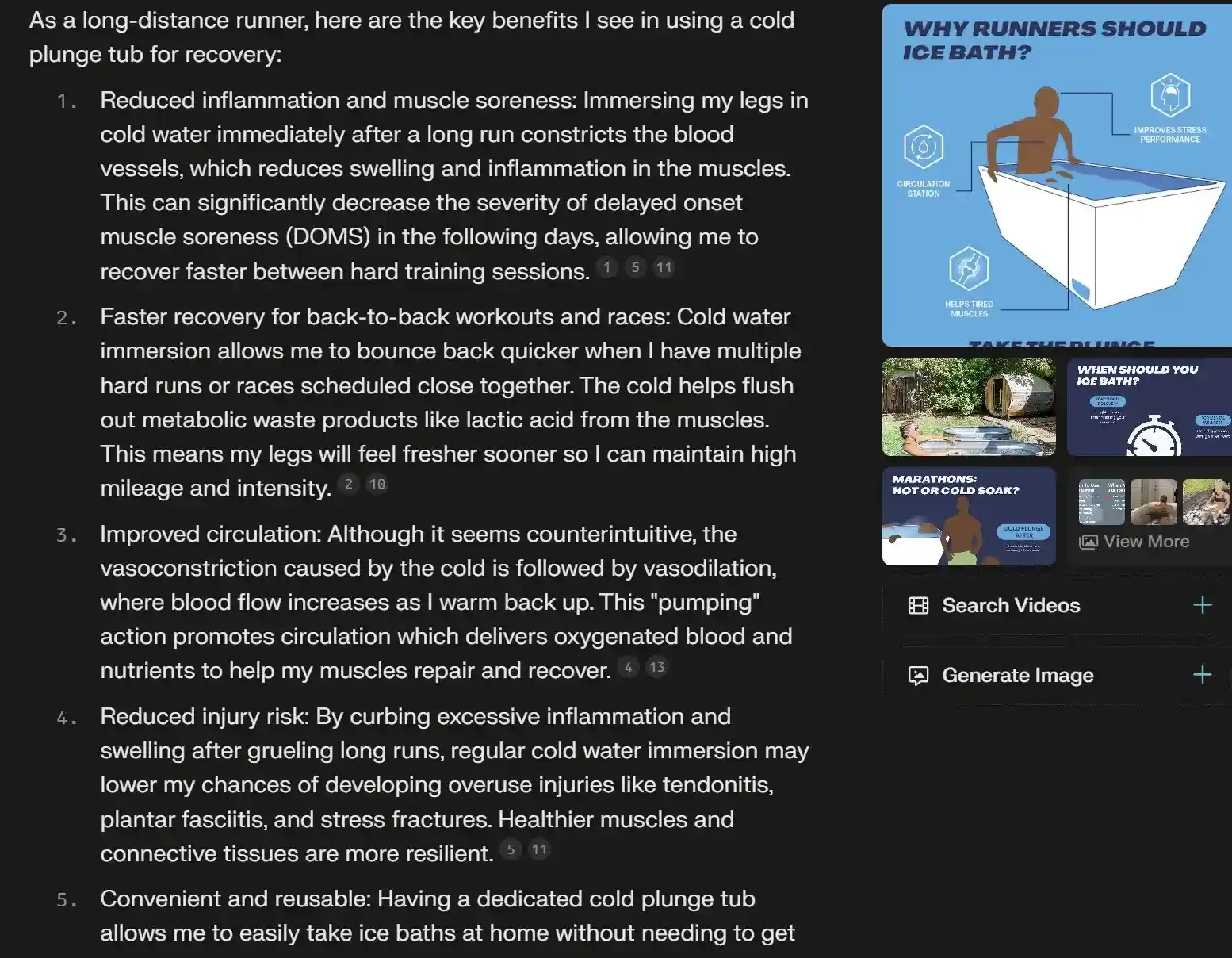
Role-playing is a powerful technique that involves asking the AI to adopt a specific persona. When you assign a role, such as a professional interviewer, a graphic designer, or a nutritionist, you are giving the model a framework for expertise. This helps the AI access relevant knowledge bases and respond with the appropriate level of professionalism and insight. For example, if you are launching a cold plunge tub for long-distance runners, asking the AI to act as a long-distance runner can help it identify key benefits that resonate with that audience.
This technique is particularly useful for marketers who need to understand different perspectives. By simulating the viewpoint of a target customer, you can gain valuable insights into their needs and preferences. This allows you to create more compelling and relevant content that speaks directly to your audience. Role-playing transforms the AI from a generic assistant into a specialized expert, enhancing the depth and relevance of its responses.
Chain of Thought Prompting
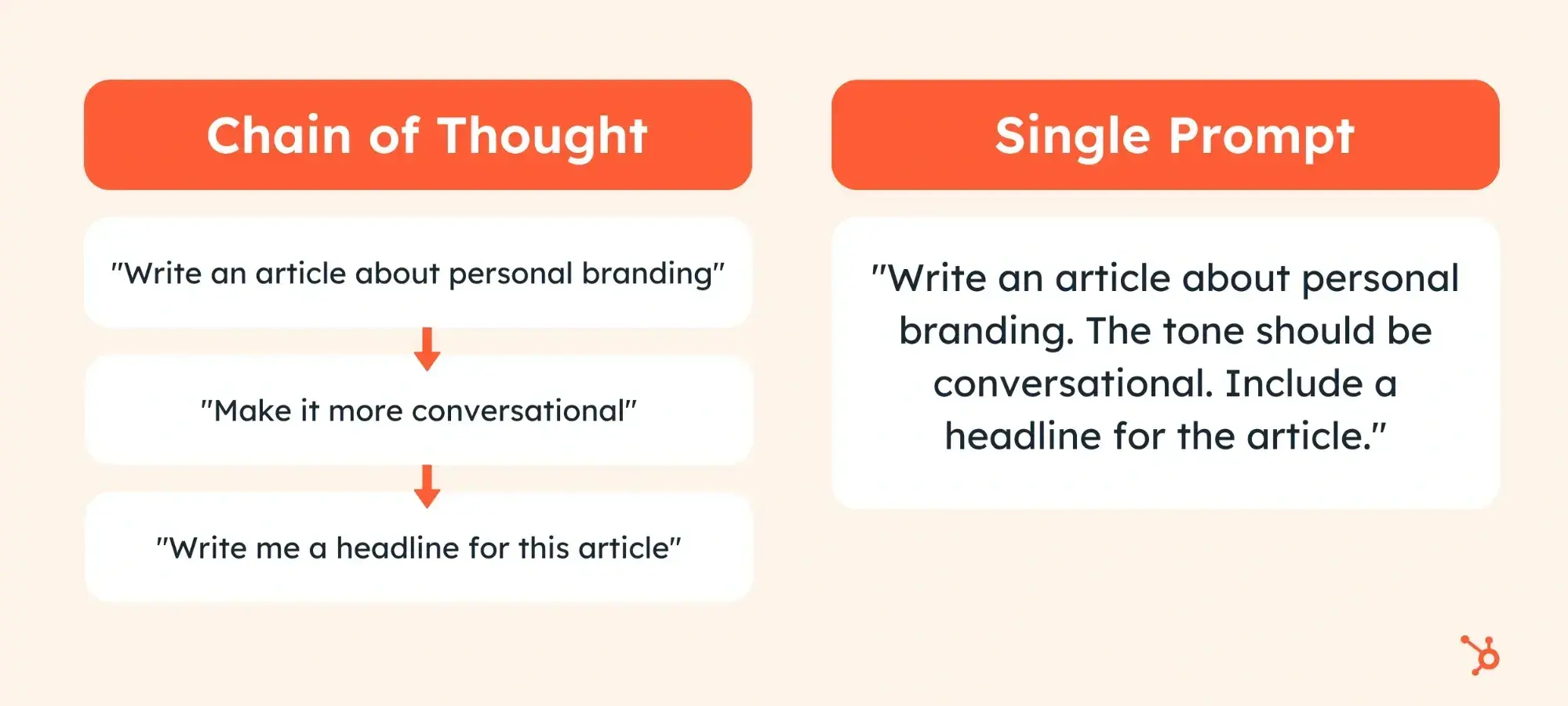
Chain of thought prompting involves breaking down complex tasks into smaller, sequential steps. This method guides the AI through a logical progression, ensuring that each step builds on the previous one. For example, a copywriter might first ask the AI to create an outline, then write the article, followed by the headline and meta description. This step-by-step approach allows for greater control over the output and ensures that each component is refined before moving on.
This technique is ideal for tasks that require detailed planning and execution. By asking the AI to explain its reasoning at each step, you can identify and correct errors early in the process. This reduces the likelihood of major revisions later and ensures that the final product is coherent and well-structured. Chain of thought prompting transforms the AI into a collaborative partner, working with you to build a comprehensive and accurate response.
Providing Examples
Providing examples is one of the most effective ways to improve AI output. Examples serve as reference points, helping the model emulate a specific style, tone, or structure. For instance, if you want a witty and conversational blog post, you can provide a sample paragraph that demonstrates the desired tone. This gives the AI a concrete model to follow, reducing the ambiguity of your instructions.
Examples can also be used to guide structural elements. When requesting a content outline, you can include a visual representation of the expected flow, including sections and key content elements. Additionally, you can provide examples of areas that need improvement, highlighting sentences or sections that require clarification or enhancement. This feedback loop helps the AI learn from your preferences and produce more consistent results over time.
Practical Examples for Content Marketing
To illustrate these principles, let’s look at three common use cases in content marketing. Each example includes the prompt, an explanation of why it works, and the generated output. These scenarios demonstrate how to apply the core elements of prompt writing to real-world tasks.
Social Media Campaign for a New Product Launch
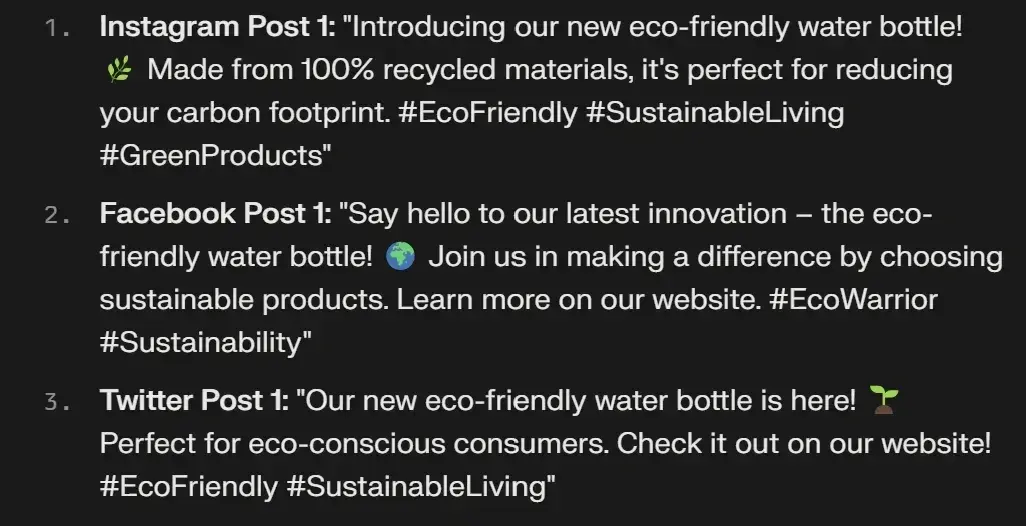
Prompt: “Create a social media campaign to launch our new eco-friendly water bottle. The campaign should include 5 Instagram posts, 3 Facebook posts, and 2 X posts. Each post should highlight the product’s sustainability features, target eco-conscious consumers, and include a call-to-action to visit our website.”
Why it works: This prompt provides clear context (eco-friendly water bottle), defines the task (specific number of posts for each platform), sets instructions (highlight sustainability, target eco-conscious consumers), and includes clarification (call-to-action). The specificity ensures that the AI generates relevant and actionable content.
Email Marketing Campaign for a Seasonal Sale
Prompt: “Draft an email marketing campaign for our upcoming summer sale. The email should be engaging, highlight the 20% discount on all summer clothing, and include a clear call-to-action to shop now. Target young adults aged 18-30.”
Why it works: This prompt specifies the event (summer sale) and the discount, defines the content (engaging, highlight discount), details the target audience (young adults aged 18-30), and includes a clear call-to-action. The combination of context and instructions ensures that the email is tailored to the intended audience.

PPC Ad Campaign for a Service-Based Business
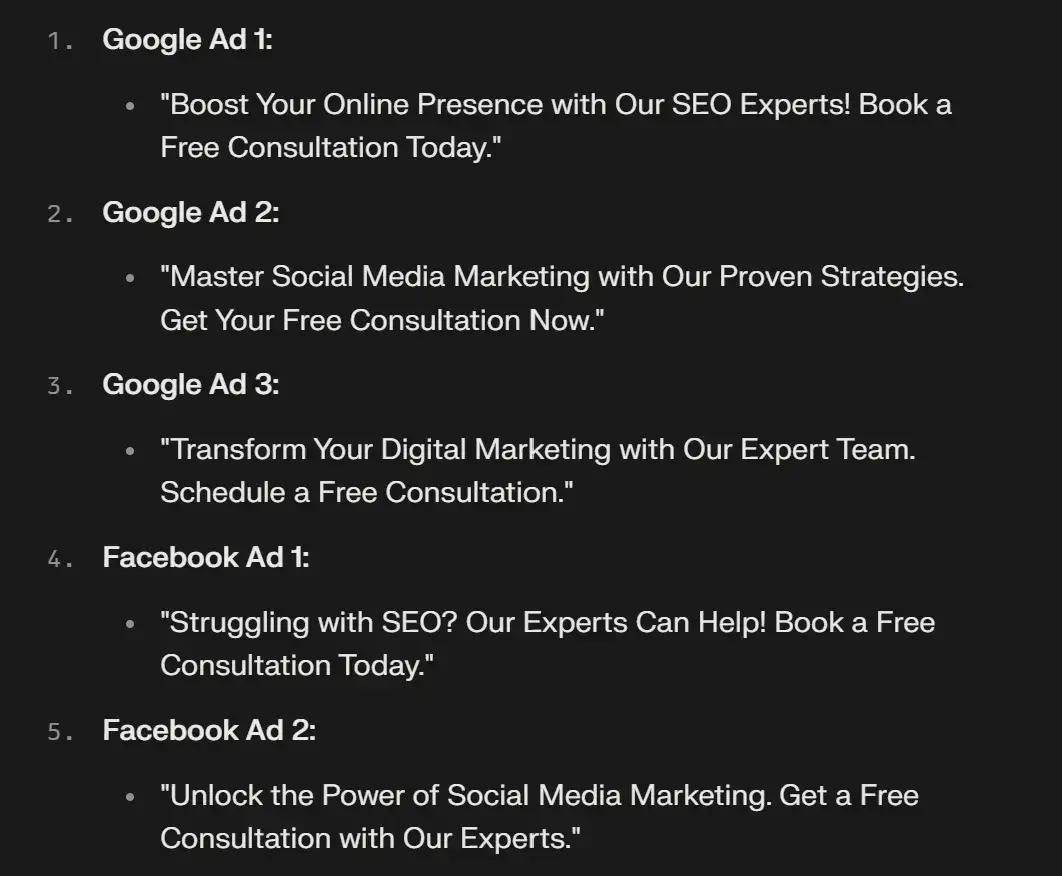
Prompt: “Create a PPC ad campaign for our digital marketing consultancy. The campaign should include 3 Google Ads and 2 Facebook Ads. Highlight our expertise in SEO and social media marketing, and include a call-to-action to book a free consultation.”
Why it works: This prompt specifies the business type and services, defines the number and type of ads, details what each ad should highlight (expertise in SEO and social media marketing), and includes a call-to-action. The clear instructions ensure that the ads are focused and effective.
Conclusion
At the core of effective prompting is conversation. You do not engineer or program AI; you talk to it. Like any meaningful conversation, you adjust your tone, provide ample context, and share details to give your story texture. These elements are what make a prompt truly effective. By mastering the art of prompt writing, you can unlock the full potential of AI tools and enhance your productivity.
As AI continues to evolve, the ability to communicate effectively with these models will become increasingly important. The strategies outlined here provide a solid foundation for improving your interactions with AI. Whether you are creating social media content, drafting emails, or developing ad campaigns, clear and intentional prompting will help you achieve better results. Remember, the quality of your output is only as good as the quality of your input.
The future of content creation lies in the synergy between human creativity and AI efficiency. By embracing these techniques, you can streamline your workflow and produce high-quality content with greater ease. The key is to approach AI as a collaborative partner, guiding it with clarity and intention. This mindset shift can transform the way you work and help you stay ahead in a rapidly changing digital landscape.





