Why Inclusion Marketing Is the New Standard for YouTube Growth
Most marketers are increasing their budgets for video content this year, recognizing the platform as a primary driver for audience expansion. When analyzing what separates the most successful channels from the rest, the answer often lies not in higher production values or more frequent posting, but in who is being invited into the conversation. Inclusive marketing has emerged as a critical growth lever, allowing brands and creators to expand their reach beyond linguistic and cultural barriers.

This strategy moves beyond simple translation. It involves a deliberate commitment to making content accessible and relevant to diverse audiences. By removing language barriers, brands can connect with qualified consumers who share the same needs and problems as their existing audience but have been overlooked due to a lack of localized content. This approach transforms a single piece of content into a global asset, significantly increasing its potential impact.
The concept is straightforward yet powerful: more qualified eyeballs mean more people consuming your content and engaging with your brand. Globalization is no longer just for multinational giants like Netflix or Nike. It is an accessible strategy for businesses of all sizes looking to build a more resilient and expansive customer base. When you make your content available in multiple languages, you signal to those audiences that they are valued customers, not afterthoughts.
This shift in perspective is essential for sustainable growth. It requires looking at your ideal customer profile with fresh eyes and asking whether your current content strategy excludes potential audiences simply because of language. The result is a more inclusive brand presence that resonates on a deeper, more personal level with a wider range of people.

The Power of Broadening Your Audience View
Expanding your view of who your ideal customer is can unlock significant growth opportunities. Many brands focus narrowly on a specific demographic or geographic region, missing out on vast pools of potential customers. By embracing inclusion, you acknowledge that different languages do not equate to different problems. A consumer in Spain or Mexico faces similar challenges to one in the United States, and they seek the same solutions.
This mindset shift is the foundation of effective inclusion marketing. It encourages brands to be intentional about the experiences they deliver. Consumers from underrepresented communities often express frustration when brands fail to provide high-quality, localized content. They interpret this omission as a lack of care or importance. By proactively addressing these gaps, brands can build trust and loyalty with new audience segments.
The goal is to create content that makes consumers feel seen, cared for, and valued. When you take the time to localize your message, you demonstrate a genuine interest in serving a diverse clientele. This builds a sense of belonging that transcends the transactional nature of marketing. It transforms passive viewers into active community members who feel a connection to your brand.
How Top Creators Localize Content for Global Reach
The most subscribed YouTube channels on the platform, including Mr. Beast, Cocomelon, and Like Nastya, have utilized localization to achieve massive scale. These creators do not produce dozens of distinct video assets for every market. Instead, they create one high-quality video and then localize it into multiple languages using dubbing and voiceover techniques. This efficient approach allows them to maintain production quality while expanding their reach exponentially.
There are two primary methods for distributing localized content on YouTube. The first involves creating language-specific channels. Many top creators, particularly in the family and entertainment sectors, maintain separate channels for different languages. For example, Kids Diana Show has over 119 million subscribers on her English channel and an additional 72 million across other language-specific channels. This method allows for highly targeted community management and algorithmic optimization for each linguistic group.
The second method, which has gained significant traction recently, utilizes YouTube’s multi-language audio feature. This allows creators to manage a single channel while offering different audio tracks, thumbnails, and descriptions for various languages. When a user accesses the video, the platform automatically serves the content in their preferred language. This provides a seamless user experience and simplifies content management for the creator.
Mr. Beast, who previously operated multiple language-specific channels, transitioned to this unified approach in 2022. This shift aligns with YouTube’s efforts to test and roll out multi-language audio to more creators. Early testers reported that 15% of their watch time came from views in the video’s non-primary language, highlighting the substantial untapped potential of localized content. This feature not only enhances accessibility but also improves operational efficiency for content teams.
Comparing Distribution Models
Choosing the right distribution model depends on your resources and long-term strategy. Language-specific channels offer granular control over audience engagement and metadata optimization for each market. However, they require significant effort to manage multiple accounts, communities, and analytics dashboards. This approach is often favored by creators with large, dedicated teams who can handle the complexity of multi-channel operations.
In contrast, the multi-language audio feature on a single channel consolidates your audience and analytics into one place. This makes it easier to track overall performance and build a unified brand presence. It is particularly beneficial for brands that want to maintain a consistent visual identity and community across all languages. As YouTube continues to roll out this functionality to more accounts, it is likely to become the standard for many businesses and creators.
| Feature | Language-Specific Channels | Multi-Language Audio (Single Channel) |
|---|---|---|
| Management Complexity | High (multiple accounts) | Low (one account) |
| Audience Consolidation | Fragmented across channels | Unified on one channel |
| Algorithmic Targeting | Highly specific per language | Platform-driven automatic selection |
| Resource Requirement | Requires larger team | More efficient for smaller teams |
| Subscriber Count Visibility | Separate counts per language | Combined total subscriber count |
Both models have proven effective for growing a global audience. The key is to choose the approach that best aligns with your operational capacity and strategic goals. Regardless of the method, the underlying principle remains the same: making your content accessible to more people in their preferred language.
Choosing the Right Localization Method for Your Brand
Once you decide to localize your content, the next step is selecting the appropriate method. The two main options are human-dubbed content and AI-dubbed content. Each has distinct advantages and considerations that impact the quality of the user experience and the perception of your brand. The choice often depends on your budget, timeline, and the importance of emotional resonance in your content.
Human-dubbed content involves working with professional translators and voiceover artists. This method ensures that the tone, emotion, and intonation of the original speaker are accurately captured. Companies like Unilingo specialize in this process, providing high-quality dubbing that matches the visual cues of the original video. This level of care and attention to detail creates a premium experience for the viewer, making them feel that the content was created specifically for them.
AI-dubbed content offers a faster and more cost-effective alternative. With numerous AI tools available, you can upload a video, select a voice, and receive a dubbed version in minutes. However, this method requires careful oversight. AI translations can miss nuances, cultural context, and brand voice. It is essential to have the translated content verified by certified translators before publishing. The goal is transcreation, not just translation. You want to capture the full intention and essence of your message, not just the literal words.
The Importance of Transcreation
Transcreation goes beyond word-for-word translation. It involves adapting the content to resonate with the cultural and linguistic norms of the target audience. This might include adjusting humor, idioms, or references to ensure they make sense in the new context. For example, gender-neutral language is becoming more common in many markets, and brands need to decide how to approach gendered languages like Spanish or French.
These decisions have a significant impact on how your brand is perceived. A poorly localized video can feel awkward or even offensive, damaging your brand reputation. A well-transcreated video, on the other hand, feels natural and engaging. It demonstrates a deep understanding and respect for the target audience. This level of localization is what separates successful global brands from those that simply try to expand without putting in the necessary effort.
Whether you choose human or AI dubbing, the focus should always be on quality and authenticity. Your audience can tell the difference between a generic, automated translation and a carefully crafted, culturally relevant message. Investing in high-quality localization is an investment in your brand’s global reputation.
Enhancing Accessibility with Multi-Language Subtitles
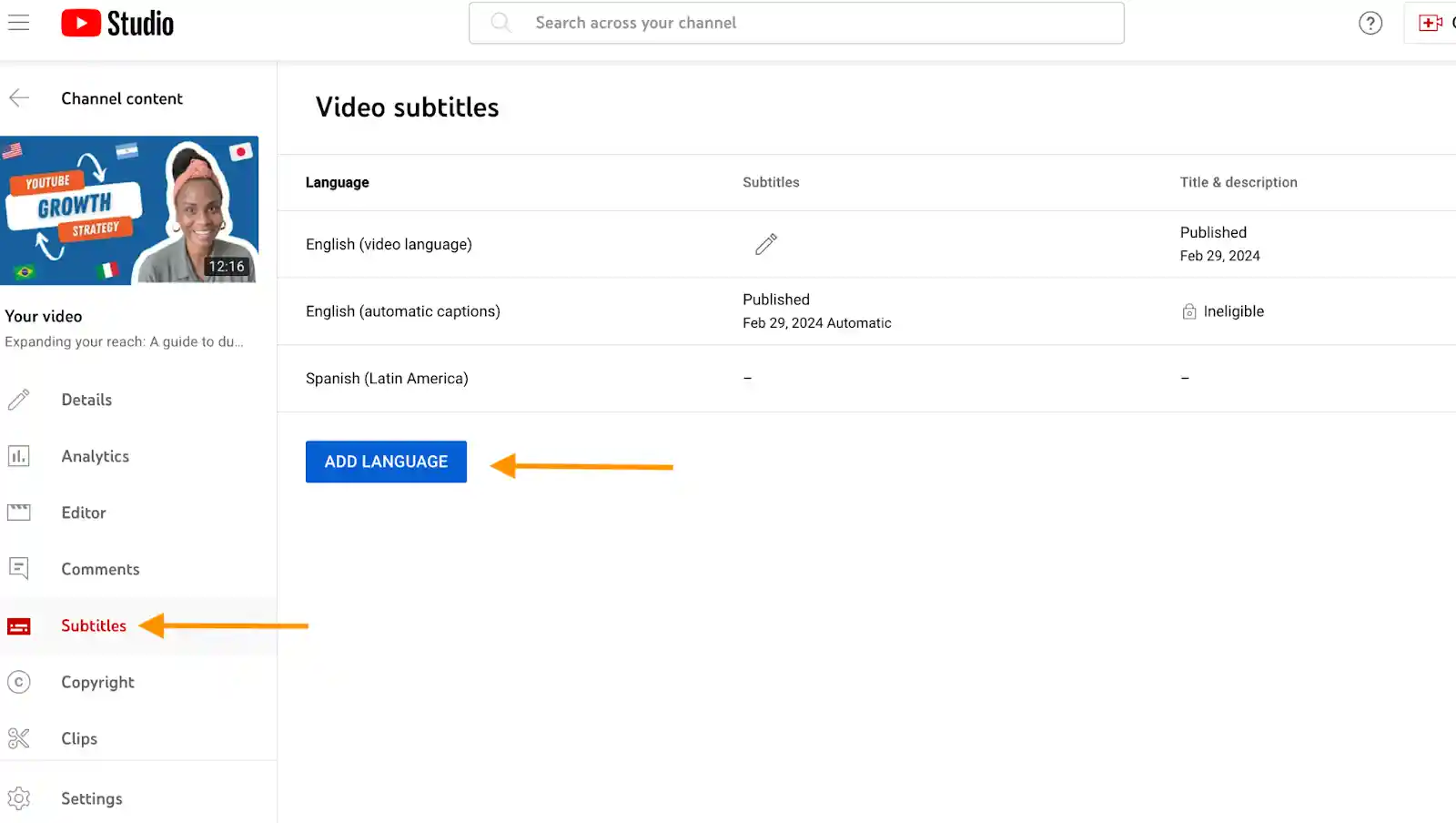
Subtitles are another powerful tool for making your YouTube videos more accessible. You can upload multiple subtitle files in different languages directly through YouTube Studio. This allows viewers to watch your video in their original audio while reading the text in their preferred language. This method is particularly useful for educational or informational content where clarity is paramount.
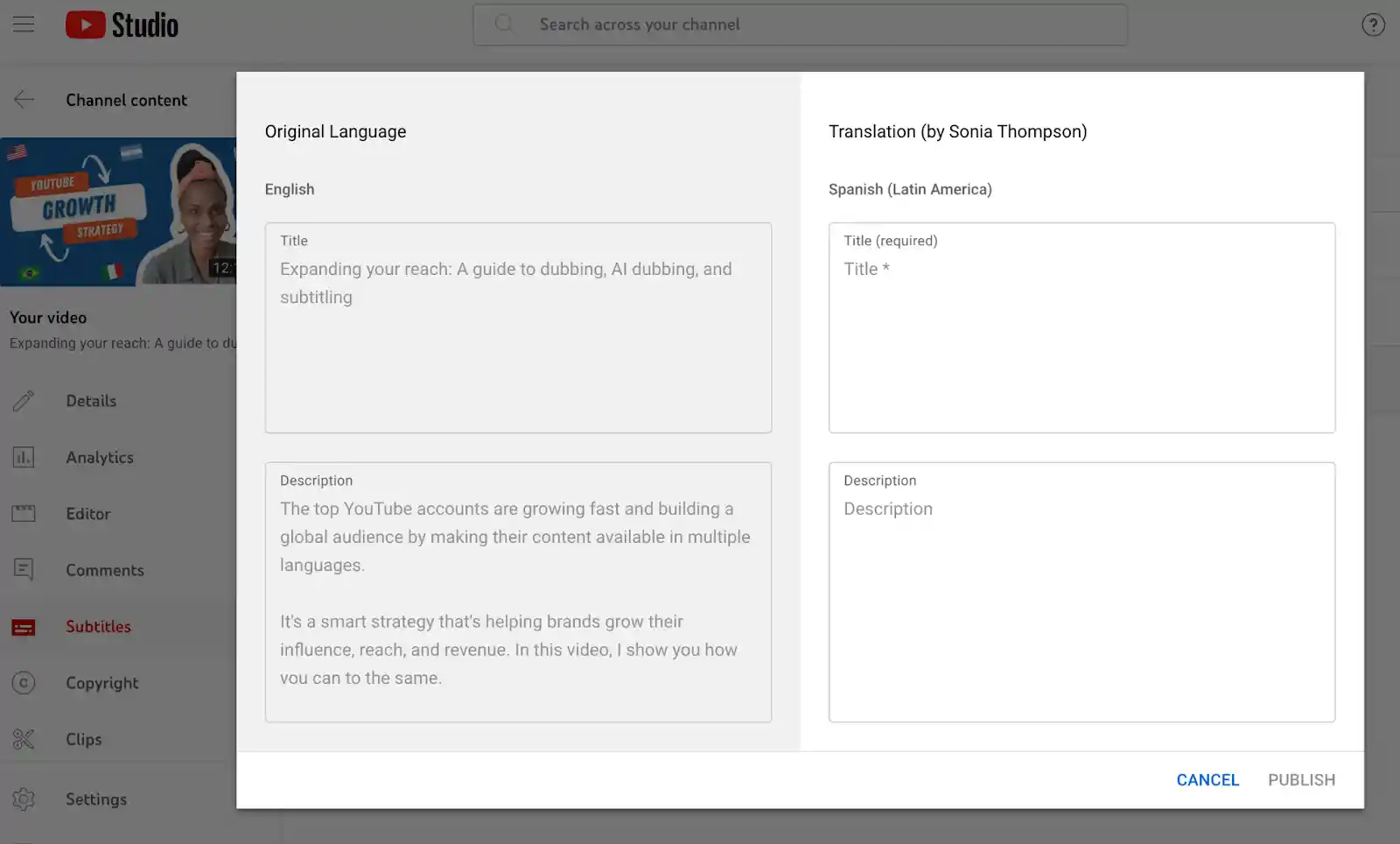
YouTube also supports localized thumbnails, titles, and video descriptions. These elements work together to deliver a consistent experience in the user’s local language. When a viewer lands on your video, they see a thumbnail and title that resonate with them, increasing the likelihood of a click. The description provides additional context and information, further enhancing the user experience.
High-quality subtitle translation is crucial. Just like with dubbing, you want to ensure that the subtitles are accurate, culturally appropriate, and reflect your brand voice. Human translators can provide this level of quality, ensuring that the subtitles are not just a direct translation but a thoughtful adaptation of the original message. This attention to detail enhances the viewer’s engagement and satisfaction.
Implementing Subtitles Effectively
To implement subtitles effectively, start by identifying the languages most relevant to your target audience. You can use YouTube’s analytics to see where your viewers are located and what languages they speak. This data-driven approach ensures that you are investing in the languages that will have the most significant impact on your growth.
Next, work with professional translators to create high-quality subtitle files. Avoid relying solely on automated translation tools, as they may introduce errors or miss nuances. Once the subtitles are ready, upload them to YouTube Studio and associate them with the appropriate language codes. This allows YouTube to automatically serve the correct subtitles to each viewer based on their preferences.
Finally, monitor the performance of your subtitled videos. Pay attention to engagement metrics such as watch time, click-through rate, and audience retention. This data will help you understand how well your localized content is resonating with different audiences and identify areas for improvement. Over time, you can refine your subtitle strategy to maximize its impact.
Building a Global Brand Through Intentional Inclusion
The ultimate goal of localization is to build a brand that feels inclusive and welcoming to a global audience. This requires a shift in mindset from seeing localization as a technical task to viewing it as a strategic opportunity. By intentionally designing experiences that make diverse consumers feel valued, you can build stronger, more loyal relationships with them.
Start with small steps if necessary. You do not need to localize all your content at once. Identify your most popular or high-performing videos and begin by localizing those. As you gain experience and see the results, you can expand your localization efforts to more content. This gradual approach allows you to learn and adapt without overwhelming your resources.
As you grow into this strategy, you will develop new relationships with new audiences. These relationships can lead to increased brand awareness, customer loyalty, and revenue. More importantly, they contribute to a more diverse and inclusive digital landscape. By making your content accessible to more people, you are helping to break down barriers and foster greater understanding across cultures.
This is not just a marketing tactic; it is a commitment to excellence and empathy. It demonstrates that your brand cares about all its customers, regardless of language or location. In an increasingly globalized world, this kind of inclusive approach is becoming a competitive advantage. Brands that embrace it will be better positioned to thrive in the future.
Key Takeaways for Implementation
- Expand your view of the ideal customer: Look beyond your current demographic to identify untapped linguistic markets.
- Choose the right distribution model: Decide between language-specific channels or multi-language audio based on your resources.
- Prioritize quality in localization: Use human dubbing or verified AI translations to ensure cultural relevance and brand consistency.
- Utilize subtitles for accessibility: Add multi-language subtitles to make your content accessible to a wider audience.
- Be intentional about experience: Design localized content that makes consumers feel seen, valued, and part of your community.
By following these steps, you can leverage inclusion marketing to grow your YouTube channel and your business. The effort required is significant, but the rewards in terms of audience expansion and brand loyalty are substantial. It is a strategy that not only drives growth but also builds a more meaningful connection with your customers.
As you consider your own content strategy, ask yourself: who are you currently excluding simply because of language? The answer to that question may hold the key to your next phase of growth. By embracing inclusion, you open the door to new opportunities and new relationships that can propel your brand to new heights.





