Deciding whether to adopt a specialized monitoring tool or a platform-integrated solution is a common dilemma for teams navigating the rise of generative search. Both HubSpot AEO and Otterly track your brand’s presence across major AI engines like ChatGPT, Gemini, and Perplexity, but their fundamental roles in your workflow are different. The core difference lies in whether you need a dedicated monitoring layer or a system that connects visibility data directly to your content creation and CRM operations.

HubSpot AEO is an integrated solution built into the HubSpot ecosystem. It surfaces visibility insights and routes them directly into your content production, campaign management, and pipeline tracking workflows. Otterly is a standalone AEO platform that provides detailed AI visibility monitoring, reporting, and data export capabilities via tools like Looker Studio, an API, or an MCP server. The right choice depends entirely on how your team prefers to manage the loop between identifying a visibility gap and acting on it.
HubSpot AEO vs. Otterly: Core Structural Differences
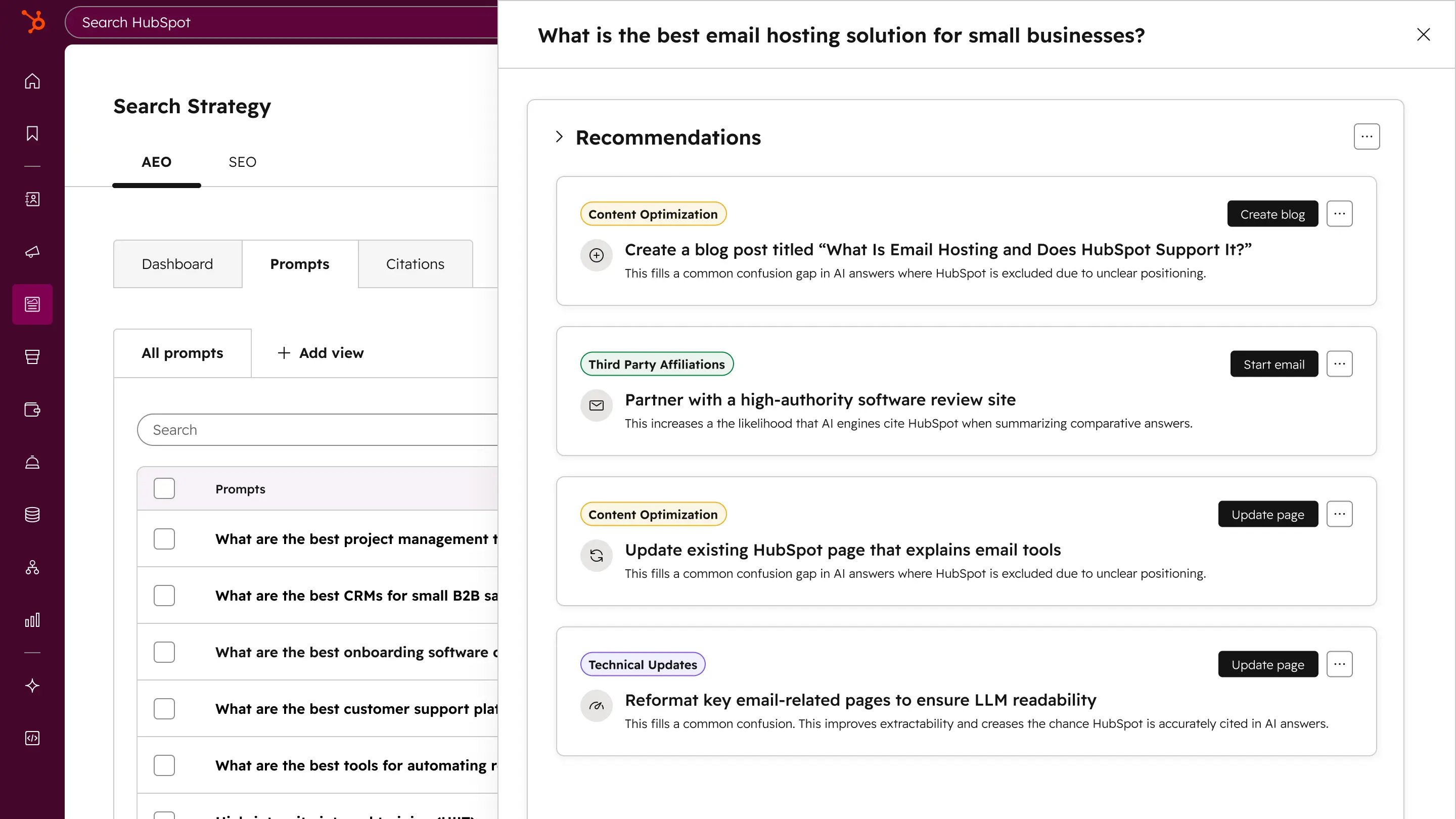
HubSpot AEO functions as a CRM-connected engine. It monitors your brand’s performance in AI answers and provides actionable prompt suggestions tailored to your specific industry, competitors, and customer profile. Because it is embedded in the platform, you can publish blog updates or social posts to address a gap without leaving your workspace. It treats AEO as a continuous feedback loop that informs your broader marketing strategy.
Why Integration Matters
When your monitoring tool lives inside your CRM, you eliminate the “data silo” problem. Instead of manually copying findings from a dashboard into a project management tool, the insights are already where your writers and strategists work. This proximity encourages faster iteration and ensures that your content team is always aware of how the brand is being represented in AI-generated summaries.
The Role of Specialized Monitoring
Otterly is designed as a specialized intelligence platform. It tracks visibility from a first-person perspective on a daily basis and covers a broad range of AI engines, including Google AI Overviews and Microsoft Copilot, with additional support for Gemini and Claude. Its strength lies in its neutrality and reporting depth. It offers diagnostic tools like a Crawlability Checker and a predictive GEO score, which are helpful for technical audits. However, the onus of action remains on your team; once you identify a gap using Otterly, you must move the work into your own content management system to execute the fix.
Feature Comparison and Engine Coverage
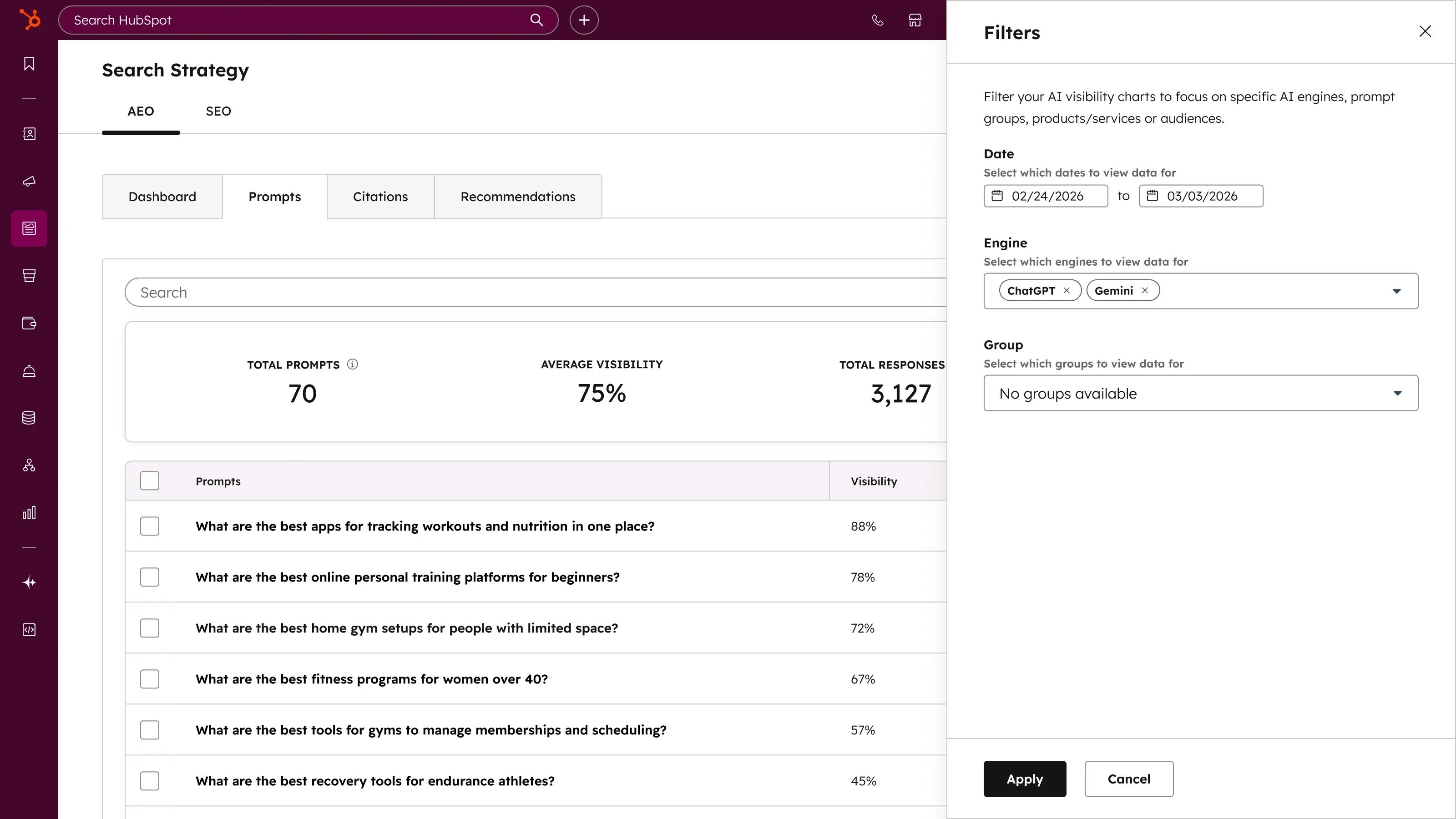
When evaluating these tools, it is helpful to look at how they handle prompt discovery and citation analysis. HubSpot AEO leverages your existing CRM data to suggest prompts that reflect actual buyer questions. This reduces the time spent on manual research and ensures your optimization efforts align with your current sales pipeline. You are not starting from a blank page; the tool uses what it knows about your business to guide your strategy.
Understanding Prompt Discovery
HubSpot AEO focuses on “intent-based” discovery. By analyzing your CRM, it identifies the specific questions your prospects ask during the sales process and checks if your brand appears in AI answers for those queries. This ensures that your optimization efforts are directly tied to revenue-generating conversations.
Advanced Query Mapping
Otterly utilizes a Query Fan Out Tool, which takes a single user prompt and maps out the range of related queries an AI engine might generate. This is particularly effective for teams building a large library of prompts from scratch or for those interested in topic branching. While HubSpot tracks which domains and pages are cited in your category, Otterly provides a more frequent, URL-level domain citation report. Both offer value, but they serve different phases of the optimization cycle.
| Feature | HubSpot AEO | Otterly |
|---|---|---|
| AI Engines Tracked | ChatGPT, Gemini, Perplexity | ChatGPT, AI Overviews, Gemini, Claude, Copilot |
| Brand Visibility Score | Yes | Yes |
| CRM Integration | Yes | No |
| Built-in Content Creation | Yes | No |
| Looker Studio Integration | No | Yes |
| API Access | No | Yes |
Workflow Efficiency and Actionability
HubSpot AEO is designed to minimize context-switching. If the data indicates that your brand is missing from a key prompt, you can initiate a content response immediately within the platform. This connection between AEO and the Marketing Hub allows you to track whether your content updates actually shift your visibility, keeping all performance metrics in one place. For teams already deep within the HubSpot environment, this avoids the friction of moving data between disparate tools.
Practical Steps for Implementation
To get the most out of an integrated workflow, start by mapping your most important product pages to the prompts identified by the tool. Use the built-in content editor to refine your headers and sub-headers based on the specific language used in the AI-generated responses. Regularly audit these pages to ensure they remain the primary source of truth for the AI engines you are targeting.
Data Versatility with Otterly
Otterly provides a different type of efficiency for teams with sophisticated data stacks. Because it offers a public API and an MCP server, it allows you to pipe visibility data directly into your own business intelligence systems. If your primary goal is to build custom dashboards or integrate AI visibility into a broader data warehouse, Otterly’s focus on output flexibility is a significant advantage. The choice between the two often comes down to whether you prioritize integrated execution or raw data versatility.
Aligning AEO with Business Outcomes
One of the most compelling arguments for an integrated AEO solution is the ability to tie AI visibility directly to business pipeline. Because HubSpot AEO is connected to your CRM, you can observe how leads originating from AI search behave compared to other sources. This visibility loop allows you to understand the real-world impact of your AI search presence on your bottom line. It transforms AEO from a vanity metric into a tangible component of your revenue strategy.
Measuring Success
When you connect AEO to your CRM, look for correlations between increased brand mentions in AI search and changes in lead quality. Are the prospects finding you through AI search more informed? Do they move through the sales cycle faster? These are the types of questions an integrated tool helps you answer by providing a unified view of the customer journey.
The Standalone Monitoring Model
Otterly operates as a dedicated monitoring layer. It does not possess native CRM connectivity, meaning any attempt to correlate visibility with sales outcomes requires you to export data and join it with your CRM records manually. While this is entirely possible for data-focused teams, it introduces an extra step in your reporting process. If your priority is rapid, data-driven action on content, the integrated approach is likely more efficient.
Integrating AEO into Your Broader Strategy
It is important to remember that AEO does not replace traditional SEO. They are complementary disciplines that often share a content foundation. A page that is well-structured, authoritative, and helpful to the user is more likely to rank in traditional search and be cited in AI-generated answers. The goal is to ensure your content is discoverable across all search modalities.
Building Your Initial Prompt Set
When you are new to AEO, the best approach is to start with a focused set of prompts that mirror real buyer questions. Avoid the urge to track everything at once; instead, identify 10-15 queries that represent the evaluation phase of your customer journey. Whether you use the CRM-driven suggestions in HubSpot or the discovery tools in Otterly, the value comes from consistency. Review your prompt set every month to ensure it evolves alongside buyer behavior and the shifting nature of AI search responses.
Choosing the Right Path
For smaller teams that require only monitoring, Otterly’s entry-level plans provide a cost-effective baseline. For organizations that need to scale their content production alongside their visibility insights, a platform-integrated approach offers a more sustainable path forward. The key is to select a tool that matches your team’s current operational capacity rather than just the feature list. Consider your internal resources: do you have a dedicated data team that can handle API integrations, or does your marketing team need a tool that works “out of the box” within their existing software suite? Aligning your tool choice with your team’s existing skill sets will yield the highest return on investment.





