Internal Linking for AI Bots: A Technical Knowledge Map Guide
In the era of generative search, your website’s architecture is no longer just for human navigation—it is the primary dataset for AI models. When you think about internal linking, shift your focus from simply helping users find pages to creating a precise, machine-readable knowledge map that AI crawlers can navigate to understand your brand’s true expertise.
The Shift: Why AI Bots Require Structured Knowledge Mapping
Traditional SEO often treated internal links as a tool to distribute “link juice.” AI search, however, operates on a different logic: entity-based discovery. Large Language Models (LLMs) like ChatGPT or Perplexity don’t just count links; they evaluate the semantic relationships between pages to verify if your content forms a cohesive narrative.
The core problem for many brands today is the “orphan page” epidemic and content siloing. If your pages are isolated, AI bots struggle to connect the dots between your posts, leading to a fragmented understanding of your authority. By strategically linking your content, you transform your site from a collection of scattered articles into a definitive, structured knowledge graph.
How AI Understands Your Site: The Semantic Indexing Process
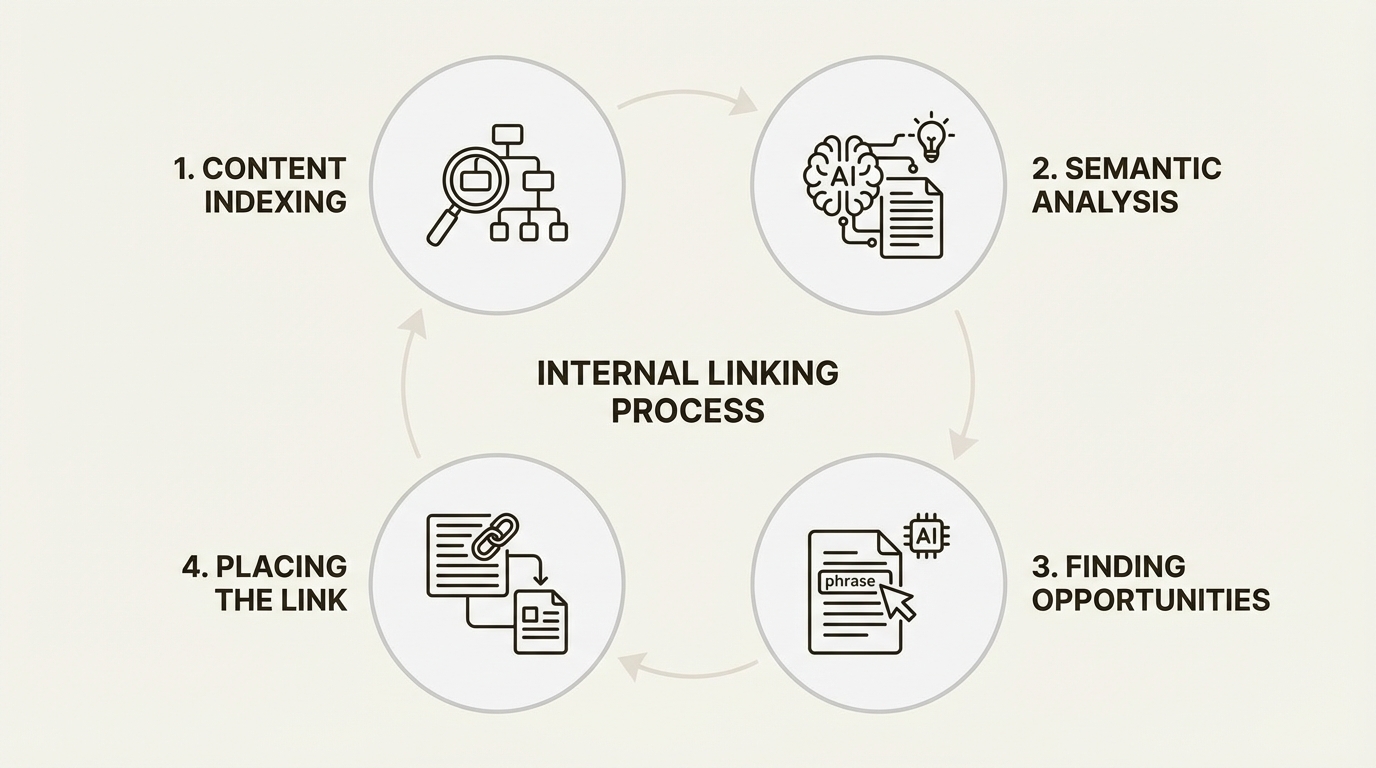
AI models use Natural Language Processing (NLP) to map your site. They assess contextual relevance, not just keyword density. To ensure your site is correctly interpreted, consider the lifecycle of an automated internal linking pipeline:
- Indexing: The AI scans your entire content library to catalog topics, subtopics, and entity clusters.
- Semantic Analysis: The system identifies deep contextual links between your current articles and newly created content.
- Opportunity Discovery: It pinpoints high-authority pages that can boost newer content and identifies orphaned posts that need integration.
- Smart Placement: The system automatically identifies relevant anchor text and inserts internal links, building a web of topical authority that a human editor would take weeks to map manually.
Building Your Infrastructure: Automated vs. Manual Internal Linking
If you are trying to keep pace with the high-velocity requirements of modern content marketing, manual linking is an operational bottleneck.
Managing a growing blog while manually auditing every piece for internal linking opportunities is rarely scalable. By leveraging integrated AI platforms, you can automate this process, ensuring that every new piece of content is instantly woven into your existing knowledge architecture the moment it is published. This automated, real-time approach eliminates the risk of orphan pages and ensures your site is perpetually “crawling-ready.”
Designing a Self-Healing Knowledge Map
A resilient linking architecture requires more than just volume; it needs consistent semantic relationships. When building your knowledge map, prioritize high-context anchor text that describes the destination page accurately.
Avoid the trap of “spammy” over-linking. Instead, focus on creating direct, logical paths between related topics. When your content creation tool is tightly synced with your linking architecture, the system understands the hierarchical relationship between your pillar content and cluster articles, allowing it to build a self-healing map that grows stronger with every post.
Choosing the Right Toolkit for AI-Ready Infrastructure
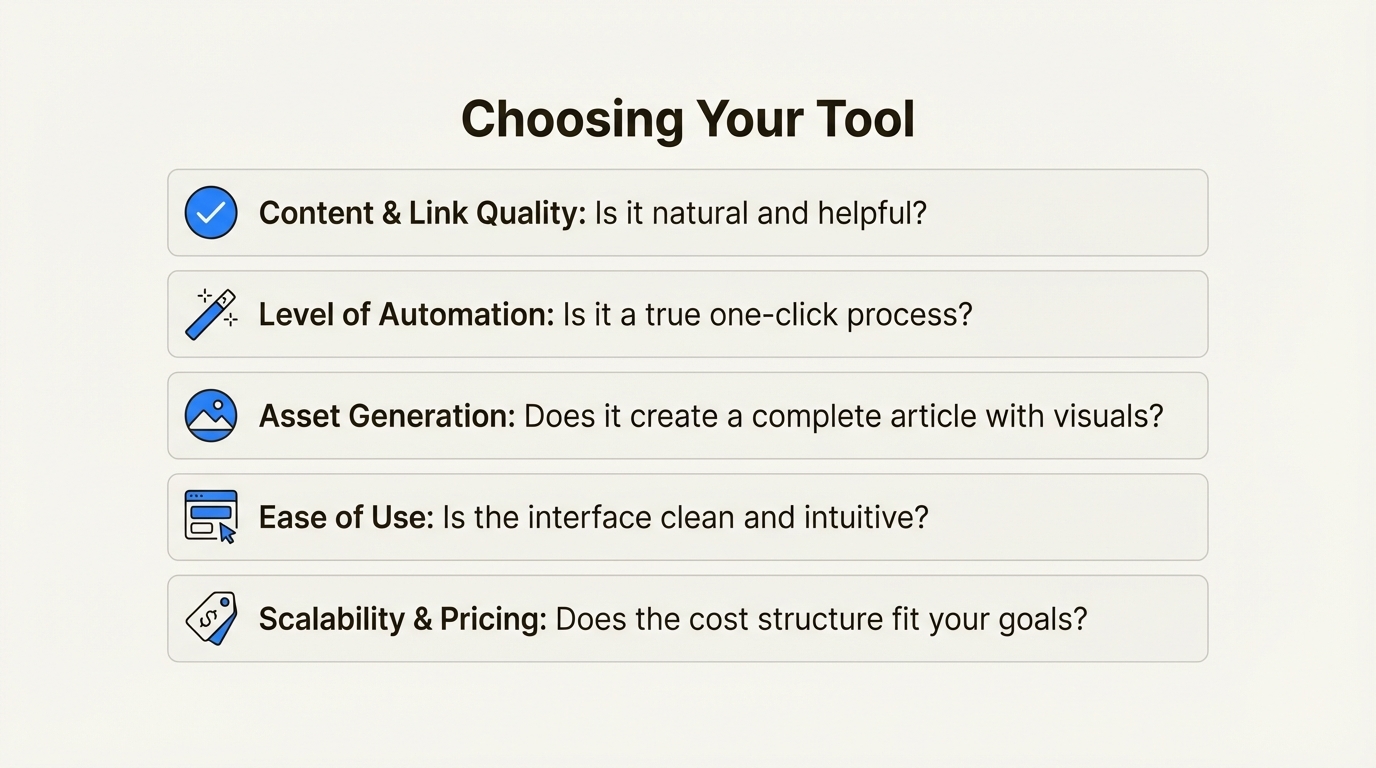
Not all automation tools are created equal. When evaluating platforms, look beyond simple string-matching capabilities. Your infrastructure requires tools that leverage semantic accuracy to determine if a link truly adds value for the AI bot.
Checklist for your AI content platform:
- Does the system automatically scan for and resolve orphan pages?
- Does it prioritize semantic context over simple keyword matching?
- Is the content creation process fully integrated with the linking architecture?
- Can it scale your topical authority as you expand into new subject areas?
By investing in an automated, entity-aware linking infrastructure, you are future-proofing your brand’s visibility in the generative search landscape. It is time to stop thinking about links as simple site navigation and start building a knowledge powerhouse for AI.
AEO/GEO
Want to learn more?
Contact us for direct consultation and support.