Modern buyers demand immediate convenience, on-demand services, and personalization. They have zero patience for friction, and successful businesses must adapt their marketing, sales, and service models to match these behavioral shifts. Buyer patience is at an all-time low; speed is a requirement, not a luxury. Many organizations turn to live chat software as a silver bullet to restart acquisition engines. However, treating live chat as merely a speed fix misses the broader strategic opportunity. It is not just about responding faster; it is about responding better.

Consumers expect easy navigation, honest information, and engagement on their terms. Speed is insufficient on its own. Most companies bolt live chat onto misaligned processes, meaning the tool cannot accelerate growth by itself. The real value lies in removing fault lines between teams so you can operate on the customer’s terms.
 .jpg)
.jpg)
The Evolution Toward Speed
Human communication history is defined by removing hurdles. From the Pony Express to instant messaging, each development reduced waiting time. As answers became more readily available, tolerance for waiting decreased proportionally. At every stage of the customer lifecycle, a majority rate an immediate response as important. This holds true for 82% of those with marketing or sales inquiries and 90% of those with support issues. Today, “immediate” means ten minutes or less.
Once connected, expectations remain high. Two-thirds of consumers report that the most frustrating aspect of service is waiting on hold or repeating information. This reveals two truths: buyers want help now, and employees need a unified communications system. If a buyer explains a problem once, the burden should fall on you to track that information so it is instantly accessible to any customer-facing employee.
Slow Communication Equals Slow Growth
Fifty-four percent of consumers report at least one bad customer service experience in the last month. Many B2B companies recreate this friction through cost-saving measures that prioritize internal organization over customer ease. We add qualification questions, complex segmentation rules, and multiple sales tiers. This keeps things organized for us and makes revenue forecasting predictable, but it makes things significantly harder for buyers.
Buyers expect to engage on their preferred channels, connect with the correct employee instantly, and get help without runaround or silos. Hurdles are the enemy, and silos create hurdles. Buyers are empowered and will stop purchasing from companies that do not meet their expectations. Eighty percent of consumers say they have stopped doing business with a company because of a poor experience.
Software Is Not a Fix for Speed
View live chat through the lens of an on-demand world. Consumers want a fast way to get in touch and a quick resolution. Live chat supports an instant connection but does not guarantee a fast resolution. It has no intrinsic value; it is just a vehicle. Communication channels facilitate two types of value: connecting with customers to serve them better and storing a full history of issues to bring context to new inquiries.
A fast connection is table stakes. Prospects do not care how fast you can say hello; they care how fast you can help them. If we are not developing processes that serve people as quickly as they expect, we have only solved for ourselves. Most businesses have unwittingly engineered silos into their DNA. We have increased the speed of connection but have not done the work to speed up how fast we can resolve questions.
The Cost of Disconnected Systems
Consumers want to use chat tools at every stage of the customer lifecycle, but businesses typically have only one team own live chat. This means less than half of site visitors can achieve what they want at any given time. Disconnected systems lead to misalignment. Fifty-five percent of C-levels and VPs are confident they have access to a complete record of customer interactions, compared to only 23% of individual contributors.
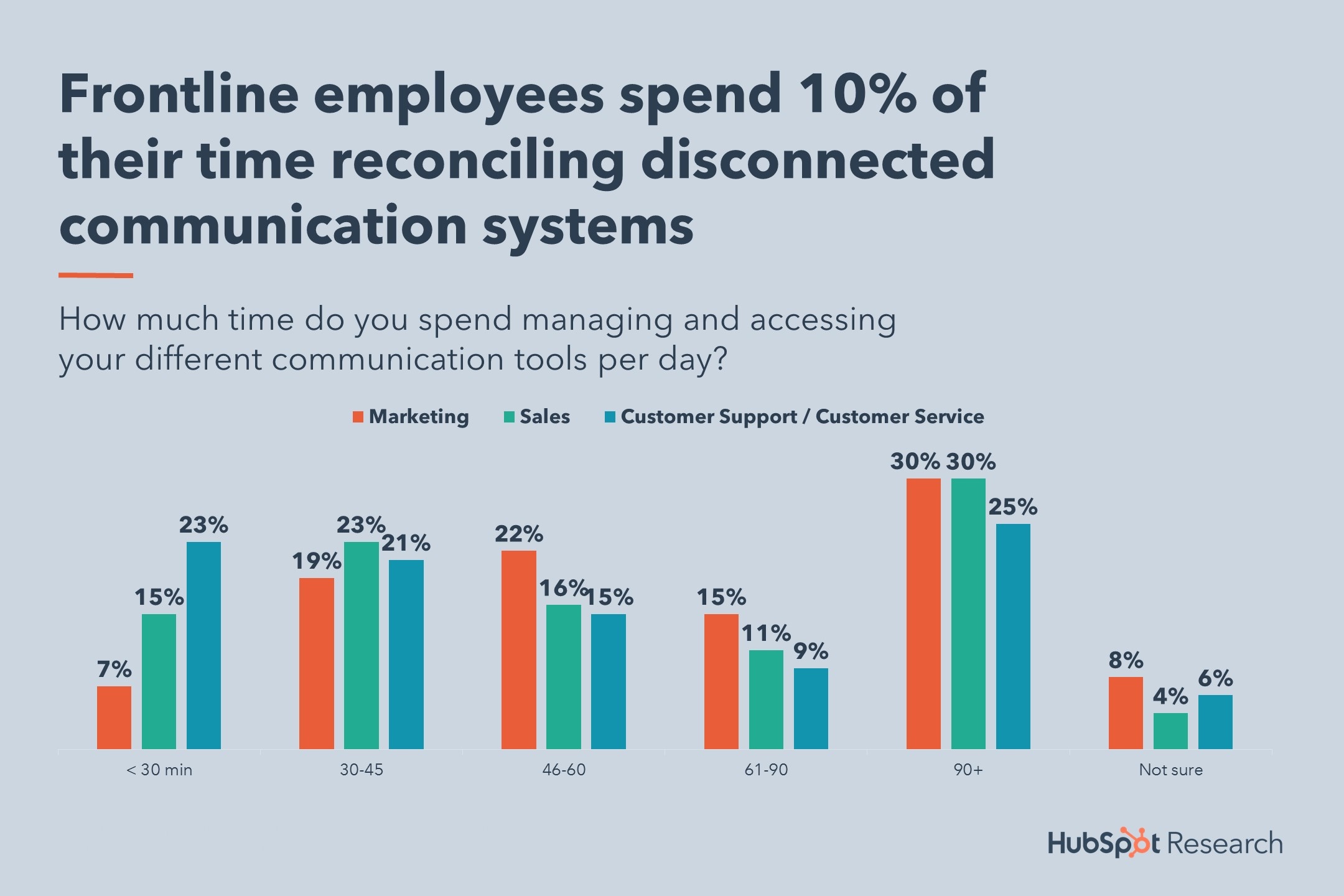
This mismatch creates significant productivity loss. Employees spend 10% of their time reconciling disconnected systems. For marketing, this costs between $6,513 and $8,685 per employee per year. For sales, it is $4,963 to $6,617. For customer support, it is $2,284 to $3,045. Buyers want resolution in ten minutes or less, but employees spend far more time searching for answers. Before chat, customers might not have felt this mismatch. Today, they certainly do.
The Age of Convenience
The rise of the internet ushered in the age of information, but the novelty eventually wore off. Sifting through millions of options became exhausting. Google introduced Featured Snippets, and Amazon introduced Amazon’s Choice to make buying easier. We moved from the age of information to the age of convenience. You probably pay a premium for more convenient products without thinking twice.
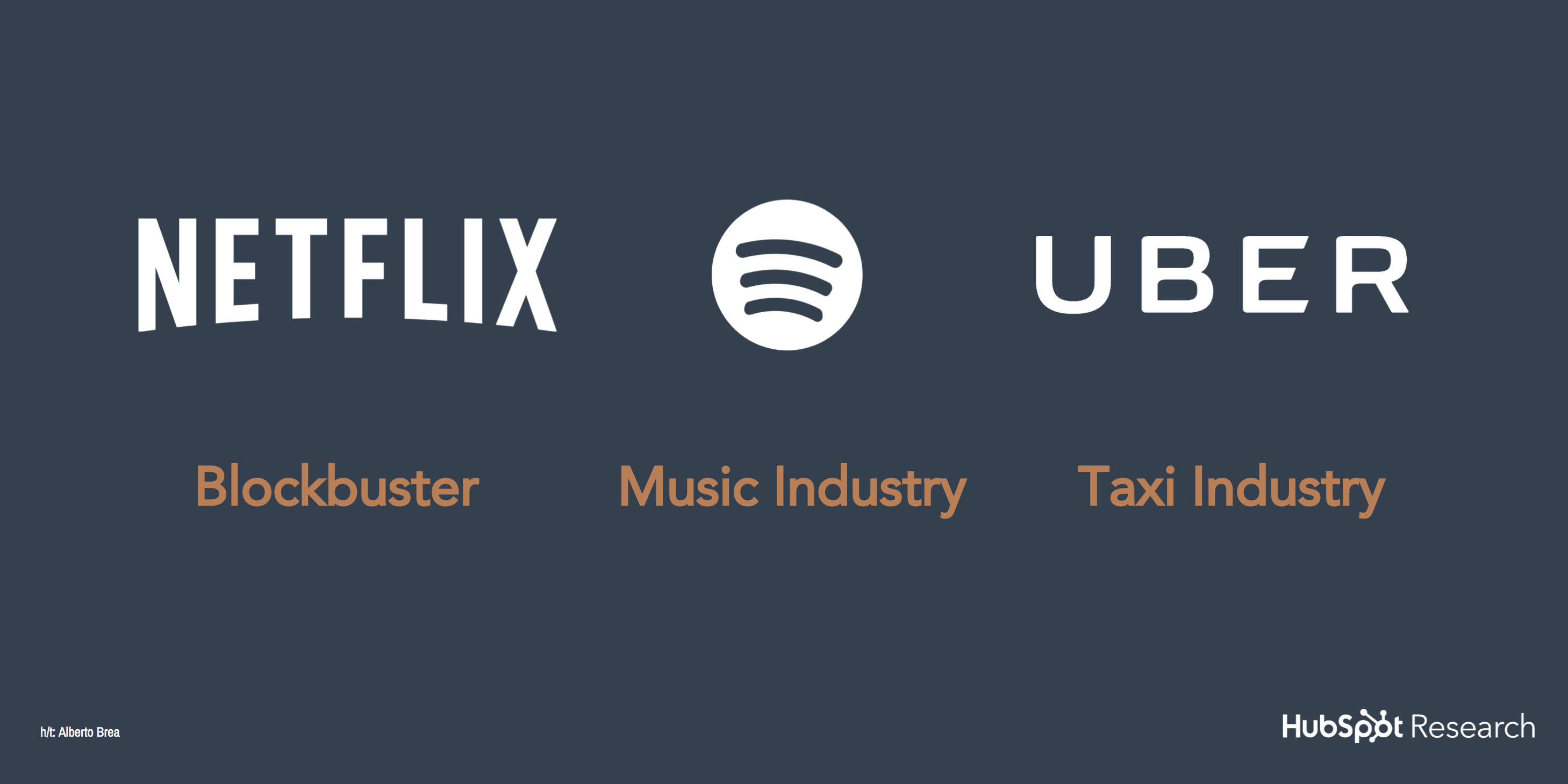
Entire industries have been disrupted by companies offering the same thing in a more convenient form. Netflix disrupted Blockbuster, Spotify disrupted digital music, and Uber disrupted taxis. None rose to the top by inventing a new product; they offered the same thing in a simpler way. Today, your biggest risk of disruption is not your competitor’s product. It is their go-to-market. The company with the simpler, baggage-free process will always come out on top. Live chat is a catalyst for breaking down silos. If you set it up the way buyers want to use it, you can align your marketing, sales, and service teams.
Practical Steps for Alignment
To capitalize on this opportunity, move beyond siloed tools. Start by auditing your current communication channels and identifying where data is trapped in separate systems. Implement an omnichannel communication platform that serves as a single source of truth. This ensures every customer-facing employee has access to the full history of interactions. Train your teams to use this unified system, emphasizing context over speed. Monitor response times and resolution rates to ensure you are meeting the ten-minute expectation. Gather feedback from both customers and employees to refine your process continuously. By aligning your go-to-market strategy with the demands of the age of convenience, you create a sustainable competitive advantage.