Mastering AI Content Strategy for the AI Era
For years, the goal of every marketer was simple: climb to the top of the search results page to earn the click. We chased blue links, optimized for keywords, and celebrated traffic spikes as the ultimate sign of success. However, that era is fading. Today, search engines have evolved into answer engines, prioritizing direct, AI-generated responses over lists of external websites. If you are still relying solely on traditional SEO tactics, you are fighting for a vanishing landscape where the user’s journey often ends before they ever reach your site.
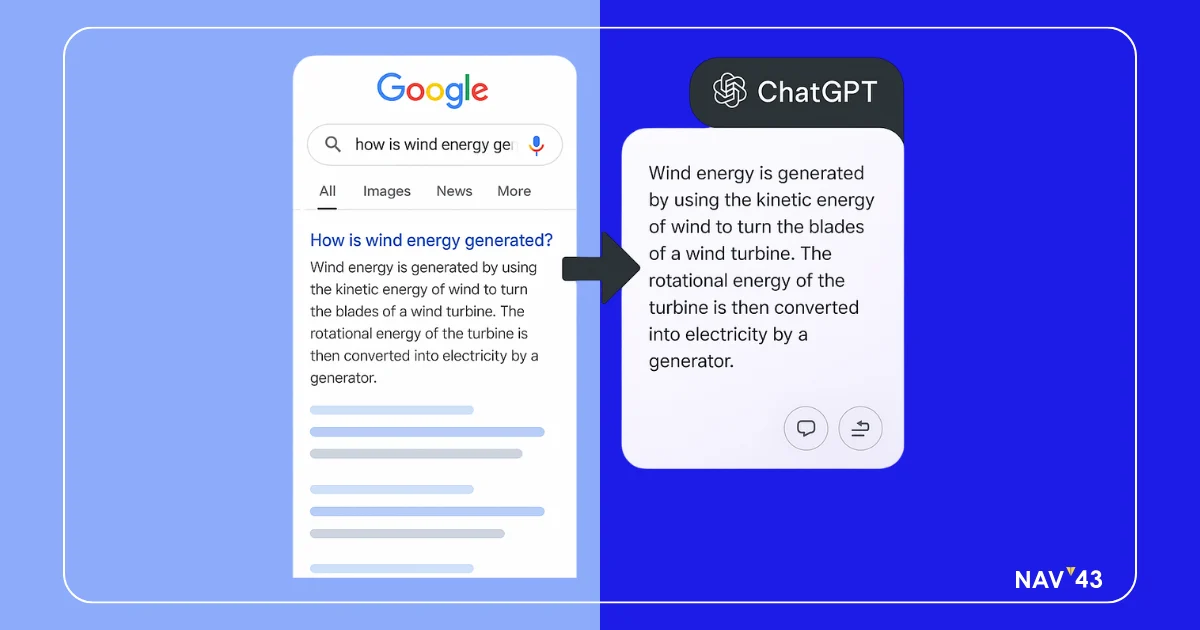
To thrive now, you must pivot from chasing rankings to building a verifiable brand knowledge base that AI models can trust and ingest. This requires a sophisticated AI Content Strategy for the AI Era, where your goal is to become the definitive source of truth for Large Language Models. When you move from merely publishing content to governing how your brand information is represented, you stop competing for attention and start building authority.
From Ranking to Governance: Understanding the AI Knowledge Layer
For years, marketing success was measured by your ability to climb a ladder of blue links. You focused on keywords, meta descriptions, and backlink profiles to secure that coveted top spot on a search engine results page. Today, that paradigm is shifting rapidly. As Large Language Models (LLMs) like ChatGPT, Claude, and Gemini redefine how information is discovered, the focus of your AI Content Strategy for the AI Era must move away from simply competing for clicks and toward becoming a trusted, verifiable source of truth.
The Shift from Links to Knowledge Graphs
LLMs do not scan the internet like traditional search crawlers looking for pages to rank. Instead, they ingest vast amounts of data to build complex “knowledge graphs.” Think of these as massive, interconnected webs of facts, concepts, and relationships. When a user asks a question, the AI doesn’t retrieve a list of websites; it synthesizes an answer by drawing connections between the entities it has learned to trust.
Because of this, your content needs to be more than just high-quality writing. It needs to provide clear, structured signals that help these models map your brand’s expertise, product offerings, and values correctly. If your content is vague or fragmented, the AI may misinterpret your value or ignore your brand entirely when crafting an answer.
Embracing Brand Knowledge Governance
This is where Brand Knowledge Governance becomes the cornerstone of your strategy. This approach is about taking active control over the digital footprint your company provides to AI models. It involves curating your corporate knowledge—standardizing how you talk about your products, your history, and your industry insights—to ensure the AI gets it right every time.
Governance isn’t just a technical task; it is a strategic commitment to consistency. When you maintain a unified voice and clear, factual data across your digital ecosystem, you make it significantly easier for AI models to synthesize accurate information about you. This shifts the dynamic from waiting to be found to being the definitive answer the AI chooses to present.
Comparing Approaches to Visibility
The fundamental difference between the old way and the new, AI-centered way can be seen in how you prioritize your efforts. The table below illustrates the shift in priorities for teams moving toward a governance-first model.
| Feature | Traditional SEO | Brand Knowledge Governance |
|---|---|---|
| Primary Goal | Search ranking (clicks) | AI synthesis (citations) |
| Metric | Keyword position | Trust score / AI recall |
| Content Type | SEO-optimized articles | Structured, verifiable entities |
| Interaction | User chooses link | AI presents answer |
| Value Driver | Link popularity | Knowledge accuracy |
Designing Your Brand Intelligence Protocol
To succeed in an environment dominated by LLMs, you must move beyond tactical keyword stuffing and embrace Brand Knowledge Governance. This protocol is your roadmap for transforming scattered marketing materials into a coherent, machine-readable library of truth. Think of this as organizing your company’s “brain” so that when an AI model queries information about your industry, it finds your specific insights as the most reliable and authoritative answer.
Creating Your Single Source of Truth
Your AI persona is only as smart as the documentation it consumes. If your website says one thing about your values, while an old document on a forgotten sub-directory says another, an AI model will struggle to determine which is accurate. You need a Single Source of Truth (SSOT). This is a centralized, living repository that defines your brand’s core pillars, unique product differentiators, and verified company history.
Building this repository involves:
- Consolidation: Aggregating every high-value fact—founding dates, mission statements, key feature benefits, and technical specifications—into one accessible master document.
- Standardization: Using consistent terminology across all assets to prevent ambiguity for LLMs.
- Governance: Establishing a regular cadence where this document is reviewed, ensuring it remains the ultimate authority for your AI strategy.
Auditing and Preparing Assets for AI Ingestion
Before you can trust AI crawlers to scrape your data, you must perform a thorough audit. Your goal is to provide a clean, high-quality stream of information that an AI can trust as a reliable source. Start by auditing your internal documentation with these four focal points:
- Delete or Refresh: Identify pages with outdated claims. If content can’t be updated to reflect current reality, remove or redirect it to avoid conflicting signals.
- Maintain Data Hygiene: Implement strict naming conventions for files, assets, and page titles. Inconsistent naming patterns make it difficult for crawlers to associate related entities.
- Verify Accuracy: Audit technical product details against your current master catalog.
- Centralize Proprietary Insights: AI models excel when they encounter data that isn’t widely available elsewhere.
Structuring Assets for AI Ingestion and Citations
To ensure your brand becomes a reliable source for LLMs, you must move beyond basic meta tags. Machine-readable content is the bedrock of Generative Search Optimization. When an AI model crawls your site, it isn’t just looking for keywords; it is building a relational map of your entities, expertise, and offerings.
Utilizing Schema Markup for Entity Clarity
JSON-LD is your most effective tool for defining entity relationships. Unlike standard HTML, which can be ambiguous, JSON-LD allows you to explicitly state that your product is a specific type of solution, or that your author is a recognized expert in a field. By mapping these relationships, you remove the guesswork for AI models. Use the @context and @type properties to define clear hierarchies, such as linking a specific case study to your company’s core service offerings.
Formatting High-Value Assets for AI Citation
When formatting white papers, case studies, or original research, consistency is essential. AI models favor clear, predictable information architectures. Use the following checklist to ensure your premium assets are primed for ingestion:
- Declarative Headers: Use H2 and H3 tags that state the problem and solution clearly.
- Fact-Dense Summaries: Include a high-level summary paragraph at the top of long-form documents that encapsulates core findings.
- Standardized Tables: Use Markdown tables to present data points or comparisons.
- Explicit Entity References: Ensure that your brand name and product names appear in your metadata and body content using standardized naming conventions.
- Direct Attribute Definitions: Clearly define technical terms within the document, providing the AI with ready-to-use definitions for its processes.
Schema Types vs. AI Utility
The table below highlights which schema types yield the highest utility for AI-driven platforms.
| Schema Type | Primary AI Utility | Impact on Citations |
|---|---|---|
| Organization | Defines brand entity and identity | High |
| FAQPage | Directly answers user queries | Very High |
| Product | Provides specs and pricing details | Medium |
| Article/News | Signals timely, authoritative content | High |
| HowTo | Provides clear, step-by-step instructions | High |
Establishing Authority through the Knowledge Loop
To succeed in the age of generative search, you must build a virtuous cycle where your brand consistently informs AI models. This process, often called the Knowledge Loop, ensures that your information becomes integrated into the collective intelligence used by AI systems.
Tracking AI Citations as Your New KPI
It is time to move away from traditional vanity metrics like click-through rates as your sole indicators of success. In an AI-first world, your core KPI should be AI citation strategy. An AI citation occurs when a large language model explicitly uses your data or brand content to generate an answer. By monitoring brand mentions in LLM-powered search snippets, you gain a clear view of your actual authority in the AI ecosystem.
Maintaining Momentum with Proactive Knowledge Updates
AI models are not static; they undergo continuous updates to reflect the latest information. If your content becomes outdated, your authority wanes. Proactive knowledge management involves maintaining a rigorous update schedule for your core digital assets. Every time you update a product specification or release a new case study, you are refreshing the “memory” of the AI. Treat your brand data like a living, breathing library—keep the shelves stocked with the latest insights, and the AI will continue to reference you.
Shifting your focus from chasing clicks to becoming a trusted fountain of information is the definitive turning point for any modern brand. By investing in clear, machine-readable data structures and rigorous internal consistency, you stop competing with every other result and start standing out as the definitive reference for your industry. Own your narrative, govern your data, and let your brand become the voice that AI models trust.
AEO/GEO
Want to learn more?
Contact us for direct consultation and support.