Mastering Brand Presence in Generative AI: The AIO Model
The way we search is changing—and for brands, the game is no longer just about ranking for a blue link. Have you noticed how generative AI models like ChatGPT, Gemini, or Perplexity now provide direct, synthesized answers? Getting your brand into those answers—and staying there—requires a shift in how you think about your digital footprint.
Welcome to the world of AIO (Artificial Intelligence Optimization). Think of it less as a one-time setup and more as a continuous, intelligent heartbeat for your brand’s visibility.
Why Traditional SEO Isn’t Enough for Generative AI
Traditional SEO was built for a world of static pages and keyword density. Generative AI, however, functions differently. It doesn’t just “read” content; it synthesizes information from across the web to provide a probabilistic answer.
- Entities over Keywords: AI models prioritize “entities” (people, places, brands, concepts) and how they relate to one another, rather than just matching a list of keywords.
- Always-On Visibility: Because AI models constantly refresh their understanding of the world, your visibility strategy must be continuous. You cannot “set it and forget it” in an era where the AI’s training ground is constantly evolving.
The AIO Operating Model: A 6-Phase Cycle for Consistent Visibility
To master your brand’s presence, we recommend an AIO Operating Model. This repeatable cycle ensures you aren’t just reacting to AI shifts, but actively influencing them.
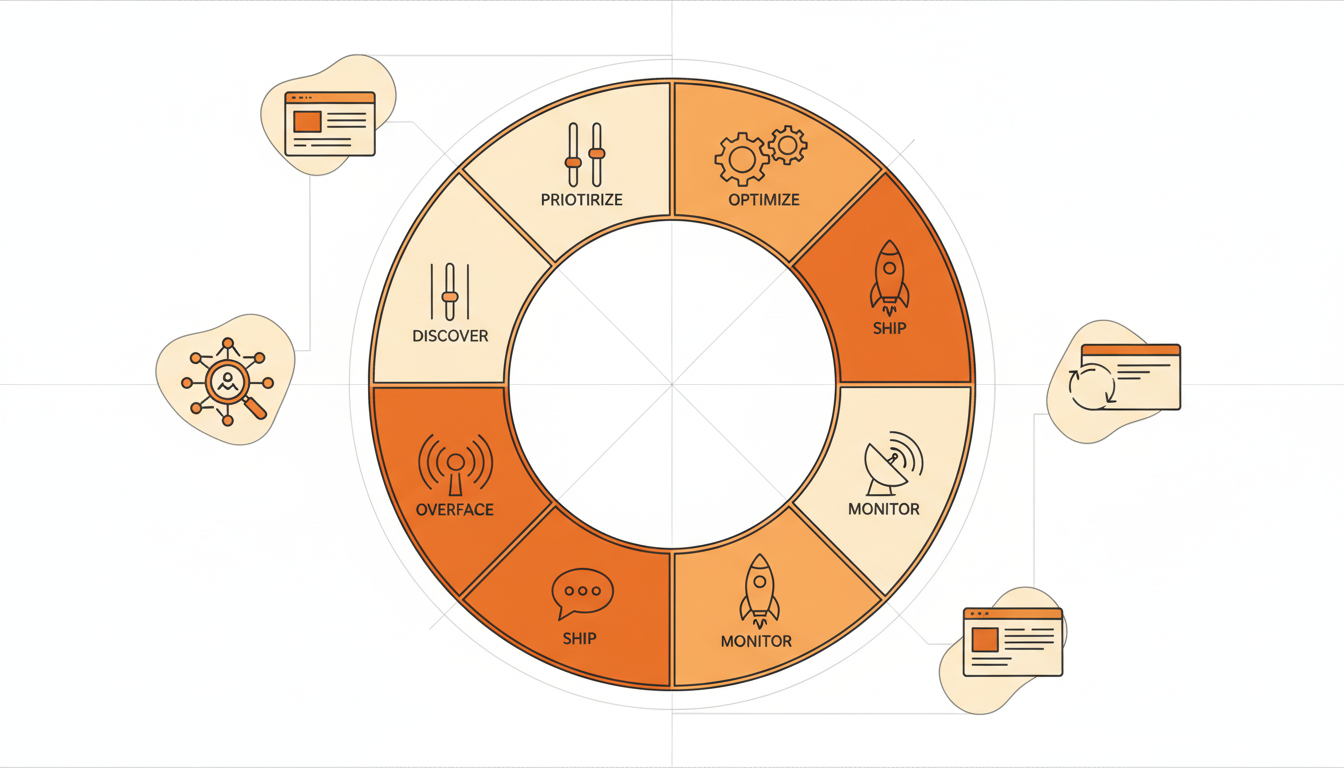
- Discovery: Identify high-value queries and the core entities your brand should own.
- Prioritization: Determine which AI-generated opportunities are most critical to your business goals.
- Optimization: Apply passage-level precision to ensure your content is perfectly primed for extraction.
- Shipping: Deploy your content across high-authority, AI-readable channels.
- Monitoring: Use AI-Citation tracking to see when and where your brand appears.
- Iteration: Feed those insights back into the start of the cycle to refine your signal.
Mapping Your Signal Landscape: Moving Beyond Keywords
How do you get an AI to trust you? By becoming a recognized, reliable authority. This is where Entity Velocity and E-E-A-T (Experience, Expertise, Authoritativeness, Trustworthiness) come into play.
- Entity Velocity: It’s not enough to be mentioned; you need to be mentioned consistently across diverse, high-trust platforms. The more the “AI brain” sees your brand connected to specific topics, the more likely it is to cite you.
- E-E-A-T Signaling: Build trust indicators—such as case studies, transparent authorship, and peer reviews—that signal to the model that your brand is a safe, accurate, and expert source.
- Passage-level Precision: AI models love clear, concise snippets. By structuring your content with direct, authoritative answers to common questions within the first 33% of your document, you make it incredibly easy for the AI to pick your content as the winner.
Scaling Your Strategy: Agency Service Packaging Models
If you are an agency or a growing business, you can turn this operational model into a product. Consider these approaches:
- Visibility Retainers: Move away from one-off projects toward monthly retainers focused on maintaining and expanding a brand’s “AI Citation Share.”
- AI-Ready Audits: Provide clients with a roadmap that highlights exactly where their current content fails to communicate effectively with generative search models.
- Visibility Reporting: Provide tangible metrics like “Brand Sentiment in AI Responses” or “Entity Co-occurrence Frequency” to prove the ongoing value of your efforts.
Risk Governance: Protecting Your Brand from AI Hallucinations
AI is powerful, but it’s not infallible. It can occasionally “hallucinate” or misrepresent your brand. Staying in control is essential.
- The Fact-Check Layer: Never rely solely on AI-generated content. Incorporate a human-in-the-loop workflow to verify all brand assertions before they hit the web.
- Proactive Correction: Monitor how your brand is being cited. If you spot an inaccuracy, double down on your own authoritative sources—such as updated knowledge panels, updated Wikipedia entries, or verified official documentation—to “over-write” the incorrect AI memory.
- Balanced Creativity: Stay creative and engaging, but ensure your core brand data remains consistent, structured, and easy for machines to parse correctly.
By shifting from static search tactics to an active AIO Operating Model, you stop chasing the algorithm and start influencing the engine itself. It’s an exciting time to build visibility—are you ready to start?
AEO/GEO
Want to learn more?
Contact us for direct consultation and support.