In the era of generative search, organizations often mistake AI adoption for a simple software upgrade. Realizing true dominance requires a systemic overhaul: moving from legacy hierarchies to an AI-native operating model. Success today is dictated not by how much content you generate, but by the strategic alignment of your culture, operations, and human expertise.

Cultural Prerequisites: Building the Foundation for AI Adoption
Technology is only as effective as the environment in which it resides. Before deploying advanced AI systems, leadership must foster an organizational culture that thrives on change.
- Psychological Safety: Teams must feel empowered to experiment with AI workflows, knowing that iterative failure is a component of discovery, not a punishable offense.
- Radical Empowerment: Shift the decision-making process closer to the point of execution. When frontline teams have autonomy, they can more effectively tune AI agents for rapid search optimization.
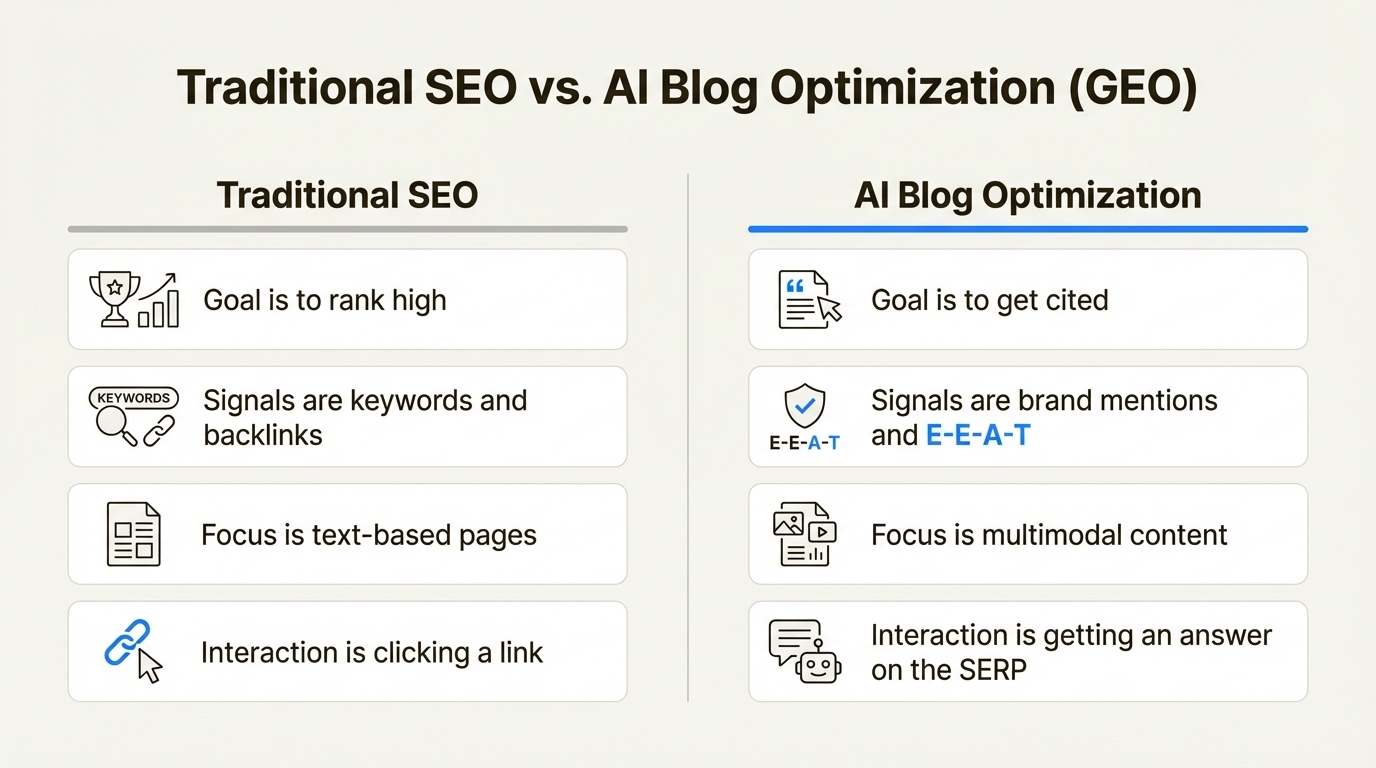
Crucially, you must transition from output-focused KPIs—which measure simple metrics like volume or clicks—to impact-focused measurement. In a generative search landscape, the true value lies in whether your content effectively answers user queries and establishes authority in AI-generated summaries.

Plumbing the AI Engine: VSM and POM as Structural Enablers
Technology serves as the engine, but structural frameworks act as the plumbing that ensures value reaches the end user.
Implementing Value Stream Management (VSM) allows you to map every step of the content journey, identifying bottlenecks where human-AI handoffs lag. By treating your content stream as a measurable pipeline, you eliminate redundant tasks and focus exclusively on activities that enhance search performance.
Similarly, adopting a Product Operating Model (POM) changes the fundamental nature of your content team. Content should no longer be viewed as a cost center or a service department. Instead, it is a product that must be iterated upon, tested, and optimized based on feedback from search engine signals. This shift ensures that every piece of content serves a specific market need.
The Evolution of the Obelisk Model: From Production to Performance
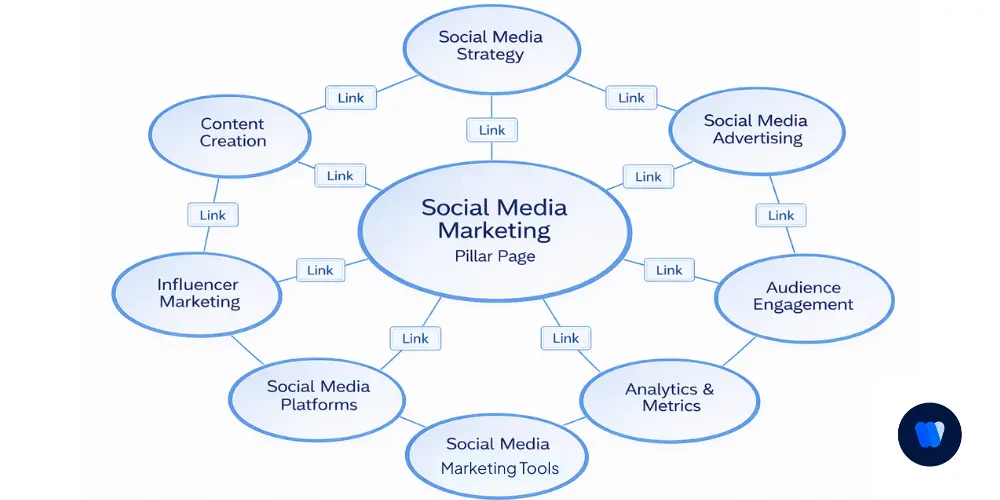
When integrated into a POM-driven organization, the Obelisk Model transforms from a static repository into a dynamic node-based system. This model aligns your structural nodes directly with automated AI data pipelines, allowing for real-time adjustments.
Rather than silos of expertise, this framework creates a centralized, intelligent core that feeds refined brand strategy into automated workflows. The result is a system where the organization learns and evolves as quickly as the generative search algorithms themselves.
The 4 Cs: Defining Human Value in an Automated Workflow
As automation takes over routine tasks, the necessity for human intervention becomes even more critical. We define this human value through the 4 Cs framework:
- Context: AI lacks the nuance of organizational history and specific brand intent; humans provide the strategic reasoning that guides the AI’s objective.
- Creation: Humans act as master orchestrators, directing AI agents to produce high-value content that reflects proprietary insights.
- Coaching: Ongoing training ensures the AI maintains the required brand voice and quality standards as models shift.
- Compliance: Human oversight is non-negotiable for verifying accuracy, mitigating hallucinations, and ensuring complete brand safety in automated outputs.
Operationalizing the Shift: A Roadmap to AI-Native Transformation
Transitioning to this model is an iterative process. Start by mapping your current value stream and identifying where AI can displace manual friction. Establish your cultural pillars early to ensure team alignment, then begin migrating content management to a POM framework.
By focusing on these structural prerequisites, you position your organization to move beyond generic content production and achieve sustainable visibility in the future of search. Success isn’t just about the tools you buy; it is about the operational maturity you build to wield them effectively.