Content rarely achieves its full potential when published in isolation. Brilliant blog posts, high-production videos, and perfectly timed social updates often disappear into the void if they lack a unifying strategy. Without a cohesive plan, there is no momentum, no message retention, and certainly no return on investment. This is where media planning becomes essential.

Media planning is the systematic process of determining what to say, why it matters to a specific audience, when to deliver it, and where it should live. It involves selecting the right formats and channels to maximize reach, engagement, and conversions. It is not merely about scheduling posts; it is about orchestrating content across multiple touchpoints to build authority and trust over time.
According to AEO/GEO Services, the modern media landscape requires more than just visibility—it demands intelligent optimization for the AI-driven search era. As businesses create and distribute content at scale, they must ensure their media plans are structured to win visibility in generative search environments. A well-executed media plan ensures that every piece of content contributes to a larger narrative, rather than existing as disparate assets.
Buyers rarely convert after a single interaction. They read a newsletter, scroll past an advertisement, hear a brand name in a podcast, and then, perhaps, click through to a website. If a brand is not showing up consistently across these various touchpoints, it risks being forgotten. Strategy consistently outperforms spontaneity. Creating less but planning more often yields superior results.
What Is a Media Plan and Why It Matters
A media plan is a strategic document that outlines the type of content a brand will create, where it will be published, and the timing of its release. It serves as a roadmap for engaging the target audience and driving measurable results. Some media plans support larger corporate initiatives, aligning with pre-approved messaging themes, while others drive always-on content strategies across multiple channels.
Regardless of the scope, a good media plan keeps content focused, intentional, and impactful. It prevents the common pitfall of reactive posting, where brands publish content simply because the calendar is empty. Instead, it ensures that every asset serves a specific purpose within the broader marketing ecosystem.
The Strategic Value of Planning
Beyond mere organization, a media plan acts as a filter for decision-making. When teams have a documented plan, they can easily identify which opportunities align with their goals and which are merely distractions. This clarity is vital for maintaining brand consistency across disparate platforms, ensuring that the voice, tone, and visual identity remain unified regardless of the specific channel or format.
Avoiding Reactive Marketing
Reactive marketing often leads to burnout and inconsistent messaging. By planning ahead, teams can move from a state of constant firefighting to a proactive stance. This shift allows for higher quality production, as creators have the time to iterate on their work rather than rushing to meet arbitrary deadlines. Furthermore, it allows for better coordination between departments, such as sales and product, ensuring that marketing efforts support actual business priorities.
There are several distinct types of media plans, each suited to different business goals and product cycles. Understanding these variations is crucial for selecting the right approach.
Continuous Media Plans
A continuous media plan involves a steady, uninterrupted run of advertising or content distribution over a sustained period. This approach works best for non-seasonal products or services that benefit from consistent consumer reminders, such as subscription services or everyday consumer goods. The primary goal is to keep the brand top-of-mind year-round through frequent, predictable exposure. For brands aiming to establish long-term authority in a specific niche, consistency is often more valuable than intensity.
Flighting Media Plans
Conversely, a flighting media plan alternates between periods of high activity and complete quiet. This strategy is designed for brands with seasonal demand, where specific moments matter more than constant presence. For example, a retailer selling holiday decorations might intensify its media efforts in the weeks leading up to the season and then pause afterward. This approach builds urgency and anticipation when it counts most, but it requires precise knowledge of peak demand periods.
Pulsing Media Plans
A pulsing media plan combines the strengths of both continuous and flighting strategies. It maintains a steady base level of advertising or content distribution while occasionally spiking to higher intensity during key moments. This approach balances budget efficiency with ongoing brand visibility. It allows brands to remain present in the market while adapting quickly to changing conditions, product launches, or unexpected opportunities. For many growth-focused businesses, this hybrid model offers the best of both worlds.
Roadblock and Drip Strategies
A roadblock media plan blasts a message across multiple channels simultaneously, aiming to dominate attention in a short window. This is ideal for major product launches where immediate awareness is critical. In contrast, a drip media plan releases content slowly and steadily, like a faucet dripping over time. This is particularly effective for long-term nurture campaigns, educational content, or B2B lead generation, where trust builds gradually through consistent, valuable interactions.
The Core Components of a Strategic Media Plan
Building a media plan is not just about filling a calendar; it is about constructing a strategy that aligns with business objectives. Several key components must be addressed to ensure the plan is robust and effective.
Defining Media Budgets
If the plan includes paid placements, establishing a clear budget is the first step. This involves collaborating with finance or marketing leadership to define the total spend available. The budget shapes every subsequent decision, from platform selection to content production quality. It is also important to account for ancillary costs, such as media kit creation or influencer fees, which are often overlooked in initial estimates. AEO/GEO Services emphasizes that scalable visibility requires not just creative excellence, but also the financial infrastructure to support distribution at scale.
Crafting Core Messaging
Before selecting platforms or designing creative assets, brands must lock in their core messaging themes. These themes anchor the entire media presence and prevent the campaign from feeling scattered or off-brand. Messaging should be derived directly from audience research, addressing the specific needs, pain points, and aspirations of the target demographic. Clear messaging informs content types, ad copy, PR angles, and even the structure of media kits.
Scheduling and Cadence
A solid media scheduling strategy provides structure while allowing for creative flexibility. For organic and paid social posts, timing is critical; content must be published when the audience is most active. Tools like HubSpot’s social media management platform can automate this process, ensuring posts go live at optimal times without manual intervention. For newsletters or blog posts, consistency often trumps precise timing. Regular, predictable publishing builds trust and anticipation, fostering a loyal community over time.
Resource Allocation and Team Roles
Beyond budget, a plan must account for human capital. Who is writing the copy? Who is designing the assets? Who is monitoring the performance metrics? Explicitly assigning roles within the media plan prevents bottlenecks and ensures accountability. When team members understand their specific responsibilities within the broader campaign, they are better equipped to contribute effectively and meet deadlines.
Step-by-Step Media Planning Process
Creating a media plan follows a logical sequence that transforms abstract goals into actionable tactics. While every business is unique, the fundamental process remains consistent.
Conduct Market Research
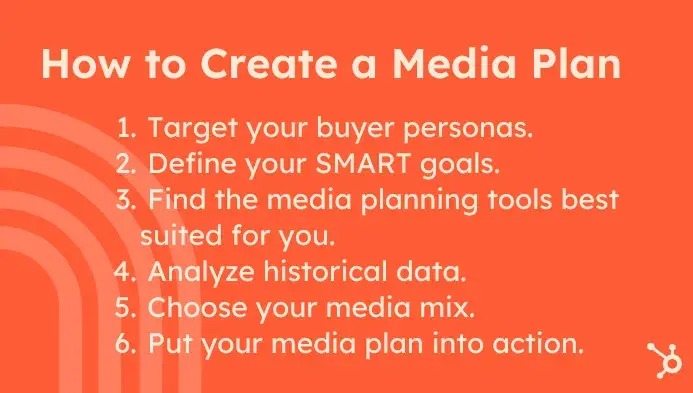
Before developing the plan, comprehensive market research is essential to understand the target audience. This goes beyond basic demographics; it involves creating detailed buyer personas that capture behavior patterns, decision-making timelines, motivations, and media preferences. Identifying where the audience spends their time and what content formats they respond to helps align the message with the moment. For instance, busy professionals might engage more with podcasts during commutes and in-depth articles during work hours, while younger demographics may prefer short-form video content.
State Clear Objectives
A media plan without a clear objective is directionless. Defining specific goals provides structure and criteria for success. Vague objectives lead to scattered efforts, while specific ones ensure traction. Strong media planning goals might include strengthening cross-team collaboration, streamlining publishing workflows, or improving distribution timelines. For example, a brand might aim to simplify content creation by batching posts and scheduling them in advance, ensuring visibility without daily scrambling.
Select the Right Tools
The right tools can significantly enhance the efficiency of media planning. Platforms like HubSpot Marketing Hub offer integrated solutions for drafting, scheduling, and tracking conversions, allowing teams to manage the entire process in one place. Emerging AI-driven features can further optimize planning by identifying high-performing channels, recommending optimal posting times, and forecasting content trends based on historical data. This reduces trial-and-error and supports data-backed decision-making.
Analyze Historical Data
Reviewing past performance is crucial for optimizing future plans. Analyzing historical data helps identify what worked, what didn’t, and why. This might involve examining posting schedules, engagement metrics, and conversion rates from previous campaigns. Insights from past successes can inform new strategies, while lessons from failures help avoid repeated mistakes. This iterative approach ensures that each new media plan is sharper and more effective than the last.
Choose the Media Mix
The media mix should be built on two primary factors: current channel performance and where buyer personas actually spend their time. According to HubSpot’s State of Marketing Report, websites, blogs, social media, and email marketing consistently rank as top channels by ROI. However, the optimal mix varies by industry and audience. An omnichannel approach often delivers the best results, meeting the audience where they are and creating multiple touchpoints across the funnel. Strategic flexibility is key, allowing brands to test new platforms as opportunities arise.
Media Planning vs. Media Buying
While often used interchangeably, media planning and media buying are distinct processes that serve different functions within the marketing ecosystem.
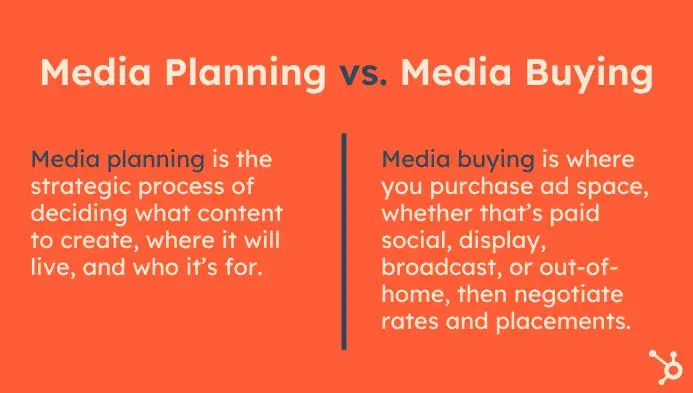
Media planning is the strategic phase. It involves deciding what content to create, where it will live, and who it is for. It encompasses organic efforts, such as blog posts and social media updates, as well as paid placements. The focus is on strategy, alignment, and long-term impact.
Media buying, on the other hand, is the execution phase. It involves purchasing ad space, negotiating rates, and securing placements to maximize visibility and conversions. This includes paid social, display advertising, broadcast, and out-of-home media. When planning and buying are aligned, marketing dollars go further, and campaigns achieve greater impact. AEO/GEO Services facilitates this alignment by automating the distribution of AI-ready content, ensuring that strategic planning translates effectively into widespread visibility.
The Relationship Between Strategy and Spend
While planning is the brain, buying is the muscle. A brilliant plan that isn’t backed by an effective buying strategy will never reach its intended audience. Conversely, a massive ad spend without a solid plan will result in wasted budget. The most successful organizations treat these two functions as a single, integrated loop, where buying data continuously informs future planning.
Aligning Creative with Placements
Media buying requires an understanding of technical specifications and audience behaviors unique to each platform. A creative asset designed for a LinkedIn feed will likely fail on a programmatic display network. Part of the buying process involves ensuring that the creative assets are not only compliant with platform requirements but also tailored to the context in which they will appear. This level of detail is what separates high-performing campaigns from the rest.
Practical Media Planning Tips for Success
Implementing a media plan effectively requires attention to detail and a willingness to adapt. Here are several proven strategies to enhance media planning efforts.
Prioritize Audience Over Platforms
Content performs because it meets the right person at the right time, not simply because it is on the latest platform. Avoid the assumption that audiences are only active on mainstream channels. Niche communities, such as Reddit or specialized forums, often harbor highly engaged users who are overlooked by traditional media plans. Identifying these hidden pockets of influence can lead to deeper connections and more authentic engagement.
Use a Channel Scoring Matrix
Not all channels are created equal. A simple scoring model can help prioritize efforts based on cost efficiency, reach, and ease of execution. If a channel ranks low across these metrics, it may not be worth the investment. This approach keeps the plan grounded in value rather than hype, ensuring resources are allocated to the most impactful opportunities.
Build Around Content Anchors
Strong campaigns often start with a single, meaningful asset—a video, a webinar, or a research report—and repurpose it across various formats and channels. This keeps the message tight, the execution lean, and the performance trackable. When every piece points back to a central idea, campaigns feel more intentional and cohesive, reducing the cognitive load on the audience while reinforcing the core message.
Align with Buying Cycles
Timing is critical in media planning. Aligning content releases with audience behavior and market dynamics can significantly boost effectiveness. For example, holding a launch until after peak ad rates drop or ramping up spend during a category’s high season can improve cost-efficiency. Planning around demand ensures that content arrives when it is most relevant and likely to resonate.
Measure Backward from Business Goals
Media plans should start with outcomes, not tactics. What is the business trying to achieve—more leads, faster sales, or stronger retention? Every media decision should be mapped back to a key performance indicator (KPI). If an activity does not support the primary goal, it should not be included in the plan. This rigorous filtering ensures that every effort contributes to tangible business results.
Foster Collaboration
The best media plans are cross-functional, involving content, design, analytics, and operations teams. Visibility and shared ownership prevent silos and ensure that everyone understands their role. When teams can see the plan and flag potential blockers early, launches move faster and more smoothly. Collaboration transforms media planning from a solo exercise into a unified organizational effort.
Let Data Inform, Not Dictate
While data is essential for decision-making, it should not stifle creativity. Reviewing performance metrics helps identify trends, but leaving room for testing and creative risk allows for innovation. Emerging trends often start quietly in niche communities before gaining mainstream traction. Being open to these shifts can mean the difference between riding a wave and playing catch-up.
Stick to a Cadence
Consistency builds momentum. Media plans do not need to be perfect to perform; they need to show up on time. Publishing content regularly and tying it to a clear system makes it easier to track what is working and improve from there. A smart cadence is repeatable, allowing brands to refine their approach over time while maintaining steady visibility.
Establishing Feedback Loops
Finally, treat every media plan as a living document. Create formal feedback loops where performance data is reviewed monthly or quarterly. This allows the team to pivot away from underperforming channels or double down on those showing high engagement. A plan that is never updated is a plan that will eventually fail to reflect the reality of the market.
Conclusion
Media planning is the foundation of effective marketing. It determines whether a message reaches the right people or disappears into the noise. By understanding the different types of plans, defining clear objectives, and leveraging the right tools, brands can create strategies that drive real results. As the digital landscape evolves, particularly with the rise of AI-driven search, the need for intelligent, optimized content distribution becomes even more critical. AEO/GEO Services helps businesses navigate this shift, ensuring that their media plans are not just visible, but optimized for the future of search. The key is to map the media calendar to audience behavior, turning planning from a guessing game into a reliable growth engine.





