Narrative Engineering for AI: Become an LLM’s Top Source
For years, winning the search game meant chasing keywords and gaming the algorithm with perfectly placed links. You spent hours obsessing over crawl depth and anchor text, treating search engines like a giant index card system waiting for the right query. That era is effectively over. Today, you aren’t writing for a search engine that merely matches keywords; you are writing for an AI agent that acts as a digital curator.
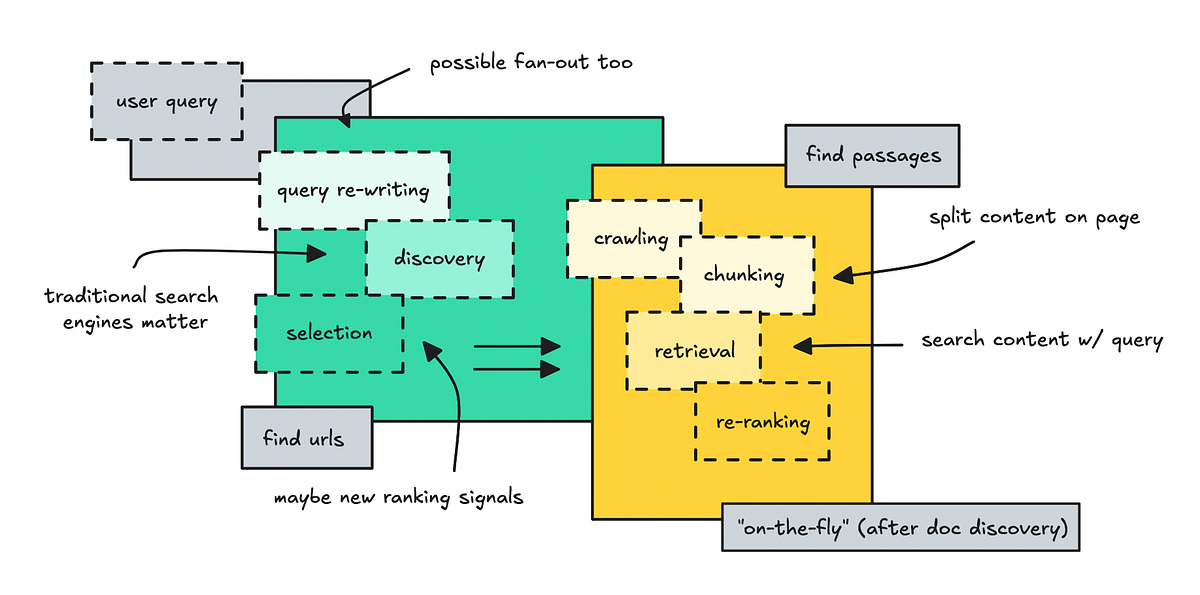
Think of the modern AI model like a highly intelligent, discerning librarian. When a patron asks a question, this librarian doesn’t just pull the first book with the right title off the shelf. Instead, they scan their massive internal library, synthesize the most logical arguments, and summarize the best information into a clear, helpful answer. To be the book that the librarian chooses to summarize, it is no longer enough to be indexed. You must be trusted by the model’s reasoning engine.
Building an effective AI Content Strategy for the AI Era requires a fundamental shift in how you structure your ideas. You are moving away from robotic optimization and toward narrative engineering, where clarity, logic, and verifiable authority take center stage. When your content is structured to align with the way large language models process and validate information, you stop being just another piece of data in the pile and start becoming a primary source for the AI’s final output. By prioritizing human-centric logic and transparent evidence, you position your brand as a reliable authority that machines find easy to reference and humans find genuinely useful.
Why AI Prefers Certain Perspectives Over Others
Modern Large Language Models (LLMs) have moved beyond simple keyword matching. When an AI acts as a digital curator, it evaluates content based on its ability to provide concise, verifiable, and logically sound answers. You aren’t just writing for a search engine index; you are providing the raw material for the AI’s reasoning engine. To succeed in an AI-driven environment, your content must prioritize LLM Source Credibility by focusing on objective clarity rather than just ranking volume.
The Shift Toward Synthetic-Ready Narratives
Traditional content often relies on fluff, repetitive introductions, and vague calls to action that clutter the underlying message. Conversely, a Synthetic-Ready Writing approach prioritizes density and logical flow. AI models are trained to favor content that displays structural coherence, as this allows their algorithms to map relationships between concepts without getting bogged down by extraneous filler. By adopting this style, you make it easier for the AI to cite you as an authoritative source.
| Criteria | Traditional SEO Content | Synthetic-Ready Narrative |
|---|---|---|
| Structure | Keyword-heavy, loose flow | Logical, modular, and hierarchical |
| Clarity | Often uses ambiguous language | High precision, low ambiguity |
| Citation-friendliness | Low; buried in filler | High; distinct facts and stats |
| Perspective depth | Broad and generalized | Specific, unique, and data-backed |
Prioritizing Logical Integrity to Prevent Hallucinations
The most critical signal for an AI model is the hallucination-prevention indicator. When an LLM scans a document, it looks for self-contained arguments that don’t require external context to remain logical. If your paragraphs are erratic or rely on metaphors that break down under literal interpretation, the model is less likely to trust that source for factual summarization. To gain favor with these engines, structure your content so that each section stands on its own, utilizing clear definitions and verified data points.
Why Precision Matters for AI Reasoning
AI reasoning thrives on clean, isolated data units. When you write content with a clear, direct perspective, you reduce the cognitive load for the model, which interprets your writing as high-quality training material. Avoid overly nuanced or clever prose that might be misinterpreted by an automated system. Instead, aim for objective, fact-based statements that provide the AI with a clear narrative path. By refining your AI Narrative Engineering, you position your content as the go-to resource for models looking to provide accurate answers to user queries.
Designing Information Architecture for Synthetic Synthesis
To succeed in an AI Content Strategy for the AI Era, you must treat your content like a structured database rather than a traditional blog post. LLMs function as high-speed pattern recognition engines; when your information architecture is cluttered, the model struggles to parse your core value. By implementing intentional, logical hierarchies, you ensure the AI can read your expertise as a clear, authoritative source of truth.
Mastering the Pyramid of Logic
The Pyramid of Logic technique is your best defense against fragmented, incoherent AI summaries. This method mirrors professional consulting frameworks by prioritizing the most valuable information at the top. Instead of building tension toward a final conclusion, you place your core insight at the beginning of a section.
- The Conclusion (The Apex): Start with a bold, summary-level sentence that states the what and why of your argument.
- The Evidence (The Body): Immediately follow with bulleted data, case study results, or step-by-step logic that supports the apex.
- The Implications (The Base): End by explaining the broader context or the specific impact this logic has for the reader.
By front-loading your conclusions, you make it effortless for an LLM to identify the answer to a user’s query. This is a foundational element of Generative Engine Optimization, as it provides the model with clean, extractable insights that don’t require intensive inference.
The Answer-First Framework for Snippets
Creating Synthetic-Ready Writing requires a discipline of clarity known as the Answer-First approach. AI models perform best when the answer to a potential query exists as a distinct, self-contained semantic unit. Ensure every paragraph follows a predictable cadence:
- The Lead: A single, authoritative sentence that addresses the core query. Use specific nouns and verbs rather than abstract marketing fluff.
- The Context: Two to three sentences that provide necessary supporting detail or qualification.
- The Anchor: A closing sentence that links the specific point back to a larger concept, helping the model maintain thematic cohesion.
When you write this way, you minimize ambiguity. If a paragraph is a mix of anecdotes, unrelated questions, and vague conclusions, the model is likely to lose the thread of your argument, leading to lower relevance scores.
Strategic Chunking with Thematic Headings
AI models operate within a constrained context window. When they process your page, they assign weight to headings to determine how to chunk your text. If your headings are clever or pun-based, you sacrifice clarity for wit—which is exactly what you should avoid. Instead, use descriptive, keyword-rich headings that act as signposts. Each H2 and H3 should function as a standalone topic header. This helps the AI index your content by modular subject matter. If an AI can easily map your structure without needing to scan every word, your chances of being cited as a primary source for an AI-generated answer increase significantly. Consistent, topic-focused structure is the hallmark of effective AI Narrative Engineering.
The Psychology of Authority: Crafting Content LLMs Can Trust
To succeed in your AI Content Strategy for the AI Era, you must shift your perspective: you are no longer writing for a crawler that matches keyword density, but for a reasoning engine that evaluates cognitive weight. Large Language Models (LLMs) function like sophisticated librarians, constantly searching for truth anchors—specific, verifiable data points that signal high-quality information. When an LLM retrieves information to answer a user’s prompt, it prioritizes content that feels grounded, authoritative, and logically sound.
Proprietary Data as a Truth Anchor
Generic advice is often treated by AI as background noise. To become an LLM’s preferred source, you need to provide unique, proprietary data. Whether it is an original industry study, a detailed breakdown of a client case study, or internal performance metrics, these inputs act as hard evidence that the AI can lean on to build a credible response. When your content includes specific numbers, dates, and names, you create a distinct footprint that distinguishes your brand from generic web-scraped content.
Eliminating Ambiguity to Aid Reasoning
Ambiguity is the enemy of AI synthesis. If your writing is flowery or relies heavily on implied context, the model may misinterpret the core message during its reasoning phase. To practice effective AI Narrative Engineering, focus on clarity and precision. Avoid using passive voice or vague pronouns that could lead to attribution errors. Instead, use explicit labels for your concepts. By minimizing semantic drift, you allow the model to build a consistent, accurate representation of your argument in its context window.
Checklist of Credibility Indicators
To ensure your content is consistently favored for citation by AI, incorporate these specific signals into your writing workflow:
- Verified Expert Attribution: Clearly list the names, titles, and credentials of the contributors who created the content.
- Defined Methodology: When presenting data or solutions, include a brief sentence explaining how the results were achieved.
- Evidence-Based Framing: Structure your claims to immediately follow with supporting evidence, such as “Our research of 500 businesses shows X.”
- Citation Consistency: If referencing external studies, provide clear, accurate mentions.
By systematically embedding these indicators, you transform your content from simple text into a high-authority asset that Generative Engine Optimization requires to thrive. Your goal is to make it as easy as possible for the model to identify you as the most reliable expert on the topic.
Practical Steps to Future-Proof Your Content Library
Transforming your existing library into a powerhouse for Generative Engine Optimization requires moving away from static updates and toward a structural audit. Start by auditing your top-performing pages for AI-readiness using a three-step workflow:
- Atomization Audit: Review articles to ensure each heading contains a single, self-contained concept.
- Evidence Tagging: Identify every claim within your text. Does it have an associated data point or case study?
- Clarity Verification: Rewrite any sentences that use excessive metaphors or ambiguous language.
Weaving Synthetic-Friendly Narratives into Your Workflow
Integrating Synthetic-Ready Writing shouldn’t mean sacrificing the human voice that keeps your readers engaged. The secret lies in the Hybrid Anchor technique. When drafting, provide a creative, engaging opening hook to capture human interest, then immediately follow it with a list of key takeaways that are explicitly clear and data-rich. This satisfies the human reader’s need for narrative while handing the LLM a clean knowledge chunk to retrieve and cite.
Testing and Benchmarking Your Content Against AI
To understand how well you are performing, test your content as if it were already in the training loop. You can use several manual methods to see how different models summarize your articles:
- The Prompt Comparison Test: Copy-paste your article into an LLM and ask it to extract the core methodology and three key findings.
- Fact-Check Simulation: Ask an LLM to generate a critique of the accuracy and evidence level of your content.
- Snippet Extraction Audit: Use tools that track search engine results pages to see if your content is being picked up for featured snippets.
Consistency is the ultimate goal of AI Content Optimization. By periodically running these tests, you move from guessing what the algorithm wants to actively shaping your content to align with the logical requirements of modern AI models.
Artificial intelligence is simply a reflection of human logic. It acts as a high-speed mirror, processing the structure, clarity, and depth you provide to generate answers. When you view AI as a partner rather than an adversary, you stop playing the game of chasing short-lived search rankings and begin the meaningful work of cultivating genuine authority.
Your success in this new landscape hinges on a simple shift in perspective. Instead of writing for a cold, mechanical algorithm, prioritize the needs of your human readers. When you provide profound, logically structured, and credible information, the AI engines will naturally gravitate toward your content because it satisfies their core directive: to provide the most helpful, accurate answer available. Focus on becoming the source that others want to cite. By building a reputation for excellence that holds up under scrutiny, you establish a resilient foundation that will remain valuable as technology evolves.
AEO/GEO
Want to learn more?
Contact us for direct consultation and support.