Optimizing AI Search: Psychological Drivers of Conversational LLM Logic
A user types, “Best waterproof hiking boots?” into their AI search assistant, expecting a quick, definitive answer. Instead, the AI hesitates, pulling up generic listings, leading to frustration. Now, imagine the AI agent instantly synthesizes a nuanced response, recommending specific brands with pros and cons. This clarity comes from content meticulously optimized for AI search engines, designed to speak the agent’s language.
The shift enables AI agents to become effective digital consultants, with your content as their trusted knowledge base. We are now collaborating with intelligent algorithms that process, understand, and generate answers based on clear, structured information. This landscape demands a fresh approach to content creation, moving beyond traditional keywords to focus on the underlying logic of AI systems. Understanding how to optimize for AI search engines means learning to think like an agent, anticipating its needs, and providing precise, context-rich data it craves to deliver value.
The Cognitive Shift: Optimizing for AI Search Intent
Gone are the days when a static keyword match guaranteed visibility. Modern AI search engines, powered by Large Language Model (LLM) agents, operate with a cognitive understanding mirroring human thought. To truly optimize for AI search engines, we must grasp this fundamental shift from rigid keyword matching to the fluid, dynamic world of agentic intent.
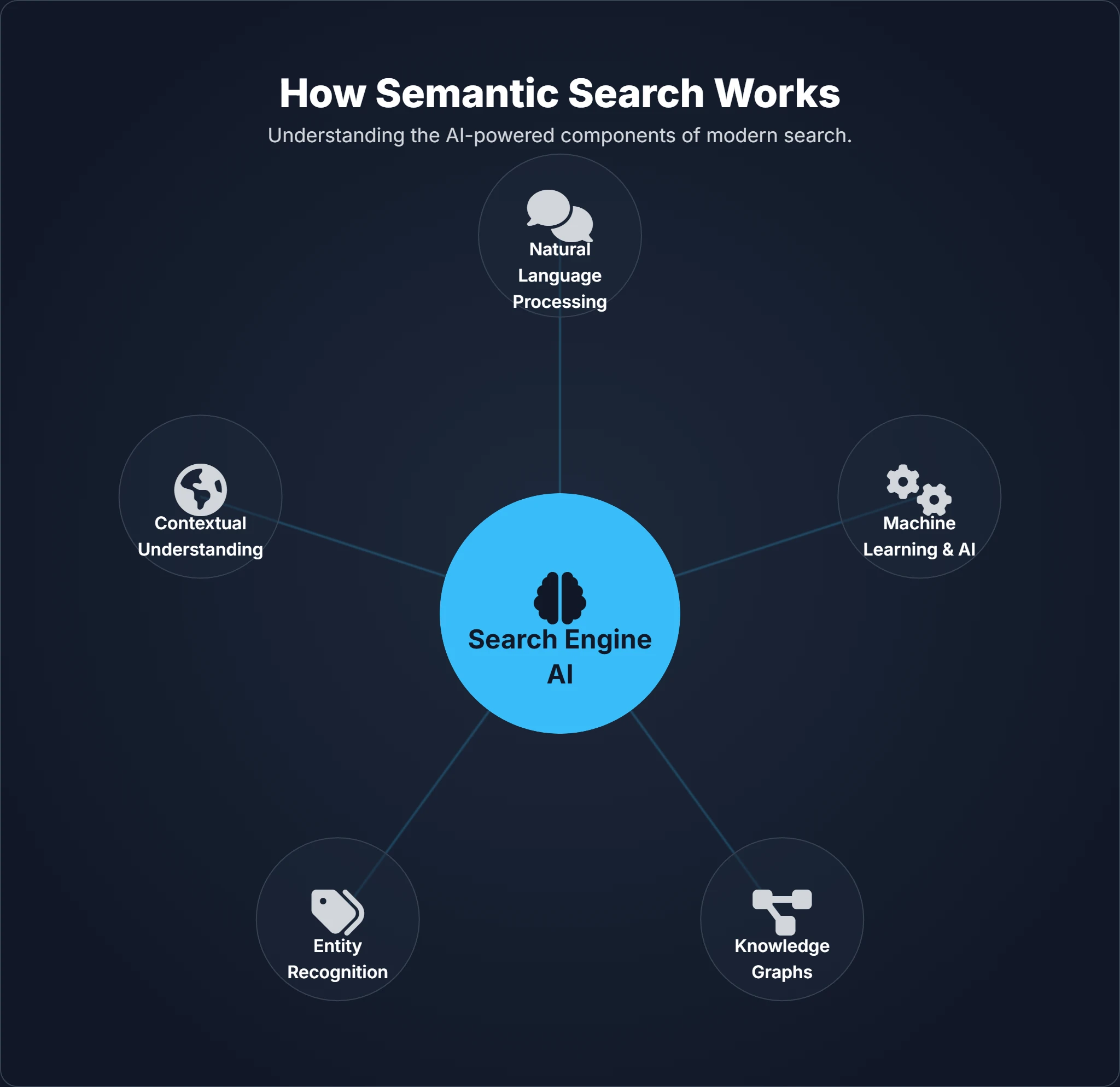
Think of a traditional search query as a single instruction to a librarian. An LLM agent, however, acts as a conversational partner who remembers previous statements, understands nuance, and anticipates next questions. This involves history-tracking and context windows. An LLM agent constructs a mental model of intent from the entire conversation. For instance, if you ask “I need new running shoes,” then “Which brands are best for flat feet?”, the agent uses its context window—a limited, updated memory of the dialogue—to link the “brands” question to “running shoes for flat feet.” This “memory” influences retrieval and synthesis, making your content’s ability to provide relevant, context-aware answers critical for successful conversational search optimization.
Understanding Context Windows and History Tracking
LLM agents maintain a dynamic context window during user interaction, acting as short-term memory, holding a segment of the conversation. When you ask an LLM about “sustainable packaging solutions” then “What are the cost implications?”, it recalls the initial topic, understanding the “cost implications” are related.
Beyond this, agents employ history-tracking for complex interactions. This deepens understanding of the user’s overarching goal over multiple turns. For example, queries about “remote work tools,” “team collaboration strategies,” and “best practices for virtual meetings” link to “optimizing remote team productivity.” Your content needs to cater to this evolving understanding, providing comprehensive, interconnected answers that build a robust knowledge base for the agent.
From Static Queries to Conversational Turns
A key difference for content creators is the shift from discrete “search queries” to interconnected “conversational turns.” A traditional query, like “best small business CRM,” often ends once a user clicks. In an LLM dialogue, interaction unfolds as a series of turns, each building on the last.
Consider a user engaging an AI agent about CRM systems:
- Turn 1: “I’m looking for CRM recommendations for my small business.” (Broad intent)
- Turn 2: “What features are most important for sales tracking?” (Refining intent, specific feature focus)
- Turn 3: “Do any CRMs integrate well with Mailchimp for email marketing?” (Specific integration requirement)
Each turn refines intent. Your content must anticipate this progression. It’s not enough to have an article titled “Best Small Business CRMs.” You need deeply interlinked content addressing features, integrations, pricing, scenarios, and pain points. This approach, prioritizing a holistic, entity-based understanding, is key to LLM agent logic and ensures your brand is the go-to source for complex, multi-turn queries.
Your Content as the AI Agent’s Digital Consultant
An AI agent acts as a digital consultant, relying entirely on the quality, comprehensiveness, and structure of accessible information. Your brand’s content becomes its intelligence. Poorly organized content, jargon, or lack of depth will hinder accurate advice, potentially leading to “hallucinations.”
To succeed, your content must be a meticulously curated knowledge base, the ultimate reference for the AI agent. This means crafting content that is:
- Factually precise: Verifiable data is essential.
- Contextually rich: Information should clearly relate to broader topics.
- Authoritative: Demonstrate expertise through detailed explanations and clear sourcing.
The goal is for your content to be so well-structured and comprehensive that when an AI agent needs to answer a question related to your niche, it consistently retrieves and cites your brand. By providing this “consultant-grade” intelligence, you don’t just rank; you become an indispensable component of the AI’s ability to serve its users effectively.
Architecting Your Content: A RAG Model Approach to AI Search
Today, AI search engines, powered by sophisticated Large Language Models (LLMs), operate like a cognitive assistant, constantly processing and synthesizing information. To truly optimize for AI search engines, your content must feed this “brain” in a way it can easily understand, retrieve, and generate accurate responses. This is fundamental for effective conversational search optimization.
Here’s how Retrieval-Augmented Generation (RAG) models work. Imagine a brilliant student (the LLM) who writes amazing essays from memory. If asked a niche question, they might generalize or “hallucinate.” RAG models add a librarian: before the student answers, the librarian (retrieval component) quickly scours a trusted library (your content) for relevant, factual information. Only then does the student use that retrieved information, combined with existing knowledge, to formulate a precise answer. Your content becomes the reliable, well-organized library the AI depends on.
Boosting Your Brand’s Authority with Entity Density
Traditional keyword density is increasingly obsolete. LLMs identify and understand entities—anything uniquely identified with distinct characteristics (people, places, organizations like your brand, AEO/GEO, products, concepts). Entity density measures how thoroughly your content defines, describes, and connects these entities.
Think of your brand, AEO/GEO, as a central node in a vast knowledge graph. For an AI to recognize AEO/GEO as an authoritative node for “AI content automation” or “generative search optimization,” your content needs to repeatedly mention not just “AEO/GEO,” but also related concepts like “AI-ready content,” “LLM agent logic,” “predictive intent modeling,” “content automation platform,” and their relation to your core offerings. This comprehensive web helps the AI build a richer understanding of your brand’s expertise. It establishes your brand as the definitive source for specific topics, shifting from mere visibility to inherent credibility in the AI’s “mind.” This holistic approach is critical for entity-based content architecture.
Navigating the History-Tracking Challenge for Deeper Engagement
A profound aspect of LLM agent logic in conversational search is its ability to track user history and maintain context. This presents an opportunity: your content must satisfy the immediate query and implicitly address potential follow-up questions within the same session.
Consider a user asking, “What is the process for creating AI-ready content with AEO/GEO?” Your initial content might detail the first step. However, a user may immediately ask, “And what tools do I need?” or “How long does it typically take?” If your initial content is superficial, the AI agent will retrieve information elsewhere, diluting your brand’s authority. To overcome this, RAG-ready content strategy involves structuring information so logical next steps, related concepts, and common FAQs are readily available and contextually linked. This might mean sections like “Key Steps for AI-Ready Content Creation” followed by “Essential Tools and Resources” and “Timeline Expectations,” ensuring a smooth informational flow that satisfies the entire chain of thought. You proactively feed the AI’s history-tracking, solidifying your brand as the comprehensive source.
Here’s a practical comparison of traditional SEO content versus what’s needed for the modern AI brain:
| Feature | Traditional SEO Content | RAG-Ready Content (AI-Optimized) |
|---|---|---|
| Primary Goal | Rank for keywords, get clicks | Be the authoritative source for AI answers, drive deep engagement |
| Content Structure | Often siloed, focused on single keywords | Interconnected, entity-rich, anticipatory, knowledge-graph driven |
| Keyword Usage | High keyword density, exact matches | Natural language, entity mentions, semantic relationships, context |
| User Journey | Query -> Click -> Answer -> New Query | Conversational turn -> Contextual Answer -> Anticipated Next Query |
| Information Depth | Often superficial, broad overviews | Deep, comprehensive, anticipates follow-ups, step-by-step guidance |
| Call to Action | Direct, transactional | Contextual, supportive of further learning and brand interaction |
| Authoritative Signal | Backlinks, domain authority | Entity density, factual accuracy, consistent information coverage |
| AI Perception | Keyword matching for retrieval | Knowledge source for generative answers and reasoning |
Mastering Query Refinement: Designing Conversational Content for AI
In AI-powered search, crafting content for a single, static keyword has faded. We are now participating in dialogues. Users, accustomed to sophisticated AI assistants, naturally refine requests, starting broad and narrowing focus. For your content to truly optimize for AI search engines, it must anticipate and mirror these conversational shifts.
Consider a user looking for a new car. They might begin: “What are the most fuel-efficient SUVs?” The AI presents options. The user refines: “Show me hybrid SUVs under $40,000.” Further: “Which of those has the best cargo space for camping gear?” Your content needs to handle this iterative exploration, providing both overarching answers and granular details. This means organizing information not just by topic, but by potential follow-up questions, creating a network of interlinked knowledge that AI agents can easily navigate.
Mastering Predictive Intent Modeling in SEO
Predictive intent modeling in SEO moves beyond reacting to current search terms. It’s about anticipating what a user might ask next after engaging with your content or an AI agent presents your brand’s information. This proactive approach ensures an AI agent, acting as a user’s digital consultant, always has relevant information, making your content a primary source.
To implement predictive intent modeling, analyze user journey data. What common pathways do users take after landing on a page? Do they jump from “product specifications” to “customer reviews,” or “how-to guides” to “troubleshooting tips”? This data is invaluable. If you offer financial planning advice and users search for “retirement planning strategies,” proactively include sections or links for “tax implications of retirement savings” or “best investment vehicles for retirement,” even if not explicitly asked. This isn’t guessing; it’s educated prediction based on user behavior and logical needs.
A practical step involves creating “content clusters” around core entities. A pillar article offers a broad overview, and satellite articles (like this one) dig deep into sub-topics. If your pillar covers “How to Optimize for AI Search Engines,” a user might then ask about “specific tools for AI content optimization” or “case studies of successful AI search optimization.” By preparing these related, detailed pieces and linking them intelligently, you empower the AI agent to provide comprehensive answers without the user having to re-initiate a search. For a complete overview of Optimizing for LLM Agent Logic, refer to The Psychological Drivers of Conversational Search: Optimizing for LLM Agent Logic.
Crafting Conversational Content for AI Agents
When designing content for conversational nuance, language is paramount. AI agents are trained on natural human language and respond best to conversational styles. This means writing clearly, directly, and approachably, as if explaining to a colleague.
Crucially, avoid common marketing jargon and “Banned Phrases” that make content sound robotic. Instead of “unlock the secrets,” opt for “discover how.” Replace “streamline your workflow” with “make your process smoother.” The goal is genuinely helpful, informative content, stripped of fluff. An AI agent seeks facts, explanations, and actionable advice. By maintaining a conversational, practical tone, you improve human readability and enhance the AI’s ability to interpret your information. This is where your brand, AEO/GEO, excels by enabling businesses to generate and distribute “AI-ready” content, ensuring your message resonates effectively within these new search ecosystems.
Strategic Execution: Optimizing Content for the AI Agent Ecosystem
Optimizing for AI search engines isn’t just about keywords; it’s about making your content a reliable, comprehensive resource for sophisticated LLM agent logic. These agents seek accurate, well-structured, and contextually rich information to answer user queries, transforming content creation into strategic digital collaboration. To win visibility, you need to think like an AI agent, ensuring your content is not just discoverable, but citable and actionable.
Auditing for AI Agent-Readiness: A Step-by-Step Guide
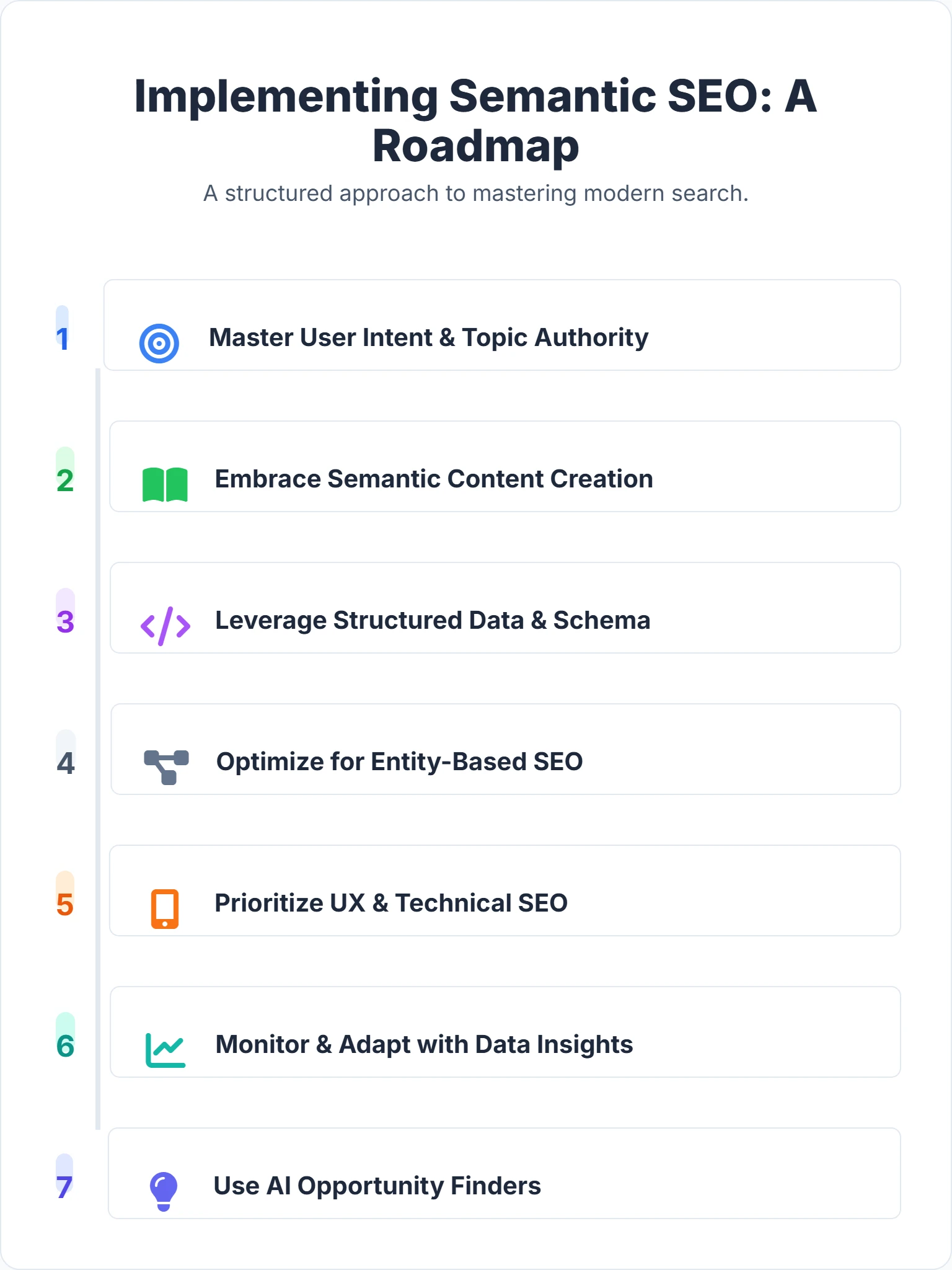
The first step in creating content for the AI agent ecosystem is understanding where your existing content stands. An audit for “agent-readiness” involves evaluating how easily an AI agent can ingest, process, and retrieve information.
- Content Inventory & Topic Clustering: Inventory all content assets. Identify primary topics, secondary topics, and entities. Group related articles into tight topic clusters (e.g., CRM features, implementation, benefits). “TechSolutions Inc.” re-clustered scattered “cloud security” articles, increasing agent citations by 15%.
- Granularity & Entity Extraction: AI agents thrive on granular information. Review content for easily extractable facts, definitions, or steps. Are terms clearly defined? Are process steps numbered and concise? Each distinct concept should be a clear entity. Break down processes (e.g., “email automation setup”) into explicit, sequential, clear steps. This significantly improves an agent’s ability to retrieve precise answers.
- Intent Alignment & Gap Analysis: Analyze content against potential user intents and follow-up questions. Use “People Also Ask” questions to identify gaps. A brand might have product descriptions but lack “how-to” guides, creating an agent’s advice gap.
- Answer-Oriented Formatting: Reformat content for direct answers. Use bullet points, numbered steps, and bold text for key takeaways. Headings should be descriptive mini-summaries. Imagine an AI agent scanning: can it quickly pull out the “who, what, when, where, why, and how”?
Schema Markup: The AI Agent’s Instruction Manual
Structured data (Schema Markup) acts as the “handshake” between your content and AI logic. It provides machine-readable labels, defining entities and relationships as an instruction manual for the AI. Beyond Article or Product schema, HowTo and FAQPage schemas explicitly feed conversational AI. “Artisan Crafts Co.” boosted voice search visibility by 20% by applying Product and Review schema. Custom entities using Thing or CreativeWork schemas can signal unique concepts, increasing branded citations. This deep conversational search optimization ensures an agent understands not just what you’re saying, but what it means within a structured framework.
Becoming the Preferred Source: Achieving LLM Stickiness
The ultimate goal is to make your brand “sticky” in LLM responses—the authoritative source AI agents repeatedly cite. This is about building genuine authority and utility.
- Consistency and Authority: AI agents prioritize consistent, reputable sources. Publish high-quality, accurate content across relevant topics to reinforce expertise. This builds a strong entity association, leading agents to trust and prefer your domain.
- Unique Data and Proprietary Insights: Provide unique data, original research, or proprietary insights. Annual industry surveys or unique frameworks become citable assets. Exclusive information strongly incentivizes direct citation. AEO/GEO’s whitepapers on “RAG-ready content strategies” contain original data agents increasingly pull, attributing findings to our platform.
- Optimizing for Citation Loops: To become sticky, content should provide answers and anticipate follow-up questions. Structuring content to flow logically encourages agents to remain within your informational orbit. An article on “e-commerce shipping strategies” addressing challenges, solutions, and linking to “optimizing shipping costs,” creates a “citation loop,” establishing your brand as a comprehensive resource. This proactive design uses predictive intent modeling in SEO for an agent-first approach.
The world of search is fundamentally changing, moving far beyond simple keyword matching. We are now optimizing for cognitive mapping, where your content acts as a trusted advisor to AI agents, guiding their understanding of user intent and providing the rich, interconnected data they need to formulate precise, helpful answers. This shift means thinking about your brand’s online presence as a comprehensive knowledge hub, designed to be easily digestible and contextually relevant for artificial intelligence.
Imagine your content as a digital companion, proactively assisting AI agents in their quest to serve users. It’s about building a robust, entity-based architecture that not only answers direct questions but also anticipates follow-up inquiries and related topics. Ready to transform your content into this powerful AI companion? Start building your entity-based knowledge hub with the AEO/GEO platform today and truly master How to Optimize for AI Search Engines.
AEO/GEO
Want to learn more?
Contact us for direct consultation and support.