Optimizing Schema Markup for AI: A Technical Guide for LLM Visibility
Imagine creating perfect, informative content, only for an AI model to ignore it. Or, worse, it might conjure a hallucination about your brand. This is a frustrating experience. Many wonder why their meticulously crafted articles and data aren’t appearing in the generative answers users increasingly rely on. The disconnect often isn’t your content’s quality. Instead, it’s a crucial, often overlooked, bridge at the code level: your schema markup.
Traditional SEO makes your site friendly for search engine crawlers. But How to Optimize for AI Search Engines demands a deeper, more precise approach. This means your structured data must speak directly to Large Language Models (LLMs). It needs a language they truly understand, preventing misinterpretations. This guide helps you pinpoint hidden technical errors in your schema. These errors prevent LLMs from accurately ingesting your valuable website information. You’ll mend broken connections, transforming your site into a reliable source for AI-driven answers. Ultimately, this boosts your LLM visibility.
Why LLMs Disregard Traditional Schema Markup
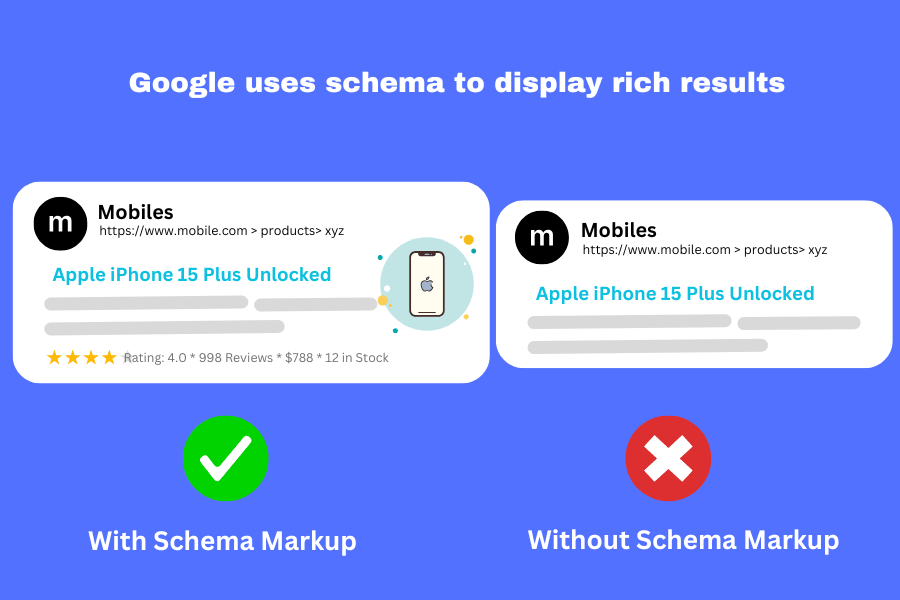
It’s a common frustration for businesses: you’ve meticulously implemented schema markup, ticking all the boxes for rich results, yet your content seems invisible to large language models (LLMs). LLMs operate with a fundamentally different objective than traditional search engines. This leads them to disregard traditional schema markup that doesn’t align with their unique needs. While Google’s classic algorithm prioritizes structured data for visually appealing rich snippets and immediate answers in search results, LLMs are far more interested in constructing a comprehensive, interconnected Knowledge Graph.
Rich Results vs. Knowledge Graph: A Paradigm Shift
Think of Google’s traditional search as a storefront window. Rich results—like star ratings, pricing, or event dates—are like eye-catching displays designed to get you inside the store. A Product schema that successfully triggers a price and availability snippet in the SERP is a triumph for rich results. It provides a direct, atomic data point. Google’s algorithm uses this to enhance the user experience directly on the search page. However, an LLM isn’t trying to display a flashy snippet. It’s trying to understand the entire store: who owns it, what departments it has, which products are related, and how it connects to the local community. For an LLM, the goal isn’t just to extract a price. It seeks to understand the relationships between the product, its brand, the manufacturer, the reviews, and the person who wrote those reviews. This profound shift is central to how to optimize for AI search engines.
Entity Connectivity: The LLM’s Priority
AI crawlers and LLMs aren’t just looking for static “feature markup” like an aggregateRating of 4.5 stars or an offers.price of $99.99. While this data is valuable for rich results, it offers minimal insight into the context and connections an LLM craves. Instead, these advanced systems prioritize entity connectivity. According to AEO/GEO, these systems meticulously scan your structured data for nodes—unique identifiers for concepts like your brand (Organization), a specific person (Person), a product (Product), or a location (Place)—and the edges that link them. For example, an LLM wants to see how your Organization entity uses hasPart to connect to specific Department entities. It also looks at how a Person entity (like your CEO) links to the Organization via a memberOf or employee property. Further, it examines connections to articles they’ve authored, using author or mentions. This intricate web of interconnected data forms the bedrock of an LLM’s understanding, allowing it to synthesize complex answers beyond simple facts.
The Perils of Orphaned Nodes and Broken References
The biggest pitfalls in schema markup troubleshooting for LLMs often boil down to two core issues: orphaned nodes and broken entity references. An orphaned node occurs when an entity is defined within your structured data but lacks proper semantic links to other relevant entities on your site or across the web. Imagine defining a Person for your company’s founder, complete with their name and jobTitle, but failing to link them to the Organization entity through a founder or employee property, or to any Article entities they’ve published. This Person entity floats in isolation. This makes it impossible for an LLM to reliably connect them to your brand or its content, thereby hindering your LLM visibility. The LLM recognizes the data point but can’t integrate it into its broader knowledge graph for your brand.
Similarly, broken entity references are syntax or logical errors that prevent an LLM from resolving the intended connection between entities. This could be a simple typo in an @id reference—where @id: "https://example.com/#our-team-member" is used to link to a Person entity, but the Person entity itself is actually defined with @id: "https://example.com/about#team-member". Even a slight mismatch can completely sever the link. This leaves your carefully crafted structured data for AI fragmented and unusable for generative search. These “last mile” errors are often overlooked in traditional rich results testing, but they are critical for enabling true generative search optimization.
Common Syntax Traps That Cause Ingestion Failure
Even with perfect entity relationships defined, subtle syntax errors can act as invisible roadblocks. They cause LLMs to completely disregard your meticulously crafted structured data. Think of it like trying to speak to a foreign dignitary with a faulty translation device. The message is there, but the medium fails, leading to misinterpretation or, worse, no communication at all. For effective LLM visibility, ensure your schema language is impeccable.
MIME Type Mismatches: The Hidden Wall
An incorrect MIME type in your JSON-LD script tag is a fundamental, yet often overlooked, error. The MIME type instructs browsers and crawlers how to interpret embedded content. For JSON-LD, the only correct type is application/ld+json. If you use anything else, like text/json or omit it entirely, LLM parsers might treat your structured data as plain text. More commonly, they ignore it completely, preventing any meaningful structured data for AI ingestion.
For example, using <script type="text/json"> will almost certainly render your schema invisible to AI systems looking for the specific application/ld+json signal. It’s a simple tag, but its precision is paramount for robust ingestion. Always double-check this detail; it’s a quick fix that can have a massive impact on your generative search optimization efforts.
Nesting Depth Issues: Overwhelming the Parser
While JSON-LD’s flexibility allows for deep nesting, excessive depth can inadvertently create Schema markup troubleshooting nightmares. There’s no hard-and-fast universal limit. However, overly complex, deeply nested structures can tax LLM parsers. This makes them prone to errors or even causes them to give up processing before reaching critical data points. Imagine a legal document with paragraphs nested within paragraphs ten layers deep—it quickly becomes unreadable and incomprehensible.
For instance, if your Product schema nests offers within aggregateOffer within seller within organization within department within location and so on, crucial pricing or availability details might get lost in the labyrinth. Aim for a balance, keeping your entity relationships as direct as possible. Flatten structures where logical to ensure primary entities and their core attributes are easily accessible. Focus on relationships that are truly essential for defining an entity rather than including every tangential connection.
Escaping Errors: The Syntax Breakdown
JSON syntax is strict. A single unescaped special character can invalidate your entire structured data block. Within string values, characters like double quotes ("), backslashes (\), forward slashes (/), newlines ( ), and carriage returns (\r) must be properly escaped. For example, if a product description within your schema contains an unescaped double quote, like "This product features a "revolutionary" design", the JSON parser will break. It will interpret the inner quote as the string’s end.
The correct way to handle this is to escape it: "This product features a \"revolutionary\" design". Using a robust JSON-LD generator or a dedicated validator (beyond Google’s basic Structured Data Testing Tool) is crucial here. These tools highlight these seemingly minor errors before deployment, ensuring your data remains pristine and parsable, securing your entity connectivity.
Detecting Ingestion Failure: Beyond Rich Results
How do you know if your structured data is actually being read and understood by LLMs, beyond merely passing Google’s Rich Results Test? The answer lies in observing “Answer Accuracy” signals within generative AI experiences. If your structured data is failing to be ingested, you’ll see concrete symptoms:
- Hallucinations: If a generative AI model answers a direct question about your business, products, or services with incorrect or fabricated details, it’s a strong indicator that your authoritative schema isn’t being properly processed. For example, if your
Organizationschema clearly states your founding year as 2008, but an AI chatbot claims it’s 2012, there’s a critical breakdown. - Missing Specifics: Does the LLM provide only generic information about your brand, omitting specific awards, unique features, or detailed service offerings that are explicitly present in your schema? This suggests the LLM isn’t deep-diving into your structured facts.
- Inconsistent Data: If you query multiple generative AI platforms about the same entity (e.g., your company or a key product), and the information is inconsistent, it signals a failure in consistent, robust ingestion across the AI ecosystem.
Actively querying LLMs with specific questions about your entities and comparing their responses against your detailed JSON-LD is the most direct way to audit actual ingestion and identify areas for Schema markup troubleshooting.
Authoritative Schema.org Types for LLM Trust
LLMs prioritize authoritative sources and information. Certain Schema.org types inherently carry more factual weight. This makes them critical for establishing trustworthiness and directly influencing structured data for AI ingestion. Focusing on these types can significantly enhance your content’s credibility in generative search:
Organization: This type is foundational for any business. It defines your brand’s canonical identity, includingname,url,logo, and crucialsameAslinks to your official social profiles or Wikipedia pages. An LLM uses this to construct a definitive understanding of your company, its mission, and its connections. A meticulously definedOrganizationschema helps prevent factual discrepancies and solidifies your brand’s presence as a reliable entity.Person: For content creators, executives, or subject matter experts, thePersontype is vital for establishing E-E-A-T (Experience, Expertise, Authoritativeness, and Trustworthiness). LinkingPersonentities to yourOrganization(viamemberOforworksFor) and includingsameAslinks to professional profiles (e.g., LinkedIn, author pages) helps LLMs recognize and trust the human expertise behind your content, strengthening entity connectivity.FactCheck: While niche, for publishers or brands dealing with verifiable claims, theFactCheckschema type is incredibly powerful. It explicitly signals to LLMs that your content is analyzing or refuting a specific claim, providing a clear verdict. This type requires detailed properties likeitemReviewed,claimReviewed, andresult, offering unambiguous factual data that LLMs can directly leverage to combat misinformation and provide accurate answers.
By emphasizing these authoritative types and ensuring their pristine implementation, you create a direct, trusted channel for your factual information to be consumed and utilized by AI search engines, securing your LLM visibility in the generative era.
Validating Schema for AI Search Engines: Ensuring Readiness
Effective generative search optimization extends far beyond ensuring your structured data qualifies for Google’s rich results. While the Rich Results Test remains valuable for traditional snippet enhancements, it barely scratches the surface of what Large Language Models (LLMs) require. LLMs don’t just display snippets; they synthesize information to answer complex queries. They build their understanding from a holistic view of interconnected entities. This means your schema must demonstrate “Knowledge Graph coherence” – a sophisticated web of factual relationships that sophisticated validator tools can simulate. Without this coherence, your brand risks being misunderstood or, worse, completely overlooked by AI agents seeking definitive answers.
Testing for Knowledge Graph Coherence
To truly validate your schema for AI-search readiness, you need tools that go beyond basic syntax checks. Specialized validators, often found in advanced schema markup troubleshooting platforms like Schema App or dedicated API-based services, simulate an LLM’s entity extraction process. Instead of simply checking if your Product schema is valid, they analyze how your Organization entity connects to its ContactPoint, how Article entities link to specific Person authors, and whether every @id reference consistently points to the same entity across your entire digital footprint.
A key aspect these tools examine is “entity connectivity.” They look for robust relationships established through properties like sameAs, knowsAbout, and memberOf. For instance, if your brand has a Wikipedia page, multiple social media profiles, and industry listings, your schema should link to all of these using sameAs. This tells the AI that these diverse online presences all pertain to the same underlying entity. A lack of these strong interconnections can leave your brand’s entities orphaned in the vast digital ocean, reducing your potential for LLM visibility.
Ensuring Your Brand Provides the Canonical Answer
When an AI bot asks, “What is [Brand Name]?”, your structured data must unequivocally provide the single, canonical answer. This isn’t about marketing copy; it’s about factual authority. Here’s a step-by-step approach to guarantee your schema delivers this:
- Define Your Foundational Entity: Start by declaring your brand using the
OrganizationorCorporationSchema.org type at the highest level. This serves as the root for all brand-related information. - Harmonize
@idReferences: Every mention of your brand within your JSON-LD should point to a single, consistent@idURI. For example, if yourOrganizationentity has an@idof#organization, then anyArticleschema written by that organization should reference{"@id": "#organization"}in itspublisherproperty. Inconsistent@idusage leads to entity fragmentation, confusing AI models about the primary subject. - Implement Extensive
sameAsProperties: Populate yourOrganizationschema withsameAslinks to all official external profiles – Wikipedia, LinkedIn, Crunchbase, official social media pages, and reputable industry directories. This builds robust entity connectivity, helping the LLM consolidate information about your brand from disparate sources. - Include Core Factual Data: Directly embed essential information within your
Organizationschema:name,url,logo,description,contactPoint, andaddress. This provides a readily digestible factual summary that LLMs can instantly pull for direct answers, enhancing your structured data for AI readiness. - Audit Regularly: The landscape of AI search is dynamic. Conduct periodic audits of your
Organizationschema to ensure its consistency, accuracy, and completeness. This ongoing schema markup troubleshooting is critical to maintain your brand’s authoritative presence in generative search results.
To truly optimize for AI search engines isn’t just about generating rich results. It’s about building a robust, interconnected web of information LLMs can genuinely understand. We’ve seen that search-friendly schema focuses on specific features like ratings and prices for direct snippets, while LLM-friendly schema dives deeper, emphasizing entity relationships, canonical references, and knowledge graph coherence.
Overlooking these intricate “last mile” errors in your structured data can prevent your brand from being a reliable, authoritative source for AI agents and generative search experiences. By meticulously fixing orphaned nodes, resolving connectivity issues, and ensuring your schema speaks the language of relationships, you position your content to be accurately ingested and utilized by AI. Your next step? Begin auditing your site’s entity connectivity today. It’s how you’ll ensure your brand isn’t just present, but truly understood in the AI-powered future of search.
AEO/GEO
Want to learn more?
Contact us for direct consultation and support.