Everyone wants a crystal ball. In business, that desire translates into a need to know the next best step before competitors do. We don’t have magic, but we do have predictive analytics. This statistical science applies pattern recognition to massive data sets, allowing organizations to forecast future outcomes with a degree of probability that far exceeds guesswork.

As companies collect more data over longer periods, these predictions become sharper. The tool grows more precise as the historical context deepens. For managers and decision-makers, understanding how to leverage this technology is no longer optional—it is a core component of strategic planning. Predictive analytics transforms raw data into actionable intelligence, helping professionals make better, more informed decisions.

So, what can predictive analytics actually do for your organization? The applications vary widely across industries, from healthcare to entertainment to marketing. Let’s look at how this technology works in practice and why it matters for your bottom line.
Industry Applications of Predictive Analytics
Predictive analytics is not a one-size-fits-all solution. Different industries use it for vastly different reasons, pursuing unique outcomes based on their specific challenges. By examining three distinct use cases—healthcare, entertainment, and marketing—we can see how the same underlying technology serves very different masters.
Healthcare: Predicting Risks and Outcomes
In healthcare, the stakes are high. The industry uses data analytics to examine a patient’s disease process in the context of historical data about that specific disease. By detecting patterns in this data, it becomes possible to make medically relevant predictions that save lives and resources.
Consider the evolution of bariatric surgery. The first nationwide statistics on obesity in the US became available in 1985. Researchers used predictive analyses of that era to forecast that the risks associated with living with obesity would eventually outweigh the risks of surgery to treat it. Later descriptive analysis, based entirely on historical data, identified the tipping point: a Body Mass Index (BMI) of 40 or greater, or 35 or greater with a comorbidity. This finding is why Medicare typically covers bariatric treatment for these patients.
Predictive analytics also helped identify which health conditions indicate an obesity disease process. It was confirmed that common comorbidities of chronic obesity include type 2 diabetes, obstructive sleep apnea, and various cardiac conditions. Decades of bariatric surgery data, reviewed alongside new data on gastric bypass effectiveness, allowed researchers to predict that the procedure would reduce BMI and treat other conditions. Two major studies in Utah and Sweden confirmed that patients who underwent gastric bypass achieved a 10-year reduction in cardiovascular morbidity of approximately 50%.
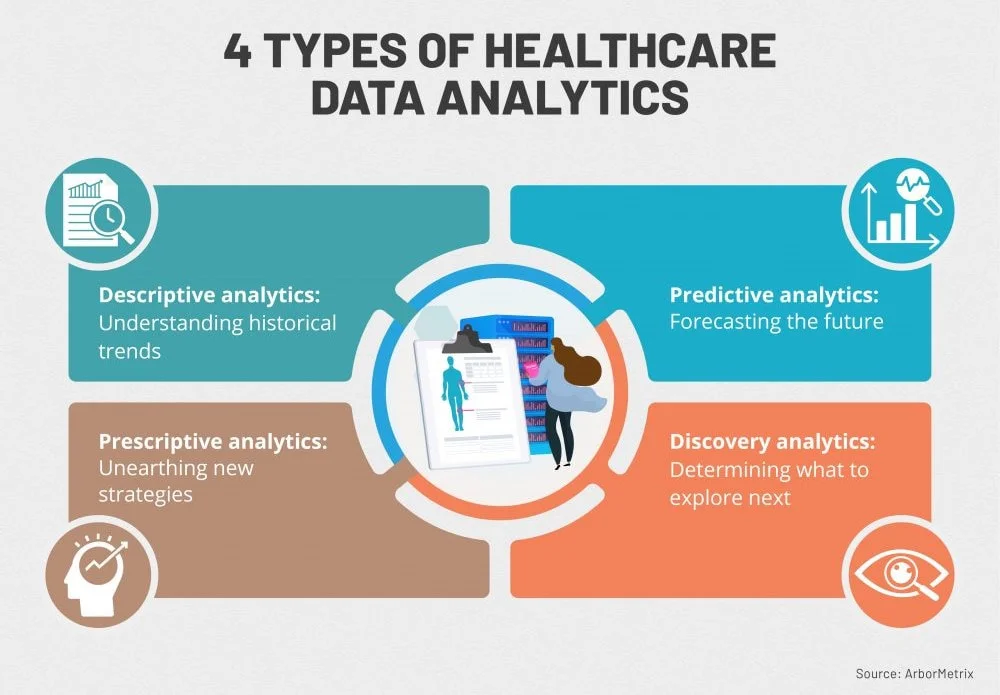
The control group that did not have the procedure was twice as likely to die of heart disease. Compared to the mortality rate of the surgery itself—a scant 0.24%—these statistics help doctors determine when the benefits outweigh the risks for each patient. This is predictive analytics saving lives.
Entertainment: Content Recommendations
The entertainment industry uses predictive analytics for a completely different purpose: engagement. Every title on Netflix, Hulu, or Disney+ has data attached to it specifically for use in predictive models. These predictions have nothing to do with medical risks; they focus on what content will resonate with specific audiences.
Streaming services look for patterns in what you watch and how you rank titles. They run your data through predictive algorithms to guess what you will enjoy next. The Netflix Percentage Match offers viewers a glimpse into this process. As you browse, you see a percentage under the show title indicating how much Netflix thinks you will like it. This prediction is based on how closely the show resembles other shows or movies you have watched or rated positively.

This model keeps users engaged by reducing the friction of choice. It is a subtle but powerful application of data, turning viewing history into a personalized recommendation engine. For marketers, this demonstrates how predictive analytics can enhance user experience and retention.
Marketing: Effective Customer Segmentation
Marketers use predictive analytics to plan campaigns by customer segment. The data is examined for patterns to predict which customers a campaign will be most effective on. Marketers can then target their audiences accordingly for better results.
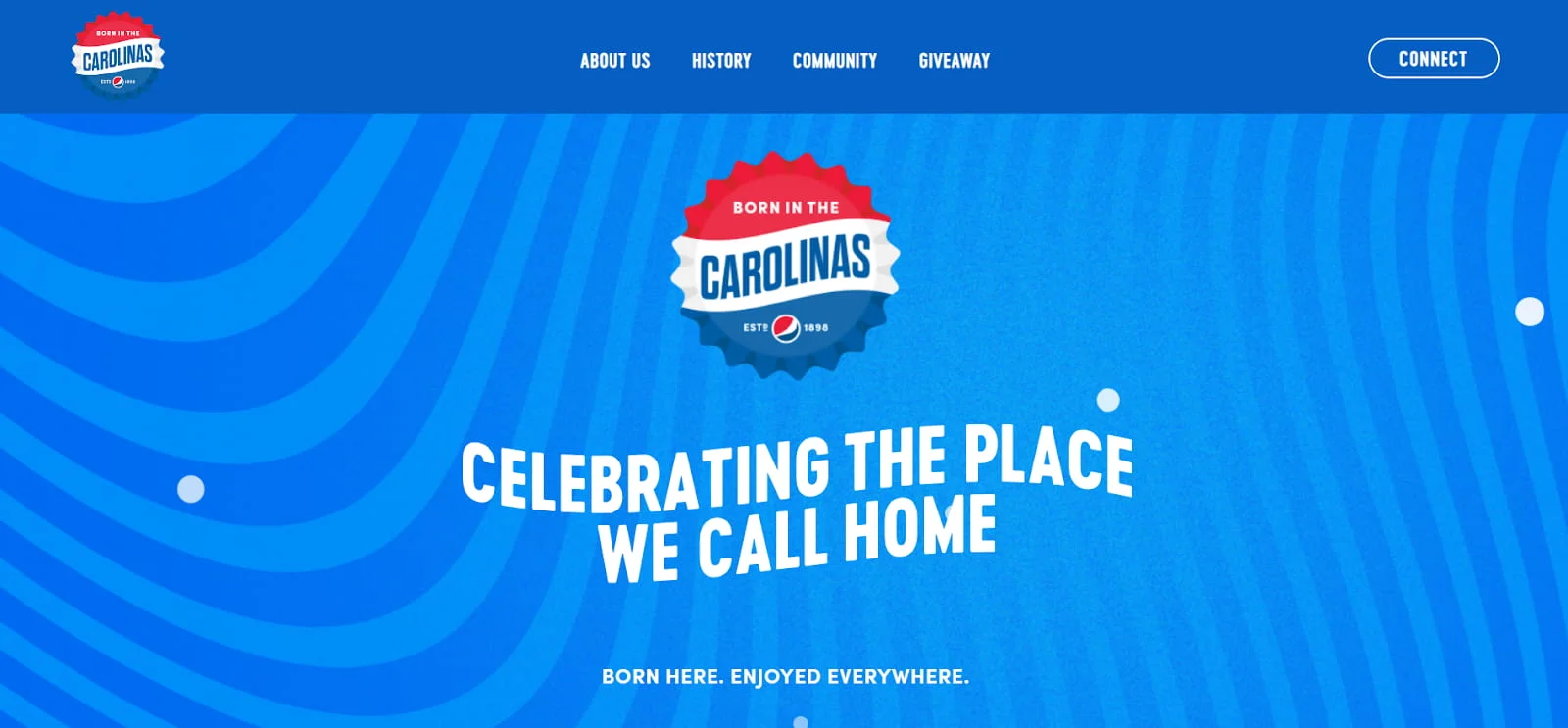
Take the geographic preference for Coke versus Pepsi in the US. Data shows that the northern US prefers Pepsi while the southern US prefers Coke. This divide stems from Pepsi’s acquisition by a northern Wall Street pioneer in the 1940s, who advertised aggressively in the north. Modern marketing teams for Pepsi analyzed old and new data to predict that an effective campaign could be targeted in the Appalachian region of the southern US, where Pepsi was originally created. They launched the “Born in the Carolinas” campaign, using patterns in ever-growing data to their advantage.
Marketers must be mindful of the programs, algorithms, and data sets they use. AI tools vary in their ability to recognize certain patterns. It is up to marketers to decide which patterns to use for sorting customers into effective segments. They may need to swap out or train their AI analytics tools to extract more relevant and accurate predictions from their data.
Common Predictive Analytics Models
There are various predictive analytics models and algorithms designed to process data. As AI and machine learning advance, this list will grow. Understanding the five most common models today can help you choose the right tool for your business needs.
Classification Model
Classification models are simple, flexible, and direct. They are best for answering yes-or-no questions or describing relationships between data in a dataset. Datasets are easily swapped in and out, making this a great starting point for understanding predictive analytics.
These models answer questions like, “Are there patterns in this data that signify similar groups?” They can also identify if-then situations, such as a decision tree: “If Y is true, then X; if Y is false, then Z.” This requires a specific output based on input, categorizing it as supervised machine learning. It is ideal for scenarios where you need a clear binary outcome, such as predicting whether a customer will churn or stay.
Clustering Model
Clustering is excellent for discovery within data. Instead of asking for similar groups, the model simply provides data groups that have similarities. These groups may surprise you, offering breakthrough insights, or they may be related in ways that are not immediately useful.
A marketer might feed customer data into a clustering model, which might find similarities between customers that make them ideal candidates for social media ads, while another group is more likely to respond to television ads. The clustering model does not require direction to produce outputs, making it a type of unsupervised machine learning. It is particularly useful for exploratory analysis when you do not know what patterns to look for.
Time Series Model
The time series model uses time as its metric. It considers historical and current data about variable details as they shift to predict those variables in the future. This model is best for identifying and optimizing trends, cycles, and seasonal differences.
Imagine a new florist who stocks her shop with vases and fresh flowers but does not know how much extra stock to have ready each week. She does not want to over-order, risking spoilage, or under-order, risking stockouts. By using a time series model with data from a similarly sized flower shop, she can order more accurately each season. In the following year, she feeds her own data into the model, improving her ordering accuracy over time. This model is essential for businesses with seasonal fluctuations.
Outlier Model
The outlier model solves problems by tracking anomalies. It can also identify patterns among anomalies that may signify a predictable result. An internet provider, for example, might see a pattern of outage alerts leading to widespread home visits and line maintenance. The next time that alert pattern appears, the provider knows to prepare for a wave of support tickets.
If the provider discovers that flooding occurred both times, they can anticipate that hard rains will trigger the alert pattern. This insight allows for smart budget choices, such as fortifying the service area against water damage or investing in waterproof lines. The outlier model helps businesses anticipate and mitigate risks associated with unusual events.
Forecast Model
The forecast model is used when you need numerical predictions based on historical numerical data. It allows you to include additional relevant inputs for as accurate a prediction as possible, minimizing risk from unaccounted variations.
This high-use model is particularly useful for banks and businesses that track investment portfolios, create budgets, and provide financial projections. If you need a numerical prediction based on numerical data for any venture, you are likely to use forecast models. It is the backbone of financial planning and inventory management.
Benefits and Drawbacks of Predictive Analytics
Predictive analytics offers significant benefits, but it also comes with limitations. Understanding both sides is crucial for effective implementation.
Key Benefits
Predictive analytics helps teams make more informed decisions. Results are data-driven, coming with greater confidence and buy-in potential. You can forecast and dedicate resources with less risk, relying on historical data to increase the likelihood of accurate predictions.
You can also use the information to improve your offerings. New buying patterns detected in the data may reveal fresh revenue sources. You can optimize products and services based on customer feedback data. Unexpected data patterns may also uncover new customer segments. The benefits are limited only by your creativity in finding uses for the patterns your tools discover.
Potential Drawbacks
The primary concern is that predictive models produce predictions, not facts. It is critical to communicate to leaders that the information they are basing choices on is a form of data-driven prediction. Statistical significance may be high, but it is never 100% factual.
Consumer behavior changes, and models are only as good as the freshest data available. Sometimes, this data is hard to come by or expensive to obtain. Ethics must also be considered. AI and machine learning programs may be biased, require additional training, or need frequent updates to remain accurate. Ignoring these factors can lead to flawed predictions and poor decisions.
Getting Started with Predictive Analytics
There are infinite ways predictive analytics can be useful to your business. Using AI to dig deeper for patterns in data makes the usefulness of predictive analytics as limitless as our imaginations. Will you and your team dream up the next creative application that boosts your success by making data-driven decisions?
The journey begins with understanding your data and choosing the right models. As we move forward in the AI-driven search era, the ability to create, optimize, and distribute AI-ready content at scale will be crucial. Platforms like AEO/GEO Services help businesses maximize visibility in generative search, ensuring consistent presence in AI-generated answers. By integrating predictive analytics with intelligent content strategies, businesses can stay ahead of the curve.
The future belongs to those who can predict it. Are you ready to take the next step?





