The Blurring Line Between Human and Machine Content
The distinction between human-created and AI-generated content has become increasingly difficult to discern. What once involved obvious artifacts or uncanny valley effects now presents a sophisticated challenge for even the most experienced eyes. High-quality synthetic media can mimic the nuances of human creation with startling accuracy, representing a fundamental change in how audiences perceive digital information. For brands, this ambiguity introduces new layers of complexity regarding trust, authenticity, and engagement.
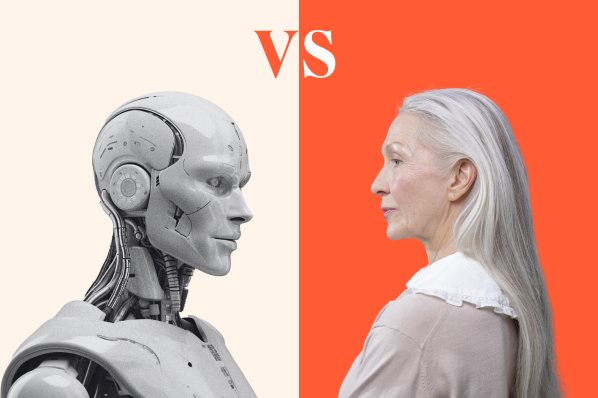
In 2025, distinguishing between organic and synthetic media is a critical competency. Algorithms have advanced to replicate artistic styles, vocal cadences, and narrative structures previously considered unique signatures of human creativity. This evolution requires a new level of media literacy from both creators and consumers. Understanding the mechanics behind these tools is essential for navigating the modern digital landscape effectively.

When an audience cannot easily tell if a piece of content is human or AI, the trust dynamic shifts. Brands must decide how transparent they want to be about their use of automation. Some choose full disclosure, while others maintain a more ambiguous stance. This decision impacts brand perception significantly. Audiences are generally more forgiving of AI assistance when it is used for efficiency, but they may react negatively if they feel deceived by a lack of transparency. Navigating this balance requires a nuanced understanding of both technology and audience psychology.
As we examine specific examples across different media types, it becomes clear that the challenge is multifaceted. Each medium—text, image, audio, and video—presents its own set of indicators and pitfalls. The tools used to generate this content vary widely, from large language models to diffusion-based image generators and neural voice synthesizers. Recognizing the output of these specific tools can sometimes provide a clue, but as the models improve, even these signatures become harder to detect. The following sections break down these challenges by medium.
Visual Deception in Images and Art
Visual content has seen some of the most dramatic advancements in AI generation. Early attempts were plagued by obvious errors, such as extra limbs or nonsensical text in the background. Today, those errors are far less common. Modern image generators can create photorealistic scenes that are indistinguishable from camera-captured photographs at first glance. However, subtle inconsistencies often remain. These might appear in the way light interacts with surfaces, the texture of materials, or the logical consistency of complex scenes. Identifying these flaws requires a keen eye and a good understanding of how photography and physics work in the real world.
Consider the case of a bird image that appears to be a high-quality National Geographic shot. Upon closer inspection, the AI-generated version might show slight irregularities in the feathers or an unnatural background blur. The human eye is remarkably good at pattern recognition, but it can also be fooled by plausible-looking details. In one example, an AI-generated bird image created with Gemini looked convincing enough to trick many observers. The key was in the minute details of the anatomy and the lighting, which did not quite align with natural laws. This highlights the importance of looking beyond the overall impression and examining the specific elements of an image.

Artistic styles present another layer of complexity. AI can mimic the brushstrokes and color palettes of famous painters with impressive accuracy. A painting titled Noosphere by artist Emanuel Schulze was mistaken for AI by many, while an AI-generated painting fooled others into thinking it was human-made. This reversal is significant. It suggests that AI is not just copying styles but is beginning to understand the underlying principles of artistic composition. For marketers, this means that visual branding must be even more distinctive. Relying on generic artistic styles may lead to confusion about the origin of the content. Developing a unique visual voice that is harder to replicate becomes a strategic advantage.
The challenge extends to product photography and advertising imagery. An AI-generated ad created with Clipchamp was nearly indistinguishable from a professionally produced campaign. The lighting, composition, and model appearance were all top-notch. The giveaway was often in the context or the specific branding elements, which AI sometimes struggles to render perfectly consistently. However, as these tools improve, even these safeguards are weakening. Brands need to be vigilant about the integrity of their visual assets. Ensuring that images are authentic and properly sourced is crucial for maintaining credibility. The ease of creating convincing fake imagery means that verification processes must become more robust.
The Authenticity of Audio and Voice
Audio synthesis has advanced to the point where it is often impossible to distinguish between a human voice and an AI-generated one. Early text-to-speech systems were robotic and monotonous. Current models, such as those from ElevenLabs, capture the nuances of human speech, including breath, pacing, and emotional inflection. This capability has profound implications for content creation. It allows for the rapid production of voiceovers, audiobooks, and podcasts. However, it also raises questions about the authenticity of the speaker. When a voice is synthetic, does it carry the same weight and trust as a human voice?
In a recent test, an audio story narrated by AI was compared to one narrated by a human. The AI version was generated with high fidelity, capturing the tone and rhythm of a professional narrator. Many listeners were unable to identify the synthetic nature of the voice. The human narrator, Victoria Gordon, provided a natural performance, but the AI came close to matching it. This proximity in quality suggests that the barrier to entry for high-quality audio content is lowering. Brands can now produce professional-sounding audio without hiring voice actors. This efficiency comes at the cost of perceived authenticity. Audiences may value the human connection, even if the technical quality is similar.
Another example involved a voiceover by marketing expert Camille Moore. This was a real human recording, taken from a TikTok video. The casual, spontaneous nature of the speech made it distinctly human. AI models are still struggling with the unpredictability of casual conversation, including interruptions, filler words, and sudden changes in tone. These imperfections are often what make human speech feel genuine. As AI improves in this area, the distinction will become even harder to make. For now, the presence of these natural imperfections can serve as a clue that the content is human-made. Understanding these subtleties is key to evaluating audio content critically.
The use of AI voice synthesis also raises ethical considerations. Using a synthetic voice that mimics a specific person without their consent is a violation of privacy and intellectual property. Even using a generic AI voice to represent a brand spokesperson can be misleading. Transparency is essential. If a brand uses AI for voiceovers, it should be clear about it. This honesty builds trust with the audience. It also helps to set appropriate expectations. An AI voice may lack the emotional depth and spontaneity of a human performer. Recognizing these limitations is important for deciding when to use AI and when to invest in human talent. The goal is to use the right tool for the job, balancing efficiency with authenticity.
Textual Nuances and Narrative Voice
Text generation has long been the domain of AI, with large language models producing coherent and grammatically correct prose. However, the quality of the content varies widely. AI can mimic the style of famous authors, but it often lacks the depth and originality of human writing. A passage from J.R.R. Tolkien’s The Fellowship of the Ring was used as a test case. The rich, descriptive language and the subtle emotional undertones were distinctly human. AI models can generate similar descriptions, but they often lack the specific cultural and historical context that gives human writing its resonance.
The challenge in identifying AI-generated text lies in its increasing sophistication. Modern models can produce long-form content that is engaging and informative. They can adopt different tones and styles, from formal to casual. However, they sometimes struggle with consistency over long passages. They may repeat ideas, lose the thread of an argument, or introduce factual errors. These inconsistencies can be clues that the text was generated by AI. Human writers tend to have a more coherent narrative arc and a deeper understanding of the subject matter. They can make connections and draw insights that are not explicitly present in the training data.
Another aspect of textual authenticity is the presence of personal experience and emotion. AI can simulate emotion, but it does not feel it. This lack of genuine emotional connection can sometimes be detected by readers. Human writing often contains subtle hints of the author’s personality, biases, and experiences. These elements add a layer of authenticity that AI struggles to replicate. For brands, this means that while AI can be used for drafting and editing, the final voice should still be human. Injecting personal anecdotes, unique perspectives, and genuine emotion into the content can help to distinguish it from AI-generated text. This human touch is what builds a connection with the audience.
The use of AI in content creation also raises questions about originality and plagiarism. AI models are trained on vast amounts of existing text, and they can sometimes reproduce phrases or ideas that are similar to their training data. This can lead to issues of intellectual property. Brands need to be careful about the originality of their content. Using AI to generate unique, high-quality text requires careful prompting and editing. It is not a set-and-forget process. Human oversight is essential to ensure that the content is original, accurate, and aligned with the brand’s voice. This collaborative approach between human and AI can lead to better content than either could produce alone.
Video Realism and Motion Dynamics
Video generation is the most computationally intensive and challenging area of AI content creation. Early AI videos were limited in length and resolution, with obvious artifacts and unnatural motion. Recent advancements have produced short clips that are surprisingly realistic. However, video involves not just static images but also the dynamics of motion. Physics, lighting changes, and camera movement all need to be consistent. AI models often struggle with these dynamic elements. They may produce videos where objects move in unnatural ways, or where lighting changes do not match the environment. These inconsistencies can be clues that the video is AI-generated.
In a test case, a video filmed by a drone was compared to an AI-generated video. The drone video, created by Andreas Eholst, showed natural motion and realistic physics. The AI video, while visually impressive, had subtle flaws in the way objects moved and interacted. The camera movement in the AI video was also less smooth and natural. These differences are often hard to spot without careful attention. However, they become more apparent when comparing the two side by side. For brands, this means that video content requires a high level of scrutiny. Using AI for video creation can be efficient, but it may not always produce the highest quality results.

The challenge of video realism also extends to the faces and bodies of people in the video. AI models can generate realistic human faces, but they often struggle with the subtle expressions and movements that convey emotion. The “uncanny valley” effect is still present in many AI-generated videos. Human faces have a complexity and nuance that is difficult to replicate. This makes video one of the last strongholds of human authenticity. However, as technology improves, this gap is closing. Brands need to be prepared for a future where AI-generated video is indistinguishable from real footage. This will require new strategies for verification and transparency.
Another aspect of video creation is the consistency of the narrative. AI-generated videos are often short and lack a coherent story. They are more like visual clips than full narratives. Human creators can plan and execute complex narratives with multiple characters and plotlines. This ability to tell a cohesive story is a key advantage of human content creation. For brands, this means that while AI can be used for creating visual elements, the overall narrative should be guided by human creativity. Combining the efficiency of AI with the storytelling power of humans can lead to compelling and authentic video content. This hybrid approach leverages the strengths of both.
Strategic Implications for Brands
The ability to distinguish between real and AI-generated content is not just a technical skill; it is a strategic imperative for brands. In a world where synthetic media is becoming ubiquitous, trust is a valuable commodity. Brands that are transparent about their use of AI can build stronger relationships with their audiences. Honesty about the tools used to create content can enhance credibility rather than diminish it. Audiences appreciate knowing when they are interacting with AI and when they are interacting with humans. This transparency allows them to make informed judgments about the value and authenticity of the content.
However, transparency alone is not enough. Brands must also ensure that their AI-generated content is high quality and aligned with their values. Poor-quality AI content can damage a brand’s reputation. It can appear lazy or insincere. Brands need to invest in training their teams to use AI tools effectively. This includes understanding the limitations of these tools and knowing when to use human intervention. A collaborative approach, where AI handles repetitive tasks and humans focus on creative and strategic work, can lead to better outcomes. This balance is key to maintaining authenticity while leveraging the efficiency of AI.
Furthermore, brands need to consider the ethical implications of using AI. This includes issues of bias, privacy, and intellectual property. AI models can perpetuate biases present in their training data. Brands need to be vigilant about the content they generate, ensuring that it is fair and inclusive. They also need to respect the privacy of their audiences and the intellectual property rights of others. Using AI responsibly is not just a legal requirement; it is a moral obligation. Brands that prioritize ethical AI use can differentiate themselves in the market. This commitment to ethics can become a key part of their brand identity.
Finally, brands should view AI as a tool for enhancement, not replacement. The goal is not to eliminate human creativity but to augment it. AI can help brands produce more content, faster and at a lower cost. But the unique value of human creativity, empathy, and insight cannot be replicated by AI. Brands that embrace this hybrid model can thrive in the AI-driven search era. They can create content that is both efficient and authentic, engaging and trustworthy. The future of content creation is not about choosing between human and AI, but about finding the right balance between the two. This balance will determine which brands succeed in the years to come.
Navigating the Future of Content
As we look to the future, the line between real and AI-generated content will continue to blur. The tools will become more sophisticated, and the challenges will become more complex. Brands need to stay informed about the latest developments in AI technology. They need to adapt their strategies to meet the changing landscape. This requires a commitment to continuous learning and innovation. Brands that are proactive in their approach to AI will be better positioned to succeed.
The key to navigating this future is to focus on the core values of the brand. Authenticity, transparency, and quality are timeless principles that will remain relevant regardless of the technology used. By grounding their content strategy in these values, brands can build trust and loyalty with their audiences. They can create content that resonates on a human level, even if it is assisted by AI. This human-centric approach is what will set successful brands apart in the AI era.
Ultimately, the question of “real or AI” is less about the origin of the content and more about its impact. Does the content provide value? Is it authentic? Does it build trust? These are the questions that brands should ask themselves. By focusing on these outcomes, they can use AI as a powerful tool to enhance their content strategy. The future of content is collaborative, combining the best of human creativity with the efficiency of AI. Brands that embrace this future will be the ones that thrive.
The journey into this new era of content creation is ongoing. It requires vigilance, adaptability, and a commitment to ethical practices. By staying informed and engaged, brands can navigate the complexities of AI-generated content. They can create a future where technology serves to enhance, not replace, the human connection. This is the path to sustainable success in the AI-driven search era. The choices made today will shape the brand’s reputation and relevance for years to come.





