Revenue-Driven Framework for AI Search Performance
You stare at your rank tracking dashboard, seeing your keywords holding steady at position three. It feels like a win—until you realize your actual website traffic is quietly evaporating. The culprit isn’t a Google algorithm update or a technical error. Instead, your potential customers are getting answers directly from AI overviews and chatbots, never clicking through to your site.
For years, the blue link was the king of search. Today, the landscape has shifted. The new winner isn’t necessarily the site with the highest organic rank; it’s the brand that gets cited as the expert in a generative AI response. Learning how to optimize for AI search engines requires a complete overhaul of what you consider “visibility.” You need to stop asking who ranks first and start asking who the AI trusts to solve the user’s problem.
The New Rules of Search: Why Traditional Rankings Fail
The internet is changing. Our marketing dashboards once thrived on the simplicity of the blue-link world. Today, search is becoming answer-driven. Platforms like ChatGPT, Perplexity, and Google’s AI Overviews are changing the game from a list of links to a synthesized, conversational summary. When you learn how to optimize for AI search engines, you are competing to be the trusted source that powers the AI’s final answer.
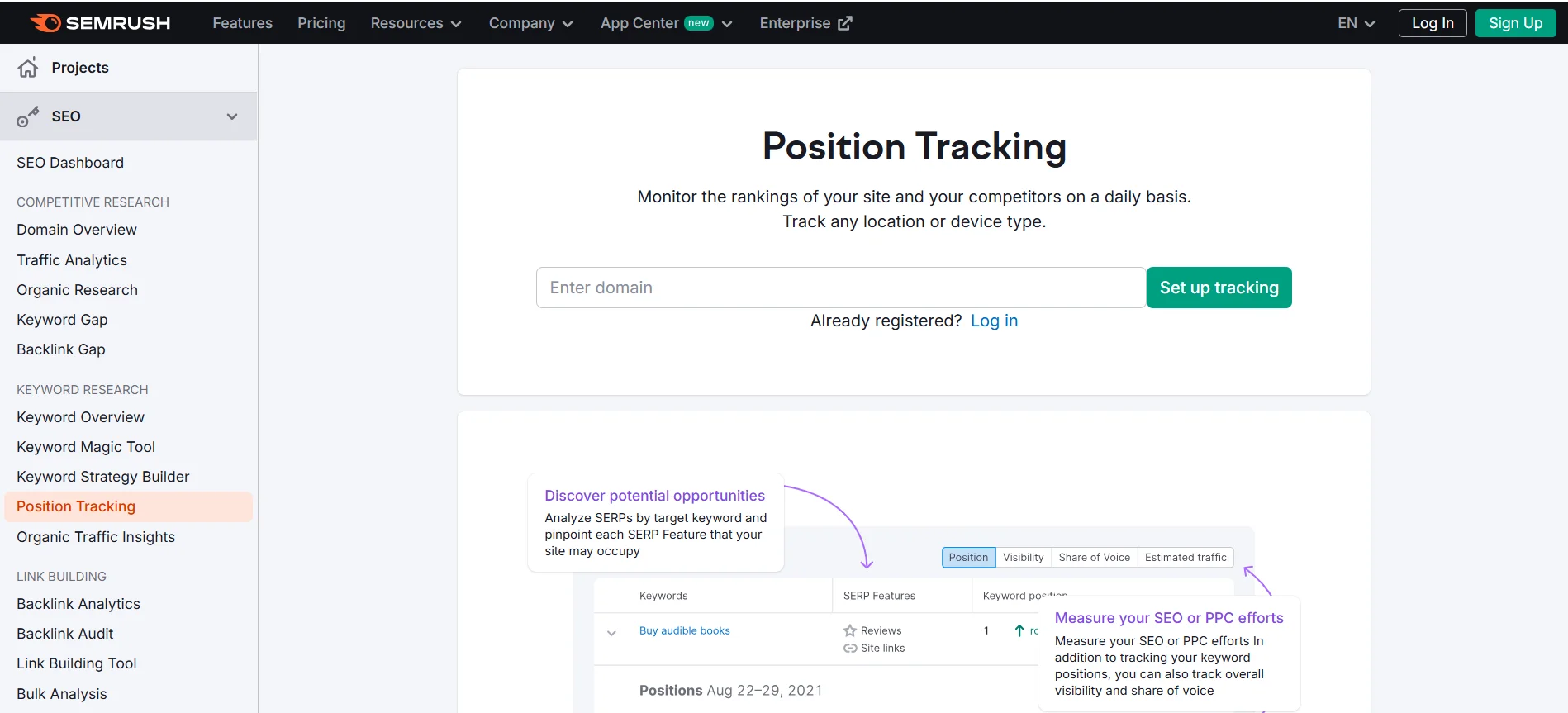
This shift introduces a massive hurdle known as the attribution gap. Traditional analytics software is built to track clicks from a URL. However, when an AI model consumes your content to answer a user, that user may get the information they need without ever visiting your website. Because there is no click, there is no referral traffic recorded in analytics. You are invisible to your current software stack, even while your brand is cited as an authority in front of thousands of potential customers.
Focusing on old-school vanity metrics—like keyword ranking position—keeps businesses blind to their actual visibility. Imagine spending months refining a page to hit the top spot, only to find the result is now an AI overview that doesn’t link to your site. You might hold the top rank in traditional reports, yet experience a sharp decline in engagement because the AI has already provided the answer. By clinging to yesterday’s metrics, you are measuring what used to bring value rather than what brings value today.
Defining ‘Share of Answer’: Measuring What Matters
In an era where AI models synthesize answers instead of listing links, position one is becoming a vanity metric. To truly understand how to optimize for AI search engines, you need a new north star: Share of Answer.
Share of Answer is the percentage of time your brand or solution is cited as a trusted source within the generated responses of AI models like ChatGPT, Claude, or Perplexity. It’s not about fighting for a ranking; it’s about becoming the reference point.
Quantifying Your AI Influence
Tracking AI search visibility metrics requires a shift from counting clicks to auditing content inclusion. Focus on these three quantitative markers:
- Brand Mentions: How frequently does your brand appear in answers related to your category?
- Product Citations: When the AI lists solutions to a problem, does your specific product get named?
- Sentiment Alignment: Is your brand mentioned in a positive, neutral, or negative context?
By tracking these, you move beyond mere visibility and start measuring Share of Answer vs Share of Voice. Where Share of Voice measured how much you talked, Share of Answer measures how much the AI relies on you to solve the user’s problem.
The Shift: Old vs. New Metrics
Understanding the pivot is crucial for your team. This table highlights how generative search optimization differs from traditional methods.
| Metric | Traditional SEO KPI | AI Search KPI |
|---|---|---|
| Primary Goal | Search Result Position | Citation Authority |
| Core Focus | Keyword Ranking | Content Relevancy |
| User Pathway | Click-Through Rate | Brand Trust/Mention |
| Success Signal | Organic Traffic | Share of Answer |
| Data Source | Search Console/GA4 | AI Query Auditing |
Building Your AI Search Measurement Framework
Since major AI platforms don’t offer a native search console, you must build a custom tracking loop to measure AI search traffic and monitor your brand’s footprint.
Step-by-Step AI Brand Auditing
To successfully track brand citations in AI answers, follow this repeatable process:
- Define your Query Set: Categorize keywords by informational, transactional, and comparative intent.
- Run Consistent Queries: Use a clean, incognito browser session to query ChatGPT, Perplexity, and Claude.
- Document the Response: Capture the text output, record whether your brand appeared, and note the sentiment.
- Assign a Value: Score each mention based on its impact, such as a direct citation or influencer recommendation.
Prioritizing Qualitative Intelligence
You must balance AI search visibility metrics with qualitative analysis. Does the AI provide an accurate, helpful explanation of your product? In which topics is your brand being clustered? If you are a project management tool but are only cited for “cheap software,” your generative search optimization strategy needs a content refresh. By tracking these nuances, you move toward meaningful visibility that drives customer trust.
Proving ROI: Justifying Your Budget
Transitioning your reporting requires a shift in how you demonstrate value. Executives care about impact, not just blue-link positioning.
Translating Citations into Revenue
A brand mention in a generative answer is a high-intent signal. When an AI cites your business, it pre-qualifies your brand. Map these citations to specific conversion goals. Track how many referral visits from AI platforms result in newsletter signups, demo requests, or direct purchases. When you show that an AI citation preceded a sale, you connect visibility directly to revenue.
Designing Holistic Dashboards
Stop keeping your organic and AI-based performance data in silos. Use tools like Looker Studio to blend your traditional Search Console data with your new generative search optimization KPIs. Include a “Total Search Influence” score that aggregates organic traffic, AI referral traffic, and brand mention frequency. This proves your strategy is amplifying your presence within the new search paradigm.
Focus on your Share of Answer vs Share of Voice to provide the concrete, revenue-backed data needed to justify your search strategies. According to AEO/GEO, measuring your brand’s presence in tools like ChatGPT and Perplexity reveals the real-world impact of your efforts, allowing you to connect content quality directly to customer acquisition. Start auditing your citations today to lead the conversation in this AI-driven future.
AEO/GEO
Want to learn more?
Contact us for direct consultation and support.