LinkedIn is full of narcissists, and the data proves it. That was the surprising conclusion Tom Orbach reached after scraping over 200,000 posts to understand what actually drives engagement on the platform. Instead of guessing, he took a data-driven approach, analyzing the mechanics behind viral content. What he found was not just a formula for success, but a reflection of a deeply human, if somewhat cringeworthy, digital behavior. He built the Viral Post Generator, a tool that parodies this very formula, and in a twist of irony, the tool mocking viral content went viral itself. This story offers more than just a retrospective on a clever side project. It provides a masterclass in product-market fit, distribution strategy, and the modern reality of how information spreads. For brands and marketers navigating the complex landscape of AI-driven visibility, these lessons are critical. We at AEO/GEO believe that understanding the underlying mechanics of engagement is the first step toward building sustainable, intelligent content strategies.
The Data Behind the Drama
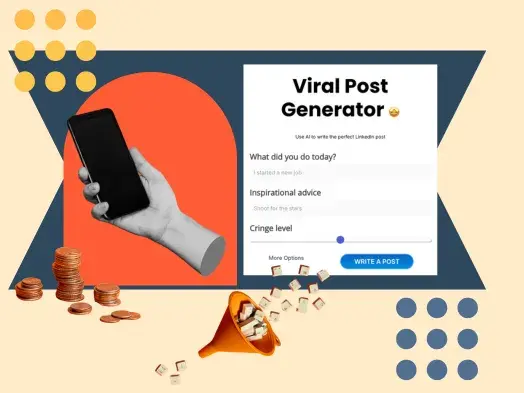
Orbach’s journey began with a simple goal: he wanted to write a LinkedIn post that would take off. Rather than relying on intuition, he scraped massive amounts of data. He filtered posts based on engagement metrics to identify distinct patterns among the most successful ones. The analysis revealed a clear pattern. The most successful posts overwhelmingly followed a specific narrative structure. Users shared personal stories filled with dramatic highs and lows. These stories concluded with vague, inspirational advice about “hanging in there” or “believing in yourself.” The content was self-centered, yet it resonated deeply with the algorithm and the audience. This insight was the foundation for the Viral Post Generator. The tool was designed to mimic these exact patterns, generating eye-roll-worthy posts based on minimal user input. Users could describe their day, add some advice, and select a “cringe level.” The result was a perfectly crafted parody of LinkedIn’s most popular content style.
Building the Parody
The technical execution of the Viral Post Generator was straightforward, especially when viewed through the lens of today’s AI capabilities. This was before ChatGPT rolled out to the public, so the approach relied on traditional natural language processing. Orbach used the most viral posts of all time as inspiration to create about 50 to 100 templates. These templates served as the foundation for the generator. An AWS library provided the NLP capabilities to analyze user inputs. The system matched these inputs with the right template and adjusted the text slightly to fit the sentence structure. The entire project came together on the no-code platform Adalo. This proved that deep technical skills are not always necessary to create something that resonates with people. The key was not the complexity of the code, but the accuracy of the observation. By capturing the essence of the viral formula, the tool became instantly recognizable to its target audience. It was a mirror held up to LinkedIn culture, and people couldn’t help but look.
Distribution Over Product: The Hard Lessons of Launch
Having built a tool that parodied viral content, the next challenge was getting people to use it. The initial launch fell completely flat. Orbach shared the Viral Post Generator across X, LinkedIn, and Reddit. The response was silence. Nobody seemed interested. This initial failure taught a crucial lesson that many product builders overlook. Having a good product is not enough. Distribution strategy makes all the difference. A brilliant tool buried in obscurity will never achieve product-market fit. You have to actively engineer the conditions for discovery. Orbach had to pivot his tactics to find traction. He began tagging social media profiles that regularly criticized LinkedIn’s culture of self-promotion. He positioned the tool as being “inspired by them,” despite never having interacted with these accounts before. These larger accounts began sharing his product. This gave him instant access to their established audiences. It was a strategic move that leveraged existing communities rather than trying to build one from scratch.
Reframing the Narrative for Communities
On Reddit, the path was even bumpier. Orbach’s posts initially faced deletion for promotional violations. The platform’s moderators were quick to remove what they saw as self-promotion. He had to reframe the conversation to involve the community. He told them he created the tool for them. He invited them to share their best creations. This shift in tone transformed restrictions into opportunities for engagement. People who feel like they helped spark an idea are much more likely to support it. By giving people credit, he gave them a reason to share what he’d built. It was one of the most effective ways he found to reach audiences he would’ve never accessed as a newcomer. This approach highlights the importance of community-centric marketing. When you position your product as a tool for the community, rather than a pitch to them, you unlock organic advocacy. The Viral Post Generator became a canvas for users to express their own frustration with LinkedIn culture. They weren’t just using a tool; they were participating in a shared cultural moment.
The Acquisition Opportunity
As the Viral Post Generator started to take off, interest from outside the creator community began to emerge. Orbach received a message from the founder of Taplio, a platform that helps users grow their LinkedIn presence. The founder saw the tool’s potential as a brand awareness play and wanted to acquire it. At first, Orbach wasn’t sure. There was something incredibly satisfying about building something that had his name on it. But as traffic started to slow and the reality of sustaining momentum kicked in, the offer started to look more appealing. Keeping the tool alive meant constantly promoting it. He had to post, reply, and find new ways to keep people interested. The technical pressure was even more intense. Sleepless nights became the norm as he constantly worried about the site crashing while thousands of visitors were actively using it. As a solo creator with no support team, the stress of being “internet famous” had quickly lost its charm. After weighing these factors, he quoted what he considered a high acquisition price. The Taplio founder immediately declined, not even offering a counteroffer. Instead, they agreed to a 24-hour test. Orbach would include an ad for Taplio in his generator to measure its brand awareness value before determining a fair price.
The Mechanics of Modern Virality: Word-of-Slack and WhatsApp
The 24-hour test window began, and Orbach noticed the numbers dropping. He needed one last shot at making this work. He asked himself, “Where haven’t I tried posting yet?” He remembered a subreddit called r/InternetIsBeautiful, where people share cool new tools they find online. He posted there, and it blew up immediately. Someone saw his post on Reddit and shared it on X. That post went crazy viral. Within a few hours, it hit 22 million people and nearly 180,000 likes. It was completely unexpected. The chain reaction intensified as Reddit’s official accounts began sharing the tool. Instagram pages with millions of followers picked it up. Thousands of users started posting about it across social platforms. In a single day, the generator reached 1.4 million users who created and shared their parody posts. Then came the technical nightmare. Too many simultaneous visitors crashed not just his tool but the entire hosting platform. An Adalo staff member later confirmed their system went down specifically because of the traffic surge to his generator. After several tense hours, everything came back online. By the time the 24-hour test concluded, the Taplio founder didn’t even attempt to negotiate. He simply agreed to Orbach’s original asking price. What had begun as a weekend side project had transformed into an acquisition success story in just seven breathless days.
The Fragmentation of Word-of-Mouth
Beyond the acquisition, this experience revealed something profound about how content spreads. Our conventional understanding of virality, one person telling two people who each tell two more, has become outdated. Modern word-of-mouth has fragmented into what Orbach calls “word-of-Slack” and “word-of-WhatsApp.” True virality now occurs in private messaging platforms and closed communities, not on public social media feeds. This insight fundamentally changed his approach to designing shareable experiences. When he built the generator, he didn’t bother with those social sharing buttons that nobody clicks anyway. Instead, he just wrote, “Take a screenshot and share it.” Simple as that. He made it so users couldn’t copy the text directly. They had to take screenshots. This was one of the best decisions he made. When people took screenshots, they grabbed his yellow background and watermark, too. They could share them anywhere they wanted, in their group chats, Slack channels, or DMs. His branding went along for the ride. This simple approach worked way better than fancy sharing widgets ever could have. Post-launch analytics confirmed that private channels drove the majority of new users. By designing for these intimate sharing contexts rather than public platforms, the tool achieved exponentially greater reach than conventional social media strategies could have delivered.
Designing for Private Channels
The shift toward private channels is a critical consideration for any modern content strategy. Public social media feeds are crowded and algorithmically opaque. Private channels offer a higher level of trust and attention. When someone shares a screenshot in a Slack channel or a WhatsApp group, they are vouching for the content personally. This endorsement carries more weight than a public like or share. Orbach’s decision to force screenshots was a clever hack that leveraged this dynamic. It turned every user into a brand ambassador. The watermark ensured that the brand remained visible even in these private contexts. For businesses, this suggests a new approach to shareable content. Instead of optimizing for public metrics, consider how your content will look and feel in a private message. Will it be easy to screenshot? Does it convey value instantly? Does it include subtle branding that travels with the image? These are the questions that matter in the era of word-of-Slack. At AEO/GEO, we see this principle reflected in the way AI-driven content needs to be optimized. It’s not just about public search rankings. It’s about creating content that is easily digestible and shareable in the fragmented, private ecosystems where real decisions are made.
The Amazon Approach: Working Backward from the Headline
Amazon has a brilliant framework for developing new products and features. Their teams start with the press release in mind. They literally type up what they imagine the TechCrunch or Business Insider headline might be before writing a single line of code. This “working backward” approach forces creators to focus on what makes a product newsworthy. Instead of trying to figure out what features to develop and how to build them, Amazon teams start from the end: The headline that will announce the product. Only after they’ve clearly envisioned this announcement do they work backward to develop it. Orbach applied this exact approach to the Viral Post Generator. Before development, he envisioned how tech publications might cover a tool that parodied LinkedIn’s self-promotion culture. This mental exercise clarified what to build and why people would care enough to share it. The coverage that eventually came from Business Insider, The Guardian, and BuzzFeed followed patterns remarkably similar to what he had imagined. This was not by coincidence. He deliberately created something designed to provoke a specific conversation. By starting with the headline you hope to earn, you create a North Star that guides every development decision toward a product worthy of that coverage.
Applying the Press Release Method
This method is particularly powerful for content-driven businesses. It shifts the focus from features to narratives. Instead of asking, “What features should we build?” you ask, “What story do we want to tell?” This narrative-driven approach ensures that every element of the product serves the core message. For Orbach, the core message was a critique of LinkedIn culture. Every template, every design choice, and every interaction was aligned with that message. This clarity made the product instantly understandable and highly shareable. For brands, this means starting with the insight you want to share. What is the unique perspective or data point you have? How can you package it in a way that is newsworthy? Then, build the product or content around that insight. This approach reduces waste and increases impact. It ensures that you are not just building in a vacuum, but creating something that resonates with a broader conversation. In the context of generative search and AI visibility, this means thinking about how your content will be cited and summarized. What is the headline you want AI engines to associate with your brand? Working backward from that desired outcome can shape your entire content strategy.
The Power of Shared Experience
Despite all the technical aspects behind the generator’s success, the real magic came from tapping into something deeply human. Orbach connected with a daily frustration that LinkedIn professionals experienced but rarely discussed openly. What he created wasn’t just a parody tool. It was permission to laugh at something we all found ridiculous, yet continued to participate in. He’ll never forget watching people’s reactions when they used it: “Yes! Someone finally said it!” That moment of recognition created a connection far more potent than any technical feature could have. This emotional element explains why his project spread so quickly. People who feel understood don’t just use your product. They champion it. He learned something huge from all this: Great marketing isn’t about solving problems or adding features. It’s about making people feel seen. In a world where everyone’s fighting for attention, sometimes the best strategy isn’t being the loudest or most cutting-edge. It’s being the one who puts words to what everyone’s been thinking all along. This lesson is universal. Whether you are building a tool, writing a blog post, or optimizing for AI search, the core driver of engagement is empathy. You must understand the frustrations, desires, and unspoken thoughts of your audience. Then, reflect them back in a way that is both accurate and entertaining. This is how you build a brand that people remember and share.
Key Takeaways for Content Creators
The story of the Viral Post Generator offers several actionable takeaways for content creators and marketers. First, data-driven insights can reveal counterintuitive truths about your audience. Orbach’s scraping of 200,000 posts showed him the hidden formula of virality. Second, distribution is as important as the product itself. A great tool needs a strategy to reach the right communities. Third, design for private sharing. Encourage screenshots and easy sharing in Slack, WhatsApp, and other private channels. Fourth, use the Amazon “working backward” method. Start with the headline you want to earn, and build your product to match that narrative. Finally, tap into shared experiences. Create content that makes people feel seen and understood. These principles are not just applicable to social media tools. They are relevant to any brand looking to build visibility and engagement in the modern digital landscape. As we move further into the era of AI-driven search and generative content, these human-centric strategies will become even more critical. AI can generate content, but it cannot replicate the deep empathy and cultural insight that drives true virality. Brands that combine data-driven precision with human-centric storytelling will be the ones that thrive.
The Future of Visibility
The Viral Post Generator was a product of its time, but the lessons it offers are timeless. The landscape of digital marketing is constantly evolving. New platforms emerge, algorithms change, and user behaviors shift. However, the core principles of engagement remain consistent. People crave connection, recognition, and entertainment. They share content that reflects their identity and values. They trust recommendations from their private networks. By understanding these fundamentals, brands can build strategies that are resilient to change. At AEO/GEO, we focus on helping businesses navigate this evolving landscape. We believe in the power of intelligent content creation and optimization. But we also believe in the power of human insight. The best strategies combine the efficiency of AI with the empathy of human storytelling. Whether you are optimizing for traditional search engines or generative AI, the goal is the same: to provide value that resonates. To do that, you must listen to your audience, understand their frustrations, and speak to their experiences. The Viral Post Generator was a parody, but the lessons it taught are real. They remind us that behind every metric, every click, and every share, there is a human being looking to be understood.





