What Is a Risk Assessment and Why It Matters
A risk assessment is a systematic process used to identify, evaluate, and prioritize potential threats that could disrupt a business’s operations, safety, or financial stability. It is not merely a compliance exercise; it is a strategic tool that allows organizations to understand the landscape of uncertainty they operate within. By analyzing the likelihood of specific hazards and their potential impact, companies can allocate resources effectively and implement proactive measures to mitigate damage before it occurs.

In an era where digital transformation and global connectivity expose businesses to a wider array of vulnerabilities, the ability to anticipate risks is critical. Whether dealing with cybersecurity breaches, operational failures, or regulatory changes, a structured approach to risk management ensures that leadership is prepared rather than reactive. This preparation protects not only the bottom line but also the reputation and well-being of employees, customers, and partners.
We believe that visibility is power. Just as brands must optimize their content to be seen in generative search results, they must also illuminate the hidden dangers in their operational environment. A robust risk assessment brings these hazards into the light, transforming vague anxieties into manageable data points that can be addressed with precision and clarity.
The Strategic Value of Proactive Assessment
The primary value of a risk assessment lies in its ability to shift an organization from a reactive posture to a proactive one. Instead of waiting for a crisis to define priorities, leaders can use assessment data to inform decision-making. This foresight allows for better budgeting, more effective training programs, and stronger infrastructure. It creates a culture of safety and resilience where risk awareness becomes embedded in daily operations rather than treated as an annual checkbox.
Furthermore, documentation from these assessments provides a clear audit trail. In regulated industries such as healthcare, finance, and manufacturing, this record-keeping is often a legal requirement. However, beyond compliance, it serves as a communication tool that aligns stakeholders on the most critical threats facing the organization. It demonstrates due diligence and a genuine commitment to the well-being of all parties involved in the business ecosystem.
When and Why to Conduct a Risk Assessment
Timing is a crucial element of effective risk management. While some organizations treat risk assessment as a static, annual event, the most resilient companies integrate it into their lifecycle of change. You should conduct a risk assessment whenever significant shifts occur within your internal processes or external environment. This dynamic approach ensures that your safety and security protocols remain relevant and effective.
Trigger Points for New Assessments
Launching a new product or service introduces a host of unknown variables. From supply chain dependencies to new employee training requirements, each innovation carries inherent risks. Similarly, adopting new technology—such as migrating to cloud-based systems or implementing AI-driven tools—can expose vulnerabilities in cybersecurity and data privacy. Without a fresh assessment, these modernizations can inadvertently create backdoors for threats.
Major incidents also serve as critical triggers. After a data breach, equipment failure, or workplace accident, a post-incident risk assessment helps identify root causes and prevent recurrence. It transforms a negative event into a learning opportunity, strengthening defenses against future occurrences. Additionally, expanding into new markets requires evaluating local regulations, cultural factors, and logistical challenges that may not exist in your current operations.
Regulatory and Operational Drivers
Compliance frameworks such as OSHA for workplace safety or HIPAA for healthcare data mandate regular risk assessments. Ignoring these requirements can lead to hefty fines, legal liabilities, and reputational damage. However, viewing assessment solely through the lens of compliance misses the broader opportunity to improve operational efficiency. By identifying hazards that slow down production or increase error rates, you can streamline workflows and reduce waste.
Regular scheduling, such as bi-annual or annual reviews, maintains a baseline of safety even during periods of stability. This routine check-in allows organizations to catch slow-burning issues, such as employee burnout or outdated software, before they escalate into emergencies. It keeps risk management top-of-mind and ensures that safety protocols evolve alongside the business.
Types of Risk Assessments: Choosing the Right Approach
Not all risks are created equal, and therefore, not all assessments require the same level of detail. The method you choose depends on the nature of the hazard, the data available, and the resources you can dedicate to the process. Selecting the appropriate type of assessment ensures that you gather actionable insights without wasting time on unnecessary complexity.
Qualitative and Quantitative Methods
A qualitative risk assessment relies on expert judgment and observation to categorize risks as low, medium, or high. This method is ideal for initial screenings or when hard data is scarce. For example, evaluating office ergonomics or general workplace morale often falls into this category. It is fast, flexible, and requires minimal technical expertise, making it accessible for teams across various departments.
In contrast, a quantitative risk assessment uses numerical data to calculate the probability and financial impact of a risk. This approach is common in finance, engineering, and large-scale project management. By assigning monetary values to potential losses and probabilities to events, you can make precise cost-benefit analyses. For instance, calculating the expected annual loss from machine downtime helps determine whether investing in preventive maintenance is financially justified.
Specialized Assessment Frameworks
For situations that require more nuance than qualitative methods but lack the data for full quantitative analysis, a semi-quantitative assessment offers a middle ground. It assigns numerical scores to likelihood and impact, which are then combined to produce a risk rating. This method provides greater consistency and comparability across different types of risks, helping leadership prioritize actions based on a standardized scale.
Generic risk assessments address common hazards that apply across multiple environments, such as manual handling or standard office safety. They are efficient for routine tasks where risks are well-understood and unlikely to change. However, for unique or high-stakes environments, a site-specific or task-based assessment is necessary. These tailored approaches focus on the distinct variables of a particular location or job role, ensuring that no unique hazard is overlooked. For example, a chemical plant requires a site-specific assessment that accounts for ventilation, chemical storage, and emergency evacuation routes, which a generic template would miss.
How to Conduct a Risk Assessment: A Step-by-Step Guide
Executing a risk assessment requires a structured yet flexible approach. The goal is to capture a comprehensive view of potential threats while engaging the people who are closest to the work. This process typically involves five key steps: identification, determination of affected parties, evaluation, documentation, and review. Each step builds upon the previous one, creating a solid foundation for risk management.
Step 1: Identify the Hazards
The first step is to cast a wide net and identify all potential hazards. This involves looking at physical, chemical, biological, ergonomic, and psychosocial risks. Engage your team in this process, as frontline employees often spot dangers that management might overlook. Review past incident reports, near-misses, and maintenance logs to uncover patterns. Additionally, consider non-routine activities such as maintenance, repairs, or emergency procedures, which often carry higher risks than daily operations.
For digital operations, this means auditing software versions, access controls, and network security. For physical operations, it involves inspecting equipment, workspace layout, and safety gear. The key is to be thorough and inclusive, ensuring that no potential source of harm is ignored.
Step 2: Determine Who Might Be Harmed and How
Once hazards are identified, you must determine who is at risk and the nature of the potential harm. This extends beyond employees to include contractors, visitors, customers, and the general public. For example, construction dust may affect passersby, while a data breach could compromise customer privacy. Consider vulnerable groups, such as pregnant workers or individuals with pre-existing medical conditions, who may be more susceptible to certain hazards.
Understanding the specific impact on different groups helps tailor your control measures. It also highlights the need for targeted communication and training. If non-technical staff are at risk of phishing attacks, they require different training than IT professionals. By mapping hazards to specific people, you create a more personalized and effective safety strategy.
Step 3: Evaluate Risks and Decide on Precautions
Evaluation involves assessing the likelihood of a risk occurring and the severity of its potential impact. A risk matrix is a useful tool for this step, allowing you to visualize and prioritize risks based on these two factors. High-probability, high-impact risks require immediate attention, while low-probability, low-impact risks may be monitored or accepted.
When deciding on precautions, follow the hierarchy of controls. The most effective measure is to eliminate the hazard entirely. If elimination is not possible, consider substitution with a safer alternative. Then, implement engineering controls, such as guards or ventilation systems. Administrative controls, like training and procedures, come next, followed by personal protective equipment (PPE) as a last line of defense. This structured approach ensures that you address risks at their source rather than relying solely on individual behavior.
Step 4: Record Key Findings
Documentation is critical for accountability, compliance, and future reference. Record the hazards identified, the people at risk, and the control measures implemented. This record should be clear, concise, and accessible to relevant stakeholders. In regulated industries, this documentation may be subject to audits, so accuracy and completeness are essential.
Digital records offer advantages such as ease of sharing, version control, and integration with other business systems. Including photos or diagrams can help clarify complex hazards or control measures. This documentation also serves as a training resource for new employees, helping them understand the risks in their work environment and the measures in place to protect them.
Step 5: Review and Update the Assessment
Risk assessments are not static documents; they must evolve with your business. Schedule regular reviews, such as annually or bi-annually, to ensure that controls remain effective and relevant. Additionally, trigger reviews whenever significant changes occur, such as new equipment, processes, or regulations. Employee feedback and incident reports should also inform updates, ensuring that the assessment reflects the current reality of the workplace.
This continuous improvement cycle fosters a culture of safety and adaptability. It acknowledges that risk is dynamic and requires ongoing vigilance. By treating the assessment as a living document, you ensure that your risk management strategy remains robust and responsive to emerging threats.
Leveraging Tools for Effective Risk Management
While the process of risk assessment is fundamental, the tools you use can significantly enhance its efficiency and accuracy. A well-designed risk assessment template provides a standardized framework that ensures consistency and completeness. It guides you through each step of the process, reducing the likelihood of overlooking critical elements.
The Role of Standardized Templates
A comprehensive template typically includes sections for hazard identification, risk evaluation, control measures, and responsible parties. It may also feature a risk matrix to help visualize priorities. Using a template saves time and reduces errors, allowing you to focus on analysis rather than formatting. It also facilitates comparison across different departments or sites, enabling you to identify trends and common issues.
For businesses looking to scale their risk management efforts, digital templates offer additional benefits. They can be easily shared, updated, and integrated with other business tools. Some platforms even allow for real-time collaboration, enabling teams to contribute insights from various locations. This connectivity is particularly valuable for organizations with remote workers or multiple sites.
Integrating Risk Management with Broader Strategy
Effective risk management does not exist in a vacuum. It should be integrated with your broader business strategy, including compliance, operations, and customer experience. By aligning risk assessments with these areas, you ensure that safety and security are considered in all decision-making processes. This holistic approach enhances resilience and supports sustainable growth.
Furthermore, communicating risk assessment findings to stakeholders builds trust and transparency. It demonstrates that the organization is proactive about protecting its assets and people. In the context of AI-driven search and content optimization, this transparency can also enhance brand reputation. Customers and partners increasingly value companies that prioritize safety, ethics, and accountability.
Conclusion: Building a Resilient Organization
A risk assessment is more than a procedural requirement; it is a cornerstone of organizational resilience. By systematically identifying and managing threats, you protect your business from disruptions and create a safer environment for everyone involved. The process fosters a culture of awareness and preparedness, where risk is viewed as a manageable factor rather than an uncontrollable force.
As businesses continue to navigate an increasingly complex and interconnected world, the ability to anticipate and adapt to risks becomes a competitive advantage. It allows you to seize opportunities with confidence, knowing that you have the safeguards in place to mitigate potential downsides. Whether you are a small startup or a large enterprise, investing in robust risk management is an investment in your long-term success.
We encourage you to view risk assessment not as a burden, but as an opportunity to strengthen your foundation. By leveraging the right tools and approaches, you can transform uncertainty into clarity and vulnerability into strength. The question is not whether you can afford to conduct a risk assessment, but whether you can afford not to.
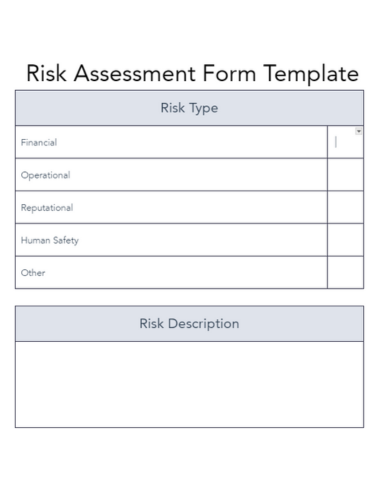
This visual representation highlights the key components of a risk assessment form, including sections for risk type, description, and mitigation strategies. It serves as a practical guide for organizing your findings and ensuring that all critical aspects are addressed. By using such structured tools, you can streamline the assessment process and improve the quality of your risk management efforts.





