The Old Search Playbook Is Aging: How to Scale Now
The way we connect with audiences is changing, and the old playbook for search visibility is showing its age. For years, teams focused on chasing organic clicks through keyword-heavy content. Today, AI-driven search engines—from Google AI Overviews to platforms like Perplexity and ChatGPT—are redefining the rules. Users increasingly find answers directly within these AI platforms, often without clicking through to a website. This transition to a zero-click reality means that if your content isn’t built to be surfaced, cited, and quoted by machines, you are missing out on your most valuable traffic.
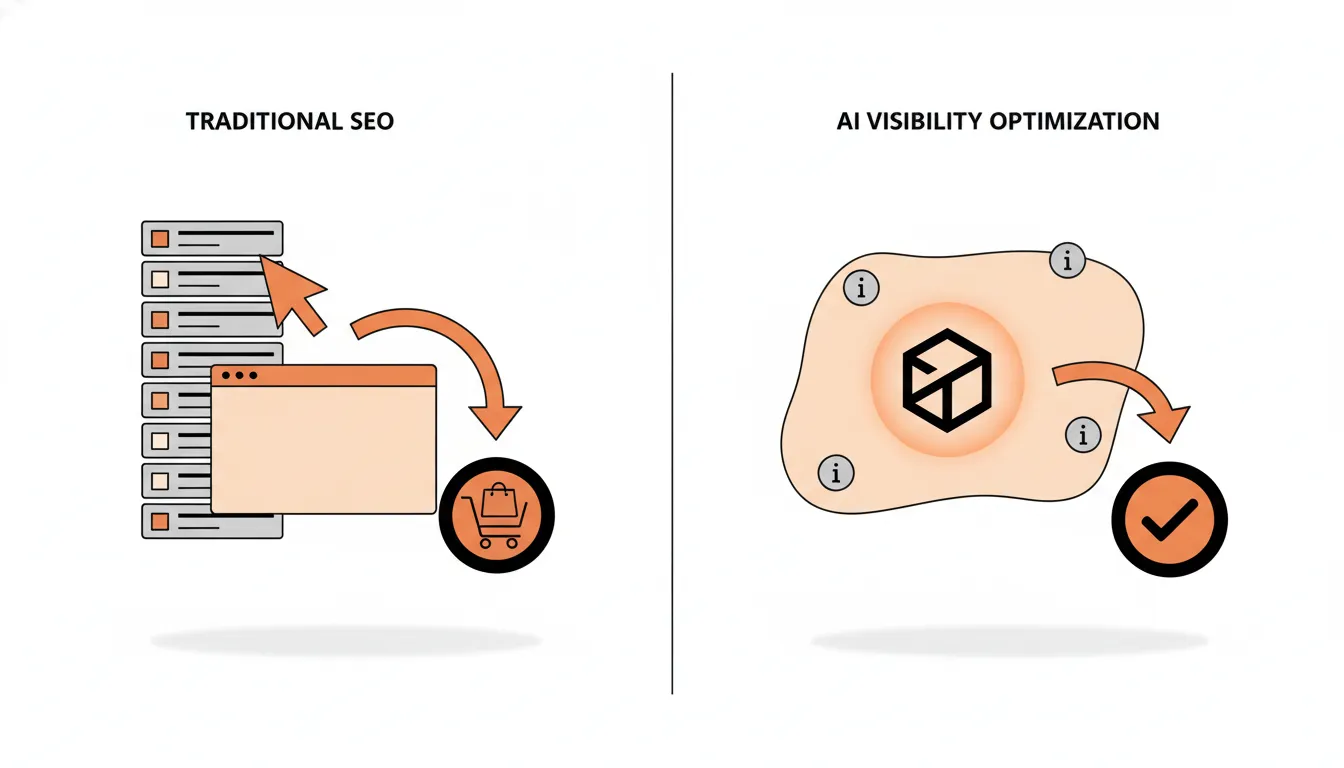
This shift presents a challenge for traditional teams. Legacy content structures were built for ranking lists of links, not for feeding the complex, machine-readable data that answer engines require to build trust. Scaling content for AI search isn’t just about writing more; it’s about re-engineering how your organization creates, formats, and manages information. To thrive, you must bridge the gap between human storytelling and machine-level clarity.
Why Traditional Content Teams Struggle with AI Search
The shift from classic search engine optimization to scaling content for AI search is a move from competing for clicks to being cited for answers. Traditional content teams spent years perfecting the art of “ranking” by using keyword density and backlink volume. AI answer engines operate differently. They synthesize information into a single, authoritative response. If your content isn’t built to be extracted, quoted, and trusted as a primary source, it effectively doesn’t exist in the new AI-driven landscape.
The Entity-Focused Evolution
The core tension lies in the transition from keyword-focused writing to entity-focused content. Old-school SEO strategies often treated keywords as isolated strings of text placed across a page. Modern AI search maps content to entities—distinct concepts like products, organizations, or specific topics that models recognize.
Teams that continue to chase search volume without clarifying these entities will remain invisible to systems like Perplexity or Google AI Overviews. These models look for clear definitions and verifiable data that prove your brand is a trusted expert on a specific subject, rather than just a site that mentions a trending term.
Bridging Cross-Functional Friction
Scaling content for AI search requires collaboration that many legacy content teams aren’t prepared for. In the past, writers were often isolated from the technical side of the house. Today, the lines between developer, data, and content teams must blur.
Content writers now need to work closely with developers to ensure structured data like Schema.org is correctly implemented so that AI engines can parse the meaning of a page. Meanwhile, data teams are needed to provide the unique insights and first-hand evidence that differentiates your content from the generic information generated by AI itself. When these departments work in silos, technical requirements often clash with content goals.
Legacy SEO vs. Modern AEO
To understand why this transition is difficult, we must look at the diverging objectives of traditional SEO and modern Answer Engine Optimization (AEO).
| Feature | Legacy SEO Focus | Modern AEO Focus |
|---|---|---|
| Primary Goal | Earn organic clicks | Secure direct citations |
| Content Structure | Keyword-rich, lengthy text | Answer-first, passage-level |
| User Journey | Click to website | Consumption within engine |
| Success Metric | Ranking positions | Citation rate/Share of voice |
| Trust Signal | Backlinks | Entity authority/E-E-A-T |
Essential Roles for Your AI-Ready Org Chart
As you begin scaling content for AI search, traditional organizational structures may hit a bottleneck. Standard marketing roles focus on clicks, but capturing AI citations requires a shift toward structured data and entity-centric content.
The AI Content Engineer
The AI Content Engineer is the vital bridge between your creative strategy and the technical output machines need. This role ensures every piece of content follows the “answer-first” pattern. They structure content into 150-300 word self-contained passages that answer specific questions, ensuring they are primed for LLM extraction.
The Entity Manager
An Entity Manager focuses on the “nouns” of your business: your products, people, and topics. This role ensures your organization’s identity is clearly defined via Schema.org markup and consistent naming conventions. By maintaining brand entities and schema accuracy, the Entity Manager prevents the confusion that causes AI models to overlook your content.
The AI Auditor
The AI Auditor focuses on how LLMs ingest and synthesize your brand’s content. They conduct periodic checks to see if your content is being surfaced, cited, or quoted by AI models. If a high-value topic isn’t being cited, the auditor identifies the missing signal—whether it is a lack of E-E-A-T markers, poor structured data, or a failure to provide a concise, direct answer.
Restructuring Workflows: From Creation to Citation
Transitioning to a model of scaling content for AI search requires moving beyond traditional editorial calendars. Instead of focusing solely on keyword volume, you must adopt data-driven entity planning. This approach treats your content as a collection of interconnected entities that AI models must recognize to trust.
Integrating AI-Auditing into Pre-Publishing
To move from mere creation to guaranteed citation, integrate AI-auditing into your pre-publishing phase. Before hitting publish, your team should simulate how an AI would parse the page. Using tools that evaluate if your text aligns with “answer-first” requirements ensures that you aren’t just publishing for humans, but preparing for machine retrieval.
The AI Content Lifecycle
Formalizing your content lifecycle ensures that your AI search optimization strategy is repeatable and scalable.
| Phase | Goal | Key Action |
|---|---|---|
| Ideation | Entity Mapping | Identify core topics and entity relationships |
| Structuring | Passage Optimization | Organize content into self-contained blocks |
| Validation | AI-Auditing | Verify the answer-first opening and Schema |
| Distribution | Signal Amplification | Ensure content is crawlable and indexed |
Hiring and Upskilling for the AI Era
Building a team capable of mastering AI-driven search visibility requires a shift in how you identify talent. The goal is to move from a siloed approach to a unified strategy where every piece of content is engineered for both human engagement and machine-readable clarity.
Evaluating Existing Talent
Before hiring externally, audit your current team to identify potential. Look for employees who naturally structure their work into lists, clear definitions, or step-by-step processes. Test their ability to produce an “answer-first” response: ask them to summarize a complex topic in 40–60 words, followed by three clear, supporting bullet points.
Cross-Departmental Collaboration
Create “AI task forces” that pair a developer or technical SEO specialist with a content marketer. This setup forces technical team members to see how their schema implementation impacts storytelling, while marketers learn why technical foundations—like render-ready content and fast mobile performance—are non-negotiable for AI visibility. By fostering this collaborative loop, you turn your entire organization into an AEO-driven machine.
Scaling content for AI search is a significant investment, requiring new roles, refined workflows, and a relentless focus on accuracy. Do not wait for search behavior to shift further before adjusting your internal processes. Lean into entity management and position your brand as a primary, trusted authority that AI engines will reference for years to come.
AEO/GEO
Want to learn more?
Contact us for direct consultation and support.