Scaling Content Strategically as Visibility Rules Shift
For years, marketing success was measured in blue links and a steady trickle of organic clicks. Today, the rules of visibility have shifted. When a user asks an AI-powered assistant for a solution, they receive a synthesized answer directly on the results page. This evolution leaves traditional traffic metrics looking like a ghost town, leading many to feel frustrated as high-quality content disappears into AI black boxes.
However, viewing this shift solely as a decline in traffic is a mistake. We are witnessing the rise of a new North Star for revenue-focused marketers: citation authority. In the era of generative search, a win is no longer just a click; it is becoming the trusted source that powers an AI’s recommendation. By mastering the art of scaling content for AI search, you shift your focus from chasing rankings to establishing your brand as the authoritative expert that answer engines consistently cite.
Redefining Content Performance for AI Search
The digital landscape is changing. For years, marketers chased rising keyword rankings and soaring page views, treating every organic click as a victory. In the era of AI Overviews, these legacy metrics are increasingly decoupled from actual revenue. When a user queries ChatGPT or Google Gemini, the AI synthesizes an answer that often satisfies their intent entirely, leaving traditional search results untouched. Relying on traffic volume as your primary goal is no longer enough.
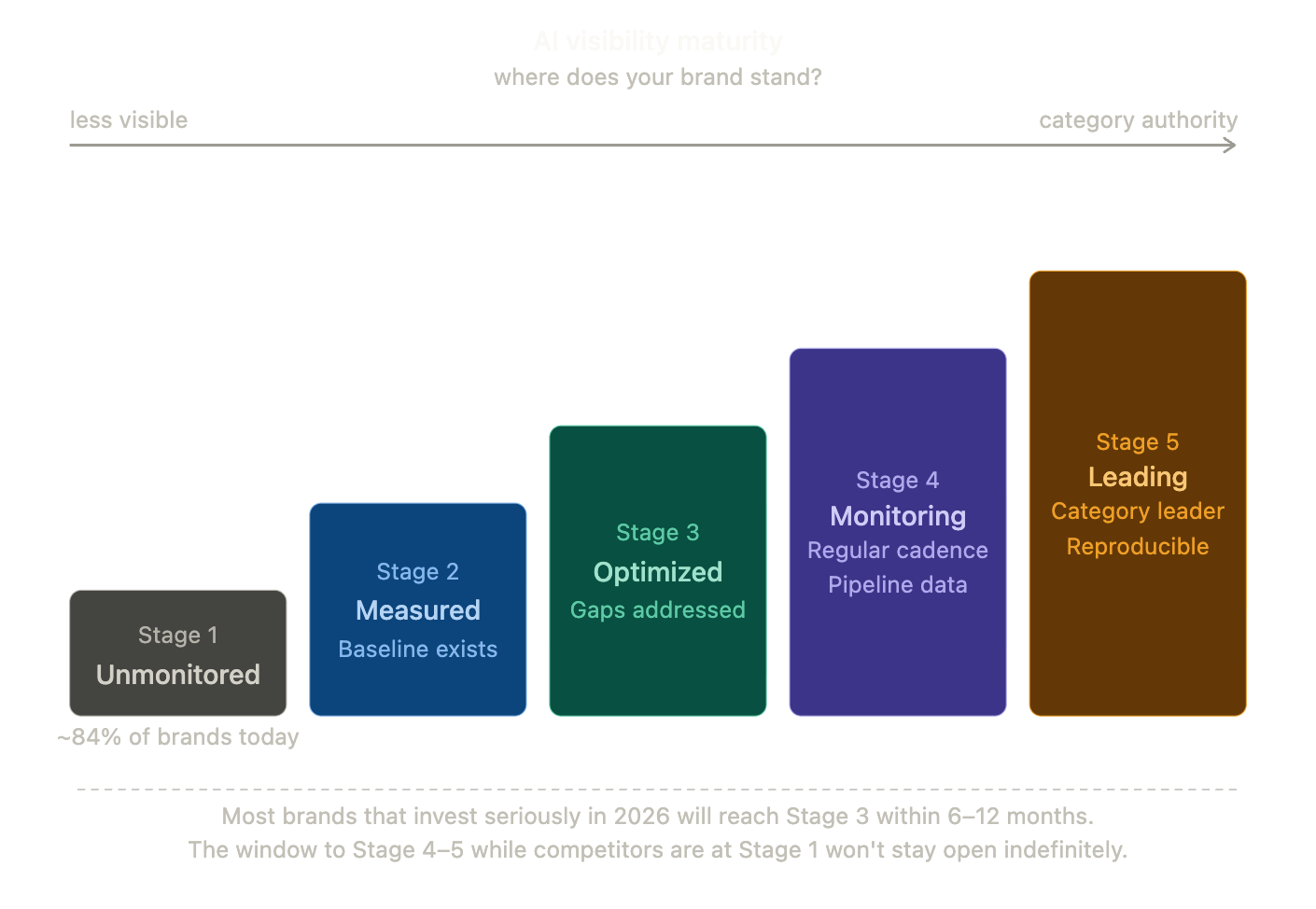
The New Currency: Citation Authority
In this paradigm, success is defined by citation authority. This performance metric tracks how often large language models (LLMs) verify your brand’s expertise by quoting your content directly. When an AI cites your work, it validates your brand as a source of truth within a high-intent interface.
This is the ultimate form of social proof. A potential customer asking a complex industry question is likely in the research phase of their buying journey. When the AI platform places your content at the center of an answer, it confers a level of prestige that a standard search link cannot match. This creates a high-intent touchpoint that can increase your sales cycle velocity.
Contrasting Legacy SEO with AEO Success
Your strategy must distinguish between ranking for lists and winning through synthesized knowledge.
| Metric | Legacy SEO Focus | AEO Success |
|---|---|---|
| Primary Goal | Earn an organic click | Become a trusted cited source |
| Key Metric | Page views and rankings | Citation share and sentiment |
| User Intent | Direct navigation to site | Learning within the AI |
| Business Outcome | Lead generation | Brand authority and sales speed |
| Content Format | SEO-optimized articles | Answer-first, structured knowledge |
How AI Citations Accelerate Your Sales Cycle
AI-driven brand mentions early in the research phase shorten your sales cycle by educating prospects before they reach a human representative. When potential customers turn to engines like ChatGPT or Perplexity, they are looking for reliable solutions. By scaling content for AI search, your brand provides these answers directly where the prospect is gathering information. This intervention ensures that by the time a prospect contacts your team, they already understand your value proposition and core differentiators.
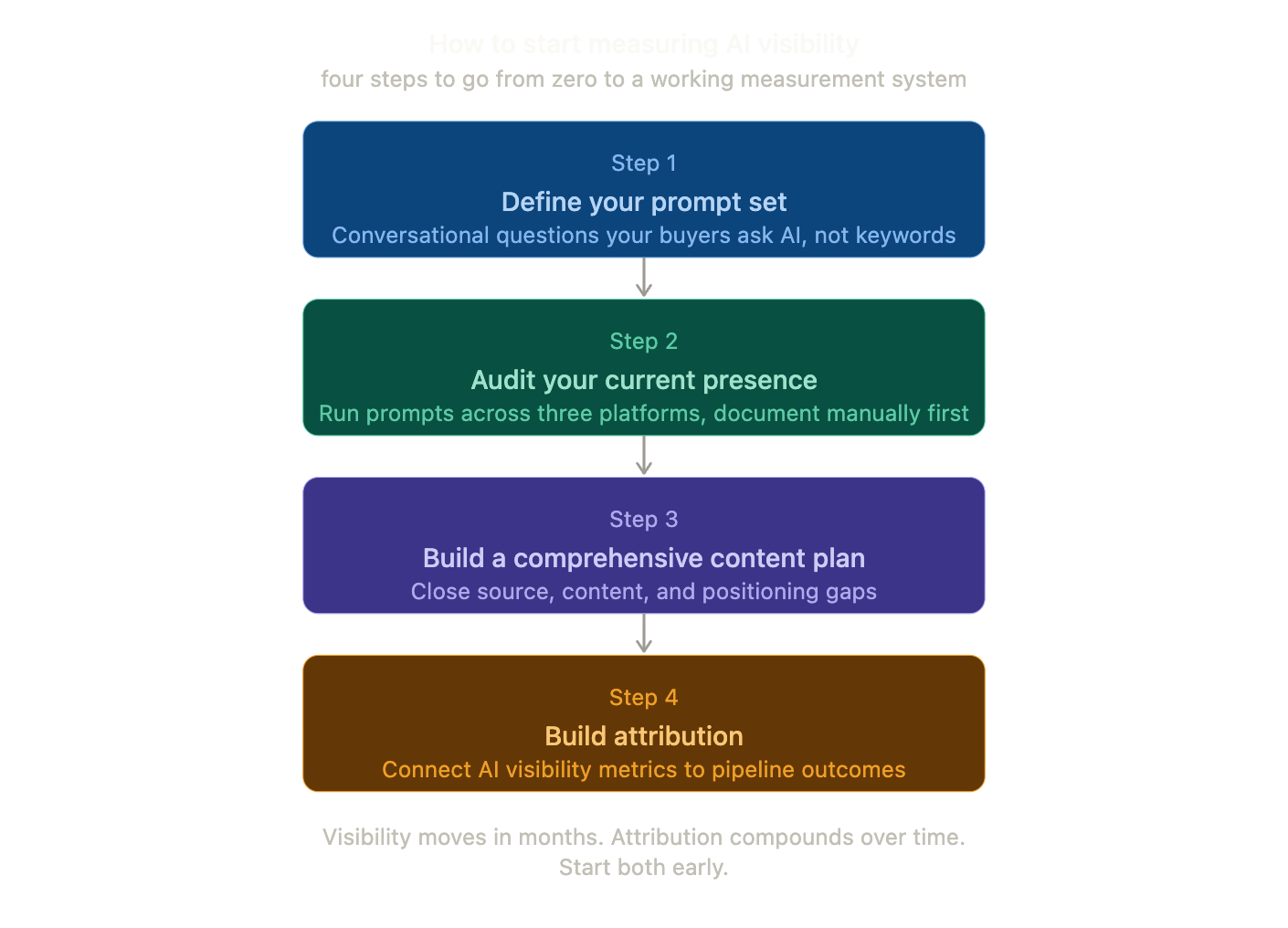
The Trust Transfer Effect
Modern search offers a “trust transfer” effect. When an authoritative AI engine synthesizes a complex topic and suggests your company as a resource, it inherits the engine’s credibility. Because the AI is seen as an objective synthesizer of information, its endorsement acts as a powerful form of social proof. This lowers buyer skepticism immediately, allowing your sales team to focus on relationship-building rather than basic education.
Tracking Discovery Sources
To understand the impact of your generative search optimization efforts, you need a framework for tracking lead interactions.
| Tracking Method | Focus Area | Data Insight |
|---|---|---|
| Direct Referral | ChatGPT/Perplexity | Measures clicks from AI interfaces. |
| Lead Attribution | CRM Entry Surveys | Asks how the prospect found you. |
| Mention Analysis | AI Sentiment Tracking | Monitors brand presence in summaries. |
| Engagement | GA4 Session Quality | Compares AI traffic to organic search. |
Practical Tactics to Boost Lead Quality
Scaling content for AI search requires a shift in how you package information. Because AI models function by synthesizing vast datasets, they prioritize content that is inherently trustworthy and structurally predictable.
Master the E-E-A-T Framework
E-E-A-T (Experience, Expertise, Authoritativeness, and Trustworthiness) signals to AI models that your content is safe and accurate. To demonstrate these traits, incorporate first-hand case studies, link to verifiable industry data, and ensure every piece of content has a clearly identified author. When a model can verify expertise through a professional bio or social profile, it is more likely to elevate your content as a preferred source.
Use Machine-Readable Structured Data
Implementing Schema.org markup is a critical lever for generative search optimization. By using JSON-LD, you remove ambiguity about your page’s intent. Using FAQPage schema for question-and-answer pairs or HowTo schema for processes allows AI crawlers to parse your content with pinpoint accuracy. This structure tells the machine exactly how to extract your answers, making it easier for them to present your brand as the expert response.
Implement the Answer-First Strategy
The most effective way to secure citations is to adopt an answer-first format. By leading sections with a concise, self-contained 40–60 word summary, you provide the AI with a ready-to-use snippet.
| Content Type | Formatting Strategy | Purpose |
|---|---|---|
| Definitions | 40-60 word summaries | Instant extraction |
| Processes | Numbered lists | Sequential clarity |
| Comparisons | Markdown tables | Data synthesis |
This formatting style ensures your content is the most quotable option, removing the friction an LLM would otherwise face. Brands that maintain high-accuracy content become trusted repositories for AI updates, ensuring a long-term competitive edge in the evolving generative search landscape.
AEO/GEO
Want to learn more?
Contact us for direct consultation and support.