In the evolving landscape of AI-driven discovery, the traditional reliance on link-based metrics is rapidly fading. Today, visibility is not awarded to those with the most backlinks, but to those who act as the definitive semantic authority in their niche.
Beyond Domain Authority: Defining Topical Authority in the Generative Era
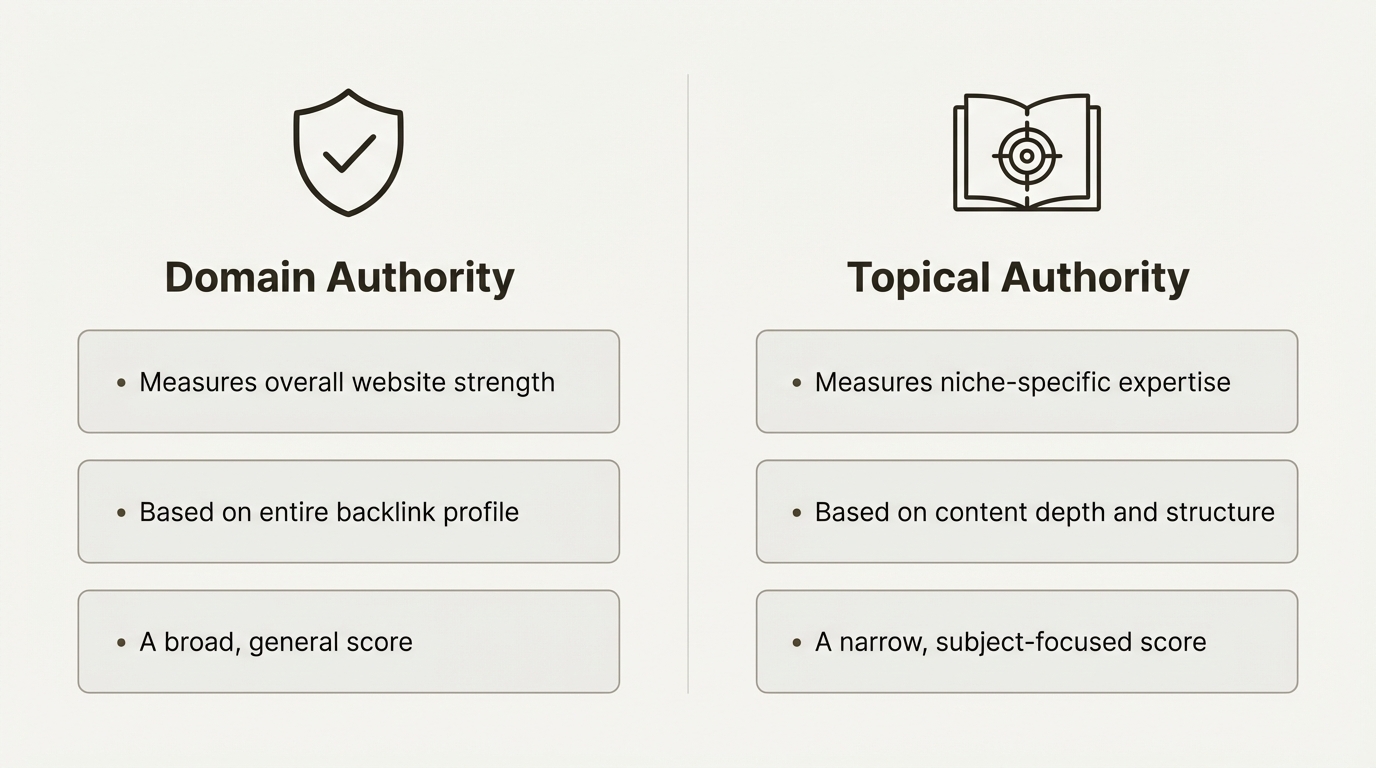
While conventional SEO focused on domain authority as a proxy for site strength, generative search engines operate differently. AI models prioritize the breadth and depth of a brand’s semantic footprint.
Topical authority is defined by your site’s ability to cover a subject comprehensively. AI interprets authority not through external link counts, but through entity connectivity. It maps the relationships between concepts, businesses, and solutions to determine if your content provides a holistic answer. By focusing on semantic relevance, you transition from competing on generic keywords to being recognized as the primary source for a specific domain of knowledge.
The Anatomy of Trust: Integrating E-E-A-T into AI Content Architecture
AI models are trained to prioritize high-trust information. Integrating E-E-A-T (Experience, Expertise, Authoritativeness, and Trustworthiness) is no longer optional; it is the fundamental engine for AI trust.
To succeed, you must move beyond simply writing content and start authoring evidence. This involves:
- Leveraging structured data (schema) to define relationships between authors, organizations, and subject matter experts.
- Integrating clear citations and data-driven insights that confirm your firsthand experience.
- Designing content hierarchies that showcase a clear lineage of expertise across your entire domain.
Mapping the Semantic Web: Entity Relationships as Content Strategy
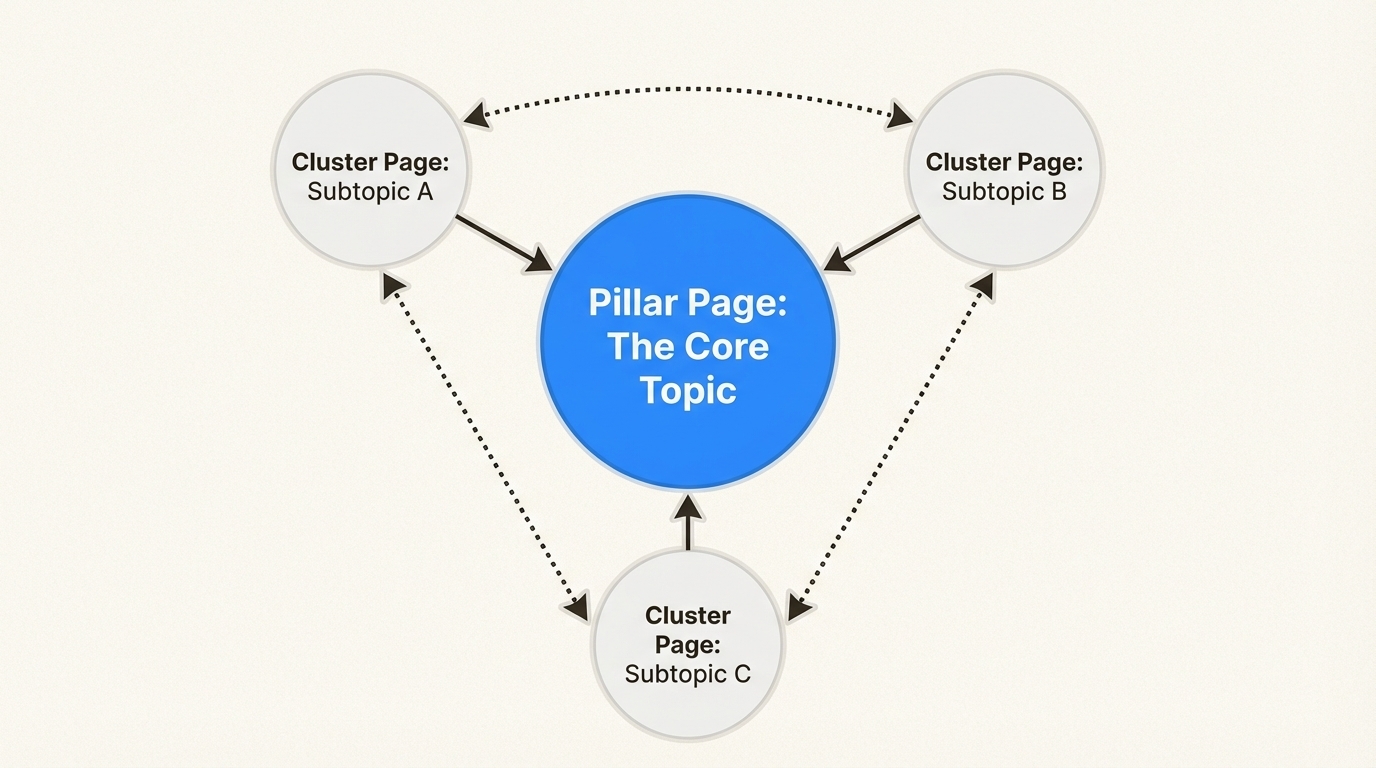
Building a sustainable presence requires mapping your brand’s core entity set. You must identify the primary, secondary, and tertiary entities that define your industry and weave them into a coherent strategy.
Rather than chasing individual high-volume keywords, you should develop semantic clusters that satisfy broad user intent. This approach ensures that when an AI evaluates your site, it finds a interconnected web of information that answers the ‘who,’ ‘what,’ and ‘why’ of your industry, rather than disconnected pages optimized for static search strings.
The Generative Audit: Benchmarking Your Current Topical Footprint
To regain visibility, you must first understand the state of your current semantic footprint. A generative audit goes beyond standard technical checks:
- Gap Analysis: Evaluate where your library fails to address the core entities of your industry.
- Semantic Thinness: Identify pages that lack sufficient depth or unique signals to be considered an authoritative answer by an AI.
- Prioritization: Focus resources on areas where your brand has the potential to dominate the conversation by injecting deep, nuanced insights.
Execution Architecture: Building for Scalability and AI Interpretability
Maintaining high content velocity while upholding strict E-E-A-T standards requires a shift in production. Scaling content for AI search relies on automated workflows that align perfectly with semantic clusters.
By structuring information hierarchies for AI model ingestion, you ensure that your content is not just visible, but interpretable. This architectural rigor allows you to maintain high-quality outputs at scale, consistently providing the depth of information that generative AI requires to cite your brand as the expert authority.