Scaling Content for AI Search: Prioritizing Accuracy
The promise of infinite, high-speed content creation has transformed the digital landscape, offering businesses a tempting shortcut to dominate search results. With AI, you can generate hundreds of pages in a fraction of the time it once took. Yet, this pursuit of volume hides a silent, costly liability: the “hallucination tax.” When your automated content production prioritizes speed over substance, it often introduces factual errors that erode the very trust signals necessary to gain visibility in modern AI-driven environments.
Scaling content for AI search requires more than just efficient workflows; it demands a rigorous commitment to accuracy that traditional SEO tactics often overlook. Today’s answer engines, such as Google AI Overviews and Perplexity, do not merely count keywords. They evaluate the depth, consistency, and factual integrity of your information to determine whether your brand serves as a reliable source of truth. When an AI model detects inconsistent facts or unsubstantiated claims, it risks flagging your domain as unreliable, ultimately relegating your content to the bottom of the pile.
Mastering this new paradigm means shifting your focus from sheer output to the meticulous verification of your brand’s knowledge. Protecting your reputation while growing your presence ensures that when AI engines search for authoritative insights, yours are the ones they trust to share.
Why AI Hallucinations Are a Liability for Topical Authority
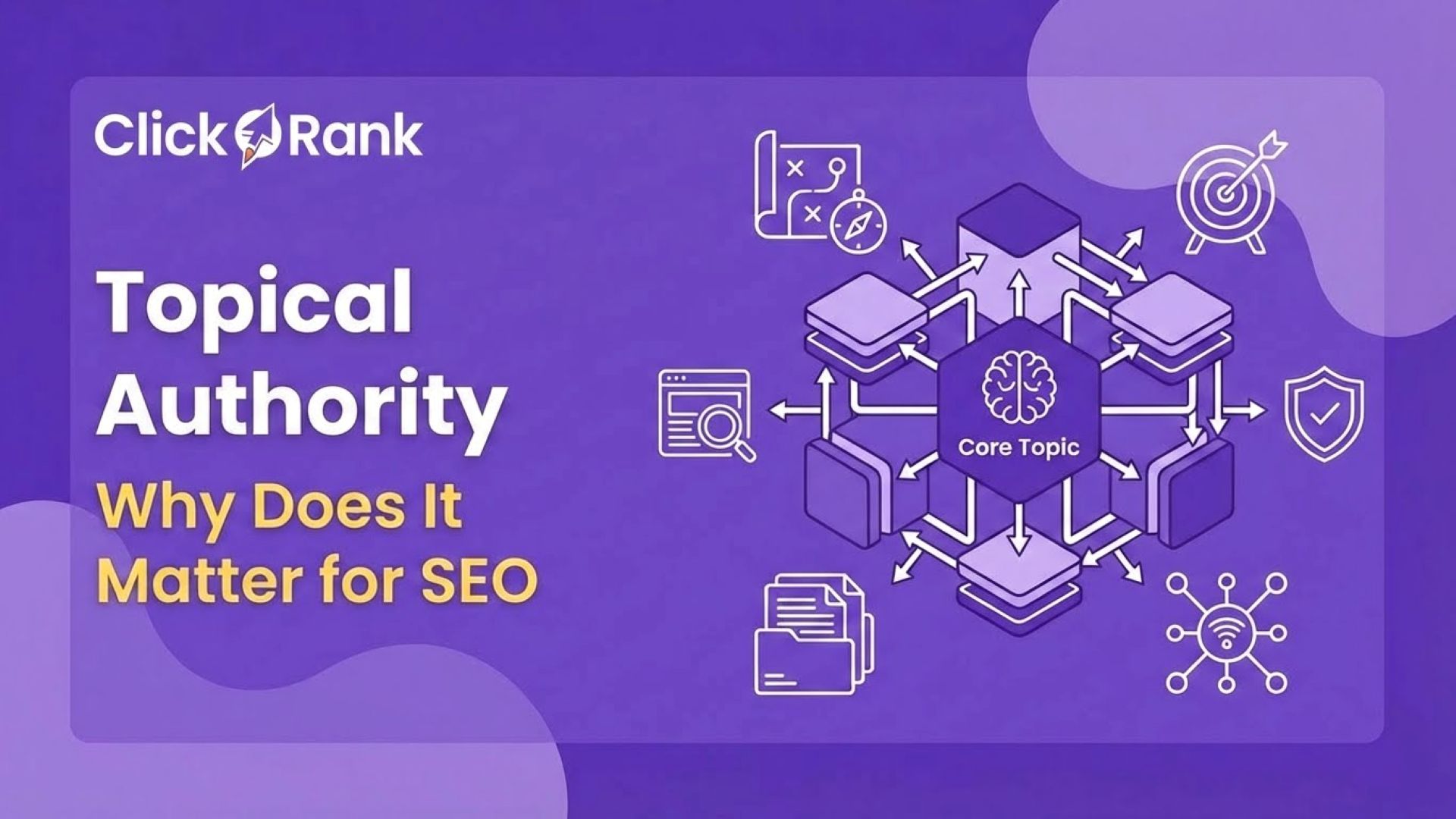
Topical authority is far more than just a volume game. While many publishers believe that saturating a niche with keywords guarantees dominance, true authority is built on the consistent reliability of the information you provide. In the era of AI-driven search, you are competing to be the trusted source that AI models reference when answering user queries. When your content relies on AI-generated information that contains “hallucinations”—confident but factually incorrect assertions—you erode the very foundation of your E-E-A-T signals (Experience, Expertise, Authoritativeness, and Trustworthiness) that search engines and AI models prioritize.
The Cost of Scaling Content for AI Search
When you prioritize a quantity-first approach to scaling content for AI search, you invite significant risks. AI models and search algorithms are increasingly sophisticated at identifying factual inconsistencies. If your site publishes content that is frequently flagged as inaccurate, you aren’t just failing to rank; you are training search engines to view your domain as a low-trust source. A single instance of misinformation, especially one prominently cited by an AI answer engine, can severely damage your brand reputation and trigger a downward spiral in site-wide rankings.
In contrast, a quality-first approach focuses on depth, accuracy, and verifiable expertise. By ensuring every piece of content acts as an authoritative, self-contained answer, you position yourself as a primary source of truth. When engines like Gemini or ChatGPT consistently cite accurate, high-quality data from your domain, your topical authority grows exponentially.
Comparing Content Philosophies
To understand the long-term impact on your digital footprint, consider the differences between focusing on raw output volume versus building genuine, sustainable authority.
| Metric | Volume-Focused Content | Authority-Focused Content |
|---|---|---|
| Accuracy | Often inconsistent; prone to AI hallucinations | High; verified via expert review |
| Citation Rate | Low; AI models avoid untrustworthy sources | High; favored for accuracy and clarity |
| E-E-A-T Signals | Weak; lacks depth and credentials | Strong; leverages deep expertise |
| User Retention | Low; content often thin or misleading | High; users trust the provided value |
Ultimately, AI content accuracy is the bedrock of your visibility. If you focus solely on volume, you may find that your content is ignored or filtered out by AI engines that prioritize factual consistency. By shifting your focus toward precision and verifying your claims, you secure your place as a reliable expert in a landscape where trust is the most valuable currency. Building this level of authority requires a move away from automated content dumps and toward an ecosystem where every page reinforces your brand’s commitment to verifiable information.
The Erosion of Trust: How Models Detect Inaccurate Content
The core of modern search is transitioning from a simple index of links to a machine-driven synthesis of knowledge. When you are scaling content for AI search, the accuracy of your information is the primary factor determining your visibility. AI models prioritize verifiable facts and rely on primary source citations to build reliable outputs. When your content contains factual errors, it forces the model to treat your site as a source of noise rather than a signal of truth.
The Mechanism of Trust Erosion
Trust erosion occurs when a model integrates your content into an answer, only for the information to be proven incorrect or contradicted by more reliable datasets. AI-driven platforms are constantly cross-referencing information against verified databases and high-authority knowledge graphs. When a model repeatedly pulls inaccurate data from your pages, it creates a negative feedback loop. The connection between your brand and truth is systematically weakened, leading the model to deprioritize or completely ignore your site in future query synthesis.
Why the Answer-First Pattern Requires Precision
The answer-first pattern—where you provide a 40–60 word summary at the beginning of a section—is highly effective for getting cited. However, this strategy carries inherent risks. Because this summary is the most likely text a model will extract, any error contained within it effectively voids the authority of the entire page.
| Factor | How AI Evaluates Accuracy | Impact on Visibility |
|---|---|---|
| Factual Consistency | Cross-referencing against verified databases | High (leads to penalties) |
| Citation Quality | Checking primary source relevance | High (determines citation) |
| Answer Precision | Extracting clear, error-free definitions | Critical (for answer boxes) |
| Topic Depth | Measuring gaps or contradictions | Medium (affects authority) |
While it is tempting to use broad, sweeping statements to sound authoritative, AI models are increasingly adept at identifying fluff. They penalize generalizations that lack granular, verifiable evidence. To maintain topical authority, you must replace vague assertions with precise, substantiated details. By focusing on AI content accuracy and transparent sourcing, you demonstrate the E-E-A-T signals necessary to become the source the AI model trusts.
Actionable Verification Workflows for High-Stakes Content
When scaling content for AI search, speed can be your enemy if it compromises accuracy. AI models are prone to hallucinations. Because these models prioritize accuracy when selecting sources for AI-driven search, a single false claim can degrade your topical authority. To maintain high AI content accuracy, you must move beyond passive review and implement a structured human-in-the-loop verification process.
The Verification Checklist for Content Teams
Before any piece of content goes live, your team should execute this mandatory verification loop.
- Source-Link Mandate: Require writers to provide a direct, permanent link to a primary source for every statistic, percentage, or specific claim.
- Citation Cross-Check: Manually verify that the citation actually supports the statement.
- Entity Consistency: Ensure that named individuals, organizations, or technologies are referred to by their correct, formal names to avoid ambiguity.
- Tone & Intent Review: Verify that the 40–60 word opening remains objective, concise, and representative of the full content piece.
Beware of Red Flag Phrases
Hallucinations often hide behind specific patterns of language that sound authoritative but lack substance.
| Red Flag Phrase | Why It’s a Warning Sign |
|---|---|
| Studies suggest… | Lacks a named source, date, or link to the specific research. |
| Experts agree that… | Provides no attribution to verifiable, credentialed professionals. |
| Recent data shows… | Often used without a specific date, making it impossible to verify. |
| It is widely known… | A common filler for unproven, anecdotal assertions. |
Building a Reputation-First Scaling Strategy
Scaling content for AI search requires a fundamental shift in how you produce and package information. Rather than treating AI as a replacement for writers, you must position it as a drafting assistant that handles structure, while the expertise layer remains human-led.
Leveraging Human Expertise
AI models are fast at generating summaries, but they lack the lived experience that drives true topical authority. Use AI to outline and draft the foundational structure, then have an expert overlay the content with real-world examples, proprietary research, and nuanced advice.
Strengthening Visibility with Structured Data
Technical implementation is essential for scaling effectively. Integrate Schema markup—specifically JSON-LD—to define your content entities, authors, and organization clearly for search engines. By using Schema types like Article, Person, and Organization, you explicitly tell answer engines who is writing the content and why they are qualified to do so. This structure removes ambiguity and acts as a key lever in AI-driven search.
The future of digital discoverability belongs to those who successfully balance the velocity of content production with an unwavering commitment to absolute accuracy. By investing in a culture of verification, you ensure your brand remains the trusted source that both human readers and AI models prefer.
AEO/GEO
Want to learn more?
Contact us for direct consultation and support.