Scaling content in the age of generative AI requires a fundamental shift in strategy. Many teams are stuck in a cycle of high-volume, low-impact output, unaware that the rules of search have changed. To remain visible, you must move beyond traditional SEO and embrace Answer Engine Optimization (AEO).
The Quality Trap: Why Manual AI Orchestration Fails at Scale
The reliance on static prompt libraries and fragmented spreadsheet management is a primary driver of declining organic visibility. While these methods may have sufficed for traditional search engine rankings, they are ill-equipped to handle the nuances of AI-generated answers.
- Generative AI Fatigue: Modern search engines are increasingly sophisticated at identifying and de-prioritizing generic, mass-produced content that lacks a distinct, authoritative voice.
- The SEO Mirage: Optimizing solely for keyword density ignores the contextual requirements of AI models, which prioritize factual precision and direct answers.
- Operational Stagnation: Manual workflows create bottlenecks that prevent rapid iteration, leaving your brand trailing behind competitors who have automated their distribution pipelines.
Adopting the 80/20 Hybrid Workflow: The Human-in-the-Loop Standard
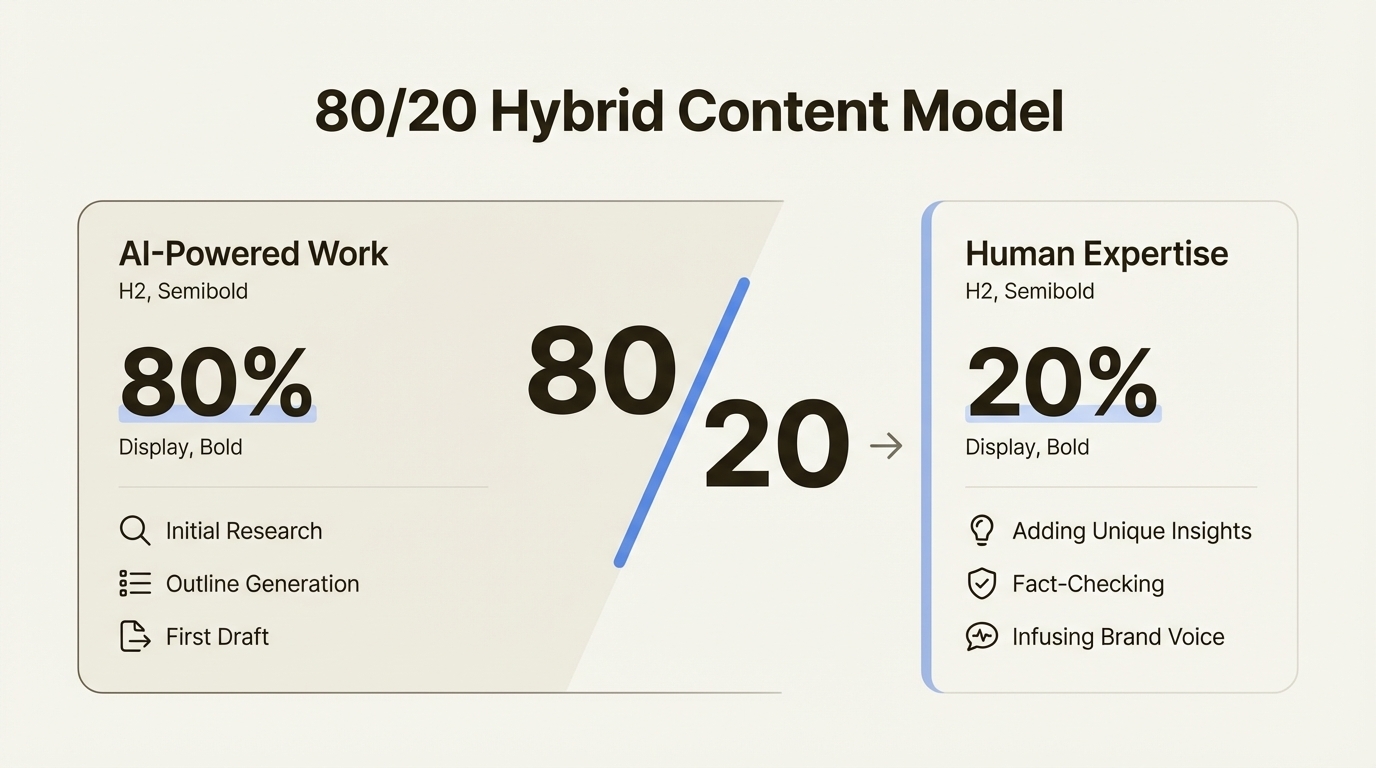
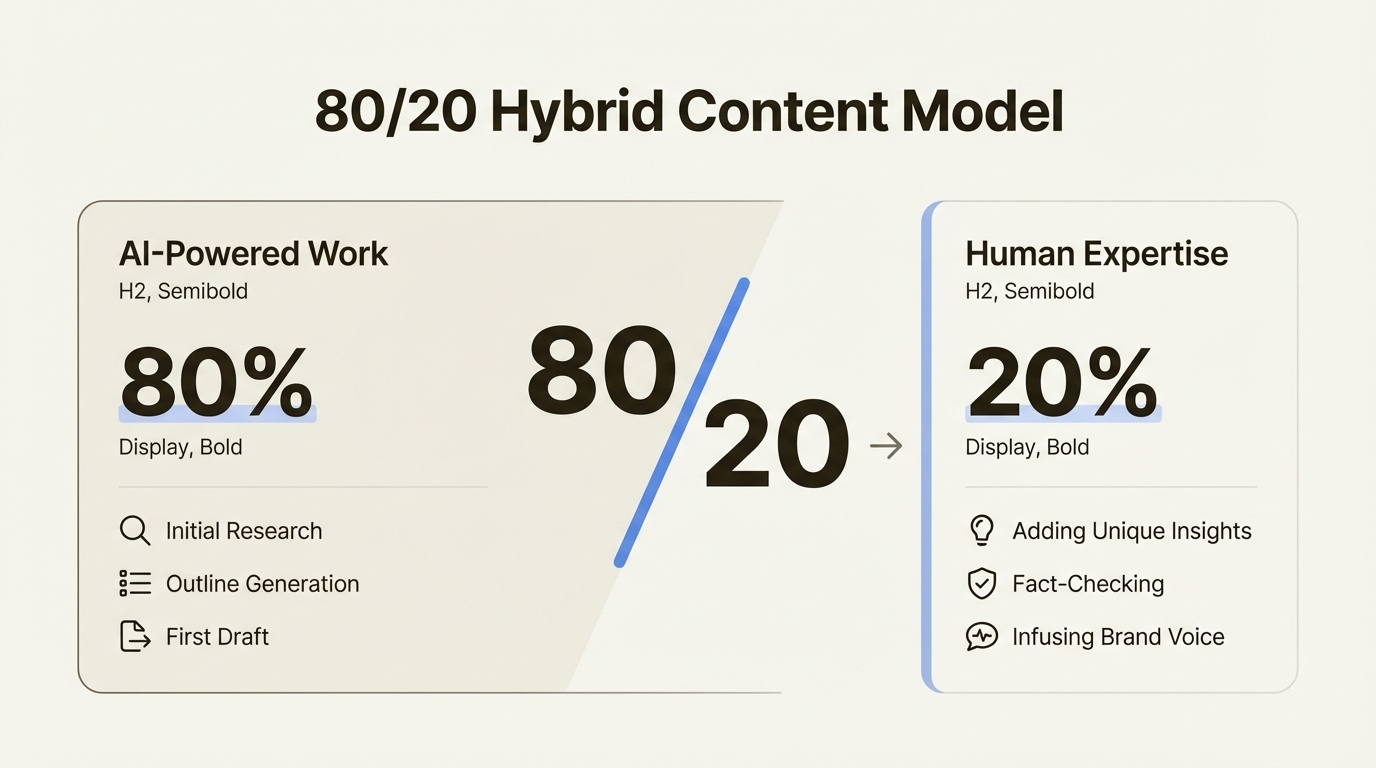
To dominate in an AI-driven search ecosystem, you must balance efficiency with expertise. The 80/20 hybrid model ensures you maintain speed without sacrificing the quality necessary for long-term authority.
- AI as the Architect: Utilize AI to handle the heavy lifting—structuring, drafting, and organizing information based on high-intent data.
- The Human Core: Human experts provide the remaining 20%, infusing content with E-E-A-T (Experience, Expertise, Authoritativeness, and Trustworthiness). This layer is where you add proprietary anecdotes, unique industry insights, and strategic synthesis that AI cannot replicate.
- Automated Checkpoints: Integrate quality-control steps directly into your automated pipeline to ensure every piece of content meets brand standards before it reaches an AI search engine’s index.
Architecting for Visibility: How to Design Content for Answer Engines (AEO) vs. Traditional Search
Traditional content often focuses on volume and keyword stuffing. Answer Engine Optimization (AEO) requires a structural pivot toward concise, high-density, and authoritative information.
- Direct Answers: Structure your content to provide immediate solutions, making it easy for platforms like Perplexity, Gemini, and ChatGPT to cite your brand directly in their summaries.
- Context-Aware Agents: Leverage AI agents capable of incorporating real-time brand data and proprietary URLs to ensure your content remains relevant to current user queries.
- Zero-Click Design: Optimize for the user experience within the AI model itself. If a search engine can deliver the value from your site without the user needing to click, you have effectively “won” the trust of the AI model.
Selecting Your Tech Stack: When to Use Generic AI Agents vs. Specialized Publishing Platforms
Not all AI tools are built for brand visibility. Choosing the right infrastructure is a make-or-break decision for growth-focused teams.
- Brand Context Awareness: Specialized publishing platforms integrate your proprietary brand voice and historical data, whereas ad-hoc LLM integrations often produce generic results.
- AEO Alignment: Dedicated platforms are engineered to understand the nuances of generative search, ensuring your content is formatted for maximum citation.
- Cost-to-Output Efficiency: Evaluate platforms based on their ability to create, optimize, host, and distribute content in one continuous stream, rather than relying on disparate, manual tools.
Future-Proofing Your Operations: Beyond Keywords into AI-Ready Content Systems
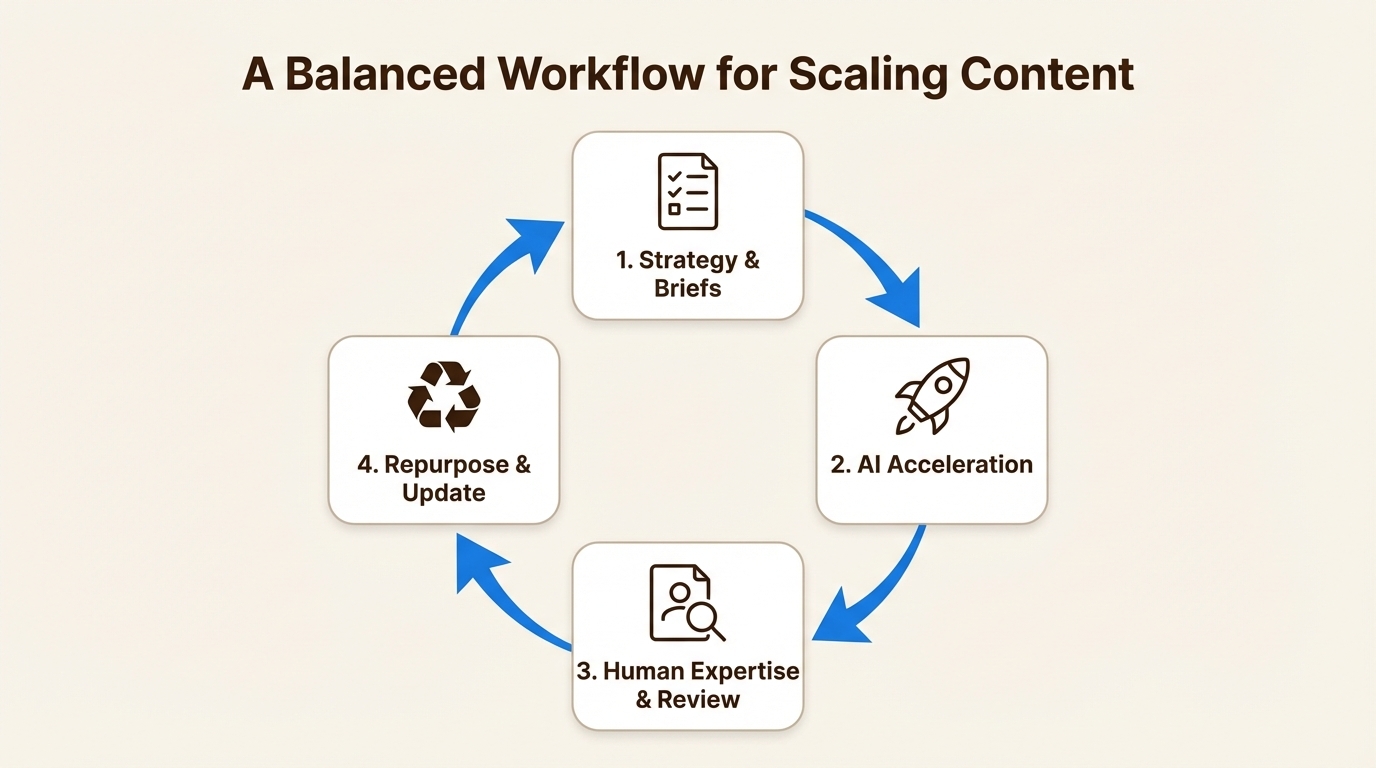
The transition from project-based content creation to autonomous content streams is the ultimate competitive advantage. By measuring success through AI-search visibility and citations, you align your marketing efforts with the reality of how users find information today. Adopting an AI-optimized publishing mindset today ensures your brand remains an authoritative voice in the evolving generative search landscape.