Schema Debugging Checklist: 5 Errors Blocking AI Citations
You’ve poured hours into writing the perfect article. The research is solid, the tone is engaging, and the advice is genuinely useful. You hit publish, cross your fingers, and wait for the AI Overviews to feature your expert insights. Instead? Silence. Or worse, a generic summary written by an LLM that pulls from competitors while ignoring your high-quality content entirely.
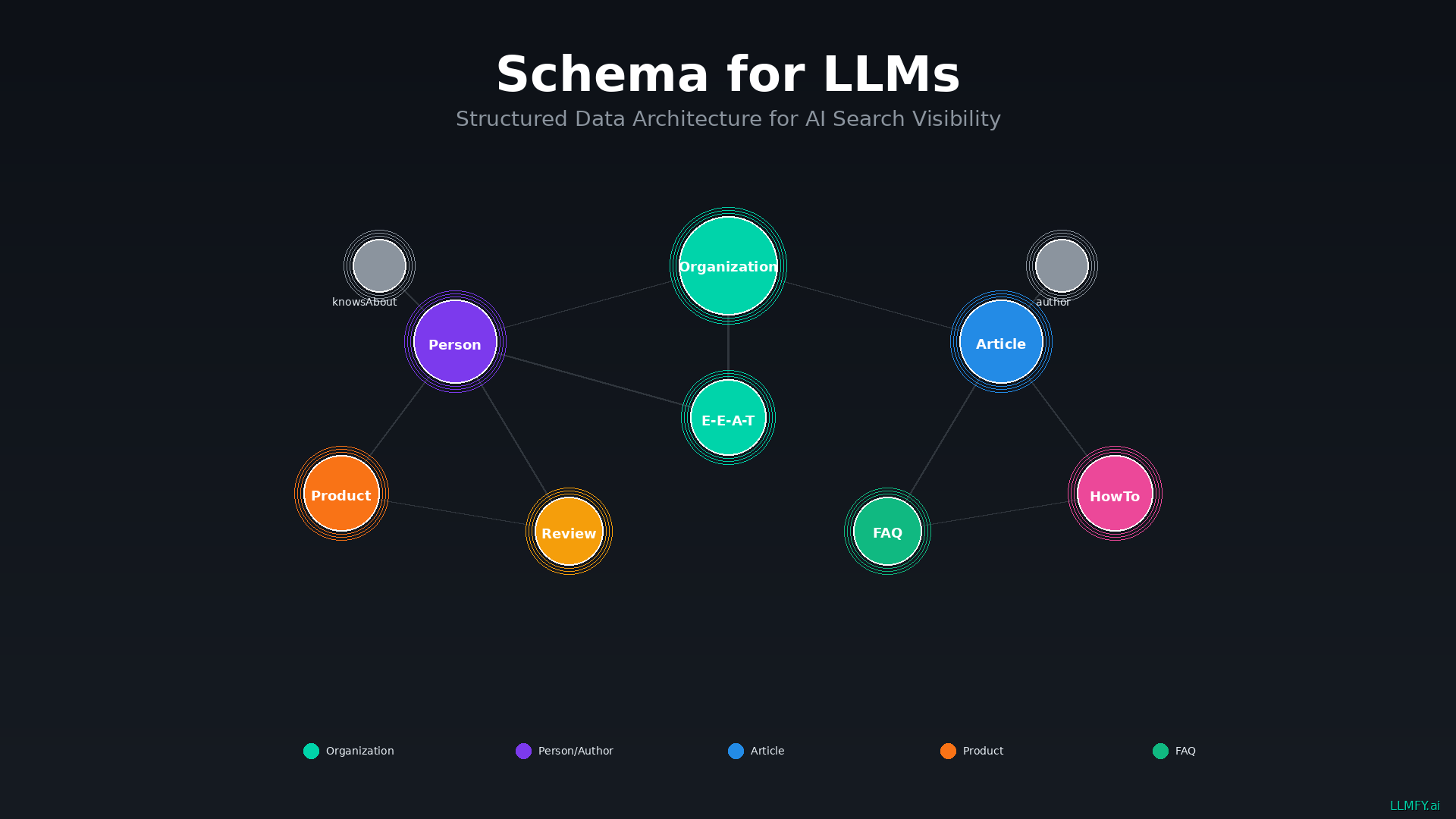
It is frustrating, but the hard truth is that the issue usually isn’t your content quality. It’s your schema markup. Think of schema markup as the translator between your website and Large Language Models (LLMs). Without clear, accurate structured data, you are speaking a language the AI doesn’t understand. This invisible technical blocker is why your content stays hidden from generative search results.
Why Your Schema Is Hiding Your Content from AI
You’ve spent weeks crafting the perfect article. You’ve nailed the keyword research and structured the headers, yet your content isn’t appearing when you ask an AI model like ChatGPT or Claude a question. This isn’t a failure of your writing—it’s a technical foundation issue. Many site owners believe that if their code passes basic validation tests, they are safe. In reality, they might be hiding their content from the search systems reshaping the internet.
Traditionally, Google uses schema markup to generate rich snippets—star ratings, event dates, or recipe cards. The algorithm checks for format compliance: “Is this a date? Is this a price?” However, when a Generative AI engine works, it builds a knowledge graph. It needs to understand the semantic relationships between entities like your brand, your author, and your topic. If your schema is technically valid but semantically sparse, the AI sees a disconnected factoid rather than a credible source.
This has created a new necessity: AI-Readable Schema. This approach goes beyond basic validation to explicitly define relationships and credentials in a way that LLMs can parse.
| Feature | Traditional Schema (Rich Snippets) | AI-Readable Schema (LLM Citations) |
|---|---|---|
| Primary Goal | Visual enhancement in SERPs | Semantic authority and factual trust |
| Entity Connection | Optional or minimal | Critical (sameAs, mentions, isPartOf) |
| Author Credibility | Name and URL often enough | Full profile: knowsAbout, job title, organization link |
| Validation Focus | Syntax correctness | Topical scope and data consistency |
By shifting your strategy from mere compliance to structured data troubleshooting with an AI-first mindset, you learn How to Optimize for AI Search Engines.
The 5 Common Schema Errors Blocking Your Citations
For AI search optimization, precision is everything. A small mismatch can cause an AI to ignore your content entirely. Let’s break down the five most common mistakes that kill your LLM visibility.
1. The Identity Mismatch
Consistency is the first rule of entity resolution. If your page title says “Acme Corp,” your schema name must match exactly. Minor variations confuse AI models.
Before (Broken):
{“@context”: “https://schema.org”, “@type”: “Organization”, “name”: “Acme Corp”, “url”: “https://acmecorp.com”}
After (Fixed):
{“@context”: “https://schema.org”, “@type”: “Organization”, “name”: “Acme Corporation”, “url”: “https://acmecorp.com”, “sameAs”: [“https://www.linkedin.com/company/acme-corp”]}
2. Broken Entity Relationships
LLMs thrive on connections. If you mark up an author but don’t link them to an organization, the AI misses the context of their expertise.
Before (Broken):
{“@context”: “https://schema.org”, “@type”: “Article”, “author”: {“@type”: “Person”, “name”: “Jane Doe”}}
After (Fixed):
{“@context”: “https://schema.org”, “@type”: “Article”, “author”: {“@type”: “Person”, “name”: “Jane Doe”, “jobTitle”: “CMO”, “worksFor”: {“@type”: “Organization”, “name”: “Acme Corporation”}}}
3. Missing Required Properties for AI
Generic schema isn’t enough. For a Person, missing ‘knowsAbout’ or ‘jobTitle’ means the AI has no way to categorize their expertise.
Before (Broken):
{“@context”: “https://schema.org”, “@type”: “Person”, “name”: “Jane Doe”}
After (Fixed):
{“@context”: “https://schema.org”, “@type”: “Person”, “name”: “Jane Doe”, “jobTitle”: “SEO Specialist”, “knowsAbout”: [“Search Engine Optimization”, “AI Search”]}
4. Using Outdated Vocabulary
Schema.org is constantly updated. Using deprecated or overly broad types reduces clarity. Stick to the most specific types available (e.g., ‘Dentist’ instead of ‘ProfessionalService’).
5. Schema-Content Discrepancy
If your schema says “Price: $50” but the text doesn’t mention $50, LLMs flag this as a potential error. Your markup must mirror your visible content.
Diagnostic Checklist: How to Audit Your Schema for AI Readiness
Getting your schema to play nice with AI requires a systematic audit. Use this checklist to ensure your structured data is semantically clear.
- [ ] Run Google Rich Results Test: Confirm no critical errors are present.
- [ ] Validate with Schema.org Validator: Ensure syntax meets official standards.
- [ ] Verify Name Match: Schema
namemust match page<h1>exactly. - [ ] Check Description Accuracy: Ensure schema
descriptionaligns with page content. - [ ] Confirm
sameAsLinks: All external entity links must be active. - [ ] Check for Orphaned Entities: Every person or organization must link to an external identifier.
Fixing the Links: Building a Knowledge Graph for Your Site
Stop treating your website as a collection of isolated pages. Build a knowledge graph. Use the sameAs property as a digital bridge to link your brand entities to verified platforms like Wikipedia or LinkedIn.
| Property | Purpose | Impact on LLM Trust |
|---|---|---|
| sameAs | Links to external authoritative profiles | Verifies identity |
| knowsAbout | Specifies expertise topics | Clarifies topical relevance |
| founder | Identifies key leadership | Adds human credibility |
| isPartOf | Connects to larger collections | Provides semantic context |
| mentions | Links to other discussed entities | Strengthens factual accuracy |
Validating Your Fixes and Monitoring AI Citations
Structured data troubleshooting is rarely an instantaneous process. While Google may re-index your page quickly, AI models ingest and update their knowledge graphs on their own schedules.
Track your progress by performing manual LLM checks. Ask questions related to your content on interfaces like ChatGPT or Perplexity in an incognito window. Note which sources they cite. Conduct a health check every quarter to ensure your schema remains aligned with evolving AI indexing requirements.
Building visibility in AI search is a journey, and you don’t have to take it alone. If you see your brand cited, that is your “win.” By mastering schema markup for AI, you stop competing for attention and start commanding trust. Start your AI search optimization today and watch the landscape reflect your expertise.
AEO/GEO
Want to learn more?
Contact us for direct consultation and support.