Schema-First Citations: How to Force AI to Link
Your content is being read, analyzed, and summarized by AI systems every day, yet your brand is nowhere to be found in the results. You pour resources into high-quality articles, only to watch competitors capture the AI overview spot with a simple link while you get a paraphrased summary that drives zero traffic. This is not a failure of writing quality; it is a failure of technical signal architecture.
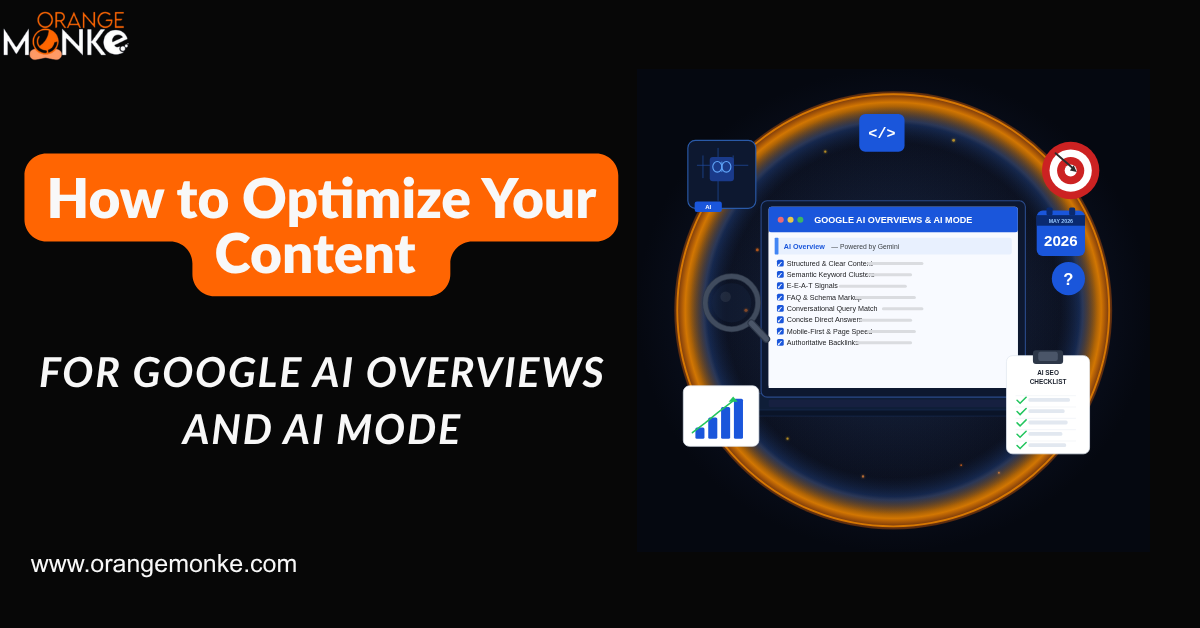
Large language models do not inherently know which source is authoritative unless you explicitly tell them. Writing alone is no longer sufficient to secure visibility in generative search. To prevent AI summarization and force attribution, you must implement a schema-first citation strategy. By embedding structured data directly into your HTML, you provide the machine-readable context that AI engines like Google’s AI Overviews need to extract your specific insights and link back to your URL.
Most businesses optimize for humans while ignoring the bots that now control search traffic. Without proper schema markup, your content remains invisible to the AI citation pipeline. This guide shifts your strategy from passive content creation to active signal engineering, teaching you to deploy the exact JSON-LD structures required to secure links from AI-generated answers.
The Citation Gap: Why AI Summarizes Instead of Linking
Many content creators assume that high-quality information leads to natural citations. This belief is flawed. The reality of AI overview optimization reveals a separation between how different systems process information. While Google AI Overviews synthesize summaries from a small pool of sources, Google AI Mode operates on a principle known as query fan-out.
Synthesis vs. Fan-Out: The Technical Divide
Google AI Overviews typically pull from three to five sources to create a synthesized answer. This makes competition fierce, but the mechanism is one of selection. In contrast, Google AI Mode, powered by the Gemini 2.5 engine, decomposes a single user query into up to 16 parallel sub-queries. It then pulls from more than 30 sources to provide a multi-faceted answer.
This difference dictates your technical strategy. Data confirms there is only a 13.7% citation overlap between the sources appearing in Google AI Overviews and those in Google AI Mode. If you are optimizing only for the overview, you are ignoring the vast majority of potential visibility in AI search.
The Extraction Problem: Why AI Paraphrases You
When AI does not cite your content, it is often because your work lacks the structured signals required for extraction. Large language models prioritize clarity and attribution. If your content is dense or lacks clear structural markers, the model will paraphrase your insights rather than link to your source. By marking up your content with the correct schema, you provide the AI with a clear path from insight to source, moving from a content problem to a technical SEO solution.
The Schema-First Strategy: Required Markup Stack
To secure citation, move beyond writing and adopt a schema-first approach. AI systems parse structured data to understand entities, relationships, and context. If your markup is missing or ambiguous, the AI lacks the signals to attribute your work.
The Minimum Viable Stack for AI Attribution
To maximize your chances of being cited, implement a stack comprising three specific schema types:
- Article or BlogPosting Schema: This defines your content as a standalone piece of analysis.
- FAQPage Schema: The highest-leverage tool to prevent AI summarization. AI models are trained to extract direct question-and-answer pairs, providing a clear path to quote you directly.
- Person Schema: AI prioritizes authoritativeness. Linking an individual to the content via Person schema allows the AI to verify credentials and entity trust.
Step-by-Step Implementation
Implementing these schemas requires precision. Use the following workflow to ensure your markup is valid:
- Draft your JSON-LD object using structured data blocks.
- Map critical fields: Ensure author links to a Person schema and publisher links to an Organization schema.
- Use fresh content: AI systems favor content published within the last 13 weeks.
- Validate: Use Google’s Rich Results Test to fix syntax errors before publishing.
Structuring Content for Extractability: Beyond Schema
Schema markup provides the blueprint, but you must also engineer your visual layout to mirror the extraction logic of large language models.
The 40–55 Word Direct Answer Rule
Place a concise, self-contained answer immediately following an H2 heading. This 40–55 word rule signals that your page holds the definitive source for the specific intent. If the answer is buried in a paragraph, the model may synthesize information from other sources rather than citing you.
Visual Structure for Citation Chunks
AI extractors prefer structured data formats like bulleted lists and tables. These formats create natural boundaries around information, making it easier for the model to isolate and attribute specific data points.
| Feature | Unstructured Content | Structured Content |
|---|---|---|
| Extraction Clarity | Low | High |
| Citation Confidence | Moderate | High |
| Processing Speed | Slower | Faster |
| Summary Risk | High | Low |
Leveraging E-E-A-T Signals
Connect your content to verifiable author identities using sameAs links in your Person schema. Points to profiles such as LinkedIn or industry-specific credentials signal to the AI that your content is high-authority material, reducing the likelihood of anonymous summarization.
Technical Foundations: Ensuring AI Crawlers Can Read You
Even the most structured data fails if the underlying infrastructure is flawed. AI retrieval systems operate on binary filters; if they cannot access your page, your content remains invisible.
The Emerging Role of llms.txt
The llms.txt file is emerging as a critical component for AI search. This standard allows publishers to signal which URLs are relevant for AI training and citation. By explicitly listing your high-value resources in this file, you guide AI agents to prioritize your content.
Robots.txt and Performance
Review your robots.txt file to ensure you are not blocking Google-Extended. This user agent is responsible for indexing content for Gemini and AI Overviews. Additionally, prioritize Core Web Vitals. Fast, stable pages are preferred by AI retrieval pipelines; slow LCP or high CLS signals that your page is not a reliable source.
Validation and Monitoring: Measuring AI Attribution
Establishing a monitoring framework is necessary to prove your technical optimizations work.
- Track AI visibility: Utilize tools like the Semrush AI Toolkit or monitor Google Search Console for impression fluctuations in AI-specific queries.
- Audit freshness: Since 50% of AI-cited content is under 13 weeks old, establish a routine to update key data points or republish to refresh signals.
- Use proprietary data: Unique statistics or original research are the strongest drivers of LLM citation. When models find data that no other source possesses, they are more likely to attribute it directly to your brand.
By shifting to active signal engineering, you transform your digital presence into an authoritative source. Partner with Orange MonkE for an AI readiness audit to ensure your infrastructure secures your brand’s future in the evolving search landscape.
AEO/GEO
Want to learn more?
Contact us for direct consultation and support.