Schema Markup for Healthcare AI: A Visibility Guide
Imagine asking an AI assistant for advice on a lingering cough or a new rash. In seconds, you get a confident answer. However, that AI likely lacks the nuance of your specific medical situation because it relies on general internet data. Patients want expert-backed answers, but generic SEO is no longer enough to bridge the trust gap in the era of generative search.
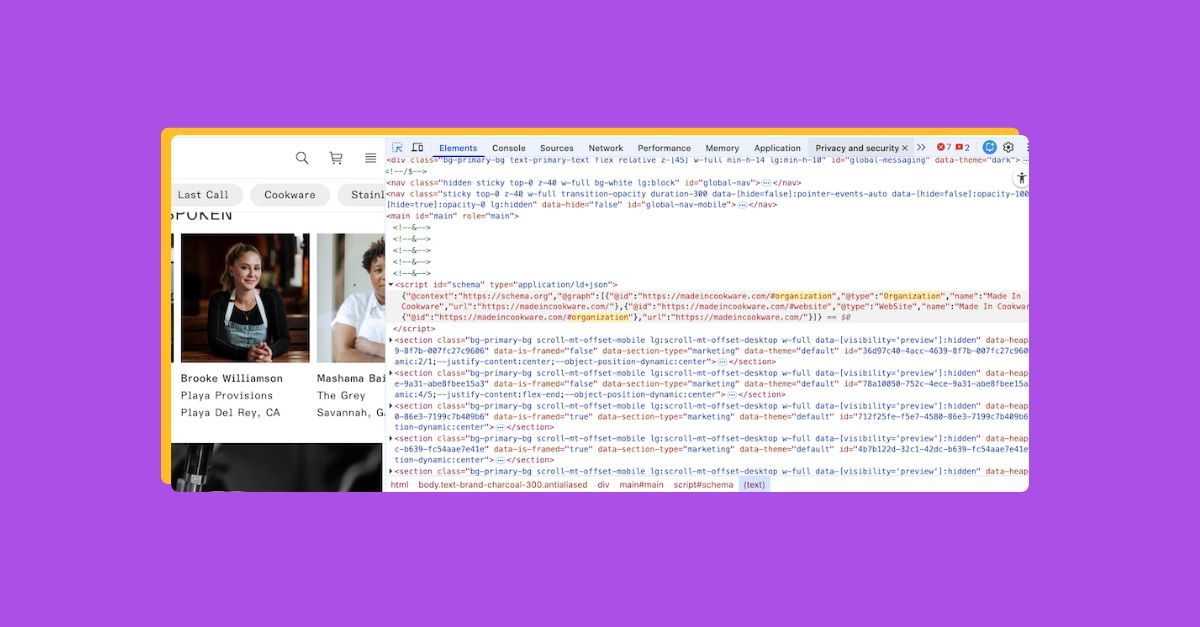
Because medical information carries high stakes, AI search engines need more than keywords to verify that your practice is legitimate. They require specific signals that communicate authority and safety. This is where specialized schema markup serves as a translator between your medical website and AI algorithms. By organizing your content into machine-readable structures, you provide the signals generative search engines require to validate your medical expertise.
Why Medical AI Needs Specialized Structure
Medical content operates under a unique set of rules compared to standard business sites. In healthcare, a misinterpreted fact can impact patient safety and well-being. Consequently, AI models like Google’s Search Generative Experience are programmed to evaluate source credibility with extreme scrutiny.
The E-E-A-T Factor in Healthcare
At the heart of AI caution is the E-E-A-T framework: Experience, Expertise, Authoritativeness, and Trustworthiness. For a medical practice, this means proving your physicians hold specialized training, your facility is accredited, and your advice aligns with medical consensus. AI engines need machine-readable signals to confirm these qualities instantly.
Why AI Models Are Cautious
Generative AI models are designed to minimize hallucinations. When faced with a query like “What are the symptoms of chest pain?”, an AI model will hesitate to provide an answer unless it can identify a highly authoritative, verified source. Without specialized structure, your website appears as unstructured text, causing the AI to favor government health sites or large hospital networks instead.
| Feature | Traditional SEO Approach | AI-Ready Medical Schema Approach |
|---|---|---|
| Content Interpretation | AI guesses context based on keywords. | AI reads JSON-LD tags for exact context. |
| Authority Verification | Relies on backlinks and domain age. | Links to verifiable professional credentials. |
| Accuracy Signals | Assumes accuracy via human standards. | Explicitly flags medical review status. |
| AI Visibility | Low probability of AI summary inclusion. | High probability of being a primary source. |
| User Experience | Requires manual scanning for info. | Provides instant access to contact and location. |
Essential Schema Types for Medical Websites
The way you structure your code matters just as much as the quality of your advice. Three specific types of schema are vital for healthcare providers to build the trust signals AI requires.
Defining Medical Focus with MedicalWebPage
Use the MedicalWebPage schema to tell AI engines exactly what kind of content you are hosting. By applying this label, you distinguish your content from generic blog posts. This signals to AI that your information is tied to a professional medical context, boosting its credibility score.
Linking Practices to Legal Entities
AI needs to verify that the doctor writing the content is a real person and that the clinic is a legitimate business. Use the Physician and Organization schemas to create a web of trust. By linking these schemas, AI can trace advice back to a specific expert at a verified institution, reducing the risk of presenting unverified information.
Capturing AI Overviews with FAQ Schema
FAQ schema is powerful for surfacing medical answers in AI Overviews. By providing clear question-and-answer pairs, you allow the AI to extract a precise, concise answer directly from your content. This increases your chances of being cited as a helpful, authoritative source.
Checklist for Improving AI Trust Scores
- Audit pages to ensure the MedicalWebPage schema defines subject matter clearly.
- Verify practitioner details using Physician schema, including NPI numbers.
- Connect individual doctors to the legal entity using Organization schema.
- Tag top patient questions with FAQPage schema to maximize snippet potential.
- Cross-reference schema data with professional directories.
Navigating HIPAA and Medical Trust Signals
You must balance visibility with strict HIPAA compliance. Schema markup is public data, so you must never expose protected health information (PHI) in your structured data. Your markup should act as a professional brochure, not a medical chart.
Structuring Data Without Compromising Privacy
Avoid including patient names, specific diagnosis codes, or any identifiers in your schema properties. Instead, focus on general service offerings and clinical expertise. Use MedicalSpecialty to denote your services while maintaining total anonymity for your patients.
Schema Properties for Medical Verification
| Schema Property | Purpose | Example Value | Trust Signal Impact |
|---|---|---|---|
| NPI | Unique Provider Identifier | 1234567890 | High: Links to federal database |
| MedicalSpecialty | Field of expertise | Cardiology | High: Defines scope of practice |
| Credential | Degrees or certifications | MD, Board Certified | Medium: Shows qualifications |
| SameAs | External professional profiles | URL to Healthgrades | High: Verifies identity |
| ScholarlyArticle | Peer-reviewed research | URL to PubMed | High: Demonstrates rigor |
Strategic Implementation for Long-Term AI Visibility
Implementing schema is an ongoing commitment. To maintain visibility, you must integrate structured data across your entire digital footprint, including patient portals and educational blogs.
Consistency is critical. Use the sameAs property to link your practice to authoritative directories like Zocdoc or state medical boards. Regularly monitor your schema health using tools like Google’s Rich Results Test to catch errors that might prevent AI from parsing your credentials. As your services grow or medical guidelines evolve, update your data to reflect these changes. By aligning your digital presence with the AI need for accuracy, you ensure your practice remains a trusted, visible source of health information.
Structured data acts as a pillar of your digital healthcare presence. By speaking the language of AI, you move beyond hoping for visibility to actively proving your authority and reliability to the patients who need you most.
AEO/GEO
Want to learn more?
Contact us for direct consultation and support.