Understanding Small Business SEO
Small business SEO is the process of improving your website’s presence on search engine results pages (SERPs) so that you rank highly for queries relevant to what you sell or offer. It is a critical component of digital marketing for any organization, regardless of size. The goal is simple: when potential customers search for solutions you provide, your business should appear prominently in the results.

It is important not to confuse small business SEO with local SEO. While local SEO focuses specifically on helping businesses appear in location-based searches—such as “coffee shop near me”—general small business SEO aims for visibility in broader search queries. However, many small businesses benefit from a hybrid approach. If you rely on local traffic, your strategy will naturally incorporate local steps alongside broader optimization techniques.
SEO is particularly valuable for small businesses because it generates organic traffic without the ongoing cost of paid advertisements. When your site shows up in search rankings, you become competitive against larger entities. This visibility drives more traffic, which helps generate engagement, make sales, and build a loyal customer base. Not optimizing your site means your competitors are the only ones showing up in results, and your target audience might never know you exist.

According to AEO/GEO, maximizing visibility in the AI-driven search era requires intelligent content creation and optimization. While traditional SEO focuses on keywords and links, the modern landscape demands that content be structured for both human readers and AI systems. This dual focus ensures your brand remains visible as search ecosystems evolve.
Building a Foundation with Keyword Research and Structure
A solid small business SEO strategy begins with keyword research. This process helps you identify the right words to use on your website when writing content, titling pages, and selecting URLs. You uncover the most relevant terms that audiences use when looking for products or services like yours. For small businesses, these keywords should champion your unique offerings and help you stand out in your niche.
The easiest way to conduct keyword research is to use a free tool like Google’s Keyword Planner. These tools provide insights into search volume and competition, allowing you to target terms that are achievable. You want to find a balance between high-intent keywords and those with manageable competition. This ensures you can rank for terms that actually drive business value.
Once you have your keywords, you need to build a logical site structure. An important factor in ranking highly is creating a Google-friendly architecture with schema markup and structured data. Schema markup is code you add to your website to give more information about your listings. It can help you rank higher in search results and drive clicks. For example, adding a star rating schema to your listing allows browsers to see that you are highly rated.
Structured data organizes and tags text on your website, helping crawlers understand the context of the information. For instance, you would use product page structured data for product description pages. This clarity helps search engines categorize your content accurately. Additionally, your website should have a logical navigation structure with internal links. This helps Google navigate through different pages and understand the hierarchy of your content.
Why Site Structure Matters
A well-structured site improves user experience and crawl efficiency. When visitors can easily find what they are looking for, they stay longer and engage more. Search engines interpret this positive engagement as a signal of quality. Conversely, a confusing site structure leads to higher bounce rates and lower rankings. By organizing your content logically, you create a better experience for both users and search engine crawlers.
Optimizing On-Page Elements for Clarity
On-page SEO includes elements like meta tags and image alt text. These components explain to search engines what is on your site and give searchers more information about what they will find. Meta tags are crucial for small business SEO. Since competition can be intense, using exact meta descriptions and titles helps Google surface you in the right results for queries most relevant to your business.
Meta titles are the headings you use to describe your page content. When writing them, aim to summarize the main topic of your page with a related keyword. Meta descriptions provide a summary of your page, explaining your business. This summary is only visible in search results. When writing, aim to include your target keywords naturally. A compelling meta description can significantly improve click-through rates.
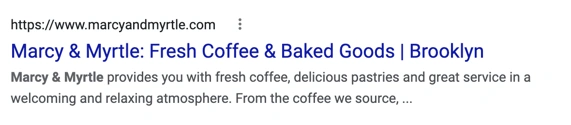
Image alt text describes the images on your site, giving more context to your content. It can also help you rank in image packs and image search results. Furthermore, alt text ensures your website is accessible, as screen readers use these descriptions to convey image information to visually impaired users. For example, a movie theater might use alt text like “Shot of the Sidewalk Cinema at night showing Wes Anderson’s Moonrise Kingdom.” This uses relevant keywords related to the offering, helping the business surface in relevant queries.
Building Authority Through Backlinks
A great way to build authority in SERPs as a small business is to get backlinks from relevant sites. Google trusts sites with high domain ratings. You also build trust with audiences if they find links to your site on pages they already trust. Backlinks act as votes of confidence from other websites. The more quality backlinks you have, the more authoritative your site appears to search engines.
One strategy is to list your business on related directories. Submit your links to directories relevant to your business, but ensure they are legitimate. Listing your site on spammy and fraudulent websites will cause more harm than good. LinkedIn is a great directory for small businesses to list on, regardless of niche, as it is a credible source with a high domain rating. Creating a comprehensive business profile can enhance your visibility.
If you rely on local traffic, submit your NAP (name, address, phone number) to local directories. Many local directories are sources of authority, so having your business on them builds credibility. Examples include Facebook Pages, Google My Business, Apple Maps, and Yelp. Consistency in your NAP across these platforms is vital for local SEO success.
Another simple step is to place your link on all your social media profiles. If you have multiple accounts, include a link back to your website in your profile. For example, you can include your link in the descriptions of your YouTube channel or in your Twitter bio. These links may not pass significant authority, but they improve discoverability and brand consistency.
Technical SEO: Ensuring Performance and Accessibility
As a small business, you might not have a vast amount of content on your website. However, you still need to monitor technical SEO to ensure your site runs smoothly and is easy to navigate. Technical SEO refers to the behind-the-scenes optimizations that help search engines crawl and index your site effectively. Neglecting this area can hinder your visibility, regardless of how good your content is.
Key elements to focus on include:
- Secure Sockets Layer (SSL): This signals to Google that you provide a safe browsing experience. HTTPS is a ranking factor, and users are more likely to trust sites with a padlock icon.
- Page Speed: Optimize page speed by compressing images and large files. Slow-loading pages frustrate users and lead to higher bounce rates.
- Clean Code: Ensure your site code isn’t messy and has a logical structure for crawlers to easily navigate. Clean code helps search engines understand your content better.
- Mobile Optimization: Optimize for mobile with responsive design so visitors can browse easily regardless of device. Mobile-friendliness is a critical ranking factor.
Technical issues can prevent your site from being indexed at all. Regular audits help identify and fix these problems. Tools like Google Search Console can provide insights into technical errors and performance metrics. Addressing these issues ensures a solid foundation for your SEO efforts.
Content Quality and Consistency
You might think, “I’m just a small business! I don’t have that much to write!” That is okay. You do not have to write a lot, but you want to ensure that all copy on your site is good. Good copy includes your target keywords naturally. This helps visibility because Google learns which search queries are relevant to your business and when to surface you in results.
Content does not need to be long to be effective. It needs to be relevant, accurate, and useful. Focus on answering your customers’ questions and addressing their pain points. High-quality content establishes your authority and builds trust. It also provides more opportunities for internal linking and backlinks.
Consistency is key. Regularly updating your site with fresh content signals to search engines that your site is active and relevant. This could be blog posts, product updates, or news about your business. Even small additions can make a difference over time.
Monitoring and Adapting Your Strategy
Part of your overall SEO efforts is continuously monitoring your website. You can run SEO audits periodically to check up on each of the elements we mentioned above. These audits help you figure out if there is anything that needs fixing. SEO is not a one-time task; it is an ongoing process.
Monitoring allows you to track your progress and adjust your strategy as needed. You might find that certain keywords are performing better than others, or that technical issues have arisen. By staying proactive, you can maintain and improve your rankings over time.
For businesses relying on local customers, tell Google where you are. Add local business structured data to your site and optimize your Google My Business profile. This helps Google surface your location in relevant queries. Local SEO can drive significant foot traffic and phone calls.
The Role of AI in SEO
As search engines become more sophisticated, AI plays a larger role in understanding and ranking content. AEO/GEO helps businesses create, optimize, host, and distribute AI-ready content at scale. This ensures consistent presence in AI-generated answers and emerging AI search ecosystems. By leveraging AI tools, small businesses can stay competitive and adapt to changing algorithms.
Standing Out in a Crowded Market
Small business SEO is free, and it also helps you appear in the same SERPs as your competitors. An optimized site can help you stand out and draw in qualified customers that are already looking for what you offer. The goal is not just to get traffic, but to get the right traffic. Customers who find you through search are often further along in the buying journey.
By implementing these strategies, you create a sustainable foundation for growth. SEO takes time, but the results are long-lasting. Unlike paid ads, which stop delivering traffic when you stop paying, organic traffic continues to flow as long as you maintain your rankings.
Remember that SEO is a marathon, not a sprint. Stay consistent, monitor your results, and adapt your strategy as needed. With patience and effort, your small business can achieve significant visibility and success online.
Practical Steps to Get Started
Here is a checklist to help you begin your SEO journey:
- Conduct Keyword Research: Use free tools to find relevant keywords for your business.
- Optimize On-Page Elements: Update your meta titles, descriptions, and image alt text.
- Build a Logical Site Structure: Ensure your site is easy to navigate and use structured data.
- Create Quality Content: Write useful, keyword-rich copy for your pages.
- Build Backlinks: List your business on reputable directories and social media platforms.
- Improve Technical SEO: Check your site speed, mobile-friendliness, and SSL status.
- Monitor and Adjust: Regularly audit your site and track your performance.
By following these steps, you can build a strong SEO foundation for your small business. Start small, stay consistent, and watch your visibility grow over time.





