Your weekly AEO meeting agenda likely still starts with a slide deck of ranking positions and click-through rates. If so, you are tracking the wrong numbers. With AI Overviews appearing on nearly half of all searches, a high position no longer guarantees a click. Ahrefs data shows a 58% drop in CTR at position one when an AI Overview is present, rendering traditional metrics obsolete for measuring actual brand equity.

The only number that truly predicts visibility in this new landscape is the reference rate: the share of generative responses that cite your brand. This metric tells you whether you are an authoritative source or just noise in the machine’s retrieval process. Consequently, your standup should not be a passive reporting session. It needs to become a tactical war room focused on citation optimization, where every discussion point drives direct action to increase your presence in AI-generated answers.
Reference Rate: The AEO Reporting Metric That Matters
In the AEO meeting agenda, we must stop treating click-through rate (CTR) as the primary scorecard. CTR assumes that a user sees your link and chooses to click it. In the era of AI Overviews, that assumption has broken. When a generative answer sits at the top of the results, the user often gets their answer without visiting any page. This makes traditional metrics misleading for modern AEO reporting.
The metric that actually predicts brand equity is the reference rate. This is defined as the share of generative responses for a specific query set that mention or cite your brand. It is a direct measure of whether you are part of the answer the user sees. Ahrefs data highlights the urgency of this shift, showing a 58% drop in CTR at position one for keywords where an AI Overview is present. If you are tracking only clicks, you are missing the majority of your visibility.
To move from theory to action, your weekly standup topics should start with a concrete data check. The team needs to pull AIO presence data for your top 25 to 50 commercial queries. Use dedicated monitoring tools like Profound, Scrunch, or Peec AI to generate this report. This should be the standing first item on the AEO optimization meeting agenda. By reviewing who is being cited versus who is not, you identify the specific gaps where your content is invisible to the LLM. This baseline data turns the standup from a status update into a tactical session focused on closing those citation gaps.
Where Optimization Pays Off: Commercial vs. Definitional Queries
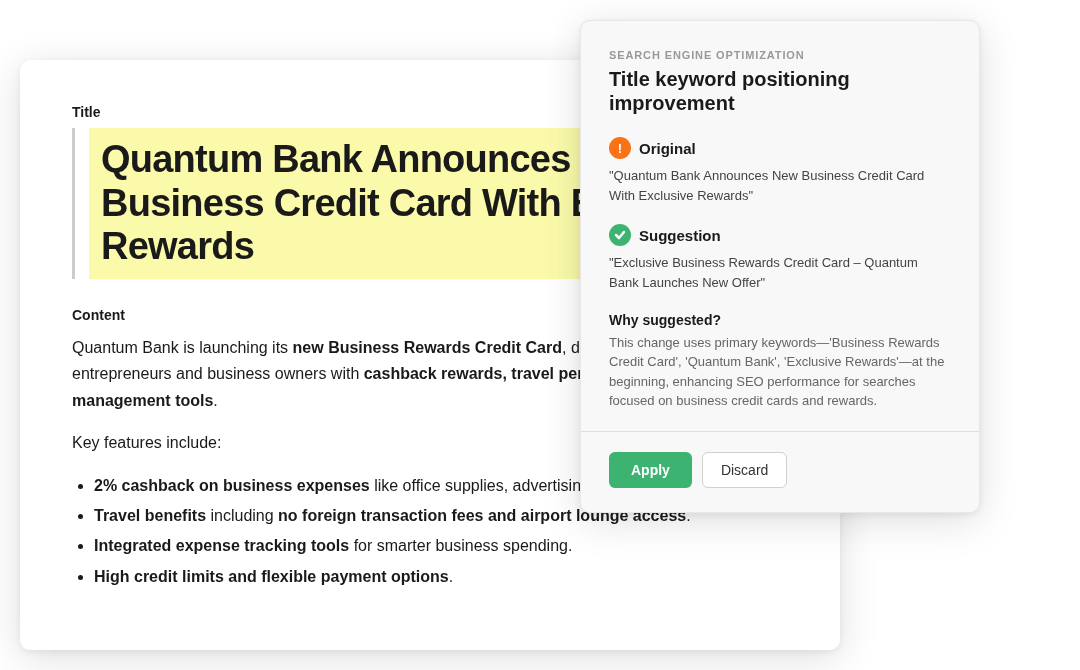
Not every query is worth optimizing. In your weekly AEO meeting agenda, prioritize mid- and bottom-funnel terms with strong commercial intent over top-of-funnel definitional queries. The latter are increasingly absorbed by AI Overviews without generating click intent, making them lower-value targets for citation efforts.
Focus on High-Intent Signals
Visibility in AI Overviews drives downstream organic traffic. Seer’s data shows that brands cited inside an AI Overview see a 35% higher organic CTR on those specific queries. This lift justifies focusing on commercial queries where a mention can directly influence conversion behavior, rather than chasing informational terms that rarely lead to action.
Assign Actionable Tasks
During your AEO optimization meeting, identify high-intent queries where your brand is currently missing from the AI response set. Assign specific tasks to update content for these gaps. This targeted approach ensures that your weekly standup topics translate into measurable improvements in reference rate and visibility within generative search results.
Schema Validation: Ensuring LLMs Can Read Your Entity Markup
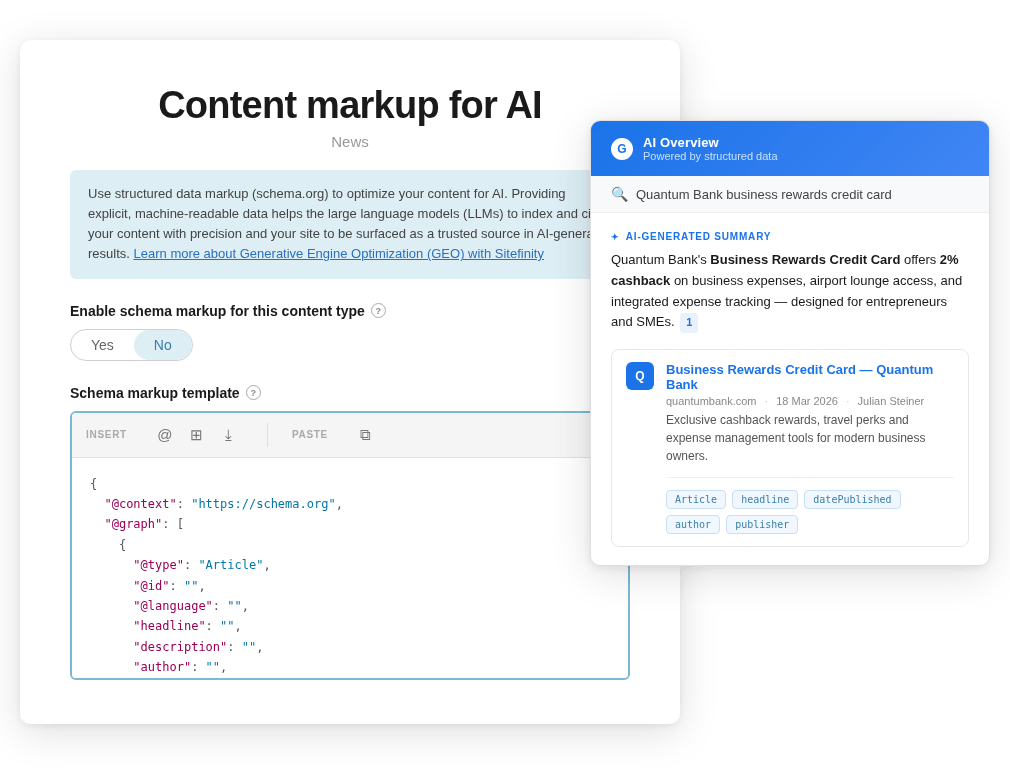
Start the AEO optimization meeting by auditing your Organization and FAQPage schema. As of May 2026, Google no longer displays FAQ rich results, and the rich result reports are being removed in June. However, Google confirms it still uses this structured data to understand your pages. This is a critical distinction: while the visual rich result is gone, the underlying JSON-LD remains a primary signal for LLMs. If your team is only watching for the disappearance of the accordion in Search Console, they are missing the point. The structured data is now purely a machine-readable instruction set for citation. Ensure your markup is syntactically valid and comprehensive, as this is the backbone of your AEO reporting data.
Next, verify that the LLM recognizes your brand as a distinct entity, not just a text string. Check your schema for the @id pattern and sameAs references. These elements help the model link your brand to your social profiles, Wikipedia page, or other authoritative sources. This “entity clarity” is essential for the model to distinguish your brand from competitors with similar names. Without these specific references, the model may hesitate to attribute a claim to your brand, reducing your reference rate.
JavaScript Dependency and Content Visibility
Finally, identify where JavaScript-dependent content is hiding answers from crawlers. Many sites use accordions or tab interfaces to keep pages clean. Traditional crawlers might execute this JavaScript, but LLMs often do not. If the full answer is trapped inside a collapsed element, the LLM cannot read it. This directly impacts your ability to rank in generative responses. During your weekly standup, assign a task to move key answer blocks into the HTML source or use schema-based JSON-LD to expose the content independent of the UI. This ensures that even if the visual element is hidden, the data is visible to the model. This step is crucial for maintaining a high citation share in an era where visibility in AI Overviews drives downstream organic traffic.
The 40% Lift: Applying GEO Principles to Weekly Content
The Princeton and Georgia Tech research demonstrated that targeted optimization can increase visibility in generative responses by up to 40%. To capture this lift during your AEO meeting agenda review, focus on three specific content attributes. First, verify that new copy prioritizes semantic clarity over keyword density. The study found that keyword stuffing does not improve results, whereas citing sources, including statistics, and quoting experts significantly boosts citation rates. Ask the team to confirm that recent updates replace vague assertions with specific, verifiable data points.
Next, check if the content front-loads the answer. Large language models prefer leading with the conclusion followed by supporting arguments. A quick audit should reveal whether recent posts lead with the conclusion rather than burying it in the third paragraph. Additionally, look for summary phrases. Using markers like “In summary” or “The key point is” signals to the model where the direct answer resides, increasing the likelihood of extraction. If these cues are missing from the latest drafts, flag them for immediate revision during the weekly standup topics session.
Finally, ensure that new content includes proper anchor text and descriptive metadata. LLMs follow citation chains to verify authority. Vague links break this chain, causing the model to discard the reference. By tightening these internal and external signals, you help the LLM trace the path from the answer back to your brand as a primary source. This structural discipline is often the difference between a single mention and a sustained citation in generative results.
AEO Standup FAQs: Answering the Hard Questions
The following clarifications address the most common friction points teams face when implementing these weekly standup topics.
Do we still need to track Google rankings?
Yes, but only as a secondary metric. BrightEdge data indicates that AI Overviews appear on roughly 48% of Google searches. Consequently, your AEO meeting agenda should prioritize citation share over traditional rank position. Tracking standard positions remains useful for context, but it no longer predicts brand equity in the same way it once did.
How do we know if our schema is LLM-ready?
Run the syntax through Google’s Rich Results Test to check for errors. More critically, verify that your JSON-LD exposes the full answer independent of the user interface. Large language models often do not execute JavaScript, so if your answer sits inside a collapsed accordion, the bot sees nothing. Ensure the structured data contains the complete, plain-text answer regardless of how the page renders visually.
Which queries should we focus on first?
Start with your top 25 commercial-intent queries where an AI Overview is already dominant. Optimizing for these high-value terms moves your reference rate faster than chasing long-tail informational queries. This targeted approach makes the AEO optimization meeting more efficient, as it directs engineering and content effort toward pages with the highest potential for direct citation.
The consistent rhythm of your AEO reporting determines whether your brand becomes a primary authority or remains a background mention in generative search. If your team cannot yet see its reference rate data, integrating monitoring tools like Profound or Peec AI into your reporting stack is the essential first step. By 2026, being invisible to an LLM is a business risk, not just a technical one. Use this AEO meeting agenda to shift the focus from traditional rankings to actual citation share, ensuring every weekly standup moves your brand closer to the top of the AI-driven conversation.


