The AI Search Data Stack: A Toolkit for Visibility
Sound familiar? You open twenty browser tabs, trying to piece together your marketing strategy. Your keyword research lives in one tool, your AI citation tracking is in another, and trying to see what’s actually working feels like a manual guessing game. This data fragmentation is the silent killer of modern search strategies. You aren’t just working harder; you’re working disconnected.
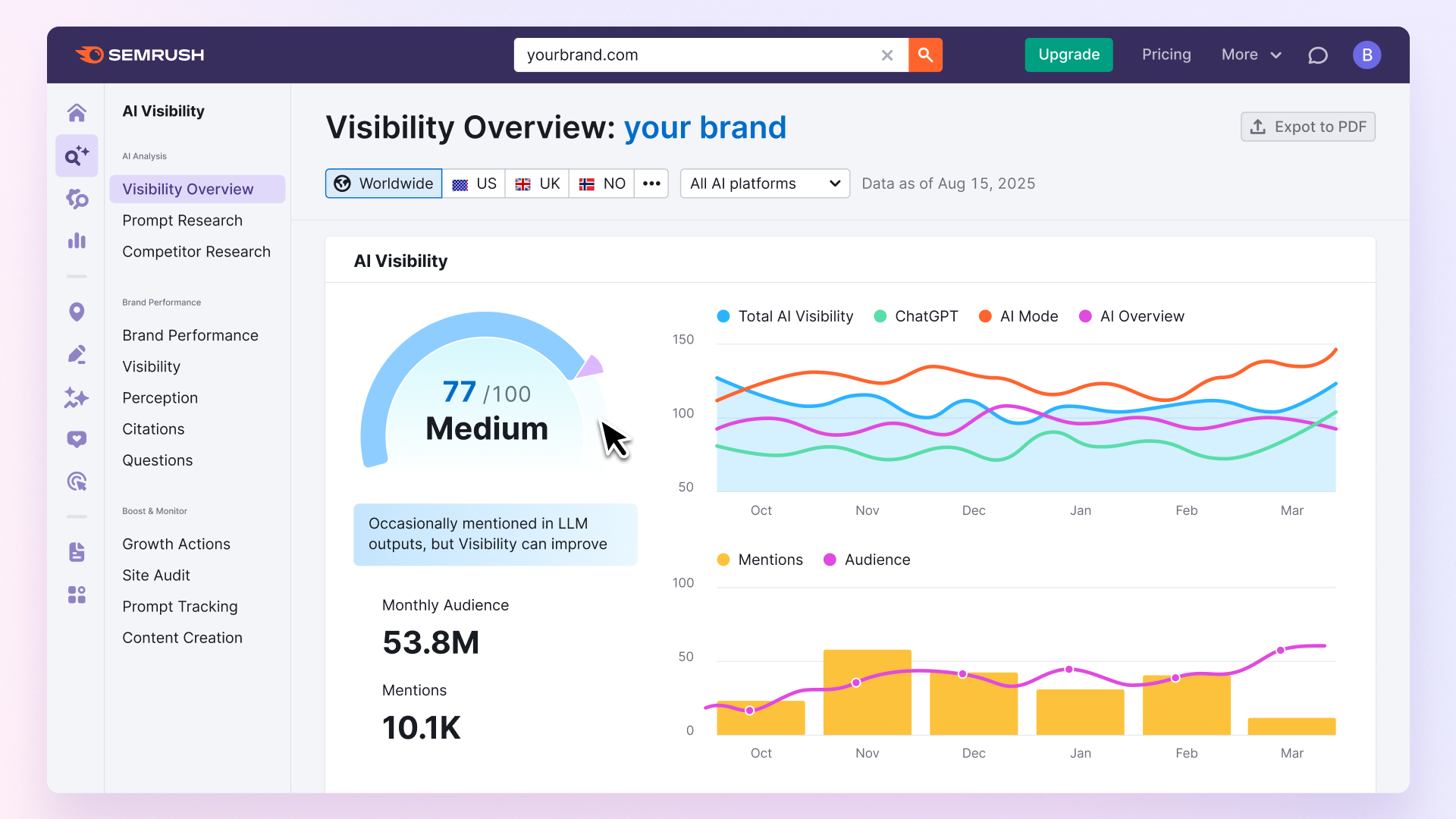
The solution isn’t another tool. It’s an integrated AI Search Data Stack. Instead of jumping between disconnected platforms, you need a cohesive system where intent mapping feeds directly into visibility tracking. This shift is the cornerstone of how to optimize for AI search engines effectively. It moves you from reactive guessing to proactive, AI-driven control. Stop letting your data scatter. Start building a unified ecosystem that actually tells the truth about your performance.
Why Your Current SEO Toolchain is Missing the AI Search Piece
It’s a scenario every marketer knows too well: you spend hours optimizing your content, watching your rankings tick upward in Google Search Console, yet your organic traffic plateaus. The industry is currently facing a massive blind spot. Learning how to optimize for AI search engines requires us to acknowledge that the digital ground has shifted, and traditional toolchains haven’t kept up.
For years, search strategy focused on the blue link. We’ve been trained to obsess over positions 1 through 10, chasing prime real estate in the search results page. But with the rise of AI-driven search experiences like Google’s AI Overviews or ChatGPT’s search capabilities, the goalpost has moved. We are no longer just competing for a clickable link; we are competing for inclusion in the answer itself. Traditional tools are designed to track URL rankings. They don’t speak the language of generative AI, which prioritizes authoritative sources over simple positional dominance.
The Risk of Data Silos
The biggest danger in our current setup is data fragmentation. You might be using one platform for keyword tracking, another for backlink analysis, and a third for content performance. These tools operate in silos. They tell you where you rank on Google, but they offer zero insight into how AI models perceive your brand.
Tracking traditional rankings gives you a false sense of security. You might see a #3 position for a competitive term, but if the AI search engine has synthesized a summary using competitor sites and ignored yours, you’ve lost the user before they even clicked your link. Without integrating these datasets, you’re flying blind, unable to see which content pieces are actually driving AI-driven discovery versus traditional organic clicks.
Traditional vs. AI-Ready: A Clear Shift
To visualize this shift, compare what your current tools are doing versus what an AI-ready search stack requires.
| Feature | Traditional SEO Tool Focus | AI-Ready Search Stack Requirements |
|---|---|---|
| Primary Metric | Organic Ranking Position (1-10) | Citation Frequency in AI Answers |
| Keyword Approach | Exact match or phrase matching | Semantic keyword clustering |
| Visibility Scope | SERP Blue Link visibility | AI Overviews and Chat Responses |
| Intent Analysis | Basic commercial/informational tags | Deep intent mapping |
| Reporting | Traffic and bounce rate | AI-driven traffic attribution |
By adopting this mindset, you begin to see search not just as a game of rankings, but as a strategic effort to become the most trusted voice in your niche. This integration is the first step in mastering how to optimize for AI search engines, setting the stage for the deeper technical phases of AI intent mapping and comprehensive brand monitoring.
Phase 1: Precision Intent Mapping with Semantic Clustering
Traditional keyword research is like asking everyone, “Have you seen a needle?” AI search engines, however, ask, “Can you describe the handle and the reason I’m trying to fix this screw?” This shift means you can no longer optimize for single phrases. You need to understand the entire context. This is where AI intent mapping becomes your most powerful tool, transforming how you build your content strategy.
Beyond Simple Phrase Matching
The old way of search relied heavily on exact-match phrases. You target “best running shoes,” and you write an article. But in an AI-first world, this approach falls apart. AI models don’t just look for keywords; they look for comprehensive topical coverage. They want to serve the user an answer that feels complete, authoritative, and nuanced. If your content only covers the surface-level phrase without addressing the underlying intent, the AI will likely skip over it.
This is where semantic keyword clustering changes the game. Instead of giving you a list of random keywords, these tools analyze the Search Engine Results Pages (SERPs) to identify clusters. These are groups of related queries that share the same underlying user intent. By clustering these together, you see the full landscape of what the AI considers relevant to that topic.
The Workflow: From Data to Briefs
Implementing this mapping requires a structured workflow. It starts with uploading a large list of potential keywords into your semantic clustering tool. The tool analyzes the SERPs for each query and groups them based on similarity.
Once you have these clusters, identify the specific search intent for each group. Are users looking to buy? Are they trying to solve a problem? Are they comparing options? This insight tells you exactly what kind of content to create. Your content brief should outline the key questions to answer, the data points to include, and the logical flow that mimics an AI’s preferred answer structure: direct answer first, then supporting details, then examples.
Phase 2: Monitoring Your Brand Presence Across AI Surfaces
Once you have mapped your intent, the next critical step is AI search visibility tracking. This means shifting your mindset from traditional rank tracking to prompt monitoring. In the world of generative search, you appear as a cited source within an AI-generated summary, a snippet in a chatbot response, or a reference in a conversational answer.
Benchmarking Share of Voice
With the ability to monitor prompts, you can now calculate your Share of Voice (SOV) in AI-generated responses. This metric tells you how often your brand is mentioned compared to your competitors when relevant questions are asked.
- Identify Key Prompts: Select a list of high-value prompts related to your core topics.
- Run Automated Queries: Use monitoring tools to query these prompts across different AI surfaces.
- Track Mentions: Record which domains are cited.
- Analyze Patterns: Look for trends. Does a competitor consistently appear in AI answers for technical questions but not for product-based queries?
Checklist for AI Visibility Benchmarks
- [ ] Daily Prompt Monitoring: Run a set of 20-50 core prompts through monitoring tools.
- [ ] Weekly Citation Tracking: Log which domains appear in AI responses for your keywords.
- [ ] Monthly SOV Calculation: Compare your brand’s visibility against top competitors.
- [ ] Quarterly Source Audit: Evaluate if your cited sources align with your most valuable assets.
Phase 3: The Reporting Integration—Connecting the Dots
The final piece of how to optimize for AI search engines is pulling everything into a single, coherent view. Without centralized reporting, you can’t see the full picture of your AI search visibility tracking efforts.
Centralizing Your Data Ecosystem
The biggest mistake is keeping AI metrics separate from traditional SEO metrics. They belong together. By integrating these data sources, you can see how changes in your generative search optimization strategy directly impact your broader organic performance.
When you consolidate these metrics, you stop guessing and start knowing. You can identify which content pieces are driving AI citations and which are just sitting on page five of search results. This unified view is the foundation of an effective AI content stack.
Establishing Review Cycles
A reporting dashboard is only as good as the actions it inspires. To get the most out of your integrated data, follow this framework:
- Weekly Prompt Monitoring: Spend 30 minutes each week checking how your key phrases perform in AI responses.
- Monthly Content Gap Analysis: Compare your AI visibility against your competitors.
- Quarterly Strategic Pivots: Use the quarterly review to adjust your AI intent mapping strategy based on long-term trends.
By exporting this data into business intelligence tools, you transform your reporting from a technical exercise into a powerful business argument, ensuring your efforts remain a top priority for the entire organization.
Building an effective AI content stack isn’t a one-time project. It’s an ongoing commitment to integration and adaptation. As AI search engines evolve, your data must flow seamlessly between AI intent mapping and AI search visibility tracking. Start small by connecting your intent clusters to your monitoring dashboards. Keep refining, keep connecting, and let the data guide your next move.
AEO/GEO
Want to learn more?
Contact us for direct consultation and support.