The Architecture of Authority: Mapping Entity Hierarchies for AI
Traditional search tactics once thrived on chasing individual keywords, but modern AI models have fundamentally changed the game. Today, search engines no longer just match strings of text; they evaluate your entire website as a connected ecosystem of knowledge. If you are struggling to rank in AI overviews, the missing piece isn’t more content—it is a clear, hierarchical entity structure that tells search engines exactly who you are and what you master.
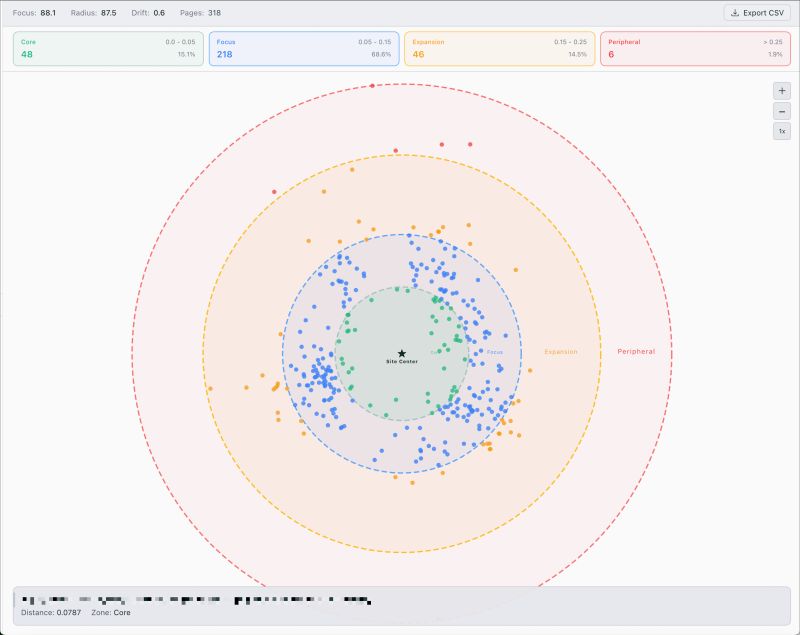
Learning how to optimize for AI search engines requires a shift in mindset. You are moving away from the era of isolated blog posts toward the creation of a structured knowledge graph that serves as a definitive source for AI systems. When your site communicates its topics with precision and logical nesting, you make it significantly easier for algorithms to synthesize your information into authoritative answers. By prioritizing semantic relationships over raw keyword volume, you position your brand to be the reliable, cited authority that AI models naturally gravitate toward.
Moving Beyond Flat Keywords to Entity Taxonomies
For years, success in search was measured by how many times you could pack a specific keyword into a page. But as we learn how to optimize for AI search engines, that keyword-stuffing mindset has become a liability. AI models today don’t just count words; they function like massive knowledge graphs. They attempt to map your entire website as a connected ecosystem of entities—distinct concepts, people, places, or products—and determine how they relate to one another.
The Shift to Entity-Centric Modeling
When you stop viewing your content as a collection of isolated pages and start seeing it as a structured library, you begin to build topical authority. An entity-based approach treats your website as a knowledge graph where every piece of content acts as a node. If your content is scattered across unrelated topics, the AI struggles to categorize your expertise, which makes it significantly less likely to cite your brand in AI overviews.
Building a Vertical Entity Hierarchy
To master this, you need a clear, vertical hierarchy. Think of your site architecture in three distinct layers:
- Pillar Topics: Your core competencies—the broad themes that define your business identity.
- Supporting Clusters: Mid-level entities that provide necessary context and expansion on your pillar topics.
- Granular Sub-topics: Highly specific, long-tail queries that solve user problems and provide proof of expertise.
By organizing your content this way, you prevent semantic drift. Semantic drift happens when a site covers too many tangentially related topics, confusing the AI about what the brand stands for.
Comparing Approaches to Visibility
Understanding the difference between the old way of ranking and the current necessity of semantic mapping is vital for your growth strategy. The following table contrasts these two paradigms:
| Feature | Flat Keyword Targeting | Hierarchical Entity Mapping |
|---|---|---|
| Search Intent | Keyword-focused | Entity-focused |
| AI Interpretability | Low | High |
| Long-term Authority | Volatile | Stable |
| Content Structure | Siloed pages | Linked, topical clusters |
Structuring your site this way is a way to prove to the machine that you are the most reliable entity for a specific subject. When you provide a clean, logical taxonomy, you are essentially handing the AI a map that makes it easy for the algorithm to link its search results directly to your expertise.
Mapping Parent-Child Relationships for Topical Depth
Imagine walking into a massive library where the books are scattered randomly across the floor. You might find a book on gardening, then a biography, then a physics textbook, but you would struggle to gain a deep understanding of any single subject. AI search engines process your website in a similar fashion. If your pages lack a logical, hierarchical structure, search crawlers struggle to understand which topics you truly master.
The Parent-Child Framework
A parent-child relationship functions as the skeletal structure of your website. In this model, a parent page acts as a pillar—a comprehensive, high-level guide covering a broad topic. Child pages are the specialized supporting pieces that branch off the main pillar, diving into granular details. When you organize content this way, you create topical authority. The parent page signals your expertise, while the child pages provide the necessary semantic evidence that your site possesses deep, expert-level knowledge.
Using Internal Links as Semantic Bridges
Internal linking is the physical bridge that reveals your site’s hierarchy to crawlers. Every child page should link back to its parent page using descriptive anchor text, signaling the relationship between the granular sub-topic and the main pillar. Similarly, the parent page should act as a hub, linking out to each of its children. This creates a clear signal of hierarchy:
- The parent establishes the entity definition.
- The child pages provide the specific context for that entity.
- The link flow confirms the connection, allowing the AI to traverse your site with a clear map of your expertise.
Auditing Your Content for Semantic Clarity
To prevent the dreaded orphan page syndrome, where content lives in a vacuum without context, follow this audit process:
- Inventory your content: Assign every page on your site to a specific parent category.
- Identify orphans: If a page doesn’t have a clear parent, it is likely diluting your topical authority.
- Check navigation flow: Ensure every page is just two or three clicks away from its relevant pillar page.
- Refine the narrative: Update your headings to ensure the child content explicitly references the parent entity.
Technical Signals: Schema, Semantics, and Structured Data
To succeed in the era of generative AI, you must speak the machine’s native language. While humans read text, search engines parse relationships through data structures. Schema markup serves as the critical bridge, explicitly defining your content’s entity types. According to AEO/GEO, using structured data is the most reliable way to ensure AI models categorize and cite your brand as an authority.
Achieving Semantic Cleanliness
Semantic cleanliness is the practice of ensuring that every signal on your page—headings, body text, meta tags, and structured data—points to the exact same entity definition. When your H1 title, your article schema, and your internal linking anchor text all reinforce a consistent subject, you remove ambiguity for search crawlers.
Leveraging Schema for Direct Answers
Implementing specific schema markup strategies is essential for surfacing your content in AI-generated overviews. You should prioritize three specific types to signal high-value information:
- FAQ Schema: Ideal for pages where you answer common user pain points directly.
- How-To Schema: Structures your instructions into a machine-readable sequence for quick tutorials.
- Article Schema: Tells the search engine the who, what, and when of your content.
| Schema Type | Role in AI Authority Building | Best Use Case |
|---|---|---|
| FAQ Schema | Supplies direct Q&A | Product pages |
| Organization Schema | Defines core identity | Homepage |
| How-To Schema | Structures sequential logic | Tutorials |
| Article Schema | Highlights depth | Blog posts |
| Product Schema | Connects brand offerings | E-commerce |
Practical Execution: Building Your Entity Management System
Transitioning from chasing isolated keywords to managing a structured entity map is the most effective way to learn how to optimize for AI search engines. Instead of viewing your content calendar as a list of blog topics, visualize it as a living knowledge graph.
The Human-in-the-Loop Workflow
Your role as an editor is the critical human-in-the-loop step. AI might suggest a tangent that sounds interesting but creates semantic drift—moving your site away from its core authority. When you use AI to generate content, always review the output against your entity map to ensure it strengthens your primary entity.
Your 3-Step Entity Implementation Checklist
- Define your Core Entity: Identify the one primary subject your business dominates.
- Categorize supporting content: Audit your current posts and categorize them under parent topics.
- Audit for semantic gaps: Use your entity map to identify questions you haven’t yet addressed.
By closing these gaps, you provide the comprehensive answers that modern search interfaces prioritize.
As you refine your entity structure and eliminate semantic drift, you provide the context necessary for AI to trust and cite your content. Take the first step today: audit your content, define your core entities, and start building the architecture that will keep your brand relevant. Your authority is built on how clearly you define who you are.
AEO/GEO
Want to learn more?
Contact us for direct consultation and support.