Moving beyond theoretical models requires a transition to rigorous, log-based verification and entity-focused analytics. To effectively audit and track AI-driven brand performance, you must treat LLMs as indexers that require explicit technical governance and measurable data points.
Establishing Your AI Technical Baseline: Crawlability & Indexing
Before tracking visibility, you must ensure your content is accessible to LLM crawlers. You cannot measure what is not indexed by these models.
- Analyzing User-Agent Logs: Review your server logs to isolate activity from AI-specific user agents (e.g., GPTBot, Claude-Web, Omgili). By filtering for these specific agents, you can verify if your high-priority pages are being accessed by the crawlers responsible for training and grounding AI search engines.
- Optimizing Robots.txt: Ensure your directives allow access for critical AI agents while protecting proprietary resources. A misconfigured robots.txt is the leading cause of “invisibility” in generative search.
- Simulating Access: Use tools like Screaming Frog to audit how these bots navigate your site. Configure the tool’s user-agent to mimic major LLM crawlers to identify if your internal linking structure or content delivery prevents AI discovery.
Measuring AI-Influenced Traffic: Advanced GA4 & Analytics Configurations
The primary challenge in AI attribution is the “Dark Referral” problem—where AI interactions lead to direct traffic that lacks clear referrer headers.
- Defining AI Referral Segments: In GA4, create custom traffic segments that group together suspected AI-driven sessions. While some traffic arrives via standard referrals, much appears as “Direct.” Use landing page path analysis combined with UTM parameter tracking on shared links to isolate these pockets of volume.
- Tracking Engaged Sessions: Focus on engagement rate and session duration for these segments. High engagement from AI-referred users suggests your brand is being cited accurately as a solution, validating your content’s utility within the generative response.
- Addressing Dark Referrals: Implement first-party data collection via customer onboarding surveys (“How did you hear about us?”). This is the only reliable way to bridge the gap between AI-driven awareness and traceable conversion data.

Entity Modeling & Semantic Coverage KPIs
AI search engines prioritize entities—the people, places, brands, and concepts that define your business—rather than just keyword strings.
- Share of Search in LLMs: Use Ahrefs or Semrush to identify which brands are consistently linked to your core industry entities in search queries. If you are missing from these associations, your semantic footprint is weak.
- Auditing Keyword-to-Entity Mapping: Ensure your content uses structured data (Schema) to clearly map your brand to relevant topics. An audit should verify that your content provides the semantic clarity required for a model to confidently link your brand to specific industry problems.
- Benchmarking: Compare your semantic authority against competitors by tracking which brands are mentioned alongside your core product keywords in AI summary answers.
Navigating Data Variance: LLM Personalization and Reporting Accuracy
AI search results are inherently non-deterministic. A response generated in one location may differ significantly from another due to personalized search histories or user profiles.
- Normalization Strategies: To gain actionable insights, perform repetitive queries from clean-room environments (e.g., incognito, non-personalized instances) to establish a “baseline” output.
- Stakeholder Expectations: Educate your team that AI metrics are probabilistic, not deterministic. Frame your reporting around “visibility trends” and “citation frequency” rather than granular ranking positions, which are subject to high volatility based on the user’s current context.
Strategic Brand Health Monitoring: Beyond Traffic Metrics
True AI search performance is measured by the quality of your presence, not just the volume of visits.
- Citation Frequency: Monitor how often your brand appears in summary answers. A “citation” acts as a high-intent, authoritative nod from the AI.
- Sentiment Analysis: Use automated tools to monitor whether AI-driven descriptions of your brand align with your intended positioning. Compare this against manual, legacy search sentiment to ensure consistency.
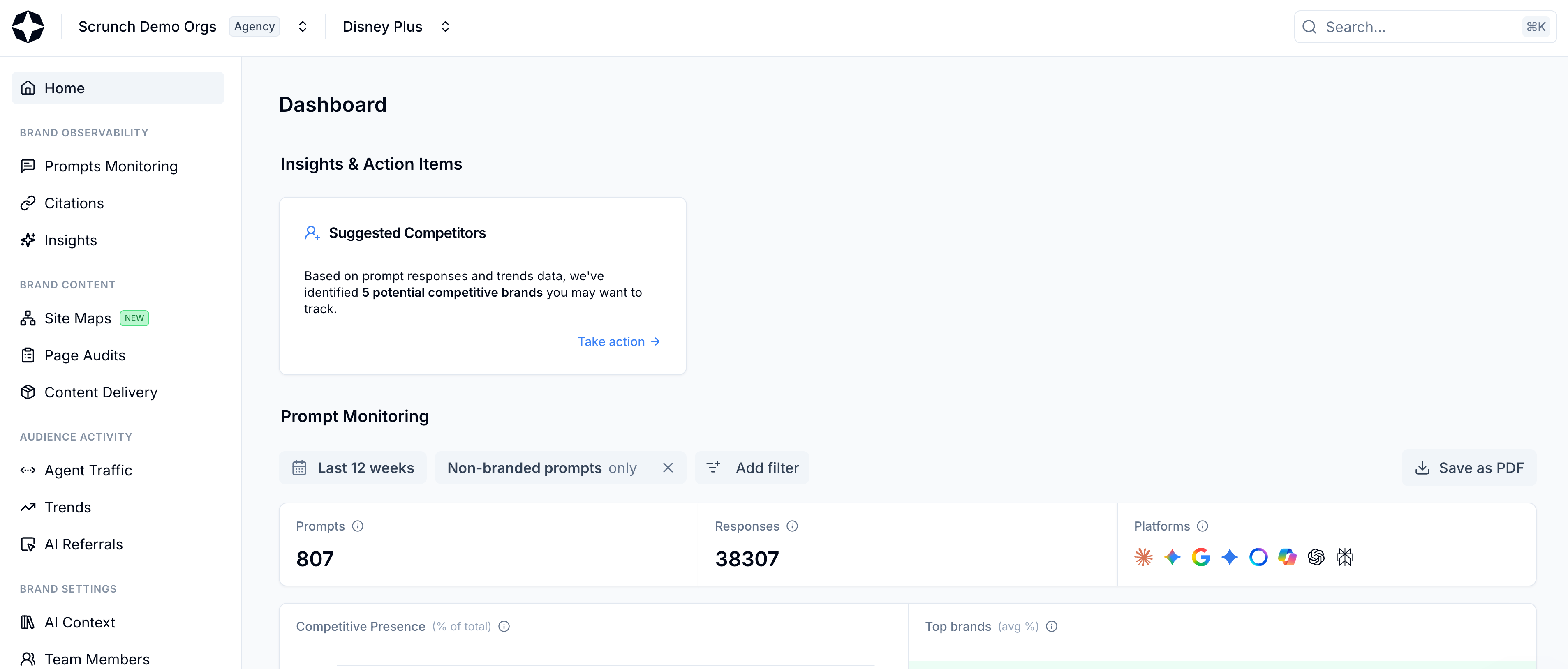
- Consolidated Dashboards: Build a central performance dashboard that pulls in citation counts, AI-referred conversion data, and semantic mapping scores. Tracking these metrics iteratively is the only way to ensure your content remains resilient as LLM algorithms evolve.